

The year 1972 served as a watershed moment for the emergence of the “West Coast Sound,” a meticulous blend of country-rock roots and high-fidelity studio discipline.
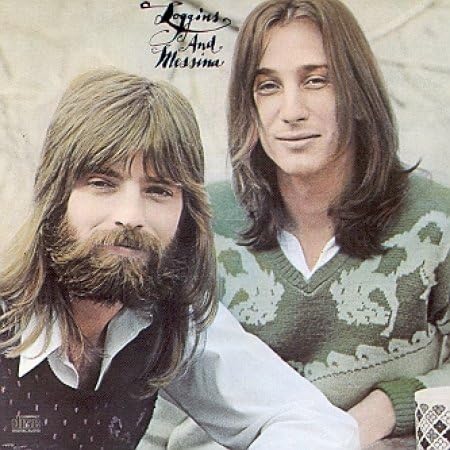
At the heart of this movement was the October 1972 release of the self-titled sophomore album by Loggins and Messina.
While their debut was a tentative exploration of a producer-artist relationship, this second effort solidified a partnership that would eventually sell over 16 million records.
For the audiophile archivist, it remains a masterclass in analog “Tubey Magic”—that rich, sweet, and dynamic sound captured at Columbia Studios in Los Angeles that has practically disappeared from the modern recording landscape.
1. The Accidental Platinum Partnership
The formation of Loggins and Messina was a productive accident rather than a calculated industry move. In 1971, Jim Messina was an independent producer for Columbia Records, tasked with launching the solo career of a little-known songwriter named Kenny Loggins. Messina intended only to “sit in” to provide the name recognition he had earned with Buffalo Springfield and Poco to Loggins’ debut.
By the release of their self-titled follow-up in October 1972, the dynamic had shifted completely. They were no longer a solo act and a mentor; they were a unified team that “played as one.” This transition was fueled by the unexpected Platinum success of their debut, Sittin’ In, which proved that their vocal harmonies and stylistic chemistry were a commodity too valuable to ignore.
2. Origins: From Mentorship to Historic Duo
Before their paths crossed, Jim Messina possessed an elite rock pedigree as the bassist who replaced Bruce Palmer in Buffalo Springfield and as a founding member of country-rock pioneers Poco. Kenny Loggins, by contrast, was an unknown staff songwriter whose early compositions—including “House at Pooh Corner”—had been picked up by the Nitty Gritty Dirt Band.
The transition to a permanent duo required intervention from Clive Davis, then-president of Columbia Records. Messina, “weary of the road” and desiring to return to full-time production, initially hesitated to commit to a touring partnership. Davis intervened, framing the duo as a “once in a lifetime” opportunity. This decision famously delayed Loggins’ solo career but established a partnership that dominated the early 1970s charts, peaking at #16 on the US Billboard 200 and making waves internationally, reaching #61 on the Australian Kent Music Report.
3. Contextualizing 1972: Soft Rock as a Cultural Pacifier
In the early 1970s, the American psyche was reeling from the trauma of the Vietnam War and the collapse of the psychedelic era. Audiences sought a “musical Valium”—a sound that could soothe the anxieties of a post-Aquarian apocalypse. Loggins and Messina, alongside contemporaries like the Eagles, became the primary architects of this “West Coast Sound,” often retrospectively dubbed “nerf rock” for its polished, non-confrontational aesthetic.
The sound resonated due to three psychological draws:
• Pastoral Escapism: Gentle harmonies and acoustic warmth provided a retreat from sociopolitical turmoil.
• Production Clarity: High-fidelity standards, managed by Messina, provided a sense of order and polished accessibility.
• Harmonic Solace: Tight vocal arrangements offered a sense of stability and community during a paranoid era.
4. The Loggins & Messina Band: Musical Personnel
The 1972 sessions utilized a sophisticated instrumentarium that elevated the record beyond standard folk-rock. The inclusion of Milt Holland’s percussion and Jon Clarke’s extensive woodwind array gave the album its crystalline, quasi-orchestral depth.
Key Personnel and Instrumentarium of the 1972 Sessions
| Musician | Primary Role | Key Instruments |
|---|---|---|
| Kenny Loggins | Core Artist | Vocals, Rhythm/Acoustic Guitar, Harmonica |
| Jim Messina | Core Artist / Producer | Vocals, Lead/Acoustic Guitar, Electric Mandolin |
| Merel Bregante | Band Member | Drums, Backing Vocals |
| Larry Sims | Band Member | Bass Guitar, Backing Vocals |
| Jon Clarke | Band Member | Flute, Oboe, Recorder, English Horn, Bass Clarinet, Bass Flute, Saxophones (Baritone/Soprano/Tenor) |
| Al Garth | Band Member | Fiddle, Recorder, Alto/Tenor Saxophone |
| Michael Omartian | Sideman | Hammond Organ, Acoustic Piano, Clavinet, Harmonium, Wurlitzer |
| Milt Holland | Sideman | Percussion |
| Rusty Young | Guest | Steel Dobro (on “Long Tail Cat”) |
5. Track-by-Track Deep Dive
The 1972 album is a showcase of stylistic versatility, blending commercial pop with sophisticated instrumental detours.
“Your Mama Don’t Dance“
A collaborative effort between Loggins and Messina, this track was the duo’s commercial peak, hitting #4 in the US and #5 in Canada. It uses a 1950s rock framework to deliver a commentary on the generation gap, complete with a “funky riff” and a drive-in scene featuring “long hair” tropes that often drew police attention.
“Thinking of You“
Written by Jim Messina, this track reached #18 in the US and #20 in Canada. Archivists should note that the album version is a distinctly different recording than the single edit; it features delicate string arrangements and an expansive mix that showcases Messina’s production finesse.
“Angry Eyes” and the Influence of Bitches Brew
The album’s artistic zenith is the 7:40 epic “Angry Eyes.” Written by both artists, the track deviates from “mellow” pop into an entrancing jam that critics have compared to the experimental jazz-fusion of Miles Davis’s Bitches Brew. It features an incredibly rare and effective bass solo by Larry Sims, textured percussion by Milt Holland, and lengthy solos on flute and guitar that allowed the band to demonstrate high-caliber musicianship.
Folk and Protest Roots
“Golden Ribbons” (written by Messina) is the duo’s most direct protest against the Vietnam War. It is a mid-tempo anthem that building into a powerful question: “What does it avail a man / To gain a fortune and lose his soul.” On the lighter side, “Long Tail Cat” (written by Loggins) features the “Dixie-inspired,” country-blues feel of Rusty Young’s steel dobro.
6. The Audiophile Perspective: Engineering and “Hot Stampers”
This album is a benchmark for top-quality analog studio recording. Jim Messina, acting as producer, worked with Recordist George Beauregard and Recording Consultant Alex Kazanegras to ensure the sound had deep, “note-like” bass and crystalline high-end extension. For the archivist, this record allows for a “suspended disbelief,” where you can hear the breath in the voices and the pick-on-string contact.
Audiophiles seeking “Hot Stampers” – vintage pressings that avoid the “veiled” midrange of standard copies, look for four critical elements:
1. Top-End Extension: Essential for the shimmer of cymbals and acoustic guitar harmonics that “fight for space” in the dense mixes.
2. Midrange Transparency: Allowing the listener to “see into the mix” and distinguish between Jon Clarke’s woodwinds and the various string instruments.
3. Bass Regulation: Ensuring the low end is Prodigious and deep, yet tightly controlled and melodic.
4. Dynamics: The ability of the pressing to handle the densest, most climactic choruses without crossing into congestion or distortion.
Comparison of Major US Pressing Plant Variations (Catalog KC 31748)
| Pressing Plant | Identifier | Collector Significance |
|---|---|---|
| Pitman, NJ | “P” in Runout | Highly consistent quality; often features Customatrix mastering. Most common among collectors. |
| Terre Haute, IN | “T” in Runout | Common variant; frequently praised by “Skeptical Audiophiles” for its specific dynamic range. |
| Pinckneyville, IL | Matrix KC 31748 | Noted for specific matrix runouts; represents the original analog tapes preferred over “Heavy Vinyl” reissues. |
7. Critical Divide vs. Commercial Triumph
The legacy of Loggins and Messina remains split between critical dismissal and massive commercial reality. Influential critic Robert Christgau famously gave their debut a “C” grade and characterized the duo as “square” and “limp,” comparing them unfavorably to the raw energy of Chuck Berry.
However, the commercial reality – 16 million records sold – tells a story of a public that valued craftsmanship and melodic stability. They were the premier musical pair of the early 1970s, establishing a blueprint for the “West Coast Sound” long before the rise of Hall & Oates.
8. FAQ: Common Misconceptions
• Are Jim Messina and Jo Dee Messina related? No. Despite the shared surname, there is no familial or direct professional relationship between the country artist and Jim Messina.
• Was this their first album together? No. Their debut was 1971’s Sittin’ In. The 1972 self-titled record was their sophomore effort and the first released as a formalized, unified duo.
• How many records did they sell? The duo sold over 16 million records during their career, which spanned from 1971 until their amicable parting in 1976.
9. Conclusion: A Masterclass in Craftsmanship
Despite being characterized as “mellow,” the 1972 Loggins and Messina album represents a high-water mark for 1970s studio discipline. It stands as a testament to the power of professional collaboration, blending country-rock roots with jazz-inflected sophistication. For vinyl collectors, a well-preserved original pressing is essential; it captures a moment when high-caliber musicianship and mainstream appeal moved in perfect harmony.
Affiliate Disclosure
This post may contain affiliate links. If you purchase an album or product through these links, I may receive a small commission at no additional cost to you. As an Amazon Associate, I earn from qualifying purchases.