

By 1973, the California sun was setting on the grit of the late sixties, giving way to a polished, high-fidelity sheen that would eventually launch a thousand “Yacht Rock” debates. At the helm of this transition stood the quintessential classic rock soft rock duet: Kenny Loggins and Jim Messina. What began as a mere producer-protégé arrangement—Messina was originally hired to guide the young Loggins’ solo debut—had coalesced into a chart-topping partnership of formidable technical skill.
Their third studio effort, Full Sail, released in October 1973, is often seen as the point where the duo truly found their sea legs. To some critics, it was the moment they “launched a yacht that wasn’t seaworthy,” while to audiophiles, it remains a masterclass in “exhilarating musical flow.” Regardless of where you stand in the “pitched fights” and “harpoon” battles regarding the birth of Yacht Rock, the loggins and messina full sail songs represent a pivotal evolution in the 1970s singer-songwriter era.
Overview of Full Sail: The Birth of the Yacht Rock Aesthetic
Recorded at the legendary Wally Heider Studio 4 in Hollywood, Full Sail was a commercial powerhouse, peaking at #10 on the Billboard 200. Produced by Jim Messina with a meticulous ear for detail, the album is famously cited by historians as the visual and sonic blueprint for the Yacht Rock aesthetic.
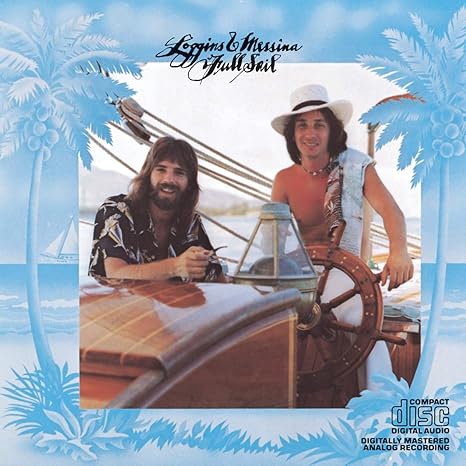
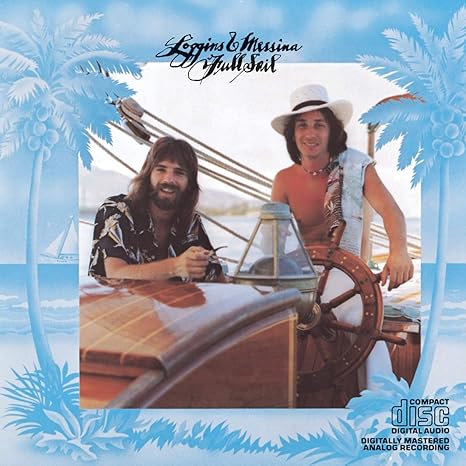
The album cover serves as the perfect visual signifier: Loggins and Messina at the helm of a handsome sailboat. Loggins, the future “Overlord of the Movie Soundtrack,” sports a Hawaiian shirt, while Messina—wearing a white Panama hat and a coral necklace—manages the tiller. It was a relaxed, sun-drenched image that stood in stark contrast to the more rugged folk-rock of peers like Neil Young. This “proto-yacht” imagery was more than just a marketing gimmick; it mirrored a shift toward the “smooth and mellow” production style that would dominate the decade.
Track-by-Track Breakdown: Exploring the Full Sail Songs
The Full Sail track list is an eclectic mix of island-rock, ’50s pastiche, and expansive “prog-yacht” compositions that stretch toward the ten-minute mark.
Lahaina
Messina’s “island-rock” opener serves as a bubbly, Caribbean-flavored sequel to the duo’s earlier hit “Vahevala.” While some modern critics find the “tropical lilt” a bit cringeworthy, the track established the duo’s ability to blend happy-go-lucky island percussion with a polished rock foundation.
Travelin’ Blues
Leaning into a smooth jazz aesthetic, this track features Messina adopting a vocal style that echoes the “James Taylor” school of sensitive delivery. While audiophiles praise its musical flow, more cynical reviewers have labeled its polished production as “urine-yellow mellow,” noting that it has more in common with high-end easy listening than the grit of the Delta.
My Music
A high-energy ’50s rock & roll pastiche, “My Music” reached #16 on the Billboard Hot 100. It follows the successful blueprint of “Your Mama Don’t Dance,” complete with lyrics about “Little Smitty” and the band van. It remains a staple of the duo’s uptempo catalog, keeping them in the same conversation as country-rock contemporaries like Richie Furay.
A Love Song
Composed by Kenny Loggins and Dona Lyn George, this is a folk-rooted ballad in E Major. While described by some as “sensitive but generic,” the track’s pastoral imagery—comparing love to a bird’s song and the peace of home—resonated deeply. Its enduring appeal was solidified when Anne Murray covered it, turning it into a Grammy-winning classic.
You Need a Man / Coming to You
At over nine minutes, this track is where the “prog-yacht” label originated. It’s essentially two songs superglued together: a funky, bass-driven first half where Loggins showcases his “soundtrack-ready” grit, followed by a Messina-led foray into tropicana featuring steel drums, timbales, and recorders.
Watching the River Run
This contemplative track is famous in audiophile circles. The big chorus at the two-minute mark is a critical test for a sound system’s “weight, resolution, and freedom from strain.” Musically, it’s a “listening and yearning” ballad highlighted by Jon Clarke’s intricate flute work. It reached #71 on the Billboard charts in 1974.
Pathway to Glory
An 8-minute composition that reveals the duo’s “CSN&Y ambitions” and “jazz-fusion inclinations.” Messina handles the lead vocals on a track that moves from a Loggins harmonica solo to an Al Garth violin solo before diving into an electric guitar-driven jazz section. It’s a dense, portentous track that rewards the patient listener.
Didn’t Know You When
This track offers a glimpse into Loggins’ future “Dancin’ in the Sheets” energy. His vocal delivery is rambunctious and energetic, supported by a driving horn section that avoids the blunted sound found on lesser pressings of the era.
Sailin’ the Wind
Diverging from the standard “sailing song,” this track takes a surreal turn. Loggins sings of a “sky ship,” looking down on his own face from the clouds. It’s a slow-motion, psychedelic exploration featuring a lush arrangement of strings and woodwinds, capturing the “freakiness” hidden beneath the duo’s square exterior.
Full Sail Tracklist & Chart History
| Track # | Title | Songwriter(s) | Length | Billboard Peak |
| 1 | Lahaina | Jim Messina | 2:31 | — |
| 2 | Travelin’ Blues | Jim Messina | 3:43 | — |
| 3 | My Music | Loggins & Messina | 3:05 | #16 |
| 4 | A Love Song | Loggins & Dona Lyn George | 3:11 | — |
| 5 | You Need a Man / Coming to You | Loggins & Messina | 9:27 | — |
| 6 | Watching the River Run | Loggins & Messina | 3:28 | #71 |
| 7 | Pathway to Glory | Jim Messina | 8:34 | — |
| 8 | Didn’t Know You When | Kenny Loggins | 3:05 | — |
| 9 | Sailin’ the Wind | Kenny Loggins | 6:03 | — |
The Players: Multi-Instrumental Mastery
The complexity of the loggins and messina full sail songs is anchored by a legendary lineup of session masters. Jim Messina’s production style favored dense, multi-layered mixes that required “high-end extension” to prevent percussion and guitar harmonics from becoming blunted.
Key contributors to the album’s sophisticated sound include:
- Jon Clarke: A woodwind virtuoso playing everything from oboe and English horn to bass clarinet and alto/tenor flutes.
- Al Garth: Contributed essential violin, recorder, and saxophone work.
- Michael Omartian: The future three-time Grammy winner handled an arsenal of keyboards, including the Wurlitzer, Moog synthesizer, and Hammond organ.
Messina’s sonic signature – deep, “note-like” bass and prominent high-end clarity—ensured that even with so many instruments fighting for space, the mix remained involving rather than congested.
Legacy and Influence: From Buffalo Springfield to the Grammys
Jim Messina’s pedigree as a bridge between Buffalo Springfield History and Poco brought a level of country-rock sophistication to the duo. His history working with Stephen Stills helped ground the duo’s pop ambitions in technical excellence.
The album’s most visible legacy is the 1974 Grammy won by Anne Murray for her cover of “A Love Song,” which took home Best Female Country Vocal Performance. Beyond the awards, Full Sail stands as a pioneer of “proto-yacht rock.” Even if some critics see the duo as “incorrigible squares,” the album’s influence on the high-fidelity, smooth-rock sound of the mid-to-late ’70s is undeniable.
Conclusion
The loggins and messina full sail songs remain a masterclass in 1970s production. Whether you’re an audiophile testing the resolution of your system with “Watching the River Run” or a fan of the quintessential classic rock soft rock duet energy of “My Music,” the album represents a high-water mark for the era. It captured the duo at the peak of their collaborative powers, successfully navigating the waters between folk sincerity and jazz-rock complexity.
What is your favorite track from Full Sail? Do you side with the audiophiles or the cynics on this one? Share your memories of the album in the comments section below!