

Loggins and Messina Sittin In: The Accidental Debut That Launched a 1970s Supergroup
Loggins and Messina Sittin In is the debut album that was never supposed to happen. Released in November 1971 on Columbia Records, this record began as a solo project for a young, unknown songwriter named Kenny Loggins. By the time the sessions ended, producer Jim Messina had contributed so much guitar work, songwriting, and vocal harmony that the album became something far greater than anyone planned. The result was a warm, genre-blending collection of folk rock, country, and soft pop that launched one of the most successful duos of the 1970s.
- Artist: Kenny Loggins with Jim Messina
- Album: Sittin’ In
- Released: November 1971
- Label: Columbia Records
- Producer: Jim Messina
- Recorded: Summer 1971, Columbia Studios, Los Angeles
- Catalog Number: PC 31044
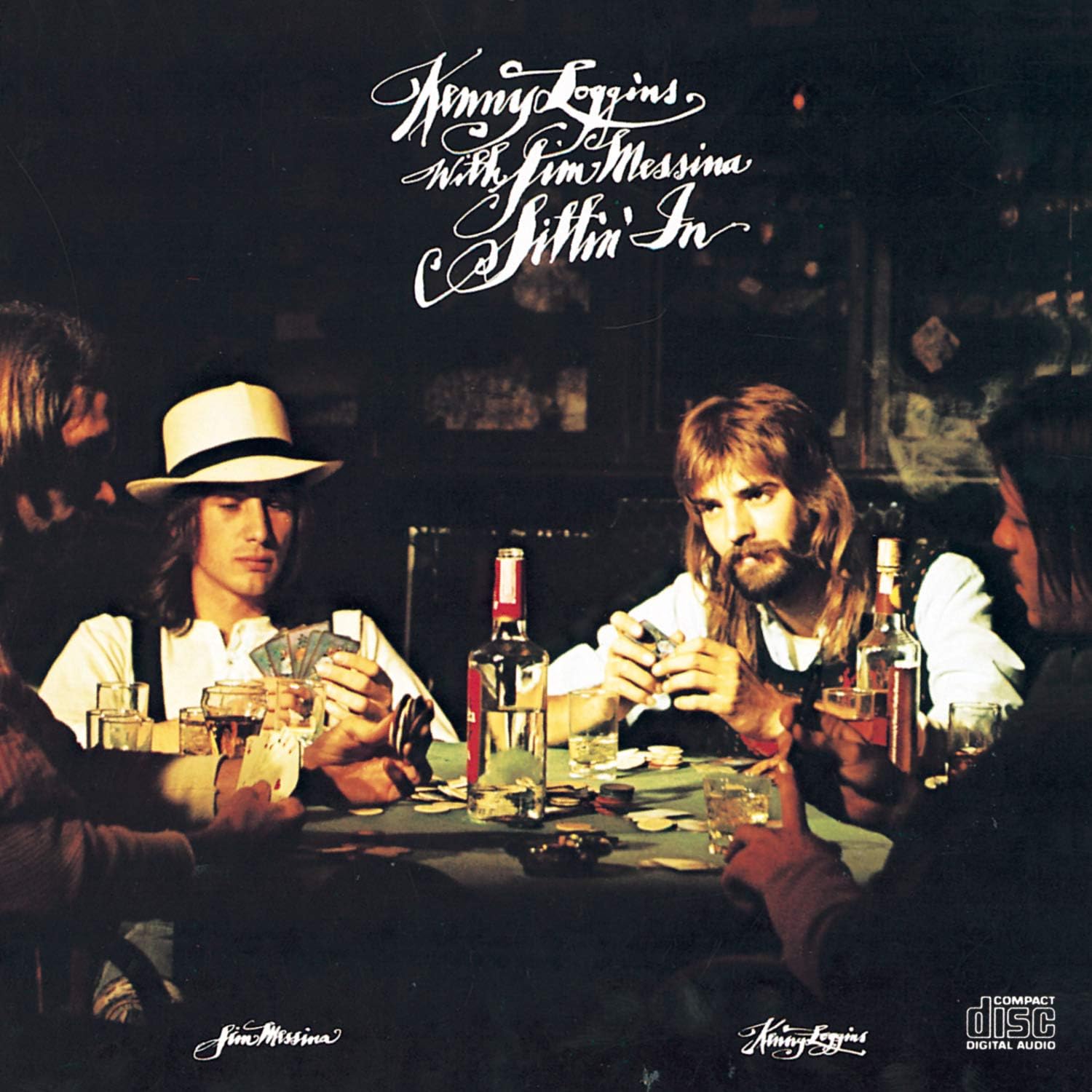
Own Loggins and Messina Sittin’ In on Vinyl or CD
Experience the album that started it all for one of the 1970s’ greatest duos. Featuring “Danny’s Song,” “House at Pooh Corner,” and the epic “Trilogy” suite.
ClassicRockArtists.com is a participant in the Amazon Associates Program.
Table of Contents
- Album Overview and Release Context
- Why Loggins and Messina Sittin In Matters
- Recording Sessions and Production
- Musicians and Personnel
- Track-by-Track Highlights
- Singles and Chart Performance
- Critical Reception
- Musical Style and Themes
- Album Artwork and Packaging
- Legacy and Influence
Album Overview and Release Context
Sittin’ In arrived in record stores in November 1971, credited officially to “Kenny Loggins with Jim Messina.” The full title itself told the story. Messina was supposed to be a behind-the-scenes presence, lending his name and production expertise to help introduce Loggins to the public. Instead, the collaboration took on a life of its own.
At the time of recording, Kenny Loggins was a 23-year-old singer-songwriter who had been working as a staff writer at ABC/Dunhill publishing. His songs had already attracted attention. The Nitty Gritty Dirt Band recorded four of his compositions, including “House at Pooh Corner,” for their 1970 album Uncle Charlie & His Dog Teddy. That track reached number 53 on the Billboard Hot 100 and put Loggins on the industry’s radar.
Jim Messina, meanwhile, was already a respected name in rock circles. He had played bass and guitar with Buffalo Springfield during their final days and then co-founded Poco with Richie Furay. By 1970, Messina had left Poco and signed on with Columbia Records as an independent producer. When the label paired him with Loggins, neither man expected it to become a long-term partnership.
Columbia Records released the album with catalog number PC 31044. It entered a marketplace already crowded with folk rock and singer-songwriter releases. Artists like James Taylor, Carole King, and Joni Mitchell were dominating the charts. Sittin’ In carved its own space by blending Loggins’ earnest songwriting with Messina’s polished arrangements and country rock instincts.
Why Loggins and Messina Sittin In Matters
This album matters because it contains songs that outlived the record itself. “Danny’s Song” became a standard after Anne Murray covered it in 1972, taking her version to number 7 on the Billboard Hot 100. “House at Pooh Corner” became one of the most beloved soft rock songs of the era. Kenny Loggins would revisit it decades later with “Return to Pooh Corner” in 1994, proving the song’s emotional durability.
Beyond individual tracks, Sittin’ In demonstrated what two artists from different creative backgrounds could achieve when their instincts aligned. Loggins brought raw, confessional songwriting rooted in folk. Messina brought studio craft, electric guitar chops honed in Buffalo Springfield and Poco, and a deep understanding of how to arrange harmonies. The chemistry was immediate and undeniable.
The album also holds a key place in the story of 1970s California rock. It sits at the intersection of folk, country rock, and soft pop, anticipating the sound that artists like the Eagles would refine in the years ahead. Messina’s experience with Buffalo Springfield and Poco gave him a direct connection to the roots of the West Coast country rock movement. That lineage flows directly into this record.
Clive Davis, then president of Columbia Records, recognized the potential immediately. As Messina later recalled, Davis urged the two to continue as a duo, telling them that opportunities like this come along once in a lifetime. Davis was right. Loggins and Messina went on to sell over 16 million records together.
Recording Sessions and Production
The road to Sittin’ In began in November 1970, when Jim Messina first met Kenny Loggins. Messina interviewed the young songwriter and heard several of his compositions. Impressed by the material, Messina recorded demos of Loggins’ songs in the living room of his own home. By January 1971, Messina had sorted through the material and began preparing an album.
The formal recording sessions took place during the summer of 1971 at Columbia Studios in Los Angeles. Messina produced the album and also served as the primary lead guitarist, bringing a level of instrumental sophistication that elevated Loggins’ acoustic-based compositions. John Fiore served as recording engineer, while Alex Kazanegras handled mixing and mastering.
Messina spent weeks forming, auditioning, and rehearsing a band for the sessions. He drew on musicians he knew from his time with Poco and other West Coast circles. The result was a tight, versatile group capable of moving between folk, country, rock, and even Caribbean-influenced arrangements.
The production approach favored warmth and space. Messina layered acoustic and electric guitars with care, allowing room for woodwinds, steel drums, and keyboards to color the arrangements without cluttering them. The 11-minute “Trilogy” suite showcased the most ambitious production on the record. It required careful arrangement to weave three distinct songs into a seamless piece.
As Jim Messina has explained on his official site, his intention was to use his name and experience to launch Loggins’ career by introducing him to audiences familiar with Buffalo Springfield and Poco. The title “Sittin’ In” reflected that original plan. Messina was just supposed to be sitting in on someone else’s record.
Musicians and Personnel
The core of the Sittin’ In sessions revolved around a small but talented group of players. Kenny Loggins handled rhythm and acoustic guitar, harmonica, and lead vocals. Jim Messina played lead and acoustic guitar and contributed vocals throughout the album.
The rhythm section consisted of Larry Sims on bass and Merel Bregante on drums. Both were formerly members of The Sunshine Company and were old friends of Messina. Their familiarity with each other brought a relaxed, intuitive feel to the rhythm tracks. Both also contributed backing vocals.
Michael Omartian played keyboards, steel drums, and concertina. Already an in-demand session player, Omartian would go on to become one of the most prolific producers in pop and Christian music. His keyboard work adds texture throughout the album, particularly on the more atmospheric passages.
The woodwind and string contributions came from Jon Clarke, who played saxophone, oboe, and steel drum, and Lester “Al” Garth, who played saxophone, recorder, violin, and steel drum while also singing backing vocals. Milt Holland, a veteran Hollywood percussionist, rounded out the ensemble on additional percussion.
David Linderman created the cover concept and provided photography. Irvin Goodnoff contributed additional photography for the album package.
Track-by-Track Highlights
Side One
- “Nobody But You” (Jim Messina) – 2:58
- “Danny’s Song” (Kenny Loggins) – 4:15
- “Vahevala” (Jim Messina / Michael Omartian) – 4:46
- “Trilogy: Lovin’ Me / To Make a Woman Feel Wanted / Peace of Mind” (Jim Messina / Kenny Loggins / Jim Messina) – 11:13
Side Two
- “Back to Georgia” (Kenny Loggins) – 3:18
- “House at Pooh Corner” (Kenny Loggins) – 3:25
- “Listen to a Country Song” (Jim Messina) – 3:02
- “Same Old Wine” (Jim Messina) – 4:48
- “Rock ‘n Roll Mood” (Kenny Loggins) – 3:25
“Nobody But You” opens the album with a bright, feel-good energy. Written by Messina, this track immediately establishes the duo’s signature blend of layered guitars and tight vocal harmonies. It became one of the album’s two charting singles.
“Danny’s Song” is the emotional centerpiece of the record. Loggins wrote it for his brother Danny when Danny became a father for the first time. The song captures the joy of new parenthood with a gentle, rolling melody. Though the Loggins and Messina version was not released as a lead single, it received substantial FM radio airplay. American Songwriter has noted the song’s enduring place in Loggins’ catalog. Anne Murray’s 1972 cover brought the song to a massive audience, reaching number 7 on the Billboard Hot 100 and number 10 on the Hot Country Singles chart.
“Vahevala” stands out for its Caribbean flavor. Co-written by Messina and keyboardist Michael Omartian, the track features steel drums and a rhythmic bounce that set it apart from everything else on the record. It became the album’s first single release and found regional success, reaching the top 3 on Chicago’s WCFL radio station.
“Trilogy: Lovin’ Me / To Make a Woman Feel Wanted / Peace of Mind” is the album’s most ambitious statement. Stretching past 11 minutes, this three-part suite weaves together songs by Messina (with Loggins co-writing the middle section). The performances, both vocal and instrumental, are among the finest on the album. The three songs connect seamlessly, building from intimate reflection to soaring release.
“House at Pooh Corner” is a song with a remarkable backstory. Loggins wrote it at age 17, inspired by the A.A. Milne children’s books. When the Nitty Gritty Dirt Band wanted to record it, Disney’s lawyers initially blocked the release over copyright concerns. Loggins resolved the situation through an unlikely connection. He was dating the daughter of Card Walker, then executive vice president of the Walt Disney Corporation. A conversation with Walker at his home in Glendale led Disney to release the copyright claim. The song is a tender allegory about the loss of childhood innocence.
“Listen to a Country Song” is a Messina composition that would find chart success through a cover version. Lynn Anderson recorded it in 1972 and took it to number 3 on the country charts, further proving the commercial appeal of the songwriting on this album.
“Same Old Wine” is one of Messina’s strongest contributions. It carries a more pointed, political sensibility than the rest of the record. The song showcases Messina’s abilities as both a lyricist and guitarist, featuring some of the album’s most assertive electric guitar work.
Singles and Chart Performance
The first single from the album was “Vahevala,” released in April 1972 with the non-album track “Same Old Wine” as its B-side. The single debuted at number 90 on the Billboard Hot 100 and peaked at number 84 over five weeks on the chart. It performed considerably better in regional markets, reaching the top 3 in Chicago.
“Nobody But You” followed as the second single in June 1972. Backed by “Danny’s Song” on the B-side, it reached number 86 on the Hot 100 during a two-week chart run. Both singles found their strongest support on folk rock and adult contemporary radio formats.
Sittin’ In peaked at number 70 on the Billboard 200 album chart after entering at number 196 in March 1972. It spent a total of 19 weeks on the chart. The album was initially slow to gain traction with radio programmers. However, it built a loyal following through word of mouth and heavy touring on the college campus circuit through the autumn of 1972.
The RIAA certified Sittin’ In as a Gold record on May 11, 1973, for sales exceeding 500,000 copies. By 1991, it had achieved Platinum certification for sales surpassing one million copies. These numbers reflect the album’s enduring appeal over two decades of steady sales.
Critical Reception
Critical response to Sittin’ In was largely positive, particularly regarding the quality of the songwriting and the vocal interplay between Loggins and Messina. AllMusic awarded the album 4 out of 5 stars, praising the harmonious blend of Loggins’ emotive songwriting with Messina’s polished arrangements. The review singled out “Danny’s Song” as a highlight that showcased Loggins’ potential as a hitmaker.
Contemporary reviewers noted the album’s warmth and accessibility. The production was frequently cited as a strength, with Messina earning credit for creating a cohesive sonic environment that allowed the diverse material to flow together naturally. The duo’s vocal harmonies drew consistent praise across reviews.
Some critics, however, pointed to the record’s soft rock stylings as a limitation. Writers who preferred harder-edged rock found the album pleasant but lacking in innovation. This was a critique that would follow Loggins and Messina throughout their career, though it did little to diminish their commercial appeal.
Retrospective assessments have generally been kind to the record. The songwriting quality, particularly on “Danny’s Song,” “House at Pooh Corner,” and the “Trilogy” suite, has held up well. Modern critics tend to view the album as a strong debut that accurately predicted the enormous success the duo would achieve with subsequent releases.
Musical Style and Themes
Sittin’ In draws from a wide palette of influences. The foundation is folk rock, with Loggins’ acoustic guitar and confessional lyrics anchoring most of the songs. Messina’s contributions push the sound toward country rock, a natural extension of his work with Buffalo Springfield and Poco. The result is a California sound that feels relaxed and organic.
The album also ventures into unexpected territory. “Vahevala” introduces Caribbean rhythms and steel drums, adding a tropical texture that few folk rock records of the era attempted. The “Trilogy” suite moves through progressive folk, romantic balladry, and expansive rock over its 11-minute span. “Rock ‘n Roll Mood” closes the album with a looser, more uptempo energy.
Lyrically, the album explores personal and domestic themes. “Danny’s Song” celebrates the arrival of a new baby with unguarded joy. “House at Pooh Corner” uses childhood nostalgia as a vehicle for reflecting on lost innocence. “Back to Georgia” evokes longing for home. These are songs rooted in everyday emotional experience, delivered without pretension.
Messina’s songs tend toward slightly broader themes. “Same Old Wine” carries political commentary, while “Nobody But You” channels a breezy optimism. The contrast between the two writers gives the album its range. Loggins brings vulnerability. Messina brings craft and confidence.
The vocal harmonies throughout the record became the duo’s defining characteristic. Audiences responded to the way Loggins’ higher, more expressive voice blended with Messina’s steadier tone. This interplay gave their music a richness that set them apart from solo singer-songwriters competing for the same audience.
Album Artwork and Packaging
The cover concept and photography for Sittin’ In were created by David Linderman. Additional photography was contributed by Irvin Goodnoff. The visual presentation reflected the album’s informal origins, with a relaxed, casual feel that matched the music inside.
The original pressing carried the full title “Kenny Loggins with Jim Messina Sittin’ In” on the cover, making clear the original intent of the project. Later pressings and reissues adjusted the billing as the duo’s partnership became established and their shared identity took hold.
The album has been reissued multiple times in formats that reflect evolving audio technology. Mobile Fidelity Sound Lab (MFSL) released an audiophile version on their silver compact disc series in 1989. Columbia’s Sony Mastersound division issued its own remastering as a gold CD in 1994. Kevin Gray remastered the album for a 180-gram vinyl release on Friday Music in May 2011. Audio Fidelity released a hybrid SACD version, also mastered by Kevin Gray, in 2015.
Legacy and Influence
Sittin’ In set the foundation for one of the most commercially successful partnerships of the 1970s. Over the next four years, Loggins and Messina released four more studio albums, a covers album (So Fine), and two live records. Together, they sold over 16 million records and became the most successful duo of the early 1970s, a distinction later claimed by Hall & Oates toward the end of the decade.
The songs from this debut continued to generate success long after the album’s release. “Danny’s Song” became a standard through Anne Murray’s cover. “Listen to a Country Song” reached number 3 on the country charts via Lynn Anderson’s 1972 recording. “House at Pooh Corner” remained a staple of Loggins’ career for decades. These covers expanded the reach of the Sittin’ In songbook far beyond its original audience.
The album also represents an important chapter in Jim Messina’s musical journey. From his early days with Buffalo Springfield through his time co-founding Poco, Messina had already helped shape the sound of California country rock. With Sittin’ In, he proved himself equally capable as a producer and collaborator. His work here connects the folk rock innovations of the 1960s to the polished soft rock that would dominate 1970s radio.
For Kenny Loggins, the album was the beginning of a career that would span decades and genres. From the intimate folk of Sittin’ In to the arena-sized pop of “Footloose” and “Danger Zone” in the 1980s, Loggins evolved into one of American pop music’s most versatile performers. It all started here, with songs written for his brother and about a childhood bear.
The duo reunited in 2005 for the “Sittin’ In Again” tour and a companion greatest hits compilation. They toured again in 2009. As AllMusic’s catalog entry confirms, the original album remains the essential starting point for understanding what made Loggins and Messina work.
Loggins and Messina Sittin In endures because it captures a genuine creative spark. Two musicians from different backgrounds met in a studio, discovered they fit together, and made something neither could have made alone. That kind of chemistry cannot be manufactured, and this album is the proof.