

Mick Taylor: The Virtuoso Guitarist of the Rolling Stones Golden Era
Mick Taylor stands as one of the most gifted blues-rock guitarists to ever grace a concert stage.
His arrival transformed the sound of the world’s greatest rock band during their most creative period.
Before joining the global spotlight, he honed his skills in the fertile British blues scene of the late 1960s.
Born in Welwyn Garden City, he possessed a fluid, melodic style that contrasted sharply with the jagged riffs of his peers.
Many critics argue that his five year tenure represents the absolute musical peak of members of the Rolling Stones history.
He brought a level of technical sophistication and lyrical soloing that pushed the band toward a more sophisticated musicality.
His contributions to iconic albums like Sticky Fingers cemented his place in the pantheon of guitar greats.
Despite his immense talent, he remains one of the more enigmatic figures in rock history.
He eventually chose to walk away from the massive machine of stadium rock to pursue his own artistic vision.
Understanding his journey requires looking at the shift from small blues clubs to the height of 1970s decadence.
This biography explores the life and legacy of the man who defined the lead guitar sound for an entire generation.
The story of Mick Taylor is a fascinating study of incredible talent meeting the pressures of extreme fame.
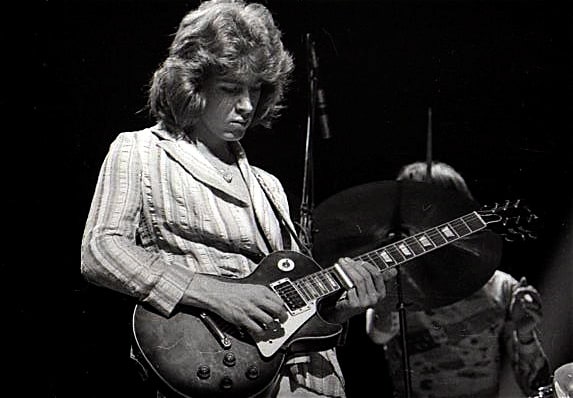
Table of Contents
Early Life and Musical Origins
Mick Taylor was born into a working class family in 1949 and grew up in Hatfield.
He first picked up the guitar at the age of nine after being inspired by his uncle.
His early fascination with the blues led him to spend hours practicing the licks of American masters like B.B. King.
By his mid teens, he was already performing in local bands and gaining a reputation for his precocious skill.
He formed a group called The Gods which featured other future rock stars like Ken Hensley.
The local music scene in the 60s provided the perfect environment for a young player to experiment.
He was largely self taught and developed a keen ear for melody and harmonic structure.
His parents supported his musical ambitions even as he began to drift away from traditional academic pursuits.
A pivotal moment occurred when he attended a concert by John Mayall & the Bluesbreakers.
When the lead guitarist failed to show up, the teenage Taylor reportedly offered to fill in for the set.
This bold move caught the attention of Mayall, who was always looking for fresh talent.
It was the beginning of a professional ascent that would soon lead him to the biggest stages in the world.
Joining the Bluesbreakers
In 1967, John Mayall officially invited the young guitarist to join his band.
He was stepping into very large shoes by replacing the departing Peter Green.
The Bluesbreakers acted as a premier finishing school for elite British guitarists of that era.
During his time with Mayall, he appeared on several influential albums including Crusade.
His work on these recordings showcased a smooth, vibrato heavy style that was deeply rooted in traditional blues.
He toured extensively across Europe and the United States, gaining vital professional experience.
Working under Mayall taught him the discipline required for a touring musician.
He learned how to listen to other players and find the right space within a complex arrangement.
His reputation grew among other musicians who were stunned by his technical proficiency at such a young age.
By 1969, he was looking for new challenges beyond the strict confines of the blues genre.
Fate intervened when a vacancy appeared in one of the most popular bands on the planet.
Mick Taylor and The Rolling Stones
The transition occurred during a tumultuous period for the band following the dismissal of Brian Jones.
John Mayall personally recommended the young virtuoso to Mick Jagger.
He was invited to the studio during the sessions for Let It Bleed.
He contributed guitar to tracks like Country Honk and the epic Live With Me.
His official debut took place at the free concert in Hyde Park in July 1969.
Performing in front of hundreds of thousands of people was a massive jump from the club circuit.
He immediately brought a new sense of discipline and melodic flair to the live performances.
His chemistry with Keith Richards created a weaving guitar style that became the band’s trademark.
The band was moving into a more rock oriented direction, and his lead playing was the perfect engine for that change.
Audiences were captivated by his calm stage presence and explosive instrumental ability.
He was only 20 years old when he became a global superstar.
Technical Brilliance of Mick Taylor
The technical brilliance of Mick Taylor often focused on his mastery of the Gibson Les Paul and the SG.
He possessed a signature “singing” tone that was achieved through precise finger vibrato and sustain.
Unlike many rock guitarists who relied on speed, he prioritized note selection and phrasing.
His slide guitar work was particularly revolutionary for the band’s studio sound.
You can hear this expertise on the hit single Brown Sugar.
He also added a layer of country and gospel influence to the band’s increasingly diverse repertoire.
His ability to improvise long, coherent solos became a highlight of their live shows in the early 70s.
The track Sympathy for the Devil took on new life during this era thanks to his inventive lead lines.
He worked closely with Charlie Watts and Bill Wyman to create a formidable rhythm section.
His contributions were not just limited to lead guitar as he often played bass or acoustic guitar in the studio.
Many musicians consider his era to be the most musically accomplished in the group’s long history.
Exile on Main St and the Peak Era
The recording sessions for Exile on Main St in the south of France are legendary for their chaos.
He played a critical role in shaping the dense, murky sound of that double album.
His work on songs like Tumbling Dice showcased his ability to blend into a complex mix.
The 1972 North American tour that followed is often cited as the greatest rock tour of all time.
The band’s live energy reached a fever pitch with his soaring solos on Gimme Shelter.
He provided the emotional core for the ballad Wild Horses with his delicate playing.
As the band moved into 1973, they released Goats Head Soup which featured the hit Angie.
His influence was everywhere, from the funk of Jumpin’ Jack Flash live versions to the soul of their new material.
However, the grueling schedule and the heavy drug use surrounding the band began to take a toll.
He started to feel like an outsider despite his vital musical contributions.
A growing dispute over songwriting credits also created friction between him and the Glimmer Twins.
He felt that his melodies and arrangements were not being properly recognized.
The Departure of Mick Taylor
The departure of Mick Taylor from the band in December 1974 shocked the music world.
He made the announcement during a party, catching even his bandmates by surprise.
Various reasons have been cited, ranging from personal health to a desire for creative independence.
He famously stated that he needed to leave to save his own life from the excesses of the road.
The band eventually replaced him with Ronnie Wood who brought a different energy.
The albums that followed, such as Black and Blue, featured a more stripped back approach.
He spent the next few years exploring different musical avenues away from the spotlight.
His exit marked the end of an era that many fans still view as the band’s artistic zenith.
The intricate lead work seen on tracks like Paint It Black during live sets was missed by some critics.
He remained professional and never publicly attacked his former bandmates in the press.
His decision to quit at the height of their fame remains one of rock’s greatest “what if” scenarios.
The Mick Taylor Solo Journey
The Mick Taylor solo career began in earnest with the release of his self titled debut album in 1979.
The record displayed his jazz and latin influences alongside his blues roots.
He joined forces with Jack Bruce for a short lived but musically brilliant power trio.
In the 80s, he was recruited by Bob Dylan for the album Infidels.
His work with Dylan was highly praised for bringing a modern rock edge to the legendary songwriter’s music.
He continued to release solo projects and live albums throughout the 90s.
Fans can follow his current updates on his official Facebook page.
He often performed in intimate venues where his guitar playing could take center stage.
Over the years, he has guest appeared with numerous artists, always adding his signature touch.
His solo work may not have reached the same commercial heights as his previous band, but it remains artistically pure.
He has always prioritized the music over the machinery of the industry.
Recognition and Legacy
In 1989, he was inducted into the Rock and Roll Hall of Fame as a member of the Stones.
His legacy is often discussed in documentaries such as Mick TAYLOR: The DARK TRUTH About His STORY.
New generations of guitarists continue to study his solos to understand the perfect balance of technique and soul.
In 2012, he reunited with the band for their 50th anniversary tour to great acclaim.
Seeing him on stage again playing Midnight Rambler was a profound moment for longtime fans.
His influence can still be heard in the playing of modern blues-rock revivalists.
The band’s recent work on Hackney Diamonds continues the tradition of guitar excellence they established decades ago.
The single Angry reminds us of the power of the riff-driven rock they pioneered.
Even as members like Steve Jordan and Darryl Jones carry the torch, his era remains a benchmark.
He will always be remembered for providing the “golden touch” to the world’s most famous rock band.
The musical contributions of Mick Taylor remain a cornerstone of classic rock history.
Essential Discography
- Sticky Fingers (1971) – A masterpiece featuring some of his most iconic slide guitar and lead work.
- Exile on Main St (1972) – The sprawling double album that defines the grit and soul of the early 70s.
- Let It Bleed (1969) – His debut contributions to the band including the country-flavored Country Honk.
- Beggars Banquet (1968) – While he joined just after this, the band’s Beggars Banquet direction set the stage for his arrival.
- Goats Head Soup (1973) – An album that showcased his melodic sensitivity on ballads like Winter.
- It’s Only Rock ‘n Roll (1974) – His final studio album with the group before his departure.
- Mick Taylor (1979) – His debut solo effort exploring blues, jazz, and rock fusion.
- Infidels (1983) – A standout collaboration where he provided lead guitar for Bob Dylan.
As an Amazon affiliate I make a small commission on any purchases made through this link at no extra cost to you. I thank you in advance.
FAQ
Why did he leave the band?
He left primarily due to a desire for creative independence and to escape the unhealthy lifestyle surrounding the group at the time.
Which albums did he play on?
His main studio albums include Let It Bleed, Sticky Fingers, Exile on Main St, Goats Head Soup, and It’s Only Rock ‘n Roll.
Is he still playing music?
Yes, he continues to perform and collaborate, though he maintains a much lower profile than in his stadium rock days.
Did he get songwriting credits?
This was a major point of contention, as he felt his significant contributions to songs like Time Waits for No One went uncredited.
Where can I see his best work?
You can watch his incredible talent in videos like Mick TAYLOR’s Finest FAREWELL Solo To The STONES.