

Neil Young Freedom Album: The 1989 Comeback That Defined Alternative Rock
The Neil Young Freedom album marked a dramatic return to form after a turbulent decade of experimentation. Released on October 2, 1989, this collection brought Neil Young back to the raw, guitar-driven sound that had defined his early career while simultaneously pointing toward the alternative rock explosion of the 1990s. The album’s lead track, “Rockin’ in the Free World,” became both a political anthem and a blueprint for the grunge movement that would soon dominate rock music.
- Artist: Neil Young
- Album: Freedom
- Released: October 2, 1989
- Label: Reprise Records
- Producer: Neil Young, Niko Bolas
- Recorded: 1988-1989, Various locations
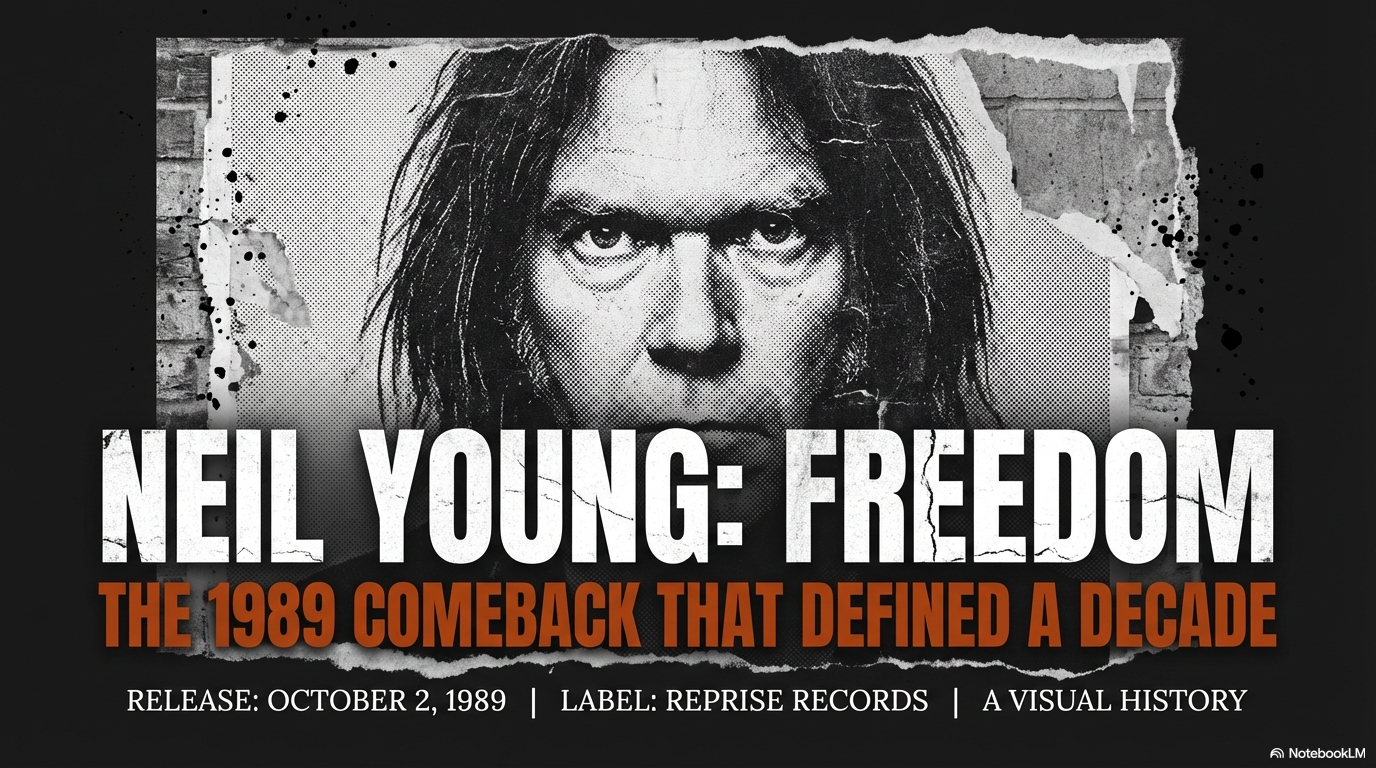
Own This Classic Album
Experience the album that redefined Neil Young’s career and influenced a generation of alternative rockers. Get Freedom on Amazon and hear the raw power that earned Young the title Godfather of Grunge.
Album Overview & Release Context
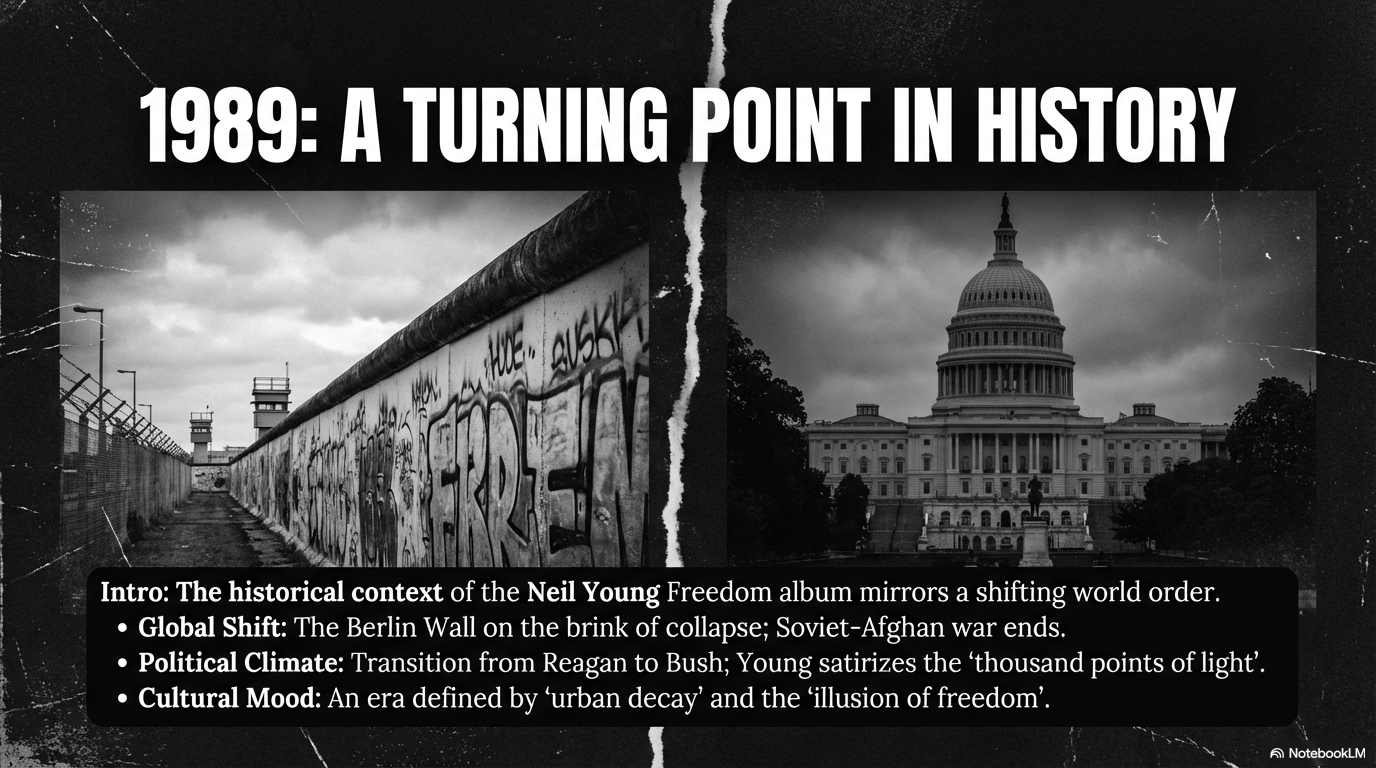
Freedom arrived at a pivotal moment in rock history. The year 1989 saw the Berlin Wall fall, communism crumble across Eastern Europe, and the cultural landscape shift dramatically. Neil Young chose this moment to release his most focused and powerful album in over a decade.
After spending the 1980s at Geffen Records experimenting with electronic music, rockabilly, and R&B, Young returned to Reprise Records determined to reclaim his artistic identity. Freedom represented more than just a label change. It marked a conscious decision to embrace both his folk roots and his electric guitar fury.
The album drew from several unfinished projects and unreleased tracks dating back to the mid-1970s. Young assembled these disparate pieces into a cohesive statement that balanced acoustic intimacy with raw electric power. This approach echoed his landmark Rust Never Sleeps album, which had similarly bridged his two musical personalities.
Critics and fans immediately recognized Freedom as a return to the Neil Young they knew and loved. The album peaked at number 35 on the Billboard 200 chart and eventually achieved platinum certification. More importantly, it reestablished Young as a vital creative force whose best work was not behind him.
Why This Album Matters
The Neil Young Freedom album stands as one of the most significant comebacks in rock history. After a decade of commercial and critical disappointments, Young delivered an album that not only satisfied longtime fans but also influenced an entire generation of alternative rock musicians.
Freedom bridged the gap between classic rock and the emerging alternative scene. Bands like Pearl Jam, Nirvana, and Sonic Youth cited Young’s raw, feedback-laden guitar work on this album as a direct influence. The juxtaposition of delicate acoustic numbers and crushing electric anthems became a template for 1990s alternative rock.
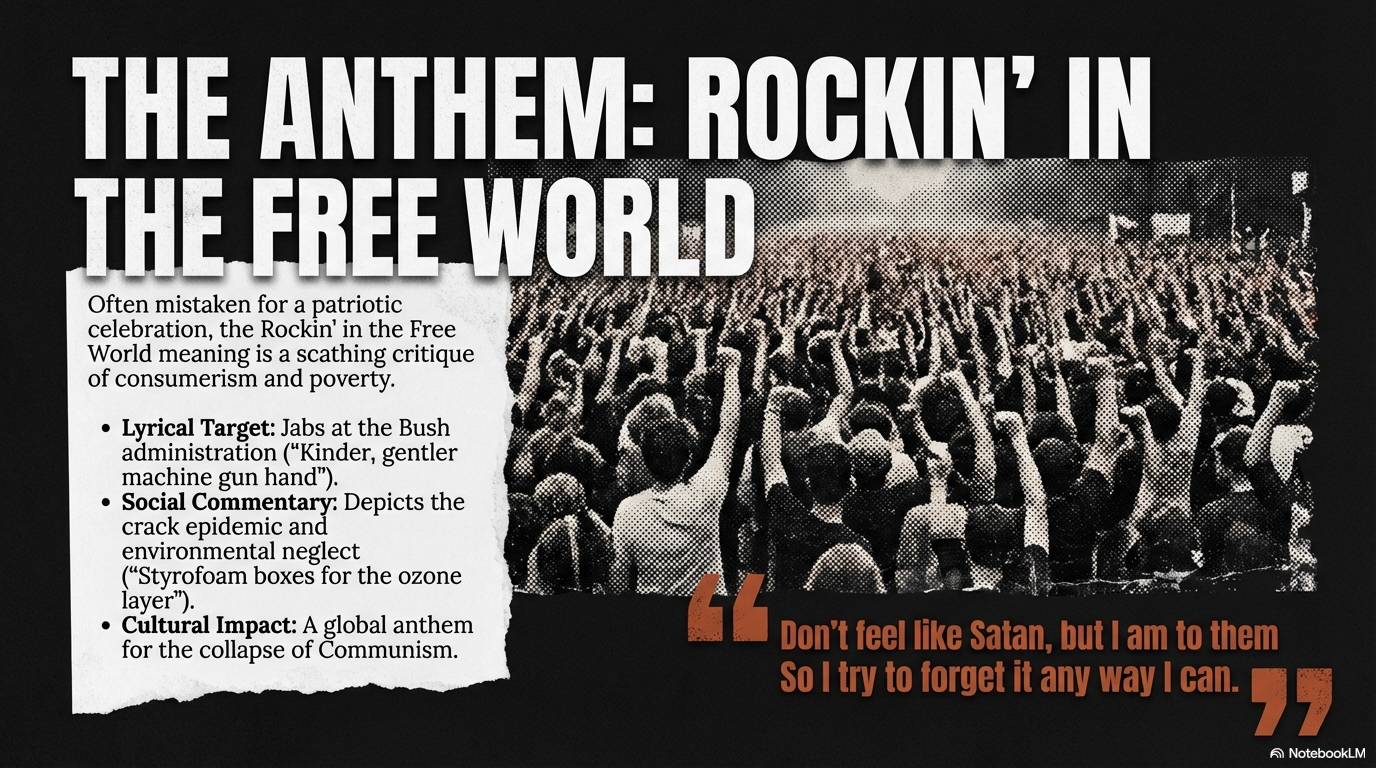
The album’s political and social commentary resonated far beyond the music community. “Rockin’ in the Free World” became an anthem for both celebration and protest, adopted by movements across the political spectrum despite Young’s clear leftist intentions. This universality speaks to the song’s power to capture a moment of historical change.
Escaping the Geffen Years
Neil Young’s relationship with Geffen Records from 1982 to 1988 remains one of the strangest chapters in his career. David Geffen signed Young expecting commercial rock albums similar to Harvest. Instead, Young delivered a series of deliberately uncommercial experiments that baffled audiences and executives alike.
Trans featured vocoder-processed vocals and synthesizers inspired by Young’s attempts to communicate with his non-verbal son. Everybody’s Rockin’ was a rockabilly throwback that Geffen found so unmarketable they sued Young for delivering “unrepresentative” material. Old Ways embraced pure country music, while Landing on Water and Life featured slick 1980s production that pleased neither Young’s fans nor his label.
The legal tension reached its peak when Geffen sued Young for $3.3 million, claiming he had intentionally made uncommercial records to escape his contract. Young countersued, and the parties eventually settled. The experience left Young eager to return to Reprise Records, where he had recorded his most successful work.
This Note’s for You, released in 1988, was Young’s first album back on Reprise. While it featured a horn section and tackled corporate sponsorship in rock music, it did not fully satisfy fans craving a return to Young’s classic sound. Freedom completed that journey.
Recording Sessions & Production
The Freedom sessions took place across multiple locations between 1988 and 1989. Unlike many albums of the era, Freedom avoided slick studio production in favor of a raw, immediate sound. Neil Young and co-producer Niko Bolas deliberately sought to capture performances with minimal overdubs.
Several tracks originated from Young’s home studio, where he recorded acoustic performances with just voice and guitar. These sessions produced “Hangin’ on a Limb” and “The Ways of Love,” both featuring Linda Ronstadt on harmony vocals. The intimate setting allowed for a warmth and spontaneity that larger studios often discourage.
The electric tracks required different treatment. Young reunited with members of Crazy Horse for some sessions, though the album credits “The Restless” as his backing band. The live-in-studio approach created the raw energy that defines tracks like the electric version of “Rockin’ in the Free World” and “Eldorado.”
Young’s production philosophy emphasized capturing genuine moments over technical perfection. He allowed feedback, distortion, and rough edges to remain in the final mix. This approach proved influential for alternative rock producers who would embrace similar aesthetics throughout the 1990s.
Musicians & Personnel
Freedom featured a rotating cast of musicians reflecting the diverse musical styles on the album. The core band, credited as “The Restless,” included Frank Sampedro on guitar, Chad Cromwell on drums, and Rick Rosas on bass. These musicians provided the foundation for the album’s electric tracks.
Linda Ronstadt’s contributions proved crucial to the album’s acoustic moments. Her harmony vocals on “Hangin’ on a Limb” and “The Ways of Love” added depth and emotional resonance. Ronstadt and Young had previously collaborated, and their musical chemistry remained strong.
The following musicians contributed to Freedom:
- Frank “Poncho” Sampedro: Guitar
- Chad Cromwell: Drums
- Rick Rosas: Bass
- Linda Ronstadt: Harmony vocals
- Steve Lawrence: Tenor saxophone on “Crime in the City”
- Ben Keith: Pedal steel guitar
Niko Bolas served as co-producer and engineer, helping Young achieve the sonic textures he envisioned. Bolas had worked with Young on previous projects and understood his preference for spontaneity over perfection.
Track-by-Track Highlights
The Freedom tracklist showcases Neil Young’s ability to move seamlessly between musical styles while maintaining a cohesive artistic vision. Each song contributes to the album’s exploration of personal and political freedom.
Complete Track Listing:
- “Rockin’ in the Free World” (Acoustic)
- “Crime in the City (Sixty to Zero Part 1)”
- “Don’t Cry”
- “Hangin’ on a Limb”
- “Eldorado”
- “The Ways of Love”
- “Someday”
- “On Broadway”
- “Wrecking Ball”
- “No More”
- “Too Far Gone”
- “Rockin’ in the Free World” (Electric)
“Crime in the City” stands as the album’s longest and most ambitious composition. Clocking in at nearly nine minutes, the song presents a cinematic portrait of urban America. Steve Lawrence’s saxophone work creates a noir atmosphere while Young’s verses paint vivid pictures of corruption and decay.
The acoustic country numbers featuring Linda Ronstadt offer a counterpoint to the album’s harder-edged material. “Hangin’ on a Limb” showcases Young’s melodic sensibility, while “The Ways of Love” explores relationship dynamics with gentle wisdom. These tracks recall the intimate moments on After the Gold Rush.
“Eldorado” emerged from sessions for a Japan and Australia-only EP. The track features jagged guitar work and heavy distortion that would become characteristic of grunge. Young’s willingness to embrace noise and dissonance influenced countless alternative rock guitarists.
“On Broadway” transforms the Drifters classic into something darker and more desperate. Young’s version strips away the optimism of the original, replacing it with a grim vision of urban poverty and the crack epidemic. The arrangement builds from sparse acoustic strumming to a full electric assault.
“Too Far Gone” dates back to the mid-1970s, originally intended for the Stars ‘n Bars album. Young’s vault of unreleased material provided perfect songs for Freedom’s themes of loss and redemption. The track demonstrates his ability to recognize when older material fits a current project.
The “Rockin’ in the Free World” Anthem
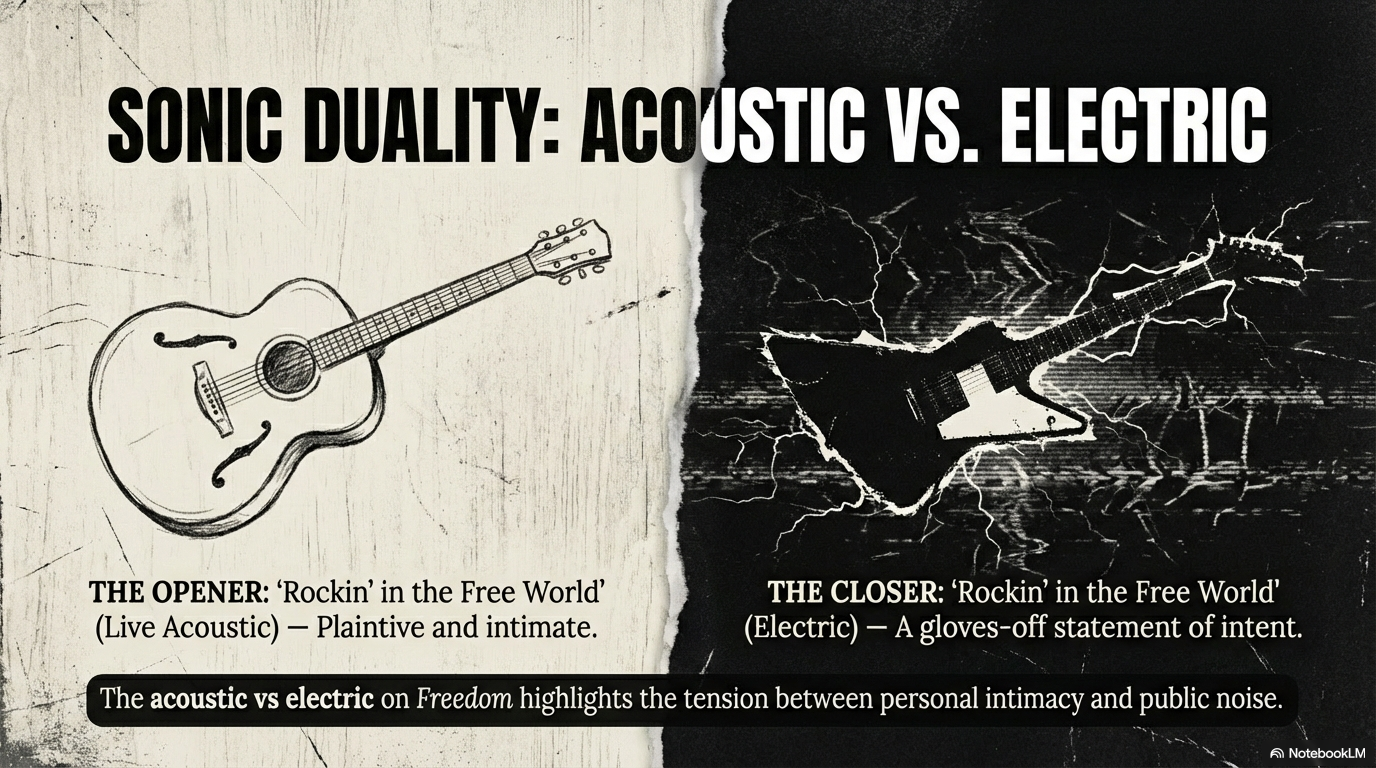
The decision to bookend the Neil Young Freedom album with acoustic and electric versions of “Rockin’ in the Free World” proved genius. This approach had worked brilliantly on Rust Never Sleeps with “My My, Hey Hey,” and Young recognized the power of presenting the same song in contrasting arrangements.
The song originated from a conversation between Young and Frank Sampedro during a tour. A planned cultural exchange with Russia had collapsed, inspiring Young to write about freedom’s complexities. The lyrics emerged as a sardonic critique of George H.W. Bush’s presidency, specifically mocking his “thousand points of light” campaign rhetoric.
Young’s lyrics paint a stark picture of American society. He describes people sleeping in their shoes, children who never attend school, and a kinder, gentler machine gun hand. The chorus “Keep on rockin’ in the free world” functions as both celebration and bitter irony, acknowledging freedom’s promise while exposing its failures.
The acoustic version opens the album with stark intimacy. Young’s voice and guitar deliver the message without adornment, forcing listeners to confront the lyrics directly. This vulnerability makes the eventual electric explosion more powerful.
The electric version closes the album with raw fury. Distorted guitars, pounding drums, and Young’s impassioned vocals transform the same song into a arena rock anthem. The contrast perfectly captures the dual nature of freedom itself: both personal and political, quiet and loud, contemplative and explosive.
Historical timing amplified the song’s impact. Released shortly before the Berlin Wall fell in November 1989, “Rockin’ in the Free World” became associated with the collapse of communism. Young performed it on Saturday Night Live in September 1989, creating one of that show’s most memorable musical moments.
Singles & Chart Performance
“Rockin’ in the Free World” was released as the album’s lead single. It reached number two on the Billboard Mainstream Rock chart and number 26 in the United Kingdom. The song’s success far exceeded typical album tracks from artists with Young’s commercial profile.
The Freedom album itself peaked at number 35 on the Billboard 200 chart. While not matching the commercial heights of Harvest, this performance represented a significant improvement over Young’s 1980s releases. More importantly, the album demonstrated staying power, eventually achieving platinum certification.
Sales data does not fully capture the album’s cultural impact. Freedom’s influence extended beyond traditional rock audiences, reaching alternative and college radio stations that had largely ignored Young’s 1980s work. The album introduced Young to younger listeners who would become core supporters throughout the 1990s.
MTV provided limited support, as the network focused primarily on newer artists and slicker production. However, the “Rockin’ in the Free World” video received some airplay, particularly on the network’s alternative programming. Young’s performance on Saturday Night Live proved more influential in reaching mainstream audiences.
Critical Reception
Music critics greeted the Neil Young Freedom album with enthusiasm and relief. After a decade of mixed reviews and commercial disappointments, reviewers celebrated Young’s return to form. Rolling Stone praised the album’s raw energy and political edge, calling it his strongest work since Rust Never Sleeps.
The Village Voice recognized Freedom as a bridge between classic rock and the emerging alternative scene. Critics noted how Young had maintained artistic integrity throughout his experimental period while still managing to create music that resonated with younger audiences. This ability to remain relevant without chasing trends earned widespread respect.
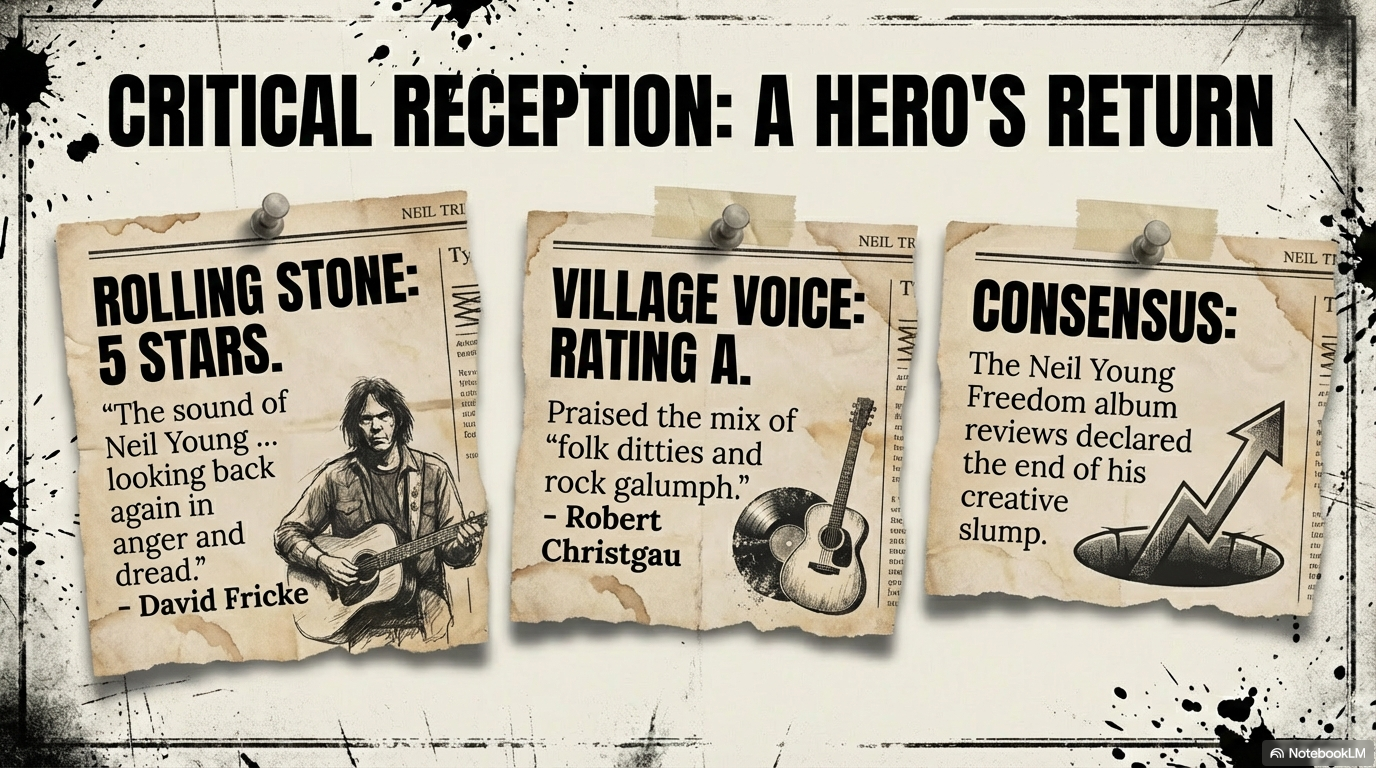
Some reviewers questioned the album’s eclecticism, arguing that the stylistic diversity prevented Freedom from achieving complete coherence. However, most critics viewed this variety as a strength, demonstrating Young’s refusal to be confined to a single approach. The contrast between acoustic and electric tracks emphasized themes of duality that ran throughout the album.
Retrospective assessments have been even more favorable. In 2001, a ranking of the most important albums in alternative music history placed Freedom at number one. Critics argued it was the first true alternative album, predating the mainstream grunge explosion by several years. This recognition cemented Young’s status as the Godfather of Grunge.
Contemporary musicians have consistently praised Freedom’s influence. Eddie Vedder of Pearl Jam has called it a blueprint for his band’s approach. Kurt Cobain cited Young’s willingness to embrace feedback and distortion as liberating. These endorsements from alternative rock’s most important figures validate the album’s historical significance.
Musical Style & Themes
The Neil Young Freedom album balances multiple musical approaches within a unified artistic vision. The acoustic tracks draw from country, folk, and traditional rock ballad structures. Songs like “Hangin’ on a Limb” feature gentle melodies, close harmonies, and restrained instrumentation that showcases Young’s songwriting craft.
The electric material embraces noise, distortion, and raw energy. Young’s guitar work on tracks like “Eldorado” and the electric “Rockin’ in the Free World” features heavy feedback and sustained notes that would become hallmarks of alternative rock. This approach connected directly to his earlier work with Tonight’s the Night, another album that prioritized emotional intensity over technical polish.
Lyrically, Freedom addresses political and social themes with unusual directness for Young. While he had always included political commentary in his work, these songs tackled contemporary issues with specific references to current events. The critique of Bush administration policies in “Rockin’ in the Free World” marked a new level of explicit political engagement.
The album also explores personal themes of redemption and renewal. After a decade of artistic wandering, Young’s lyrics express determination to reclaim his creative voice. Songs about hanging on and pushing forward reflect his personal journey back to musical authenticity.
Musical influences range from Bob Dylan’s folk protest songs to the raw garage rock of the 1960s. Young synthesizes these influences with his own distinctive voice, creating music that honors tradition while pushing forward. This balance between respect for the past and innovation for the future characterizes his entire career.
Album Artwork & Packaging
The Freedom album cover features a stark black and white portrait of Neil Young. The image, shot by photographer Joel Bernstein, presents Young in profile against a dark background. His weathered face and intense expression convey both vulnerability and determination.
This minimalist approach contrasted sharply with the elaborate cover art common in late 1980s rock albums. Young rejected the era’s preference for slick production design, choosing instead an image that emphasized authenticity and raw emotion. The black and white photography reinforced the album’s themes of clarity and directness.
Inside the original LP and CD packaging, additional photographs and lyrics provided context for the songs. The physical presentation emphasized the album as a complete artistic statement rather than a collection of singles. Young has always valued the album format, believing songs gain meaning from their placement within a larger sequence.
Original vinyl pressings of Freedom have become collector’s items, particularly first pressings on Reprise Records. The album was released on LP, cassette, and CD simultaneously, with each format offering slight variations in sound quality and packaging details. Audiophiles particularly prize the original vinyl pressing for its warm, analog sound.
Legacy & Influence
The Neil Young Freedom album’s influence on alternative rock cannot be overstated. When Pearl Jam, Nirvana, and other grunge bands exploded in the early 1990s, they consistently cited Young as a primary influence. His willingness to embrace feedback, distortion, and raw emotion provided a template for the alternative rock movement.
Pearl Jam’s relationship with Young proved particularly significant. The band frequently covered “Rockin’ in the Free World” in concert and eventually collaborated with Young at the 1993 MTV Video Music Awards. Eddie Vedder has called Young one of his greatest heroes, praising his integrity and artistic fearlessness. Young returned the compliment by recording the Mirror Ball album with Pearl Jam in 1995.
Nirvana’s Kurt Cobain quoted Young’s famous line “it’s better to burn out than to fade away” in his suicide note, tragically connecting Young’s music to one of rock’s greatest losses. This association complicated the legacy of Young’s loud-soft dynamics and themes of intensity versus fragility.
The album demonstrated that established artists could remain relevant without compromising their vision or chasing trends. Young’s refusal to adapt his sound to fit 1980s commercial expectations initially hurt his career but ultimately preserved his artistic credibility. Freedom showed that authenticity and commercial success were not mutually exclusive.
Young continues to tour and record prolifically, maintaining a schedule that would exhaust performers half his age. His ongoing tour schedule proves the enduring appeal of his music. Freedom remains a setlist staple, with “Rockin’ in the Free World” serving as a powerful concert closer.
Political Controversy & Legal Battles
In 2015, Donald Trump began using “Rockin’ in the Free World” at campaign rallies, including his presidential campaign announcement at Trump Tower. This unauthorized use created an immediate conflict with Neil Young, who had endorsed Bernie Sanders in the Democratic primary. Young’s management issued a statement making clear the campaign did not have permission to use the song.
The controversy highlighted complex issues surrounding performance rights and political campaigns. While campaigns can technically use recorded music by paying performance rights organizations, artists maintain some control through licensing agreements. Young’s objection rested on both legal grounds and personal opposition to Trump’s politics and policies.
In August 2020, Young filed a copyright infringement lawsuit against the Trump campaign, stating he could not allow his music to be used as a theme for what he described as a divisive, un-American campaign. The lawsuit sought to prevent further use of not just “Rockin’ in the Free World” but also “Devil’s Sidewalk.”
The case raised important questions about artistic integrity and political association. Young argued that unauthorized use of his music created a false impression of endorsement, potentially damaging his reputation with fans who opposed Trump. Studies on brand association suggest such concerns have merit, as unauthorized political use can create “tarnishment” effects.
The lawsuit was eventually dismissed in December 2020 after Trump lost the election, with Young’s legal team stating the issue had become moot. However, the case sparked broader discussions about artists’ rights to control how their work is used in political contexts. Other musicians, including Bruce Springsteen and the Rolling Stones, faced similar unauthorized use of their songs by the Trump campaign.
Young’s willingness to take legal action demonstrated his commitment to controlling his artistic legacy. Throughout his career, he has fiercely protected his creative output and resisted commercial exploitation of his music. The Trump controversy reinforced Young’s reputation as an artist who prioritizes principles over commercial considerations.
Conclusion
The Neil Young Freedom album stands as a testament to artistic resilience and creative renewal. After a decade of experimentation that alienated many fans, Young returned with a collection that honored his past while pointing toward rock music’s future. The album’s raw energy and political engagement influenced an entire generation of alternative rock musicians.
Freedom demonstrated that established artists need not fade into irrelevance or compromise their vision to remain vital. Young’s refusal to chase commercial trends during his experimental period preserved his artistic integrity, allowing him to create authentic work when inspiration struck. The album’s success validated his patient approach to creativity.
More than three decades after its release, Freedom continues to resonate with new listeners. The political themes remain sadly relevant, while the musical approach still sounds fresh and urgent. Songs like “Rockin’ in the Free World” have transcended their original context to become timeless expressions of hope and frustration.
The Neil Young Freedom album proves that great art emerges from truth and commitment rather than calculation and compromise. Young’s journey through his lost decade and back to creative vitality offers lessons for any artist struggling to maintain integrity in a commercial world. Freedom remains both a powerful listening experience and an inspiring example of artistic perseverance.