

Red Rose Speedway by Paul McCartney and Wings: The Album That Launched a Hit Streak
Red Rose Speedway stands as a pivotal turning point in Paul McCartney’s post-Beatles career, marking the moment when Wings transformed from a struggling startup band into a chart-topping force. Released on April 30, 1973, this album became Wings’ first number one on the Billboard chart and launched a remarkable streak of four consecutive chart-topping albums that would define the mid-1970s.
The album spawned “My Love,” a romantic ballad that topped the US charts for four weeks and featured an unforgettable guitar solo from Henry McCullough. It achieved Gold certification from the RIAA and peaked at number 5 in the UK, proving that McCartney could build a successful band beyond the Beatles’ shadow.
If you’re exploring Paul McCartney’s solo catalog or discovering Wings for the first time, Red Rose Speedway offers a fascinating glimpse into a transitional period where raw talent met commercial ambition. The album captures McCartney experimenting with his sound, balancing pop craftsmanship with quirky experimentalism.
Originally conceived as a sprawling double album showcasing Wings as a genuine band, Red Rose Speedway was condensed to a single LP at EMI’s insistence, concerned about the lukewarm sales of their debut Wild Life. This decision marked the beginning of McCartney’s shift from band democracy to creative control.
More than five decades later, the 2018 Archive Collection deluxe reissue revealed what might have been, reconstructing the original double album vision complete with unreleased tracks, alternate mixes, and the raw energy of their 1972 European tour performances.
⏰ Experience Wings’ Breakthrough Album
Discover the chart-topping album that launched Wings into superstardom with “My Love” and kicked off a historic run of #1 albums. Limited edition vinyl pressings available now!
📋 Table of Contents [+]
Red Rose Speedway Overview: Context and Creation
When Paul McCartney and Wings entered Olympic Studios in London in March 1972, they were at a crossroads. Their debut album Wild Life had received tepid reviews and modest sales, while their first two singles flopped commercially. Linda McCartney later described this period as “a terribly unsure period” for the band, with Paul still searching for his post-Beatles artistic direction as he approached his 30th birthday.
The circumstances surrounding Red Rose Speedway reflected McCartney’s determination to establish Wings as more than just his backup band. He expanded the group to a five-piece by adding Irish guitarist Henry McCullough, hoping to develop a fuller sound and genuine band chemistry. Before recording began, Wings embarked on an impromptu tour of British universities, playing small venues to hone their live sound away from media scrutiny.
The album initially took shape as an ambitious double LP project. McCartney accumulated a vast collection of songs throughout 1972, including unreleased tracks from his 1971 Ram sessions like “Get on the Right Thing” and “Little Lamb Dragonfly.” This expansive vision aimed to showcase Wings as a legitimate band capable of sustained creative output, following the double album tradition that signaled artistic maturity in the vinyl era.
However, EMI had other plans. Concerned about the commercial performance of Wild Life and mindful of the poor sales of Wings’ early singles including the BBC-banned “Give Ireland Back to the Irish,” the label insisted on condensing the material to a single LP. They believed the quality wasn’t consistent enough to justify a double album and wanted a more commercial, less expensive product. The decision frustrated both Denny Laine and Henry McCullough, who felt the original double album better represented the band’s capabilities.
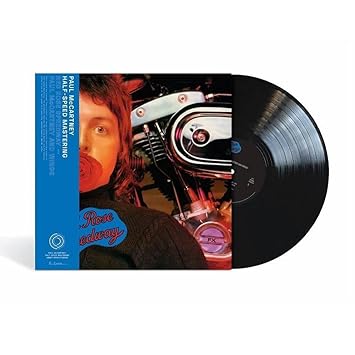
The name change from simply “Wings” to “Paul McCartney and Wings” signaled another compromise. Capitol Records and EMI believed the public’s unfamiliarity with the band name had hurt Wild Life’s sales. In the US, Capitol even added a blue sticker to the album cover identifying McCartney and listing songs, worried that the iconic red rose obscuring his face might make him unrecognizable to record buyers.
Recording Sessions and Production
Recording for Red Rose Speedway took place across five London studios throughout 1972, including Olympic Sound Studios, Morgan Studios, Trident Studios, AIR Studios, Island Studios, and Abbey Road Studios. Sessions began at Olympic between March 6-30, initially with renowned producer Glyn Johns at the helm, but this collaboration quickly soured in spectacular fashion.
At their first session, McCartney asked Johns to treat him as just “the bass player in the band” rather than as Paul McCartney. When Johns took him at his word and treated him like any other musician, McCartney took offense. Johns, who typically worked with established acts, didn’t believe Wings constituted a genuine band and made little effort to hide his skepticism. Author Howard Sounes recounts Johns eventually reading a newspaper in the control room while the group smoked marijuana and jammed aimlessly in the studio.
After Johns departed, McCartney took full production control, a decision that would define the rest of Wings’ career. Recording continued sporadically through the year, with significant sessions occurring between September and October 1972 at Abbey Road and Olympic. Alan Parsons engineered most tracks, bringing technical expertise that helped realize McCartney’s increasingly ambitious arrangements.
The sessions captured a band finding its footing. McCartney played bass, piano, Mellotron, Moog synthesizers, and various other instruments, demonstrating his multi-instrumental prowess. The recording approach varied wildly from track to track, some featuring tight arrangements while others embraced a looser, more experimental feel. The closing medley alone consumed over 11 minutes, harking back to the Abbey Road suite but with decidedly different results.
Band Dynamics During Creation
The band dynamics during Red Rose Speedway’s creation revealed the fundamental tension that would plague Wings throughout their existence. McCartney wanted the creative freedom he’d enjoyed on his solo albums while simultaneously craving the camaraderie and validation of being in a band. This push-pull created an environment where other members contributed but rarely felt like equal partners.
Denny Laine made his first significant songwriting contribution to a Wings album with “Little Lamb Dragonfly,” co-written with McCartney. The song, inspired by a wounded lamb on McCartney’s Scottish farm, showcased the gentler side of their collaboration with intricate harmonies and delicate 12-string acoustic arrangements. Laine also provided strong vocal harmonies throughout the album and played multiple instruments including guitar, bass, and harmonica.
Henry McCullough’s contributions proved crucial, particularly his improvised guitar solo on “My Love.” The Northern Ireland guitarist recalled being “half terrified, half excited” when recording the solo in one spontaneous take. His Harrison-esque phrasing left McCartney temporarily speechless, creating one of the album’s most memorable moments. McCullough also contributed to the album’s heavier tracks like “Get on the Right Thing,” adding necessary rock edge to McCartney’s pop sensibilities.
Drummer Denny Seiwell provided solid, inventive percussion throughout, particularly shining on the experimental instrumental “Loup (1st Indian On The Moon)” with its prominent drum work. Linda McCartney continued her role as multi-instrumentalist and backing vocalist, playing keyboards, organs, electric harpsichord, and percussion. While critics often dismissed her contributions, she provided emotional support during this uncertain period and contributed to the band’s unique group vocal sound.
However, the condensing of the double album to a single LP created disappointment within the ranks. Both McCullough and Seiwell left Wings shortly after the album’s completion, marking the end of this original lineup. Their departure stemmed partly from frustration over the final song selection and partly from the realization that Wings would always remain McCartney’s vehicle rather than a true democracy.
💡 Did You Know?
The original vinyl pressing of Red Rose Speedway featured a 12-page booklet stapled into the gatefold sleeve with artwork by pop artist Eduardo Paolozzi. Even more touching, the back cover included a Braille message reading “We Love You Baby,” specifically meant for Stevie Wonder. The iconic cover photograph, shot on the roof of the Sunday Times newspaper building, depicted McCartney with a red rose in his mouth standing beside a Harley-Davidson motorcycle, perfectly capturing the album’s blend of romance and rock rebellion.
Track-by-Track Analysis of Red Rose Speedway
The final nine-track, 40-minute album presents a journey through McCartney’s diverse musical interests, from bouncy pop to experimental instrumentals to an ambitious closing medley. The sequencing attempts to balance commercial accessibility with artistic ambition, though the results remain divisive even among hardcore McCartney fans. The album’s sonic journey showcases a band still finding its identity while displaying flashes of the brilliance that would define later Wings albums.
At its core, Red Rose Speedway represents McCartney’s melodic gift in full bloom, even if the overall execution sometimes falters. Songs vary wildly in length and approach, from the sub-two-minute “Single Pigeon” to the sprawling 11-minute closing medley. This variety gives the album an almost sketchbook quality, as if McCartney was testing different ideas to see what resonated.
Standout Tracks and Hidden Gems
Track 1: “Big Barn Bed” opens the album with an upbeat, country-tinged rocker that immediately establishes a lighter tone than Wild Life. Clocking in at 3:49, the song features McCartney’s signature melodic bass work and showcases the full band arrangement. While not revolutionary, it’s eminently hummable and sets expectations for the album’s whimsical approach. The lyrics about rural living reflected McCartney’s contentment with farm life in Scotland, a recurring theme throughout the Wings era.
Track 2: “My Love” became the album’s centerpiece and biggest commercial triumph. This 4:07 ballad written for Linda topped the US charts for four weeks and reached number 9 in the UK. What could have been overly saccharine is elevated by McCartney’s sincere vocal delivery and especially by Henry McCullough’s soaring guitar solo, which channels George Harrison’s lyrical phrasing. The orchestral arrangement and gentle production make it one of McCartney’s most successful post-Beatles ballads, covered by artists from Cher to Harry Connick Jr.
Track 3: “Get on the Right Thing” injects much-needed rock energy into the album’s first side. Originally recorded during the Ram sessions with session guitarist David Spinozza, this 4:16 track features a driving rhythm and harder edge that contrasts sharply with “My Love.” The song demonstrates McCartney’s ability to rock when he chose to, though it lacks the raw power of his best Beatles rockers.
Track 4: “One More Kiss” delivers well-crafted pop in just 2:29. This brief but effective song showcases McCartney’s gift for melody and hooks, even if the lyrics remain fairly lightweight. It’s the kind of effortlessly catchy composition that made McCartney famous, though it doesn’t break new ground.
Track 5: “Little Lamb Dragonfly” stands as one of the album’s artistic high points. At 6:21, this Laine-McCartney collaboration features gorgeous 12-string acoustic guitar, complex melodic structures, and genuinely affecting harmonies. Inspired by a wounded lamb on McCartney’s farm, the song’s gentle lullaby quality and orchestral arrangement rank it among McCartney’s loveliest 1970s compositions. The lyric “I have no answer for you, little lamb” captures a vulnerability rarely expressed elsewhere on the album.
Track 6: “Single Pigeon” clocks in at just 1:52, making it the album’s shortest track. This brief acoustic piece feels like a fragment or sketch, charming in its simplicity but insubstantial. It exemplifies the album’s weakness for “aimless whimsy” that critics like Robert Christgau derided.
Track 7: “When the Night” provides another uptempo moment at 3:35, featuring strong vocal harmonies and a driving beat. While not one of the album’s standouts, it demonstrates solid songcraft and gives the band a chance to stretch out instrumentally. Some fans consider it an underrated gem in the McCartney catalog.
Track 8: “Loup (1st Indian On The Moon)” represents the album’s most experimental moment. This 4:25 instrumental features prominent drums from Denny Seiwell, synthesizers, and an unconventional structure. While interesting as an artistic statement, the track includes a grating high-pitched repeating sound in its midsection that tests listener patience. It’s the kind of experimental piece that belongs on a double album’s more adventurous side, not condensed into a mainstream single LP.
Track 9: The Medley – “Hold Me Tight / Lazy Dynamite / Hands of Love / Power Cut” closes the album with an 11-minute attempt to recreate the magic of the Abbey Road medley. Unfortunately, it mostly fails to cohere. “Hold Me Tight” opens with promise, “Lazy Dynamite” features amusing brass work from Paul and Linda, and “Hands of Love” offers gentle melody, but “Power Cut” (written during the 1972 miners’ strike) drags the suite to an anticlimactic conclusion. The medley feels like cobbled-together fragments rather than a carefully constructed whole, emblematic of the album’s compromised nature.
Musical Themes and Innovations
Musically, Red Rose Speedway explores diverse territory from pop-rock to experimental instrumentals. McCartney’s arrangements draw from country music, orchestral pop, folk, and even progressive rock influences. The instrumentation is notably more varied than Wild Life, with prominent use of synthesizers, Mellotron, electric harpsichord, and orchestral elements alongside traditional rock instruments.
Lyrically, the album gravitates heavily toward love songs and pastoral themes. McCartney’s contentment with Linda and their rural Scottish lifestyle permeates tracks like “Big Barn Bed” and “Little Lamb Dragonfly.” The focus on romantic and domestic themes left some critics wishing for more substantial subject matter, though fans appreciated the sincerity and warmth. Unlike John Lennon’s politically charged solo work, McCartney chose personal expression over grand statements.
The album represents an evolutionary step in Wings’ development rather than a radical departure. It’s lighter and more polished than Wild Life while lacking the confidence and cohesion that would define Band on the Run just months later. In retrospect, Red Rose Speedway feels like a transitional work, showing glimpses of greatness while revealing the growing pains of a band still figuring out its identity.
One innovation worth noting is McCartney’s increasing comfort with studio technology. The Moog synthesizers and experimental production techniques on tracks like “Loup” showed his willingness to embrace new sonic possibilities. While not always successful, this adventurous spirit would serve him well in later recordings.
Critical Reception and Chart Performance
Red Rose Speedway received decidedly mixed reviews upon its 1973 release, with critics divided between those who appreciated McCartney’s melodic gifts and those who found the album lightweight and insubstantial. The critical reception marked a turning point in how rock journalism approached McCartney’s solo work, though opinions remained far from unanimous.
The album’s commercial success stood in stark contrast to its critical ambivalence. While reviewers debated its artistic merits, fans embraced Red Rose Speedway enthusiastically, making it Wings’ first chart-topping album and validating McCartney’s post-Beatles direction after the disappointment of Wild Life.
Initial Reviews and Contemporary Reactions
Rolling Stone’s review by musician Lenny Kaye proved surprisingly favorable, describing the album as “the most overall heartening McCartney product given to us since the demise of The Beatles.” According to author Michael Frontani, this marked a significant shift from Rolling Stone’s openly hostile stance toward McCartney since 1970. Kaye’s review suggested that critics were no longer requiring “art of consequence” from McCartney, allowing him to be judged on his own melodic terms rather than against Beatles standards.
The New York Times critic Ian Dove acknowledged that McCartney’s work continued to pale beside John Lennon and George Harrison’s solo output but deemed Red Rose Speedway his best album yet. This backhanded compliment typified much of the contemporary coverage, praising the album while implicitly diminishing McCartney’s ambitions compared to his more critically acclaimed former bandmates.
NME’s Tony Tyler took a more positive approach, writing that while the album was “lightweight” and lacked “intellectual posture,” he was “bloody pleased to discover a lightweight record that not only fails to alienate, but actually succeeds in impressing.” Tyler’s review captured the album’s appeal for listeners exhausted by progressive rock’s pretensions and heavy metal’s bombast.
However, harsher critics emerged as well. John Pidgeon of Let It Rock delivered a scathing assessment, describing the album as sounding “as if it was written after a big tea in front of the fire with carpet-slippered feet up; listening to it takes about as much as going ten rounds with a marshmallow fairy.” He compared the album to The Emperor’s New Clothes and lamented that McCartney had no one to “challenge his judgment or kick his arse.”
Village Voice critic Robert Christgau proved even more brutal, deriding McCartney’s reliance on “aimless whimsy” and declaring Red Rose Speedway “quite possibly the worst album ever made by a rock and roller of the first rank.” This hyperbolic condemnation reflected the disappointment some critics felt watching a Beatles genius produce what they considered frivolous pop confections.
Interestingly, McCartney himself expressed ambivalence about the final product. In a 1977 interview, he admitted that he typically waited several months before listening to an album as a whole after its release. Regarding Red Rose Speedway, he confessed he “couldn’t stand” it. Wings’ tour photographer Joe Stevens recalled: “I thought Red Rose was a disaster and so did everyone connected.” Even band members Denny Laine and Henry McCullough expressed disappointment, believing the double album would have been superior and showcased the band better.
Commercial Success and Certifications
Despite the mixed critical reception, Red Rose Speedway achieved impressive commercial success, particularly in the United States. The album peaked at number 1 on the Billboard Top LPs & Tape chart, becoming Wings’ first chart-topping album and launching a historic run that would include Band on the Run, Venus and Mars, Wings at the Speed of Sound, and Wings Over America. The album achieved Gold certification from the Recording Industry Association of America (RIAA), marking a significant commercial rebound from Wild Life’s modest performance.
In the United Kingdom, Red Rose Speedway performed respectably if not spectacularly. The album first charted on May 19, 1973, entering at number 6 before climbing to its peak position of number 5 on May 26, 1973. It remained in the UK Top 100 for 13 weeks during its initial chart run and appeared in the Top 10 for six weeks total. While not matching its US success, this represented a substantial improvement over Wings’ previous efforts and earned British album certification from the British Phonographic Industry.
The album also achieved Canadian certification from Music Canada and performed well internationally. In Australia, it appeared on Billboard’s “From the Music Capitals of the World” chart report in November 1973. Chart positions varied by country, but Red Rose Speedway generally performed strongly across major markets, demonstrating McCartney’s continued global appeal.
The lead single “My Love” proved even more successful commercially. Released in March 1973 backed with the live track “The Mess” (recorded during Wings’ 1972 European tour), “My Love” topped the US Billboard Hot 100 for four weeks, becoming Wings’ first number 1 single in America. In the UK, it reached number 9 on the Singles Chart, providing Wings with their first genuine hit single and radio staple.
“My Love” dominated easy listening and adult contemporary charts worldwide and received extensive radio play. The song became a wedding favorite and has remained a fixture in McCartney’s live performances for decades. Its success validated McCartney’s more romantic, melodic approach and proved that mass audiences still craved his signature ballad style.
The album’s delayed release also impacted its commercial performance. Apple Records gave precedence to two Beatles compilation albums (1962-1966 and 1967-1970), which delayed Red Rose Speedway’s release until April 30, 1973, in the US, with the UK following on May 4. This gap between recording and release meant the album hit stores during peak spring buying season, likely boosting sales.
The 2018 Paul McCartney Archive Collection reissue introduced Red Rose Speedway to a new generation of fans and collectors. This deluxe edition, featuring the reconstructed double album, bonus tracks, rare footage, and extensive liner notes, charted modestly in various countries and received positive reviews for its comprehensive presentation. A limited edition half-speed mastered vinyl reissue for Record Store Day 2023 commemorated the album’s 50th anniversary, demonstrating enduring collector interest.
Cultural Impact and Legacy
Red Rose Speedway occupies a curious position in rock history, neither celebrated as a masterpiece nor dismissed as a failure. Its lasting importance stems less from revolutionary innovation and more from its role as a crucial transitional album that set the stage for Wings’ golden period and demonstrated McCartney’s resilience in building a successful post-Beatles career.
The album proved McCartney could survive and thrive outside the Beatles’ shadow, a fact that wasn’t guaranteed in early 1973. After the commercial disappointment of Wild Life and several banned or ignored singles, Red Rose Speedway’s success validated his decision to form a band rather than pursue a solo career. The number 1 chart position silenced critics who suggested McCartney’s best work was behind him.
Influence on Future Artists and Genres
“My Love” became one of McCartney’s most enduring compositions, covered by an impressive array of artists across multiple genres. Nancy Wilson, Johnny Gill, Cher, Brenda Lee, Corinne Bailey Rae, and Harry Connick Jr. all recorded versions, demonstrating the song’s appeal beyond rock audiences. An instrumental version even appeared in a memorable wedding scene in the TV sitcom Friends, introducing the song to younger generations.
The album’s influence on other artists remained more subtle than overt. Few bands attempted to replicate Red Rose Speedway’s particular blend of whimsy and romance, though its success helped legitimize lighter, more melodic approaches to rock music during an era dominated by progressive rock complexity and hard rock aggression. McCartney’s willingness to be unfashionably romantic and populist gave permission to other artists to follow their own muses rather than chase critical approval.
Henry McCullough’s guitar solo on “My Love” influenced countless guitarists and became a clinic in melodic, lyrical soloing. The improvised, emotional approach contrasted with the increasingly technical guitar work dominating 1970s rock. McCullough demonstrated that sometimes a simple, heartfelt solo could prove more memorable than virtuosic displays.
The album’s experimental moments, particularly “Loup (1st Indian On The Moon),” showed McCartney’s ongoing interest in studio innovation and synthesizer technology. While not as groundbreaking as his work with the Beatles, these explorations kept McCartney relevant as rock music embraced electronic instruments.
Red Rose Speedway’s commercial success without critical acclaim helped establish the pattern that would define much of McCartney’s career. He proved that an artist could maintain massive popularity and creative satisfaction without winning over rock critics, a lesson that influenced how subsequent generations of musicians approached their careers. This disconnect between critical and commercial reception became even more pronounced in McCartney’s 1980s work.
Retrospective Evaluations
Time has been neither particularly kind nor cruel to Red Rose Speedway. Modern critics generally view it as a minor work in McCartney’s catalog, an album with several excellent songs undermined by weaker material and questionable sequencing. It rarely appears on “greatest albums” lists, though “My Love” and “Little Lamb Dragonfly” frequently appear on compilations and best-of playlists.
The 2018 Archive Collection reissue sparked renewed interest and reevaluation. Critics who heard the reconstructed double album version argued that the original conception might have been superior, with the live energy of tracks like “The Mess” and “Best Friend” balancing the studio material’s mellower moments. The bonus content revealed a more adventurous, rock-oriented Wings than the condensed single album suggested.
Contemporary reviewers of the deluxe edition praised the comprehensive presentation and noted that Red Rose Speedway deserved more credit for its melodic craftsmanship and the genuine band chemistry displayed in bonus tracks. Several critics suggested that the album’s reputation suffered unfairly from being overshadowed by Band on the Run’s critical and commercial triumph just seven months later.
Music historians now view Red Rose Speedway as an important stepping stone in Wings’ evolution. The album marked the end of the original lineup with McCullough and Seiwell’s departures but established Wings as commercially viable. Without Red Rose Speedway’s success, McCartney might not have had the confidence or financial resources to create Band on the Run under adverse circumstances in Nigeria.
The album has aged reasonably well, with its emphasis on melody and hooks feeling refreshing compared to some period progressive rock excess. Songs like “Little Lamb Dragonfly” sound timeless, while “My Love” remains a wedding and radio staple. The weaker tracks haven’t improved with age, but they’re harmless rather than embarrassing.
Fan communities remain divided on Red Rose Speedway’s merits. Hardcore McCartney devotees appreciate its place in the Wings story and treasure tracks like “Little Lamb Dragonfly” and “Get on the Right Thing.” Casual fans typically know only “My Love” and may not realize it came from an album that mixed brilliant pop craftsmanship with questionable artistic choices.
Ultimately, Red Rose Speedway deserves recognition as the album that proved Paul McCartney could build a successful band and career beyond the Beatles. While not a masterpiece, it contains enough quality moments to justify its existence and provided the commercial foundation for Wings’ peak period. Its legacy is one of transition, resilience, and the enduring power of a great melody.
📢 Explore More Paul McCartney and Wings
Dive deeper into Wings’ complete discography with our comprehensive guide to all Paul McCartney and Wings albums or explore the latest McCartney news and tour updates.
Production Credits and Album Personnel
Band Members:
Paul McCartney – Lead vocals, backing vocals, bass guitar, piano, electric piano, Mellotron, celeste, Moog synthesizers, acoustic guitar, electric guitar
Linda McCartney – Backing vocals, keyboards, organ, electric piano, electric harpsichord, percussion
Denny Laine – Backing vocals, electric guitar, acoustic guitar, bass guitar, harmonica, piano
Henry McCullough – Electric guitar, acoustic guitar, backing vocals, percussion (left Wings after album completion)
Denny Seiwell – Drums, percussion (left Wings after album completion)
Additional Musicians:
Hugh McCracken – Electric guitar on “Little Lamb Dragonfly”
David Spinozza – Electric guitar on “Get on the Right Thing”
Production Team:
Paul McCartney – Producer
Glyn Johns – Producer (Olympic Studios sessions, March 1972, uncredited)
Alan Parsons – Recording Engineer (most tracks)
Dixon Van Winkle – Recording Engineer (“Get on the Right Thing,” “Little Lamb Dragonfly”)
Recording Details:
Recorded: March 1972 – October 1972
Studios: Olympic Sound Studios, London; Morgan Studios, Willesden; Trident Studios, London; AIR Studios, London; Island Studios, London; Abbey Road Studios, London
Label: Apple Records (UK), Capitol Records (US)
Released: April 30, 1973 (US), May 4, 1973 (UK)
Format: LP, Cassette, CD, Digital Download, Streaming
Artwork: Eduardo Paolozzi (booklet illustrations)
Cover Photography: Clive Arrowsmith (rooftop photograph with Harley-Davidson motorcycle)
Frequently Asked Questions About Red Rose Speedway
Conclusion: Why Red Rose Speedway Still Matters Today
Red Rose Speedway deserves recognition as the album that proved Paul McCartney could successfully transition from Beatle to bandleader, establishing Wings as a commercially viable entity and launching a remarkable run of chart-topping albums. While imperfect and inconsistent, it contains enough melodic brilliance to justify its historical importance in McCartney’s catalog.
The album remains enduringly relevant because it captures an artist in transition, honestly documenting the growing pains of building something new while carrying the weight of unprecedented expectations. Songs like “My Love” and “Little Lamb Dragonfly” demonstrate McCartney’s undiminished gift for melody and arrangement, while weaker moments humanize a figure often dismissed as effortlessly talented.
In the broader context of 1970s rock, Red Rose Speedway helped legitimize lighter, more melodic approaches during an era of progressive rock complexity and hard rock aggression. McCartney’s success without critical approval showed that artists could follow their own vision and still connect with mass audiences, a lesson that influenced generations of musicians.
Listeners approaching Red Rose Speedway today should understand it as a transitional work that bridges the uncertainty of Wild Life with the confidence of Band on the Run. It’s an album best appreciated for its strongest moments rather than as a cohesive artistic statement. The 2018 Archive Collection reissue reveals what might have been with the reconstructed double album, offering context that enhances appreciation for the released version’s compromises and triumphs.
Ready to explore more classic rock history?
Check out our coverage of classic rock’s greatest decade or discover the albums that defined the 1970s for the full story of rock’s evolution!