

Riding with the King: Clapton and B.B. King’s Blues Masterpiece
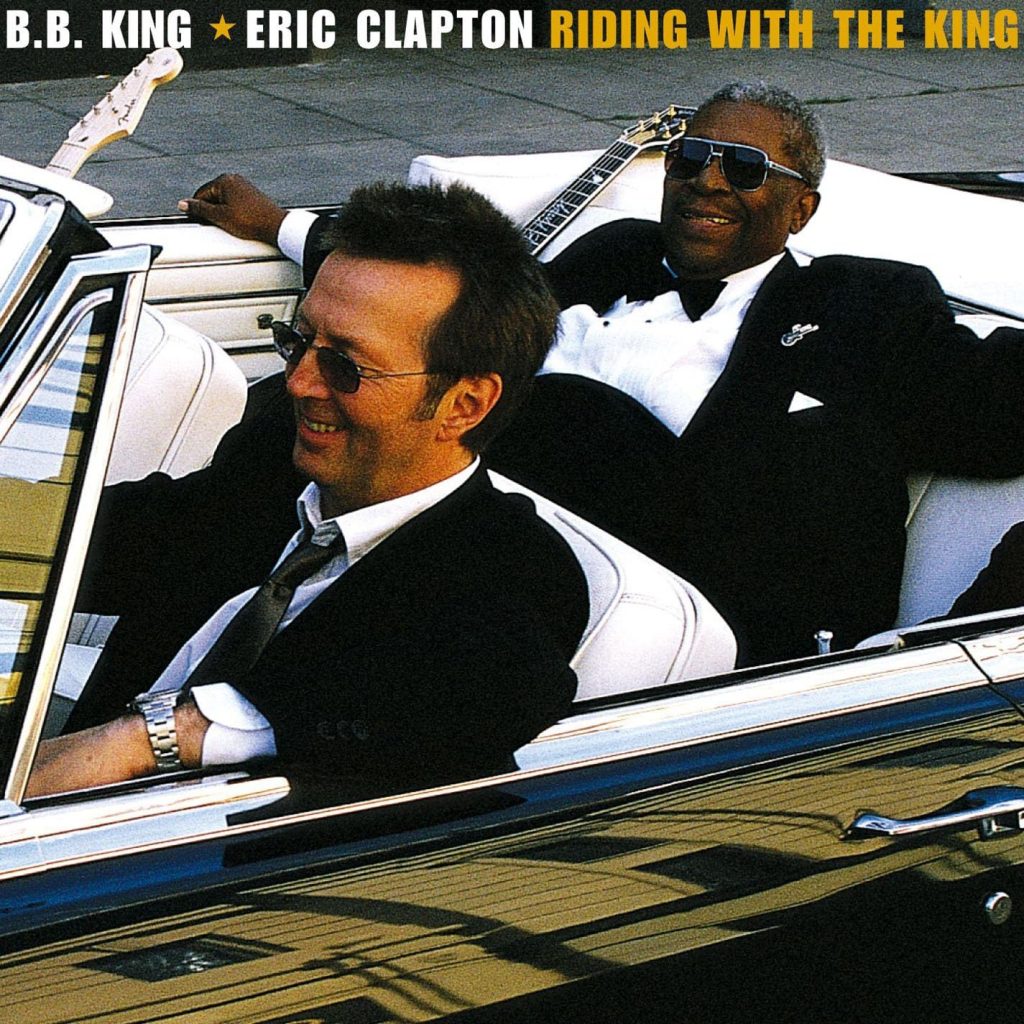
Riding with the King is the album that proved two living legends could share a throne without either one shrinking.
It arrived in June 2000, a collaboration decades in the making between Eric Clapton and B.B. King, and it still sounds like a Saturday night that refused to end.
If you’ve followed Clapton’s journey back to the blues on From the Cradle, you already know the man never abandoned his roots.
But this record is something different: it’s a conversation between equals, a passing of torches that burns both ways.
Quick Navigation
Quick Navigation
The Backstory Behind the Album
Eric Clapton and B.B. King had been circling each other for years before this record finally happened.
King was already a blues deity by the time Clapton was learning his first chord shapes in Surrey.
The younger man openly credited King as a foundational influence, the kind of guitar player who rewired your brain the first time you heard him.
Their friendship developed slowly over decades of mutual admiration and occasional shared stages.
By the late 1990s, the timing felt right, and producer Simon Climie helped bring the project to life.
Climie had worked with Clapton through the 1990s and understood how to frame the guitarist’s instincts without over-producing them.
The sessions took place in Los Angeles, with a live-in-the-room energy that you can actually hear in the final recordings.
If you want a deeper look at Clapton’s collaborative spirit, check out his landmark Unplugged performance, which showed a similarly stripped-back authenticity.
Riding with the King: The Title Track
The title track was written by John Hiatt and originally appeared on his 1983 album Riding with the King.
Hiatt’s version was great. Clapton and King’s version is a different beast entirely.
Watch the official music video for Riding with the King on YouTube and you’ll see two men having the time of their lives.
There’s no posturing, no ego contest.
King’s vibrato hits you in the chest the way it always does, rich and wide and unmistakable.
Clapton slots in beneath him, around him, and occasionally right beside him with a fluency that only comes from genuine respect.
The rhythm section locks in early and stays there, giving both guitarists exactly the space they need.
Lyrically, the song is pure American mythology: big cars, open roads, and the swagger of two men at the top of their game.
It sounds autobiographical even though Hiatt wrote it well before either man recorded it.
Production and Sound
Simon Climie made a smart call keeping the production clean and uncluttered.
The album sounds warm without being murky, polished without losing any grit.
There are horns on several tracks that add a soul-revue weight to the proceedings.
The rhythm section is tight but relaxed, the way a great blues band plays when everyone in the room is comfortable.
Climie resisted the temptation to layer on studio gloss, and the record is better for it.
You can hear the guitars breathe, which matters enormously when the guitarists are B.B. King and Eric Clapton.
The mix places both players in a shared sonic space without either one dominating unfairly.
That’s a harder trick than it sounds, especially with two artists of this stature and distinct tonal identity.
Standout Tracks and Highlights
Beyond the title track, “Ten Long Years” gives King ample room to stretch out in full storytelling mode.
His voice carries the weight of lived experience on every line, and Clapton’s answering phrases are perfectly chosen.
“Hold On I’m Coming” is a Sam and Dave classic reimagined as a slow-burning duet that drips with confidence.
“Days of Old” is a deeper cut that rewards patient listening with some of the album’s most inventive guitar interplay.
“Come Rain or Come Shine” brings the tempo down and lets the emotional core of both players come through without any flashiness.
Clapton’s tone on the ballads is one of the warmest on his entire discography, shaped by decades of refinement.
Compare it to the rawer attack you hear on Derek and the Dominos’ Layla and you can trace a whole career arc in the difference.
“Marry You” closes the album on a surprisingly tender note, suggesting both men had more range than the pure blues format might imply.
The Guitar Work: Two Masters, One Stage
This is what most listeners came for, and neither man disappoints.
King plays Lucille with the authority of someone who has never had a single wasted note.
His bends are surgical: slow, deliberate, and loaded with feeling.
Clapton’s approach is more fluid, drawing on his decades of absorption from blues, rock, and pop contexts.
The two styles complement rather than clash, which is the defining achievement of the album’s guitar performances.
According to the album’s Wikipedia entry, the project won the Grammy Award for Best Traditional Blues Album in 2001, which surprised no one who actually listened to it.
For a broader view of how Clapton evolved from his early days, the Slowhand album review on this site traces that development in detail.
The interplay on the uptempo numbers particularly rewards headphone listening, where you can track each player’s movements through the stereo field.
Neither man overplays, which speaks to the mutual trust that developed during the sessions.
Legacy and Why It Still Matters
Riding with the King matters for reasons that extend beyond its considerable pleasures as a listening experience.
It introduced B.B. King to a generation of rock fans who might never have sought out his solo catalog.
Clapton’s mainstream profile carried significant commercial weight in 2000, and King benefited from that reach.
The album sold over two million copies in the United States alone, extraordinary numbers for a traditional blues record.
It also reminded the broader music world that the blues was not a museum exhibit but a living form with genuine power.
Classic rock fans who had followed Clapton from Cream’s Disraeli Gears through his solo career found the album to be a satisfying late chapter.
For those curious about how Clapton’s health has affected his later-career performances, there’s important context in this 2025 report on his health struggles.
King passed away in 2015, making this album one of the most significant late-career documents in his extraordinary catalog.
It captured him at a moment of full command, surrounded by musicians who understood exactly what he was doing.
Final Verdict
Riding with the King delivers on every promise its lineup suggests.
It’s not a vanity project or a calculated commercial move: it’s a genuine blues record made by two men who loved the form and each other’s playing.
The production serves the performances, the performances serve the songs, and the songs hold up after repeated listening.
If you came to Clapton through rock and have not spent time with his blues work, this is an ideal entry point.
If you are already a B.B. King devotee, hearing him in this context will give you new angles on his technique and charisma.
The album won its Grammy for a reason, and twenty-five years on, Riding with the King remains one of the most purely enjoyable records either man ever put his name to.
Affiliate Disclosure: As an Amazon Associate, I earn from qualifying purchases. This means that if you click on a link to a classic rock album or piece of gear on this site and make a purchase, I may receive a small commission at no extra cost to you. This helps support classicrockartists.com and allows me to keep providing deep-dive content on the legends of rock. Thank you for your support!
Listen to Riding with the King on Amazon Music or Order Your Copy Today