

Robby Krieger: The Songwriter Behind The Doors’ Greatest Hits
Robby Krieger is one of rock and roll’s most distinctive guitarists and the primary commercial songwriter behind The Doors‘ most celebrated recordings.
Born Robert Alan Krieger on January 8, 1946, in Los Angeles, California, he developed a style that blended flamenco technique, blues slide, and jazz improvisation into something the rock world had never encountered before.
Where many of his contemporaries reached for power chords and distortion, Krieger reached for melody, texture, and a restraint that made every single note count.
He wrote or co-wrote the majority of The Doors’ biggest hits, often providing the musical backbone that elevated Jim Morrison’s poetry into chart-topping singles.
From the opening bars of “Light My Fire” to the atmospheric shimmer of “Riders on the Storm,” Krieger’s guitar work and compositional instincts shaped a defining era in rock history.
His contributions to the band have been celebrated by musicians, critics, and fans for more than five decades, and his influence on rock guitar remains deeply felt to this day.
For a complete look at the full band lineup, individual histories, and where each surviving member is today, the Members of The Doors story covers it all in depth.
As a guitarist, songwriter, and recording artist, Robby Krieger stands among the most consequential creative forces of 1960s and 1970s rock.
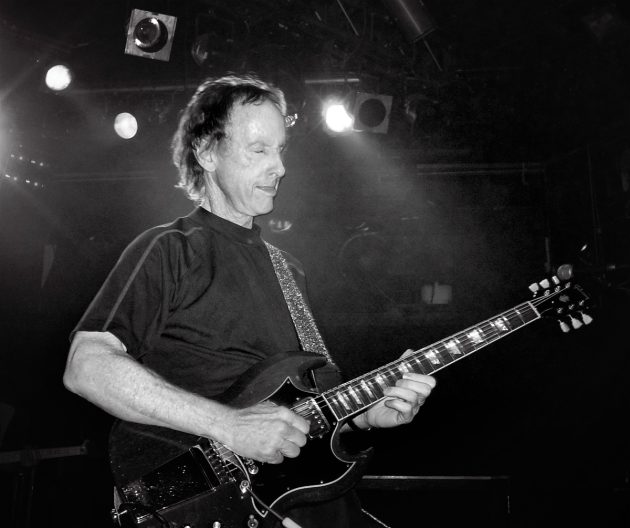
Table of Contents (click to expand)
- Who Is Robby Krieger? Early Life in Los Angeles
- The Doors: Formation of a Legendary Band
- Robby Krieger’s Guitar Style and Songwriting Genius
- Life After Jim Morrison: Career Challenges and Loss
- Robby Krieger’s Revival and Later Career
- Awards, Hall of Fame, and Musical Legacy
- Robby Krieger Essential Discography
- Frequently Asked Questions: The Doors’ Guitarist

Affiliate link — earns a small commission
Shop Robby Krieger & The Doors on Amazon
Vinyl, CDs, books, and collectibles
Who Is Robby Krieger? Early Life in Los Angeles
Robby Krieger was raised in the Pacific Palisades neighborhood of Los Angeles, an area that provided early and consistent exposure to the city’s diverse and evolving musical culture.
His father, Stuart Krieger, was an aerospace engineer, and the family’s comfortable circumstances allowed Robert to pursue musical interests from an early age without restriction.
As a young boy, he initially took up the trumpet before discovering the guitar as a teenager, immediately drawn to its versatility and expressive range.
Traditional Spanish flamenco was an early passion, and Krieger taught himself fingerpicking techniques that would later become central to his distinctive approach as a rock guitarist.
He attended the University of California, Santa Barbara, where he deepened his interest in Eastern philosophy alongside his musical pursuits.
It was through Transcendental Meditation classes back in Los Angeles that Krieger would eventually meet the musicians who became his bandmates in The Doors.
His early guitar influences included the pioneering blues of Chuck Berry and the melodic jazz precision of Wes Montgomery, two artists who shaped his sense of phrasing and timing profoundly.
He absorbed flamenco technique deeply enough that it became second nature rather than an ornament, evident in the picking style he brought to every Doors recording.
By his late teens, Krieger was a self-taught guitarist of unusual breadth, equally comfortable with bottleneck slide, classical fingerpicking, and the kind of melodic improvisation that would define his entire career.
The Doors: Formation of a Legendary Band
The Doors came together in 1965 through a combination of shared musical ambition, spiritual curiosity, and the charged creative energy of Los Angeles in the mid-1960s.
Krieger met keyboardist Ray Manzarek and drummer John Densmore through Transcendental Meditation circles, and the three musicians quickly bonded over a shared passion for blues, jazz, and experimental sound.
Manzarek had already encountered Jim Morrison at UCLA’s film school, where Morrison was filling notebooks with poetry and the fragments of songs that would become the Doors’ earliest material.
Morrison’s commanding presence and the band’s collective chemistry gave them an identity unlike anything else emerging from the California rock scene at the time.
Without a bassist, the group used Manzarek’s left hand on a keyboard bass to handle the low frequencies, freeing Krieger’s guitar to occupy a wider, more melodic role than in most rock bands.
After building a devoted following through a residency at the Whisky a Go Go on the Sunset Strip, they signed with Elektra Records in 1966.
Their debut single, “Break On Through (To the Other Side)”, introduced the world to a band whose sound was equally rooted in blues, psychedelia, and jazz.
The song’s sharp, percussive guitar figure was unmistakably Krieger, and it established the musical language the band would speak across six studio albums.
Robby Krieger’s Guitar Style and Songwriting Genius
Writing Light My Fire
When Jim Morrison challenged the other band members each to write a song for their debut album, Krieger responded with what became one of the best-selling singles in rock history.
“Light My Fire” was written almost entirely by Krieger, with the extended organ and guitar solos developed collaboratively during rehearsals with the full band.
The song’s harmonic structure drew directly on the flamenco technique Krieger had spent years absorbing, and its combination of jazz-inflected improvisation and melodic pop sensibility was unlike anything on rock radio in 1967.
It reached number one on the Billboard Hot 100 and remained there for three weeks, transforming The Doors from a cult Los Angeles act into one of the most recognizable bands in the world.
The success of that single cemented Krieger’s role as the band’s most commercially reliable songwriter, a fact that shaped the Doors’ output for the remainder of their career.
A Catalog Built on Krieger’s Pen
The full scope of Krieger’s songwriting contribution to The Doors is formidable when examined across the entire catalog.
He wrote “Love Me Two Times,” a hard-driving blues-rock track from the Strange Days era, demonstrating his ability to work within a traditional structure while giving it the Doors’ unmistakable character.
“People Are Strange” emerged from an early morning walk Krieger and Morrison shared when the frontman was in a dark and alienated state of mind.
Krieger provided a descending chord progression and melody that perfectly matched Morrison’s outsider lyric, and the song became one of the band’s most enduring recordings.
On The Soft Parade album, Krieger delivered “Touch Me,” a commercially polished track featuring a brass arrangement that climbed into the top five of the Billboard Hot 100.
“Hello, I Love You” from Waiting for the Sun was built around a guitar riff Krieger had been developing for years before The Doors even formed, originally inspired by a woman he observed on Venice Beach.
It reached number one in the United States and number one in the United Kingdom, making it one of the rare Doors recordings to simultaneously top both charts.
The slow-burning, cinematic guitar passage at the heart of “The End” stands as one of the most recognizable instrumental passages in rock, a piece Krieger helped shape through the band’s early live residencies.
“When the Music’s Over” from Strange Days features one of his most explosive guitar breaks, a full-throttle passage that cuts through the song’s quieter, meditative sections with visceral force.
“Five to One” from Waiting for the Sun is a grinding, politically charged track where Krieger’s menacing, repetitive riff drives the song forward with unrelenting intensity.
On the L.A. Woman album, Krieger co-wrote the title track, “L.A. Woman,” an extended blues odyssey that showcased the band’s raw, stripped-back power on what became Morrison’s final studio recording.
“Riders on the Storm,” from that same album, stands as one of the most atmospheric songs in classic rock, with Krieger’s clean, shimmering guitar lines threading through the production like a current of quiet dread.
“Love Her Madly,” written entirely by Krieger, became the band’s final top 20 single with Morrison as lead vocalist, and remains a staple of classic rock radio playlists to this day.
“Roadhouse Blues,” the opener of Morrison Hotel, is Krieger’s most openly blues-driven riff from the Doors era, a track that became one of the band’s most celebrated live staples and an enduring radio classic.
Krieger’s guitar style relied on a combination of thumb-picking, slide technique, and jazz-influenced chord voicings that gave his playing a textural richness rare in rock of the era.
He frequently cited Jimi Hendrix as a peer whose instinctive approach to the guitar he deeply admired, though the two players pursued very different sonic paths.
Krieger’s particular strength was melodic invention and controlled restraint, qualities that ensured the Doors’ music aged far better than most of the psychedelic rock produced alongside it.
Life After Jim Morrison: Career Challenges and Loss
Jim Morrison died in Paris on July 3, 1971, at the age of 27, and the loss shook the remaining members of The Doors to their foundations.
The circumstances of his death, officially recorded as heart failure, have remained a subject of ongoing discussion among biographers and fans for more than fifty years.
The most authoritative account of Morrison’s troubled life and the forces that shaped it is captured in No One Here Gets Out Alive, essential reading for any serious student of the Doors.
Krieger, Manzarek, and Densmore chose to continue as a trio, releasing Other Voices in 1971, with Krieger and Manzarek stepping into the lead vocal roles for the first time in their careers.
The album received a mixed critical reception, as the absence of Morrison was impossible to overcome, and the band’s commercial momentum had diminished significantly without him.
They followed with Full Circle in 1972, but the band formally dissolved later that year, closing the chapter on one of rock’s most iconic groups.
Krieger pursued a solo career and various collaborative projects throughout the 1970s and 1980s, but the weight of the Doors’ legacy made it difficult to step fully out from beneath its shadow.
He has spoken candidly about the personal and professional challenges of those years, including the difficulty of building a musical identity separate from his role as a Door.
Robby Krieger’s Revival and Later Career
In the decades following The Doors’ dissolution, Robby Krieger remained one of the most active and respected figures in classic rock circles.
He collaborated extensively with Manzarek in the Manzarek-Krieger touring band, bringing the Doors’ music to new audiences worldwide throughout the 2000s and into the early 2010s.
In 2021, Krieger released his memoir, Set the Night on Fire: Living, Dying, and Playing Guitar with The Doors, which offered a frank and deeply personal account of life inside and beyond the band.
The book was praised widely for its candor, giving readers Krieger’s own perspective on an era that had so often been filtered exclusively through Morrison’s mythology.
In 2025, he headlined a landmark event in Los Angeles performing the Morrison Hotel album in full, an event covered in our report on the Robby Krieger Morrison Hotel revival concert.
Fans can follow his current tour dates, projects, and news through his official website at robbykrieger.com and his official Facebook page.
A recent live performance showcasing his guitar mastery in fine form is available on YouTube, offering a compelling window into an artist still performing at a high level.
Krieger’s enthusiasm for live performance has never diminished, and he continues to tour and record into his late seventies with a drive that reflects his genuine love of the guitar.
Awards, Hall of Fame, and Musical Legacy
Robby Krieger was inducted into the Rock and Roll Hall of Fame in 1993 as a member of The Doors, alongside Manzarek, Densmore, and posthumously Jim Morrison.
The induction recognized a band whose influence on rock, psychedelia, blues, and American popular music had been both profound and lasting across multiple generations.
Rolling Stone has consistently ranked “Light My Fire” among the greatest songs in rock history, a measure of both its commercial impact and its musical originality.
The six studio albums The Doors recorded with Morrison are now available in an immersive Dolby Atmos surround sound Blu-ray edition, a format that brings Krieger’s guitar playing into extraordinary new sonic relief.
Krieger’s influence extends well beyond the Doors’ catalog, cited by guitarists working in styles as varied as blues rock, alternative, and world music traditions.
In the broader landscape of 1960s rock, he stands alongside the members of Jefferson Airplane as one of the era’s most innovative guitarists, someone who fundamentally expanded what the instrument could do in a rock context.
His sustained creativity over decades also mirrors the career arc of bands like the members of Deep Purple, artists who continued to perform and record at a serious level long after their commercial peaks had passed.
The Doors’ catalog continues to sell millions of copies globally each year, making the band one of the best-selling rock acts of all time, more than half a century after their initial releases.
Robby Krieger Essential Discography
The following albums represent the most essential recordings from Robby Krieger’s career, both with The Doors and as a solo artist.
- The Doors (1967): The debut that introduced Krieger’s guitar voice to the world, featuring “Light My Fire,” “Break On Through (To the Other Side),” and “The End” in a self-contained burst of psychedelic rock brilliance.
- Strange Days (1967): A darker, more experimental follow-up showcasing the full range of Krieger’s songwriting, from the blues-driven “Love Me Two Times” to the epic “When the Music’s Over.”
- Waiting for the Sun (1968): The band’s only chart-topping album, anchored by Krieger’s “Hello, I Love You” and the politically charged “Five to One.”
- The Soft Parade (1969): A controversial but commercially successful record where Krieger’s “Touch Me” became one of the band’s highest-charting singles.
- Morrison Hotel (1970): A raw blues-driven return to form, anchored by Krieger’s driving guitar work on the timeless “Roadhouse Blues.”
- L.A. Woman (1971): Morrison’s farewell album and among the greatest rock records ever made, featuring “L.A. Woman,” “Riders on the Storm,” and “Love Her Madly.”
- Other Voices (1971): The first post-Morrison album, with Krieger stepping into an expanded vocal and compositional leadership role alongside Manzarek.
- Full Circle (1972): The final studio album by The Doors as a formal group, and a document of Krieger’s jazz and blues influences at their most unfiltered.
- Singularity (2010): A standout solo album demonstrating that Krieger’s guitar playing remained inventive, expressive, and vital decades after the Doors era had closed.
Affiliate Disclosure: I am an Amazon affiliate and if you purchase through any amazon links on this site I may earn a small commission at no extra charge to you. This helps support classicrockartists.com and allows me to keep providing deep-dive content on the legends of rock. Thank you for your support!
Affiliate link — earns a small commission
Shop Robby Krieger & The Doors on Amazon
Vinyl, CDs, books, and collectibles
Frequently Asked Questions: The Doors’ Guitarist
What songs did Robby Krieger write for The Doors?
Krieger was the primary commercial songwriter for The Doors across their entire recording career.
He wrote “Light My Fire” almost single-handedly, along with “Love Me Two Times,” “Touch Me,” “Love Her Madly,” and co-wrote “People Are Strange” with Morrison.
He also co-wrote “Roadhouse Blues,” “L.A. Woman,” and “Riders on the Storm,” making him the most commercially prolific songwriter in the band by a considerable margin.
Did Robby Krieger write a memoir?
Yes. Set the Night on Fire: Living, Dying, and Playing Guitar with The Doors, published in 2021, is Krieger’s memoir covering his early life, the full Doors era, and his decades of work since the band’s dissolution.
For more on the books that chronicle the world of The Doors and Jim Morrison, visit our in-depth guide to Jim Morrison books.
Is Robby Krieger in the Rock and Roll Hall of Fame?
Yes. Krieger was inducted as a member of The Doors in 1993, and the recognition reflected the band’s transformative and lasting impact on rock and roll.
What guitar does Robby Krieger play?
Krieger is most closely associated with the Gibson SG Standard, which he used throughout the Doors’ recording career and live performances.
He has also used a range of acoustic, slide, and classical guitars over the decades, reflecting the wide stylistic range that has always defined his playing.
What is Robby Krieger doing now?
Krieger remains an active and touring performer, with a headline Morrison Hotel revival concert in Los Angeles in 2025 among his most recent major appearances.
As one of rock and roll’s most enduring guitarists, Robby Krieger continues to carry the music of The Doors forward for audiences around the world, generation after generation.