

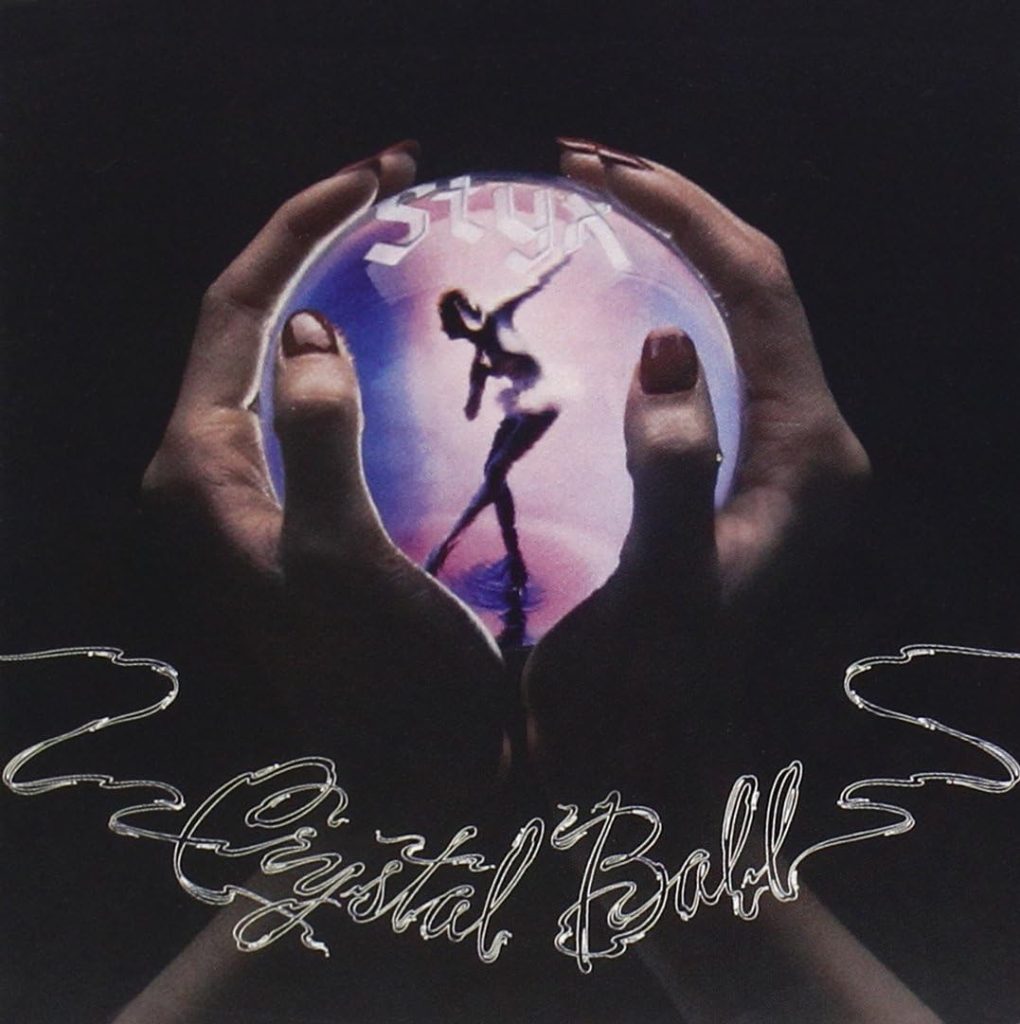
STYX Crystal Ball: The Album That Changed Everything
STYX Crystal Ball, released in 1976, is the record where a good band became a great one.
It introduced guitarist and vocalist Tommy Shaw, and nothing was ever quite the same again.
This is the album that cracked the door open for the arena rock dynasty Styx would build over the next decade.
Quick Navigation
Quick Navigation
STYX Crystal Ball: A Band at the Crossroads
By 1976, Styx had already released four studio albums with very little commercial traction.
The band was good, but something was missing.
Original guitarist John Curulewski departed before recording began, and the remaining members faced a critical decision about the band’s future direction.
They chose ambition over safety, and it paid off.
The result was a record that leaned harder into melodic rock, sharp guitar work, and the kind of vocal harmonies that would define the band’s signature sound for years to come.
Crystal Ball was not an overnight sensation, but it laid groundwork that proved essential.
The Tommy Shaw Effect
Tommy Shaw was 23 years old when he walked into the Styx lineup, and he hit the ground running.
His debut on this album is nothing short of remarkable for a first outing with an established band.
Shaw’s guitar playing brought a leaner, more aggressive edge to the group’s sound.
His voice, high and clear and full of emotional reach, gave the band a second strong lead singer alongside Dennis DeYoung.
That dual-vocal dynamic would become one of Styx’s greatest assets.
Shaw co-wrote several tracks here, including the title song, and his fingerprints are all over the album’s best moments.
If you want to understand why Styx became one of the biggest arena rock acts of the late 1970s, start right here with this record.
For a deeper look at who shaped this band’s history, the full members of Styx guide covers every lineup change from start to finish.
STYX Crystal Ball Track by Track
The title track opens the album with a brooding, atmospheric intro that gives way to a full melodic rock surge.
It is still one of the band’s most underrated songs, dripping with tension and payoff in equal measure.
Watch the lyric video for the title track on YouTube here to hear it with fresh ears.
“Put Me On” is pure driving rock, lean and muscular, with Shaw asserting himself immediately as a front-line force.
“Mademoiselle” is the album’s commercial heartbeat, a smooth and immediately likable track that got real radio traction.
DeYoung’s “Shooz” is theatrical and slightly quirky, signaling the prog-pop ambitions that would fully bloom on later records.
“Clair de Lune / Ballerina” showcases the band’s willingness to blend classical influence with hard rock, a combination they pulled off better than almost anyone.
“Witch Wolf” is a straight-ahead rocker that does not overstay its welcome.
The closing track, “Boat on the River,” foreshadows the lush, orchestrated balladry that would dominate Styx records by the early 1980s.
The Sound of Transition
What makes this album fascinating is how clearly it captures a band in motion.
You can hear the heavier, bluesier Styx of the early records still present in the grooves.
But you can also hear the pop-forward, harmony-rich direction that would define their commercial peak.
The production, handled by the band alongside engineer Gary Lyons, is clean without being sterile.
The guitars have weight, the keys have presence, and the rhythm section locks in with real confidence.
This is not a perfect album, but it is an honest one, and that counts for something.
Compare this to the more refined approach on Styx Equinox, the record that immediately preceded it, and the leap forward becomes obvious.
Why It Still Holds Up
Styx celebrated the 49th anniversary of this album in 2025, and the band’s own Facebook post called it a turning point album, which is exactly right.
Nearly five decades on, Crystal Ball holds up because it was built on actual songs, not studio tricks.
The melodies are strong enough to survive repeated listening without fading into background noise.
Shaw’s guitar work remains a pleasure, full of ideas and executed with real precision.
The harmonies on tracks like “Mademoiselle” are effortlessly constructed and still land with warmth.
Classic rock fans who write this one off as a transitional curiosity are missing a genuinely rewarding record.
STYX Crystal Ball and Its Place in the Catalog
STYX Crystal Ball sits at a unique position in the band’s discography.
It is not the record most casual listeners think of first, but longtime fans hold it in high regard.
The albums that followed it, particularly Styx Cornerstone, would refine the formula further toward a polished, radio-ready sound.
But Crystal Ball is where the formula was first assembled.
It belongs in any honest conversation about the band’s essential records.
If your classic rock collection has a gap where this album should be, it is worth filling.
Final Verdict
This is a record that rewards the listener willing to give it proper attention.
It is not flashy or overproduced, which is precisely what makes it feel timeless.
Tommy Shaw’s arrival gives the album an energy that none of the earlier Styx records could match.
The songwriting is tighter, the performances are sharper, and the vision is clearer than anything the band had done before.
For classic rock fans serious about the genre, STYX Crystal Ball belongs in the collection without question.
Affiliate Disclosure: As an Amazon Associate, I earn from qualifying purchases. This means that if you click on a link to a classic rock album or piece of gear on this site and make a purchase, I may receive a small commission at no extra cost to you. This helps support classicrockartists.com and allows me to keep providing deep-dive content on the legends of rock. Thank you for your support!