
Head Over Heels by Tears For Fears (1985): The Art-Pop Gem That Got Away
Head Over Heels arrived in 1985 as the third single from one of the decade’s most ambitious albums, wrapping an aching portrait of obsessive love inside one of the most elegantly constructed pop productions of its era.
It should have been a massive hit everywhere, and in many ways it was, but it has always lived slightly in the shadow of its colossal siblings, which makes it the most rewarding song in the Tears For Fears catalog for the listeners who actually pay attention.
Quick Navigation
What is the meaning of Head Over Heels by Tears For Fears?
Head Over Heels by Tears For Fears is a song about the paralysis of infatuation. Roland Orzabal wrote it from the perspective of someone so consumed by romantic obsession that he can barely function. The lyrics describe watching a girl from a distance, unable to speak, drowning in feelings he cannot control or escape.
The Vibe: Genre, Mood, and Search Intent
The song sits at the intersection of art-pop and new wave, where the music sounds brighter than the emotion underneath it.
That tension between a shimmering, melodic surface and the desperate psychology beneath is what makes it one of the most interesting tracks of the entire 1980s.
- Genre: New Wave, Art-Pop, Synth-Pop
- Mood: Bittersweet, Yearning, Romantically Obsessive
- Tempo: Mid-tempo with a flowing, almost waltz-like feel in sections
- Best For: Late-night headphone sessions, 80s nostalgia playlists, rainy afternoon drives
- Similar To: “Don’t You (Forget About Me)” by Simple Minds, “In Your Eyes” by Peter Gabriel
- Fans of Tears For Fears also search: “best 80s synth-pop songs,” “emotional new wave classics,” “Tears For Fears deep cuts”
Behind the Lyrics: The Story of Head Over Heels
Roland Orzabal has described the song as rooted in the same themes of emotional repression and obsessive love that drove the entire Songs from the Big Chair album.
The record was shaped by the duo’s deep engagement with primal therapy, the psychological framework developed by Arthur Janov, and Head Over Heels captures something specific from that world: the feeling of being emotionally trapped by your own longing.
The narrator watches a girl in a library, obsessed and unable to act, and the detail of the library setting grounds what could have been an abstract lyric in something achingly real and recognizable.
Curt Smith provides the lead vocal on the track, and his delivery is carefully calibrated: warm enough to invite the listener in, but restrained enough to convey someone who cannot quite say what he means.
That restraint is the emotional core of the song.
The music swells and opens up in ways the narrator cannot, and the gap between the beauty of the production and the helplessness of the lyric is where the song lives.
According to the song’s Wikipedia entry, the track was recorded during the extended sessions for Songs from the Big Chair, a period when the band was operating with serious commercial ambition and serious artistic intent at the same time.
That combination is rare in pop music, and Head Over Heels is one of its cleaner examples.
The Tears For Fears lineup at the time, built around the creative tension between Orzabal and Smith, was at its most productive and cohesive.
Technical Corner: The Gear Behind Head Over Heels
The production on Head Over Heels was handled by Chris Hughes and Ross Cullum, the same team responsible for the album’s two colossal singles, and their fingerprints are all over the arrangement.
The track opens with a clean, fingerpicked acoustic guitar figure that immediately sets it apart from the harder-edged synth-pop surrounding it on the album.
That guitar, running dry and close-miked, creates a sense of intimacy before the synths arrive.
The synthesizer layers build gradually, using what sounds like a Roland Jupiter-8 for the pad textures that fill the mid-range, giving the track its characteristic warmth without crowding the vocal.
The drum sound on the track is a product of the gated reverb era, but applied with more restraint than on Shout or Everybody Wants to Rule the World, letting the arrangement breathe rather than dominate.
The bass line is melodic and inventive, sitting unusually high in the mix for a pop record and giving the song a sense of forward motion that holds the whole thing together.
The outro, where the track transitions into “Broken” as a medley, is a production decision that reveals how seriously the band and their producers were thinking about the album as a unified listening experience rather than just a collection of singles.
It is a detail that rewards headphone listening even forty years on.
Legacy and Charts: Why Head Over Heels Still Matters
Head Over Heels reached number 12 on the UK Singles Chart and number 3 on the US Billboard Hot 100, a strong performance for a track that was arguably the most nuanced and least commercial of the three singles pulled from the album.
In Canada, it performed similarly well, benefiting from the enormous appetite for British new wave across North American radio at the time.
The song’s most enduring cultural moment came in 2001, when director Cameron Crowe used it in the opening sequence of Donnie Darko.
That placement, scored against slow-motion footage of the Darko family moving through their morning routine, introduced the song to a generation that had not been born when it was released, and it became one of the defining needle-drop moments of early 2000s cinema.
The association gave Head Over Heels a second life and cemented its reputation as a song that operates on an emotional frequency deeper than most of its chart contemporaries.
In the context of the Tears For Fears 40th anniversary celebrations, the song has been performed live with renewed appreciation from both the band and its audience.
It sits comfortably in the catalog alongside Everybody Wants to Rule the World and Shout, but it rewards closer listening in ways those blockbusters do not always demand.
Listener’s Note: A Personal Take on Head Over Heels
When I first heard this on vinyl, what struck me was how physically different it felt from the rest of the album.
Songs from the Big Chair has a particular density to it, a sense of weight and ambition that can occasionally feel like it is pressing down on you, and then Head Over Heels arrives and the whole thing just opens up like a window being pushed outward on a summer morning.
The acoustic guitar in the intro has a texture that feels almost apologetic, like someone clearing their throat before saying something they have been rehearsing for days.
There is a moment about two-thirds of the way through, just before the final chorus, where the production pulls back slightly and Curt Smith’s voice sits almost alone in the mix for a couple of seconds.
It lasts maybe four beats, but it is the most honest moment on the entire record.
Everything the song is about, the longing, the helplessness, the beauty of being completely overtaken by feeling, lands in that small gap.
That is why this song has stayed with me longer than almost anything else from 1985.
Affiliate Disclosure: I am an Amazon affiliate, and if you purchase through any Amazon links on this site, I may earn a small commission at no extra charge to you. This helps keep ClassicRockArtists.com running and supports the deep-dive content we create on the legends of rock. Thank you for your support.
Collector’s Corner: Own Head Over Heels on Vinyl or CD
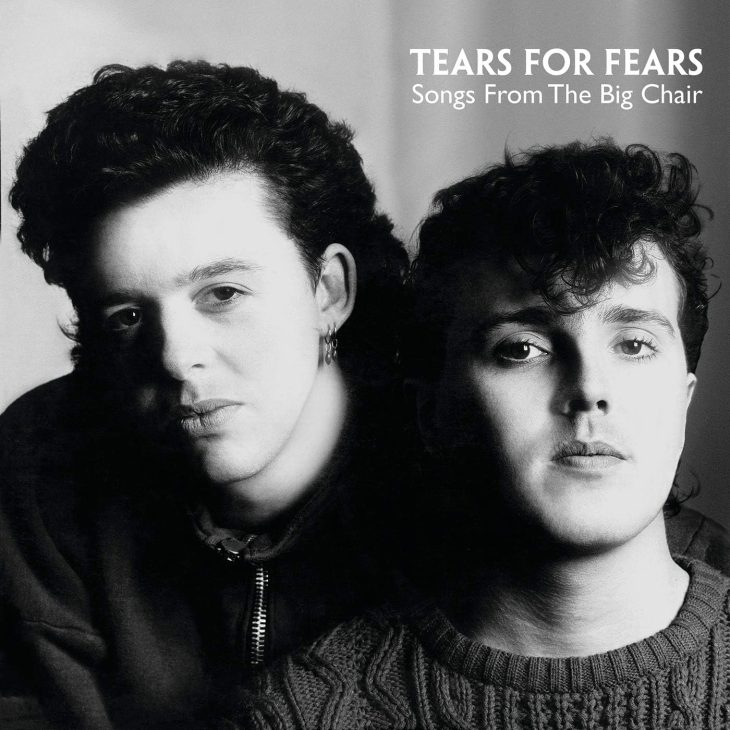
Songs from the Big Chair is one of the essential 1980s albums, and owning it on vinyl is an experience worth having: the production depth that Chris Hughes built into these recordings translates beautifully to analogue playback, and Head Over Heels in particular benefits from the format’s warmth.
You can also explore the full Tears For Fears catalog in one place.
Get Songs from the Big Chair on Vinyl or CD at Amazon
Browse the complete Tears For Fears discography on Amazon to find more classic albums from the duo.
Frequently Asked Questions About Head Over Heels
Who wrote Head Over Heels by Tears For Fears?
Head Over Heels was written by Roland Orzabal, the primary songwriter of Tears For Fears. It was recorded during the Songs from the Big Chair sessions in the mid-1980s and produced by Chris Hughes and Ross Cullum. Curt Smith sings lead on the track.
What album is Head Over Heels from?
Head Over Heels appears on Songs from the Big Chair, released in 1985. It was the band’s second studio album and their commercial breakthrough, also containing Everybody Wants to Rule the World and Shout. The album reached number one in both the US and UK.
What does Head Over Heels mean?
The song describes the experience of obsessive romantic infatuation from the perspective of someone who cannot bring himself to act on his feelings. Roland Orzabal drew on the psychological themes of primal therapy that informed the entire album, portraying love as something closer to compulsion than choice. The library setting in the lyric gives the obsession a specific, painfully recognizable quality.
Was Head Over Heels used in a film?
Yes. The song was used memorably in the 2001 film Donnie Darko, directed by Richard Kelly, in the film’s opening slow-motion sequence. That placement introduced the song to a new generation of listeners and has since become one of the most celebrated needle-drop moments in modern cinema. It significantly boosted the song’s streaming numbers when the film found its cult audience on home video.