

Seeds of Love: Tears for Fears’ Most Ambitious Album
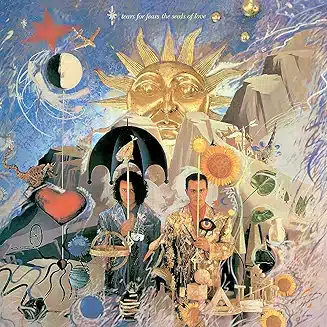
The Seeds of Love is the album where Tears for Fears stopped playing it safe and swung for the fences.
If you want to understand how far this band evolved, start with Songs from the Big Chair and trace the journey to this record.
Quick Navigation
Affiliate Disclosure: As an Amazon Associate, I earn from qualifying purchases. If you click an Amazon link on this site and buy something, I may receive a small commission at no extra cost to you. It helps keep ClassicRockArtists.com running and lets me keep writing deep dives like this one. Thank you for the support.
The Story Behind Seeds of Love
By 1985, Tears for Fears were one of the biggest bands on the planet.
Songs from the Big Chair had made them superstars, and “Everybody Wants to Rule the World” was inescapable.
But Roland Orzabal and Curt Smith weren’t interested in a quick cash-in follow-up.
They wanted to make something genuinely different, something that reflected where they were as artists and as people.
The result, released in September 1989, was Seeds of Love.
It arrived four years after their commercial peak, and it sounded like nothing they had done before.
To understand the full arc of this band, you need to read about the Tears for Fears members who drove this creative vision.
Three Years in the Making
The recording of Seeds of Love is one of the great behind-the-scenes stories of late-1980s rock.
Orzabal and Smith reportedly spent over three years and a significant portion of their own fortune making it.
They assembled a rotating cast of brilliant session musicians, including a young Tori Amos, who contributed piano and backing vocals on several tracks.
The sessions were notoriously long and intense, driven by Orzabal’s perfectionism and a genuine desire to reach for something grand.
Wikipedia’s detailed breakdown of the album captures how unconventional the recording process truly was.
Curt Smith has spoken candidly about how the sessions strained the band’s relationship.
That tension is audible in the music, and somehow it makes the record better.
There is a raw emotional honesty running through every track that a smoother, easier process might have polished away.
The Sound: Lush, Layered, and Fearless
Seeds of Love sounds like a band deliberately moving away from synth-pop and embracing something more organic.
The production layers acoustic piano, real strings, gospel-inflected backing vocals, and classic rock guitar in ways that felt genuinely brave at the time.
It draws comparisons to late-period Beatles records, to Sgt. Pepper in its ambition if not always its execution.
The band cited Sgt. Pepper’s Lonely Hearts Club Band as a direct influence on the album’s scope and sonic philosophy.
There is warmth here that was largely absent from The Hurting’s clinical cold precision.
The drums breathe, the arrangements shift and evolve within songs, and Orzabal’s voice carries a weight and vulnerability that suits the material perfectly.
This was a band demanding to be taken seriously as artists, not just hitmakers.
If you want the full picture of their early sound for contrast, the review of The Hurting shows exactly how much ground they covered in six years.
Standout Tracks You Need to Know
The title track “Seeds of Love” is the centerpiece, a sprawling, gorgeous piece of work that earns every one of its six-plus minutes.
Tori Amos’s piano runs through the song like a thread of gold, and the vocal interplay between her and Smith is genuinely arresting.
Watch the official music video to hear how that arrangement translates visually: Seeds of Love on YouTube.
“Woman in Chains” is arguably the album’s most powerful moment.
It is a slow-burning meditation on gender and control, anchored by Phil Collins’s understated drumming and a lyric that still hits hard today.
“Sowing the Seeds of Love” is the album’s undeniable pop moment, a kaleidoscopic piece of psychedelic pop that made perfect sense as the lead single.
It is immediately familiar but rewards repeated listens with its layered detail.
“Badman’s Song” closes the first side with nearly nine minutes of blues-rock ambition that few bands at this commercial level would have dared attempt.
For fans who found the band through Everybody Wants to Rule the World, these tracks represent a genuinely different proposition.
The Legacy of Seeds of Love
Seeds of Love reached number one in the UK and performed strongly across Europe and North America.
Critics at the time were largely positive, though some found the ambition outpacing the execution on certain tracks.
Revisionist listening over the past three decades has been kinder, and many now consider it the band’s finest work.
Classic Pop Magazine ran a detailed retrospective on the album that captures how its reputation has grown: Tears for Fears remember Seeds of Love.
The album also marked the beginning of the end of the classic Tears for Fears lineup.
Smith departed for a solo career shortly after the supporting tour, and Orzabal carried on under the band name for the mid-1990s records.
The reunion in the early 2000s brought new life to the catalogue, and Seeds of Love has held its place as a beloved and sometimes underrated cornerstone of the era.
The band’s four decades of history make for remarkable reading, and this Tears for Fears 40 years celebration piece puts Seeds of Love into its proper long-view context.
Browse more classic rock album reviews for the full picture of the era this record defined.
Tears for Fears Discography
The Hurting (1983)
Songs from the Big Chair (1985)
Seeds of Love (1989)
Elemental (1993)
Raoul and the Kings of Spain (1995)
Everybody Loves a Happy Ending (2004)
The Tipping Point (2022)
Shop Tears for Fears Albums and Merch on Amazon
FAQ: Seeds of Love
When was Seeds of Love released?
It was released on September 25, 1989.
Who plays piano on Seeds of Love?
Tori Amos contributed piano and backing vocals on the album, most notably on the title track and Woman in Chains.
Did Seeds of Love chart well?
Yes. It reached number one in the UK and performed strongly in multiple international markets.
Is Seeds of Love Tears for Fears’ best album?
Many fans and critics consider it their most ambitious work, though Songs from the Big Chair remains the most commercially successful.
Why did it take so long to make?
The band spent approximately three years recording, driven by Orzabal’s perfectionism and a desire to expand beyond their synth-pop origins.
Seeds of Love remains one of the most daring and rewarding albums of the late 1980s, a record that only gets better the more time you spend with it.