

The Court of the Crimson King (Song): 7 Hidden Secrets Behind Prog Rock’s Most Epic Masterpiece
The Court of the Crimson King (song) stands as the defining moment when progressive rock found its voice, a nine-and-a-half minute journey through medieval imagery, haunting Mellotron passages, and poetic brilliance that still resonates over five decades later.
This epic closer to King Crimson’s 1969 debut album achieved what no prog song had done before – it reached number 80 on the Billboard Hot 100, making it the only King Crimson single to ever chart on that legendary ranking.
You’re about to discover the fascinating origin story of a track that began as a simple country and western tune, the classical music influence hidden within its iconic four-bar Mellotron riff, and the profound symbolism that inspired Stephen King to name his greatest literary villain after this very song.
Released on October 10, 1969, as the triumphant finale to In the Court of the Crimson King, this composition by Ian McDonald and lyricist Peter Sinfield transformed from humble beginnings into what critics call the definitive statement of early progressive rock.
What makes this deep dive different from everything else you’ll find online is the complete picture – from the rehearsal basement beneath a London cafe where it all began, to the groundbreaking studio techniques that created those otherworldly sounds, to its lasting impact on artists from Kanye West to the prog-metal giants of today.
The Court of the Crimson King (song) represents everything ambitious rock music could be in 1969 – and its influence continues to shape how we think about progressive composition today.
🎸 Experience The Court of the Crimson King in Audiophile Quality
Limited 200-gram remastered vinyl pressings selling fast.
Hear every Mellotron layer and Greg Lake vocal nuance exactly as intended.
Don’t miss your chance to own the album that invented prog rock.

📋 Table of Contents [+]
The Court of the Crimson King (Song) Overview: Origin Story and Creation
The Court of the Crimson King emerged during one of rock music’s most transformative periods, closing out an album that would redefine what guitar-driven music could accomplish.
King Crimson’s debut arrived on October 10, 1969, just months after the band’s legendary performance at Hyde Park where they opened for the Rolling Stones before an estimated 250,000 to 500,000 people.
That Hyde Park show on July 5, 1969 – commemorating the recent death of Brian Jones – has been poetically described as marking both the death of Jones and the birth of King Crimson as a major force in rock music.
The album was recorded between July 16 and August 15, 1969, at Wessex Sound Studios in London, with the band taking the unprecedented step of producing themselves after initial sessions with Moody Blues producer Tony Clarke failed to capture their vision.
The Writing Process and Country-Western Origins
The composition began life in a form that would seem unrecognizable to fans of the finished epic.
Ian McDonald and lyricist Peter Sinfield originally wrote the song for their earlier group, The Creation, crafting it as a simple country and western tune with folk influences.
Sinfield has described the original version as resembling a Bob Dylan song, built around acoustic guitar and straightforward storytelling.
When McDonald brought the piece to King Crimson, everything changed – the medieval atmosphere materialized, bombastic drum rolls emerged, and baroque flute sections transformed the humble folk song into a symphonic progressive rock statement.
The Mellotron turnaround that anchors the entire composition was reportedly inspired by James Brown’s rhythmic innovations, creating a surprising connection between soul music and prog rock.
King Crimson’s Explosive Formation
The original King Crimson lineup came together on November 30, 1968, with rehearsals beginning in a basement beneath a cafe on London’s Fulham Palace Road on January 13, 1969.
Robert Fripp on guitar, Greg Lake on bass and lead vocals, Ian McDonald on woodwinds, keyboards, and Mellotron, Michael Giles on drums, and Peter Sinfield as lyricist formed what Sinfield would later describe as a deliberately anti-commercial collective.
Lake had primarily been a guitarist for eleven years before joining King Crimson – this was his first time playing bass guitar professionally.
The band’s philosophy, as Sinfield later explained, was intentionally oppositional to mainstream rock conventions: anything that sounded too popular was rejected in favor of complexity, strange time signatures, and expansive musical ideas.
💡 Did You Know?
The main melodic theme of The Court of the Crimson King was adapted from American composer Samuel Barber’s “Essay for Orchestra” (1938), giving the song a direct connection to 20th-century classical music that most listeners never realize.
Complete Musical Breakdown of The Court of the Crimson King
The Court of the Crimson King represents one of the most ambitious compositional achievements in rock music, blending classical architecture with rock power over its nine-and-a-half minute runtime.
Played in the key of E minor at approximately 135-138 beats per minute in 4/4 time, the track builds from intimate verses to overwhelming crescendos.
Song Structure: Four Stanzas and Two Instrumental Movements
The song divides into clearly defined sections that create a symphonic narrative arc unprecedented in rock music of the era.
Four lyrical stanzas form the backbone, each building upon the last with increasing intensity and instrumental density.
Between verses, an instrumental section titled “The Return of the Fire Witch” provides dramatic contrast, featuring Ian McDonald’s flute work and the full ensemble’s interplay.
The main portion climaxes around the seven-minute mark with crashing repetitions of the iconic Mellotron riff.
After a brief pause, “The Dance of the Puppets” – a haunting instrumental interlude – leads to a final reprise of the main theme.
The chaotic coda mirrors the aggressive ending of album opener “21st Century Schizoid Man,” bringing the record full circle and symbolizing the tumultuous nature of power and its inevitable collapse.
The Mellotron Revolution and Instrumentation
The Mellotron keyboard dominates the sonic landscape, making The Court of the Crimson King one of the most famous Mellotron-driven recordings alongside The Beatles’ “Strawberry Fields Forever.”
Ian McDonald spent countless hours in the studio layering Mellotron tracks with various woodwind and reed instruments to achieve the album’s characteristic lush, orchestral sound.
McDonald amplified the Mellotron aggressively through a double stack of Marshall amplifiers, positioning the microphone 20 feet away to enhance its dynamic presence and avoid the softer tones used by bands like the Moody Blues.
The distinctive four-bar Mellotron riff repeats throughout, providing the harmonic foundation that ties every section together.
Robert Fripp’s guitar work weaves between sections, providing textural support rather than conventional rock lead playing.
Michael Giles contributes dramatic timpani rolls and precise drum patterns that give the track its martial, processional quality.
Guest musician Robin Miller adds oboe to certain passages, furthering the classical orchestral atmosphere.
Greg Lake’s Plaintive Vocal Delivery
Greg Lake’s voice carries the weight of Peter Sinfield’s dense poetry with a plaintive, almost mournful quality that critics have consistently praised.
His delivery ranges from intimate and hushed during verses to soaring and powerful during the climactic choruses.
The backing vocal arrangements feature Lake layered with contributions from McDonald and Giles, creating choir-like textures during the most dramatic moments.
Lake’s natural vocal tone proved perfectly suited to the material’s medieval imagery and melancholic themes.
The soft, caressing quality of his voice that emerged on quieter tracks like “I Talk to the Wind” transforms here into something grander and more theatrical.
Recording Sessions and Production Secrets at Wessex Studios
The recording of In the Court of the Crimson King at Wessex Sound Studios in London produced one of the most influential sonic documents in rock history.
Engineer Robin Thompson and assistant Tony Page captured the band’s ambitious vision on a 1-inch 8-track recorder.
Inside Wessex Sound Studios: July-August 1969
Sessions ran from July 16 to August 15, 1969, an intensive month of creative exploration.
The band entered the studio fresh from their triumphant Hyde Park performance, riding a wave of confidence and creative momentum.
Initial sessions earlier in 1969 with producer Tony Clarke, famous for his work with the Moody Blues, had failed to capture the band’s live energy.
After those sessions didn’t work out, King Crimson received permission to produce the album themselves – an unusual arrangement for a debut album at the time.
Some songs required up to five tape generations to achieve the deeply layered, segued sound the band envisioned.
Revolutionary Production Techniques
The sonic quality and production approach set new standards for what rock albums could achieve.
McDonald’s extensive overdubbing of Mellotron and woodwind layers created an orchestral density previously unheard in rock music.
On tracks throughout the album, McDonald layered two Mellotron tracks with subtly varying volumes to introduce motion in sustained chords and prevent a static quality.
The production deliberately abandoned the R&B and blues foundations that characterized most British rock at the time.
As music historian Jeff Gold observed, King Crimson embraced a guitar and Mellotron-based, crypto-classical style that went well beyond what Procol Harum and the Moody Blues had attempted.
Some time after completion, it was discovered that the stereo master recorder used during mixdown had incorrectly aligned recording heads, resulting in some loss of high frequencies – a technical issue that affected all vinyl pressings until modern remasters corrected it.
The Court of the Crimson King Lyrics: Hidden Meanings Revealed
Peter Sinfield’s lyrics for The Court of the Crimson King create a tapestry of medieval imagery, existential reflection, and social commentary that has inspired decades of interpretation.
The imagery is deliberately open to interpretation, drawing from sources as diverse as Bob Dylan, the Bible, and Sinfield’s favorite science fiction and fantasy novels.
Medieval Imagery and Core Themes
The song paints a picture of a mythical, oppressive royal court populated by archetypal figures including the Black Queen, the Fire Witch, the Yellow Jester, and the Crimson King himself.
“Rusted chains of prison moons” creates an atmosphere of decay and confinement from the opening lines.
“The keeper of the city keys puts shutters on the dreams” speaks to forces that limit human potential and ambition.
The Black Queen who “chants the funeral march” represents death and mourning, while cracked brass bells create a soundscape of spiritual emptiness.
“The gardener plants an evergreen whilst trampling on a flower” juxtaposes creation and destruction, utility and beauty.
References to “the grinding wheel” evoke time’s relentless passage, while “divining signs” and “the hoax” suggest humanity’s search for meaning in a potentially meaningless universe.
Peter Sinfield’s Intent and Fan Interpretations
Sinfield has always maintained that the song creates atmosphere through imagery rather than telling a literal story.
Robert Fripp once suggested the Crimson King represents Beelzebub, the devil, and that his court is Hell – an interpretation Sinfield has consistently denied.
Sinfield describes the lyrics as a pastiche of images drawn from Dylan, biblical sources, and genre fiction, creating what he calls “words and illuminations” rather than narrative.
The term “crimson king” itself, which Sinfield coined, historically refers to any ruler during whose reign there were societal rumblings – one governing during a period of great civil unrest and war.
Many listeners interpret the Yellow Jester who “gently pulls the strings” as representing God, fate, or universal forces controlling human destiny.
This connects to Shakespeare’s observation that “all the world’s a stage” – humans may have free will, but they remain puppets dancing to a cosmic tune.
The album’s subtitle “An Observation by King Crimson” suggests the entire work offers commentary on life itself, with this final track serving as the ultimate philosophical statement.
Chart Performance and Critical Reception
The Court of the Crimson King achieved something no other King Crimson single would ever accomplish – charting on the Billboard Hot 100 at number 80.
Cash Box magazine praised the song’s “unusual lyric imagery and instrumental work” in its contemporary review.
Billboard specifically singled out the title track as reflecting the band’s “depth and deliberateness,” noting its “towering sound and foreboding poetry.”
The album reached number five on the UK Albums Chart and number 28 on the US Billboard 200.
In the US, the album was eventually certified Gold by the Recording Industry Association of America for equivalent sales of 500,000 units.
Pete Townshend of The Who famously called the album “an uncanny masterpiece,” a quote that has appeared in Crimson marketing materials for decades.
NME acknowledged that while the album didn’t fully capture the power of the band’s live performances, the diverse musical influences produced something “totally original and always captivating.”
Melody Maker similarly noted the album “still packs tremendous impact” despite lacking some live concert intensity.
In 2015, Rolling Stone ranked In the Court of the Crimson King number 2 on their list of the “50 Greatest Prog Rock Albums of All Time,” behind only Pink Floyd’s The Dark Side of the Moon.
Cultural Impact and Lasting Legacy
The Court of the Crimson King’s influence extends far beyond progressive rock, shaping artists across genres and even inspiring one of literature’s most memorable villains.
The song helped establish the template for what symphonic progressive rock would become throughout the 1970s.
Artists Influenced by The Court of the Crimson King
Genesis famously hung a copy of In the Court of the Crimson King on their rehearsal room wall as a constant reminder of the standard they should aim for.
Yes, Emerson, Lake and Palmer, Jethro Tull, Gentle Giant, and Van der Graaf Generator all drew inspiration from King Crimson’s groundbreaking approach.
Greg Lake’s departure from King Crimson in 1970 directly led to the formation of Emerson, Lake and Palmer, connecting the Crimson legacy to another prog supergroup.
Dream Theater’s James LaBrie participated in the 2024 tribute album “Reimagining The Court of the Crimson King,” demonstrating continued relevance to modern progressive metal.
That tribute album also featured Todd Rundgren, Deep Purple’s Ian Paice, Megadeth’s Chris Poland, Rainbow’s Joe Lynn Turner, and Cactus’s Carmine Appice.
Notable Covers, Stephen King’s Dark Tower, and Media Appearances
The song’s most remarkable cultural legacy may be its influence on Stephen King’s Dark Tower novel series.
King named his primary antagonist “The Crimson King” after the song, creating a villain who resides in the “Can-tah Abbalah” – the Court of the Crimson King.
The Crimson King appears as the overarching antagonist across multiple Stephen King novels including Insomnia, Black House, and the entire Dark Tower saga.
In the anime JoJo’s Bizarre Adventure: Golden Wind, the main villain’s Stand (supernatural power) is named “King Crimson” with a sub-stand called “Epitaph” – both references to the album.
The song has been covered by numerous artists including the 21st Century Schizoid Band, Erik Norlander and Friends, and Stephen Bennett.
Hip-hop artist Aesop Rock sampled instrumental sections on his track “Kill ‘Em All.”
In The Venture Bros., the album appears in character Rusty Venture’s prog rock collection, though he refuses to play it for his son Dean, warning that at his stage of training, “an album like that could turn you into an evil scientist.”
🔢 Discover More King Crimson Classics
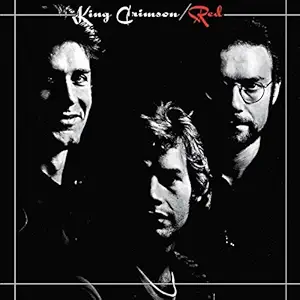
Explore our complete 21st Century Schizoid Man analysis or check out our coverage of Starless, Red, and the Red album.
Essential King Crimson Albums


Live Performances and Stage Evolution
King Crimson performed The Court of the Crimson King during their initial 1969-1970 touring period, establishing it as a concert staple during the original lineup’s brief existence.
The band supported the album with extensive UK and US tours, with some shows featuring The Nice as opening act.
Their live debut occurred at The Speakeasy Club in London on April 9, 1969, with Yes guitarist Peter Banks among the audience members.
The song remained in the setlist throughout the original lineup’s tenure, which ended when Greg Lake departed in early 1970 to form Emerson, Lake and Palmer.
NME noted in their album review that while the studio recording was excellent, it couldn’t fully capture the power of the band’s live performances – making concert versions particularly prized by fans.
Greg Lake continued performing the song as a solo artist throughout his career, recording live versions that appeared on albums including “A Salute to King Crimson” and “London ’81.”
Later King Crimson lineups occasionally revisited the track, though Robert Fripp’s constantly evolving approach to the band meant setlists rarely looked backward for long.
Lake’s death on December 7, 2016, marked the end of an era for original performances of this material.
Complete Credits and Personnel
Performed by:
Greg Lake – Lead Vocals, Bass Guitar
Ian McDonald – Mellotron Mk II, Flute, Clarinet, Harpsichord, Backing Vocals
Robert Fripp – Guitar
Michael Giles – Drums, Percussion, Timpani, Backing Vocals
Robin Miller – Oboe (guest musician)
Written by:
Ian McDonald – Music
Peter Sinfield – Lyrics
Production:
Produced by King Crimson for E.G. Productions
Robin Thompson – Recording Engineer
Tony Page – Assistant Engineer
Recording Details:
Recorded: July 16 – August 15, 1969
Studio: Wessex Sound Studios, London
Album: In the Court of the Crimson King
Label: Island Records (UK), Atlantic Records (US)
Released: October 10, 1969
Length: 9:22 (album version)
Your The Court of the Crimson King (Song) Questions Answered
Why The Court of the Crimson King Changed Music Forever
The Court of the Crimson King (song) represents the precise moment when rock music proved it could achieve the complexity and emotional depth of classical composition without sacrificing raw power or accessibility.
Over five decades later, the song’s Mellotron passages remain instantly recognizable, its medieval imagery continues to inspire artists from novelists to anime creators, and its influence echoes through every progressive rock album recorded since 1969.
What makes this track enduringly relevant is its refusal to compromise – the band’s insistence that popular music could be intellectually ambitious while remaining emotionally devastating.
Modern listeners discovering King Crimson for the first time often report that The Court of the Crimson King sounds nothing like 1969 – it exists outside of time, as relevant today as when Pete Townshend called the album “an uncanny masterpiece.”
From its humble origins as a country and western tune to its transformation into prog rock’s defining statement, this song embodies the unlimited possibilities of creative ambition meeting virtuosic execution.
The Court of the Crimson King (song) remains essential listening for anyone who believes rock music can aspire to art – and proof that when artists refuse to compromise their vision, the results can echo through generations.
Ready to experience The Court of the Crimson King in all its glory?
Grab the remastered edition of In the Court of the Crimson King or explore our complete guide to King Crimson’s discography!