
Hello I Love You the Doors (1968): The #1 Hit with a Controversial Origin
“Hello I Love You the Doors” is one of the most searched Doors tracks on the planet, and with good reason: this is the song that handed the band their second number one single in the United States and cemented their status as a genuine mainstream force.
Released in the summer of 1968 from the Waiting for the Sun album, it is also one of the most debated songs in The Doors’ catalogue, carrying with it a chord-progression controversy that has followed it across six decades.
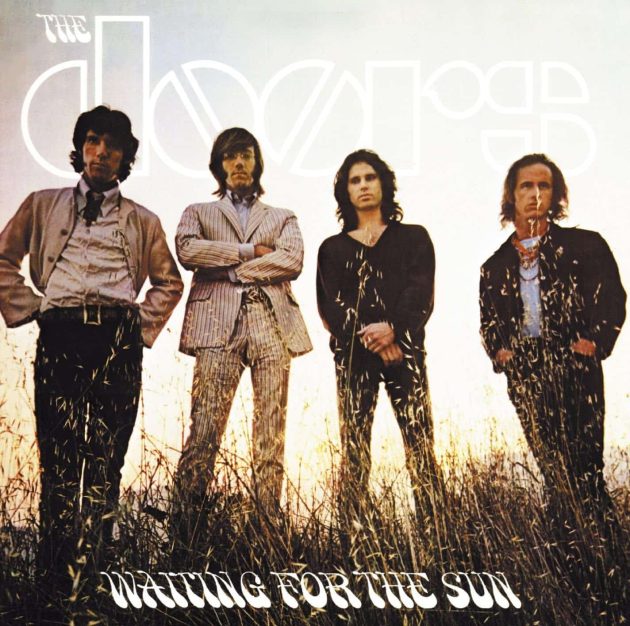
Get Waiting for the Sun by The Doors on Vinyl or CD at Amazon.
Affiliate Disclosure: I am an Amazon affiliate and if you purchase through any amazon links on this site i may earn a small commission at no extra charge to you.
Quick Navigation
What is the Meaning of Hello, I Love You by The Doors?
“Hello, I Love You” is a song about instant, overwhelming physical attraction, a narrator watching a woman walk past on a beach and declaring love, desire, and obsession in the space of a few seconds. Morrison wrote the lyric as a young man before The Doors existed, and it reads as an unfiltered, unapologetic statement of desire with no pretense of emotional depth beyond the immediate moment.
The Vibe: Genre, Mood, and Search Intent
“Hello, I Love You” is the most straightforwardly pop track The Doors ever released, and that’s not a criticism.
After the density of their first two albums, its two-minute drive-straight-through structure was a deliberate pivot toward AM radio, and it worked.
- Genre: Psychedelic Pop, Hard Rock, Garage Rock
- Mood: Electric, Urgent, Infatuated
- Tempo: Fast, driving, almost breathless
- Best For: Summer playlists, driving with the windows down, high-energy classic rock mixes
- Similar To: The Kinks’ “All Day and All of the Night”, intentionally or not, the chord structures share enough DNA that Ray Davies of The Kinks acknowledged the similarity
- Fans of The Doors also search: “Waiting for the Sun album 1968,” “The Doors number one hits,” “classic rock songs about attraction”
Behind the Lyrics: The Story of Hello, I Love You
Jim Morrison wrote “Hello, I Love You” in 1965, before The Doors had formed, before Ray Manzarek had heard him reciting poetry on Venice Beach, and before anyone outside of Los Angeles knew his name.
The story behind the lyric is specific: Morrison was sitting on Venice Beach in LA and watched a tall woman walk past along the shoreline.
The image, her turning sideways in the sun, the arc of her stride, the complete indifference she showed to any observer, lodged in his mind immediately, and the song poured out of it.
When The Doors began building their catalogue in 1966 and 1967, the song was always in their live set, but producer Paul A. Rothchild and Elektra Records chose not to include it on either of the first two albums, considering it too slight for the band’s developing identity.
By 1968, with Waiting for the Sun needing a commercially viable anchor, the song was revisited, rearranged, and given the harder, more direct treatment that turned it into a number one single.
The controversy that arrived with its success was genuine: the chord progression bears a notable resemblance to the Kinks’ 1964 hit “All Day and All of the Night.”
Ray Davies of The Kinks acknowledged the similarity publicly but never pursued legal action.
Morrison’s defenders have pointed out that the underlying chord pattern is a common enough rock figure and that the melodic and lyrical content is entirely distinct.
The full chart history and controversy surrounding “Hello, I Love You” is documented in detail at the Wikipedia page for the song.
For the broader band context, the complete story of The Doors’ members and their legacy covers the 1968 period and the pressures of commercial success in detail.
Technical Corner: The Gear Behind Hello, I Love You
The most distinctive element of “Hello, I Love You” is Robby Krieger’s guitar work, which here abandons the flamenco-influenced finger-picking he used on tracks like “Light My Fire” in favor of a hard, strummed electric attack that drives the song like a piston.
Krieger played a Gibson SG on the track, and the choice of instrument shows: the SG’s bright, cutting tone cuts through the mix without the warmth of a Les Paul, giving the song its lean, slightly abrasive energy.
Ray Manzarek’s keyboard work on “Hello, I Love You” is deliberately restrained, he locks into a supporting role, filling space behind Krieger’s rhythm guitar rather than dominating the arrangement as he does on organ-led tracks.
John Densmore’s drum part is straightforward and propulsive, built around a backbeat that keeps the song moving at pace.
The track was recorded primarily at TTG Studios in Hollywood, a change from the Sunset Sound sessions that produced much of the band’s earlier work, with Paul A. Rothchild again at the desk.
Rothchild’s production here is noticeably drier and more direct than on the debut: less reverb, less space, more immediacy.
That compression of the sonic space gives “Hello, I Love You” its sense of forward momentum, it sounds like a song that has somewhere to be.
Legacy and Charts: Why Hello, I Love You Still Matters
“Hello, I Love You” reached number one on the US Billboard Hot 100 in August 1968, becoming The Doors’ second chart-topper after “Light My Fire” in 1967.
In the UK it peaked at number 15, a solid showing for a band that had not always translated easily to British radio tastes.
The song made The Doors the first band to have two number one singles in the United States from different studio albums in consecutive years, a benchmark that underlines how commercially dominant they were at their peak.
The track has been licensed extensively for film, television, and advertising over the decades, and its driving guitar riff remains one of the most instantly recognizable intros in classic rock.
For a full picture of where Waiting for the Sun sits in the band’s discography, the album review for Waiting for the Sun covers the full record and its place in The Doors’ career arc.
Listener’s Note: A Personal Take on Hello, I Love You
I will be honest: “Hello, I Love You” is not where I go when I want the full Doors experience.
If you want Morrison at his most ambitious, you go to “The End” or “When the Music’s Over.”
But there’s something I’ve always appreciated about this song’s complete lack of pretension.
It’s Morrison at his most unguarded, a twenty-one-year-old sitting on Venice Beach watching a woman walk by and writing down exactly what that felt like, with no philosophical apparatus around it.
And Krieger’s guitar riff has a kinetic, almost reckless energy that the band’s more studied compositions sometimes trade away for atmosphere.
Put it on at the right volume and it still sounds like it’s in a hurry to get somewhere.
Affiliate Disclosure: I am an Amazon affiliate and if you purchase through any amazon links on this site i may earn a small commission at no extra charge to you. This helps support classicrockartists.com and allows me to keep providing deep-dive content on the legends of rock. Thank you for your support!
Collector’s Corner: Own Hello, I Love You on Vinyl or CD
The 40th Anniversary Mixes edition of Waiting for the Sun is the best available version, with remastered audio that gives Krieger’s guitar considerably more presence than older pressings.
The original 1968 Elektra pressing is increasingly collectible, particularly copies in VG+ or better condition.
Get Waiting for the Sun by The Doors on Vinyl or CD at Amazon.
Frequently Asked Questions About Hello, I Love You
Who wrote “Hello, I Love You”?
Jim Morrison wrote “Hello, I Love You” in 1965, before The Doors had formed as a band. The song was inspired by a woman he observed walking on Venice Beach in Los Angeles. It was performed live throughout the band’s early career before being recorded for the 1968 album Waiting for the Sun and released as the lead single.
Did “Hello, I Love You” reach number one?
“Hello, I Love You” reached number one on the US Billboard Hot 100 in August 1968, making it The Doors’ second chart-topper after “Light My Fire” in 1967. It peaked at number 15 in the UK. The song made The Doors one of the few bands to score number one singles from two separate studio albums in consecutive years during the 1960s.
Is “Hello, I Love You” similar to a Kinks song?
Yes, the chord progression in “Hello, I Love You” is notably similar to The Kinks’ 1964 hit “All Day and All of the Night.” Ray Davies of The Kinks acknowledged the resemblance publicly, though no legal action was ever taken. The Doors’ defenders note that the underlying chord pattern is a common rock figure, and that Morrison’s melody and lyric are entirely distinct from the Kinks’ track.
What album is “Hello, I Love You” from?
“Hello, I Love You” is the lead single from The Doors’ third studio album, Waiting for the Sun, released on Elektra Records in July 1968. Waiting for the Sun became The Doors’ only album to reach number one on the US Billboard 200, driven in large part by the commercial success of this single.
You Might Also Like
Waiting for the Sun (1968) – Album Review
The full album that produced The Doors’ second number one, a transitional record that split critical opinion but conquered the charts on the back of this single.
Light My Fire – Story & Meaning (1967)
The Doors’ first number one single, the song that made them stars and against which every subsequent hit, including “Hello, I Love You,” would inevitably be measured.
People Are Strange – Story & Meaning
Written around the same time as “Hello, I Love You” but occupying a completely different emotional register, darker, stranger, and built on a waltz-time structure that makes it impossible to shake.