
The Doors Morrison Hotel album is a landmark release that captured the band returning to their gritty blues-rock roots in 1970.
This record marked a significant shift away from the orchestral experiments of their previous work.
Fans and critics alike consider it one of the most cohesive statements in the band’s career.
The following guide explores every detail of the Doors Morrison Hotel album.
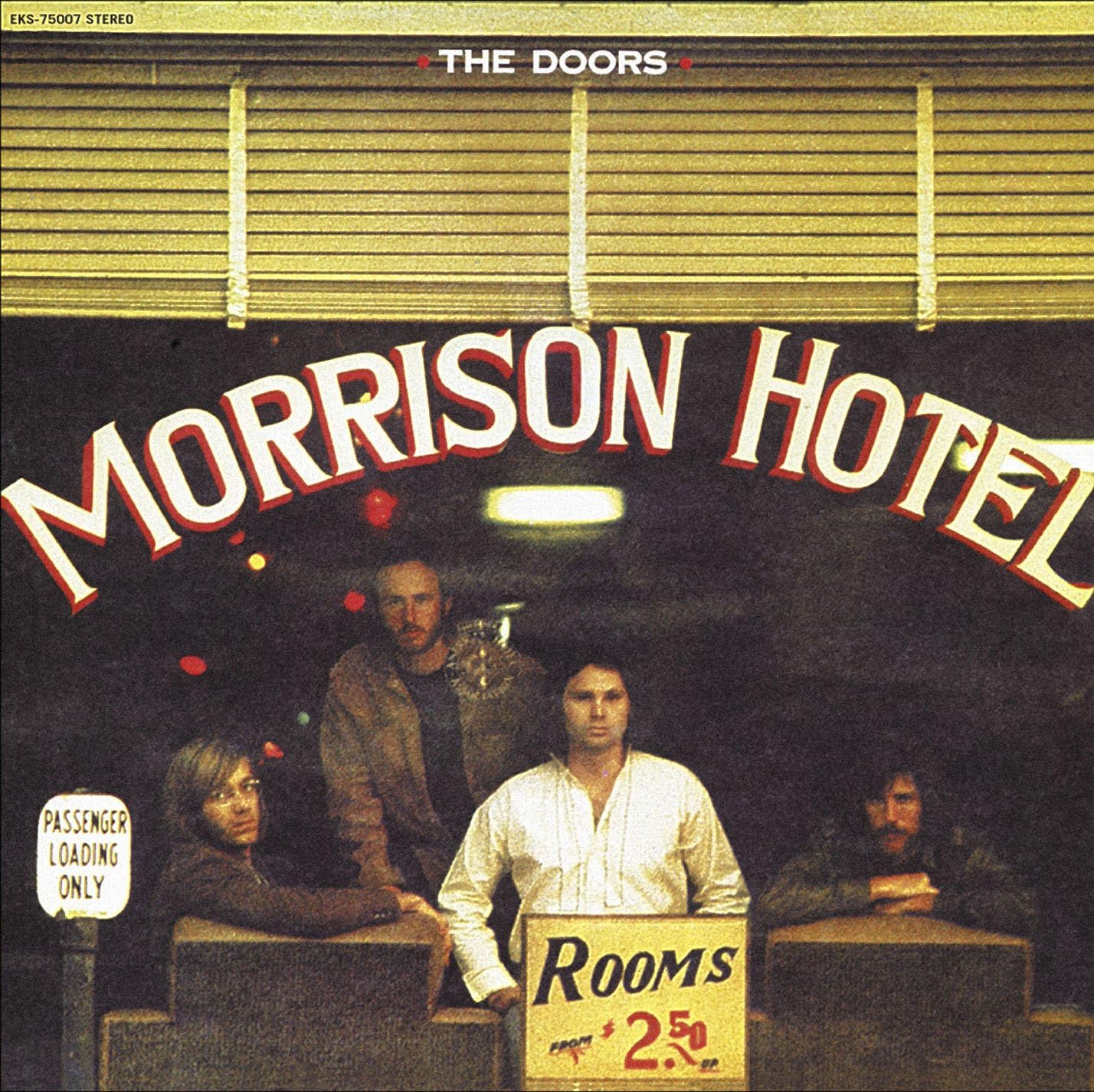
Table of Contents
- The Doors Morrison Hotel Album: A Masterful Return to Blues-Rock
- Behind the Recording Sessions at Elektra Sound Recorders
- Musicians and Key Personnel on The Doors Morrison Hotel Album
- Definitive Track-by-Track Analysis of The Doors Morrison Hotel Album
- Commercial Success and Singles Performance in 1970
- What the Critics Said: Initial and Modern Reception
- Exploring the Evolving Musical Style and Themes
- The Fascinating History of the Album Artwork and Packaging
- Legacy and Cultural Influence of The Doors Morrison Hotel Album
- Final Verdict on the Doors’ Fifth Studio Masterpiece
Own a Piece of Rock History
Experience the raw power of the Doors’ blues revival on high-quality vinyl or CD.
Buy on AmazonThe Doors Morrison Hotel Album: A Masterful Return to Blues-Rock
The Doors Morrison Hotel album arrived at a pivotal moment for the Los Angeles quartet.
Released on February 9, 1970, the record served as a powerful response to the mixed reception of The Soft Parade.
Jim Morrison and his bandmates decided to strip away the brass and string arrangements that had complicated their earlier sound.
This “back to basics” approach re-energized the group and solidified their reputation as a formidable hard rock act.
The album is divided into two distinct sides titled “Hard Rock Cafe” and “Morrison Hotel.”
This structure highlighted the dual nature of their evolving musical identity during the late 1960s classic rock era.
Behind the Recording Sessions at Elektra Sound Recorders
Recording for the project primarily took place in November 1969 at Elektra Sound Recorders in Los Angeles.
Longtime producer Paul A. Rothchild returned to guide the band through these intense sessions.
The atmosphere was markedly different from the protracted and expensive nine-month recording period of their previous LP.
Engineer Bruce Botnick worked closely with the band to capture a drier and more immediate room sound.
The group focused on live-in-the-studio performances to retain the energy of their club days.
This efficiency allowed the band to complete most of the tracks in just a few weeks.
Musicians and Key Personnel on The Doors Morrison Hotel Album
The core lineup of the members of the Doors remained unchanged during these sessions.
Jim Morrison provided his most commanding vocal performances in years, showcasing his rich baritone.
Ray Manzarek moved away from the psychedelic organ to emphasize the barrelhouse piano and electric keys.
Guitarist Robby Krieger brought a stinging blues edge to his solos, particularly on the opening track.
John Densmore employed jazz-influenced drumming techniques that provided a swing rarely found in hard rock.
The band also hired session bassists Ray Neapolitan and the legendary Lonnie Mack to bolster the rhythm section.
John Sebastian of The Lovin’ Spoonful contributed the famous harmonica parts under the pseudonym G. Puglese.
These talented musicians helped define the sonic character of The Doors Morrison Hotel album.
Definitive Track-by-Track Analysis of The Doors Morrison Hotel Album
The album opens with the high-octane energy of Roadhouse Blues, a staple of classic rock radio.
This track sets the tone for the entire record with its driving rhythm and Morrison’s iconic “keep your eyes on the road” lyric.
“Waiting for the Sun” finally appeared on this record after being held back from the 1968 album of the same name.
“Peace Frog” stands out as a funky and politically charged masterpiece featuring Krieger’s percussive wah-wah guitar.
The transition into the gentle “Blue Sunday” showcases the band’s ability to balance aggression with poetic beauty.
Side two begins with the seafaring shanty “Land Ho!” which offers a rare moment of joyous optimism.
“The Spy” delves into the dark and noir-influenced jazz territory that the band explored so effectively.
The haunting “Indian Summer” was actually a recording from their earliest 1966 sessions at World Pacific Studios.
Finally, “Maggie M’Gill” closes the Doors Morrison Hotel album with a gritty tale of a woman on the move.
Commercial Success and Singles Performance in 1970
The album was a significant commercial success upon its release in early 1970.
It reached number four on the Billboard 200 chart in the United States.
In the United Kingdom, the record peaked at number twelve, becoming their highest-charting studio album there.
The double A-side single “You Make Me Real” and “Roadhouse Blues” reached number fifty on the Billboard Hot 100.
While it lacked a massive top-ten hit like Light My Fire, the album sold consistently well.
The RIAA certified the record Gold just weeks after it hit the shelves in America.
What the Critics Said: Initial and Modern Reception
Critics were generally enthusiastic about the band’s decision to embrace a harder sound.
Rock Magazine famously called it the ballsiest and best album the band had ever produced.
Lester Bangs wrote a mixed but impactful review for Rolling Stone, praising the “raw funk” of the opener.
Many reviewers noted that Morrison’s voice sounded more mature and focused than on previous efforts.
Modern assessments often rank the album just below their debut and L.A. Woman in terms of quality.
Retrospective reviews highlight the record as the perfect bridge between their psychedelic past and blues future.
Exploring the Evolving Musical Style and Themes
The musical style of the record is deeply rooted in electric blues and traditional American rock and roll.
Lyrically, Jim Morrison moved away from abstract surrealism toward more grounded and observational themes.
Songs like “Ship of Fools” reflected his growing cynicism regarding the decline of the 1960s counterculture.
The theme of the road appears frequently, suggesting a band that is constantly in motion and searching for truth.
This sense of travel and transition defined the group’s headspace as they entered a new decade.
The band managed to maintain their mystical aura while sounding more physically powerful than ever before.
The Fascinating History of the Album Artwork and Packaging
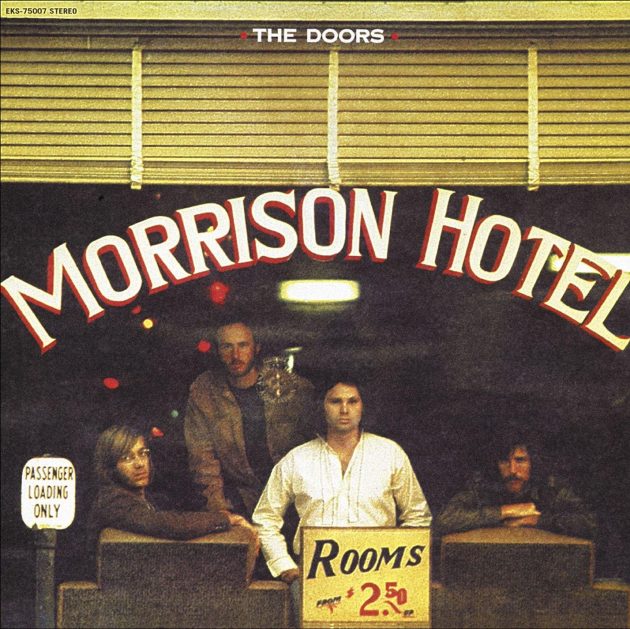
Photographer Henry Diltz captured the iconic cover image at the real Morrison Hotel on South Hope Street.
The hotel owner initially refused to let the band pose inside for the photo shoot.
When the clerk stepped away to the elevator, the band quickly ducked behind the window for the famous shot.
The back cover features the Hard Rock Cafe, a dive bar located at 300 East 5th Street in Los Angeles.
Interestingly, the founders of the global Hard Rock Cafe chain took their name from this very album cover.
This visual identity perfectly complemented the earthy and unpretentious music contained within the grooves.
Legacy and Cultural Influence of The Doors Morrison Hotel Album
The legacy of the record continues to grow as new generations of fans discover its timeless tracks.
It remains a cornerstone of the band’s discography alongside earlier hits like The End.
Musicians often cite the album as a primary influence on the development of hard rock and heavy blues.
The track “Peace Frog” has been sampled and covered by numerous artists across various musical genres.
Today, fans can experience a Robby Krieger Morrison Hotel revival in live settings.
This enduring popularity proves that the Doors Morrison Hotel album was far more than just a temporary comeback.
Final Verdict on the Doors’ Fifth Studio Masterpiece
The record stands as a testament to a band that refused to be pigeonholed by their past successes.
By returning to their roots, the Doors found a new sense of purpose and musical vitality.
The album is essential listening for anyone wanting to understand the transition from 60s psychedelia to 70s rock.
It remains one of the most consistent and enjoyable listening experiences in the entire rock canon.
The group proved they could thrive without orchestral gimmicks by relying on their incredible chemistry as a quartet.
Every serious collector should own the definitive version of the Doors Morrison Hotel album.