

Riders on the Storm the Doors (1971): Morrison’s Last Word
“Riders on the Storm the Doors” is one of the most cinematic songs in rock history, a seven-minute psychedelic blues meditation that sounds like rain on a wet highway and feels like the last mile of a very long road.
It closed L.A. Woman, the band’s sixth and final studio album with Jim Morrison, and within weeks of its release, the singer who breathed life into it was gone.
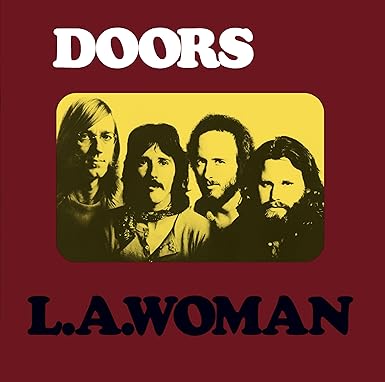
Affiliate Disclosure: I am an Amazon affiliate and if you purchase through any amazon links on this site i may earn a small commission at no extra charge to you.
Get L.A. Woman on Vinyl or CD at Amazon.
Quick Navigation
What is the Meaning of Riders on the Storm by The Doors?
“Riders on the Storm” by The Doors is a 1971 psychedelic blues track from the album L.A. Woman.
The lyrics follow a traveler on a stormy open road and introduce a chilling figure, a killer drifter who has no conscience and no destination.
Set against rolling thunder, rain, and Ray Manzarek’s cascading Fender Rhodes piano, the song explores themes of mortality, fate, and the dark freedom of the American road.
It was the last single released during Jim Morrison’s lifetime.
The Vibe: Genre, Mood, and Search Intent
From the first crack of thunder and the first note of that piano, “Riders on the Storm” occupies its own atmospheric space, somewhere between blues rock, jazz, and something genuinely eerie that no genre label quite captures.
It moves slowly and deliberately, like the storm it describes.
- Genre: Psychedelic Rock / Blues Rock / Art Rock
- Mood: Eerie, meditative, fatalistic
- Tempo: Slow burn, approximately 82 BPM
- Best For: Late-night drives in the rain, deep listening sessions, dark mood playlists
- Similar To: “People Are Strange” by The Doors, “Comfortably Numb” by Pink Floyd
- Fans of The Doors also search: “best psychedelic rock songs 1970s,” “Jim Morrison last songs,” “The Doors final album L.A. Woman”
Behind the Lyrics: The Story of Riders on the Storm the Doors
The song opens with real rain and real thunder recorded in the studio, an atmospheric gamble that paid off completely.
Morrison’s lyrics introduce two figures: a traveler riding the storm, and a killer, “a brain squirmin’ like a toad,” a man who “took a face from the ancient gallery and stalked the halls of fame.”
Morrison never publicly confirmed a direct source for the killer character, but many scholars and fans have drawn a line to Billy Cook, a real-life hitchhiker and serial killer who terrorized the American Southwest in 1950 and 1951.
The road as both freedom and threat was a recurring Morrison obsession, fed by his deep reading of the Beat writers, particularly Jack Kerouac, and the French poet Arthur Rimbaud.
The recording sessions for L.A. Woman were unconventional from the start.
Original producer Paul A. Rothchild walked out after early sessions, reportedly telling the band he felt like he was watching something he couldn’t save.
The Doors moved the entire operation to their own rehearsal workshop on Santa Monica Boulevard in Los Angeles and self-produced with engineer Bruce Botnick.
The rawer, more direct sound you hear on “Riders on the Storm” is a direct product of that decision.
Morrison arrived at those sessions in poor health, overweight, and visibly depleted.
But on this track, he found a register of control and intimacy that most singers never reach at their peak.
He recorded the lead vocal and then whispered the same melody over himself in a second pass, creating the ghostly dual-voice effect that runs beneath the song like a shadow.
It was the last time he recorded in a studio.
He flew to Paris shortly after, and on July 3, 1971, Jim Morrison died in a bathtub in the Marais district.
He was 27.
You can watch the official audio for the song on YouTube and read the full song history on Wikipedia.
To understand the full story of the four men who made this song, start with the complete guide to the members of The Doors, which covers where each of them went after Morrison was gone.
Technical Corner: The Gear Behind Riders on the Storm
The song is built on a foundation of four very specific sonic choices, and each one matters.
Ray Manzarek plays the iconic cascading intro figure on a Fender Rhodes electric piano, and he sustains that rolling, rippling pattern through the entire seven minutes.
It is not a riff in the traditional sense; it is closer to a texture, the musical equivalent of rain on glass.
Manzarek also played the bass line with his left hand on a Fender keyboard bass, as he did throughout the Doors’ catalog, since the band never had a dedicated bassist.
John Densmore’s drum performance is one of the most underrated in classic rock.
His ride cymbal pattern is jazz-phrased and loose, rooted in the vocabulary of Miles Davis rather than rock, giving the song its feeling of suspended time.
Robby Krieger’s guitar is restrained throughout, adding texture and space rather than lead fills, which took discipline from one of rock’s most instinctively melodic guitarists.
The rain and thunder effects were recorded by the band and Botnick specifically for this track, not sourced from a library.
Morrison’s whispered vocal was a second pass over his lead, recorded at a lower dynamic and mixed just below the surface, creating a doubling effect that gives his voice an almost disembodied presence.
The song was produced by Bruce Botnick and The Doors and recorded at The Doors’ Workshop, their own converted rehearsal space at 8512 Santa Monica Boulevard, West Hollywood, California.
Legacy and Charts: Why Riders on the Storm the Doors Still Matters
“Riders on the Storm” was released as a single on June 16, 1971, backed with “The Changeling.”
It peaked at number 14 on the US Billboard Hot 100, which made it a genuine Top 20 hit but not quite the commercial peak of “Light My Fire” or “Hello, I Love You.”
What it lacked in initial chart performance it more than made up for in longevity.
In 2000, Snoop Dogg collaborated with the surviving Doors members on a remix of the song, layering new rap vocals over the original track for the soundtrack to the Nicolas Cage film “Gone in 60 Seconds.”
The remix reached number one in the UK and introduced the song to an entirely new generation.
It remains one of the more unlikely crossover moments in rock history, and it worked because the original track had always been built on a groove rather than a riff.
The song has appeared in dozens of films and television productions over the decades, consistently used to signal menace, fate, or the open road.
John Densmore named his 1990 memoir after this song, “Riders on the Storm: My Life with Jim Morrison and the Doors,” which remains one of the most candid insider accounts of the band’s rise and collapse.
The fact that the drummer chose this title above all others tells you something about where this song sits in the band’s own mythology.
For a deeper look at how Robby Krieger has kept the Doors’ legacy alive in recent years, read about his full Morrison Hotel Revival performance in Los Angeles.
Listener’s Note: A Personal Take on Riders on the Storm by The Doors
When I first heard this on vinyl, the needle dropping into that groove before Morrison opens his mouth, I thought I’d put the record on wrong.
The rain comes first, then the piano, and there’s this long moment where you think something is about to happen, and then you realize that waiting, that suspended breath, is the point.
There is a moment about four minutes in where the rain effect pulls back almost imperceptibly in the mix and Morrison’s whispered vocal rises just slightly above the melody line.
On a good pair of headphones, with the volume up, it sounds less like a recording and more like someone standing just behind you in a dark room.
I don’t say that to be dramatic; I say it because the production achieves something most rock records never attempt, which is the feeling of physical presence.
Seven minutes is a long time to ask someone to sit still for a single track.
This one earns every second of it.
The fact that Morrison recorded this song less than two months before he died does not reduce it to a curiosity.
It makes it something close to a farewell that wasn’t planned as one, which is somehow more devastating than if it had been.
Collector’s Corner: Own Riders on the Storm on Vinyl or CD
The album L.A. Woman has been reissued in multiple vinyl and CD formats over the years, and it remains one of the best-sounding Doors records, partly because of that warm, live-room aesthetic from the workshop sessions.
If you want to hear “Riders on the Storm” the way it was meant to be heard, on a record player with the volume at a reasonable level and no distractions, the original analog master still sounds extraordinary on modern pressings.
Get L.A. Woman on Vinyl or CD at Amazon.
Affiliate Disclosure: I am an Amazon affiliate and if you purchase through any amazon links on this site i may earn a small commission at no extra charge to you. This helps support classicrockartists.com and allows me to keep providing deep-dive content on the legends of rock. Thank you for your support!
Frequently Asked Questions About Riders on the Storm
Who wrote Riders on the Storm?
“Riders on the Storm” is credited to all four members of The Doors: Jim Morrison, Ray Manzarek, Robby Krieger, and John Densmore. The Doors wrote most of their material collectively, with Morrison contributing the lyrics and conceptual direction while the other three developed the musical arrangement.
What album is Riders on the Storm on?
“Riders on the Storm” appears on L.A. Woman, the sixth and final studio album recorded by The Doors with Jim Morrison. The album was released on April 19, 1971, on Elektra Records. The song also appeared as a single, backed with “The Changeling,” released June 16, 1971.
What does Riders on the Storm mean?
The song uses the imagery of a storm and an open road to explore themes of mortality, fate, and the darkness lurking within freedom. The killer character in the lyrics is widely believed to be inspired by real-life hitchhiker murderer Billy Cook, though Morrison never confirmed this. The phrase “riders on the storm” functions as both a literal image and a metaphor for people who live outside the boundaries of ordinary society, driven by something they can’t fully control.
Was Riders on the Storm Jim Morrison’s last recording?
The L.A. Woman sessions, which included “Riders on the Storm,” are widely considered Morrison’s final studio recordings. He flew to Paris shortly after the sessions wrapped and died there on July 3, 1971, at age 27. The song and the album were released while he was still alive, but he did not live to see “Riders on the Storm” chart.
You Might Also Like
Light My Fire – Story & Meaning (1967)
The song that launched The Doors, written by Robby Krieger, and the commercial peak that “Riders on the Storm” quietly answered four years later with maturity and shadow.
Members of The Doors: Complete Story & Where Are They Now
The four men who made this song had very different lives after Morrison died, and this guide covers exactly where each of them went and what they built.
Robby Krieger: Full Morrison Hotel Revival in L.A.
Krieger brought Morrison Hotel back to life in Los Angeles, a live performance that underscores just how much sonic territory The Doors covered before “Riders on the Storm” closed everything out.
More than fifty years on, “riders on the storm the doors” remains one of the most searched phrases in classic rock, and for good reason: this is the song that ended an era, left the door open, and let the rain in.