
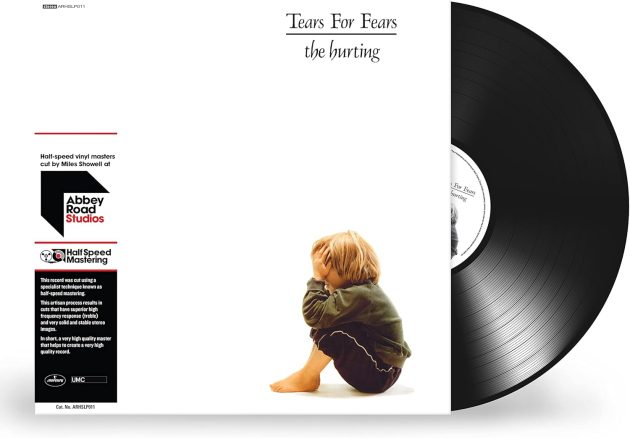
The Hurting Tears For Fears: The Album That Started It All
The Hurting by Tears for Fears is one of the most emotionally raw debut albums to come out of the entire 1980s new wave era.
It did not arrive quietly.
It hit the UK like a psychological gut punch in March 1983 and never really let go.
If you have ever felt like your teenage years were one long, unprocessed trauma session, this record gets it.
Roland Orzabal and Curt Smith were barely in their twenties when they made this, and somehow they captured the interior anguish of a generation that was still figuring out how to name what it felt.
Quick Navigation
What Is The Hurting?
The Hurting is the debut studio album from Tears for Fears, released on March 7, 1983, through Mercury Records.
It was produced by Chris Hughes and Ross Cullum, with a sound deeply rooted in synthesizers, drum machines, and aching vocal harmonies.
The album went straight to number one on the UK Albums Chart.
That was not a fluke.
It connected with an audience that recognized the darkness behind the synth-pop sheen.
The lyrical themes draw heavily from primal therapy, a psychological concept championed by Arthur Janov, whose ideas influenced both John Lennon and, clearly, Roland Orzabal.
Pain, childhood wounds, and the search for emotional release are woven into every track.
This is not background music.
This is music that sits down across from you and makes eye contact.
Affiliate Disclosure: I am an Amazon Associate, and if you purchase through any Amazon links on this site, I may earn a small commission at no extra charge to you. It helps keep this site running and the deep dives coming. Thank you for the support.
Get The Hurting on Amazon and hear it the way it was meant to be heard.
The Sound of The Hurting
The production on this record is impeccably cold and warm at the same time, which sounds like a contradiction until you hear it.
Synthesizers carry most of the melodic weight, layered in ways that feel claustrophobic in the best possible sense.
The drum programming is precise without feeling mechanical.
Curt Smith’s bass lines move with purpose beneath the surface, giving the record a physical weight that pure synth albums often lack.
Orzabal’s guitar appears sparingly, but when it does, it cuts through like a memory you did not ask to have.
The duo’s vocal harmonies are the real anchor here.
Smith’s voice has a fragility that grounds the more intense moments, while Orzabal pushes into the upper registers with an urgency that borders on desperate.
It is a pairing that would carry them through their entire 40-year career.
Listen to the full album on YouTube and pay attention to how the mix never lets you fully relax.
That tension is entirely intentional.
Track-by-Track Highlights
The album opens with “The Hurting,” a slow-building meditation on emotional pain that sets the tone immediately.
There is no easing in.
You are in the deep end from the first bar.
“Mad World” follows, and if you only know the Gary Jules cover, hearing the original is a revelation.
The synth-pop arrangement gives the song a manic, clock-ticking energy that makes the despair feel almost danceable.
That is a hard trick to pull off, and Tears for Fears do it effortlessly.
“Pale Shelter” is perhaps the most emotionally direct track on the record.
It is a plea for parental love that never came, and it does not dress that wound up in metaphor.
“Ideas as Opiates” is the deep cut fans return to most.
It is six minutes of hypnotic, slowly evolving atmosphere that rewards patience.
“Change” was the first single and remains a standout, with a hook that burrows into your memory within two listens.
“Suffer the Children” closes the first half with an ominous, slow-motion dread that still sounds unlike anything else from that era.
The back half of the record maintains the intensity without repeating itself.
“Watch Me Bleed,” “The Prisoner,” and “Start of the Breakdown” each add a different texture to the emotional landscape Orzabal and Smith are mapping.
This is a record that works as a complete listen, not just a collection of singles.
The Hurting Tears For Fears Legacy
Few debut albums from the 1980s have held up as well as The Hurting.
Most records from this period feel like artifacts of their time, charming but dated.
The Hurting feels like it could have been made last year.
The emotional content is timeless precisely because it does not rely on the decade’s fashionable optimism.
While peers were singing about dancing and romance, Tears for Fears were processing childhood trauma in four-four time.
That willingness to go somewhere darker gave the album a staying power that shinier records from the same era never achieved.
It also laid the psychological and sonic groundwork for everything the band would do next.
The massive commercial breakthrough of Songs From the Big Chair in 1985, including the iconic “Everybody Wants to Rule the World,” would not have existed without the blueprint The Hurting established.
You can hear the seeds of that ambition in every track here.
The duo simply needed a bigger stage and a slightly larger sonic palette to bring it fully to life.
Chart Performance and Impact
The Hurting debuted at number one on the UK Albums Chart in April 1983 and stayed in the top ten for months.
It produced three UK top-twenty singles: “Mad World,” “Change,” and “Pale Shelter.”
The American market took longer to come around, but the record built a devoted cult following that primed the audience for the global explosion that followed.
Critically, the album was recognized as something different from the outset.
Reviewers noted the psychological depth of the lyrics and the precision of the production in ways that were unusual for a debut from two artists still in their early twenties.
The 80s music landscape was crowded with synth-pop acts, but very few were using the genre as a vehicle for genuine emotional excavation.
Tears for Fears stood apart because they had something real to say and the craft to say it compellingly.
Decades later, the album continues to appear on best-of lists and is regularly cited by artists across multiple genres as a formative influence.
That kind of longevity is earned, not assigned.
Should You Buy The Hurting?
If you have any interest in the emotional range of 1980s music beyond the surface-level pop hits, yes, absolutely.
If you are a Tears for Fears fan who has never gone back to the beginning, this is essential listening.
If you discovered the band through Songs From the Big Chair or The Seeds of Love and never tracked down where they came from, The Hurting is the answer to a question you did not know you had.
The album holds up in every format.
The remastered versions bring out detail in the production that was occasionally buried in the original mix.
You can also browse the full range of Tears for Fears albums and merch on Amazon if you are looking to go deeper into the catalog.
Whatever format you choose, just listen to it front to back, without interruption, at least once.
That is the only way to fully experience what Orzabal and Smith built here.
The Hurting Tears For Fears is not just a debut album.
It is a document of two young men deciding that honesty was more important than comfort, and in doing so, they made something that still resonates more than forty years later.
Frequently Asked Questions
When was The Hurting released?
The Hurting was released on March 7, 1983, through Mercury Records in the United Kingdom.
Did The Hurting reach number one?
Yes. The album debuted at number one on the UK Albums Chart and remained in the top ten for an extended period following its release.
What are the best songs on The Hurting?
“Mad World,” “Pale Shelter,” “Change,” and “Ideas as Opiates” are consistently cited as the standout tracks, though the album rewards listening as a complete work.
What influenced the lyrics on The Hurting?
Roland Orzabal was heavily influenced by the primal therapy theories of Arthur Janov, whose work also influenced John Lennon. Themes of childhood pain, emotional suppression, and psychological release run through every song.
How does The Hurting compare to Songs From the Big Chair?
Songs From the Big Chair is more polished and commercially expansive, but The Hurting is rawer and more emotionally concentrated. Both are essential, and The Hurting is the foundation on which the bigger record was built.
Is The Hurting considered a classic rock album?
It is considered a landmark of 1980s new wave and alternative music. You can explore more essential albums from the era in our album reviews section at Classic Rock Artists.
Few records capture the interior life of a generation as precisely as The Hurting Tears For Fears, and that is exactly why it still matters today.