

Exile on Main St: The Rolling Stones’ Greatest Album Reviewed
Exile on Main St is not just a Rolling Stones record. It is the defining document of rock and roll in its prime.
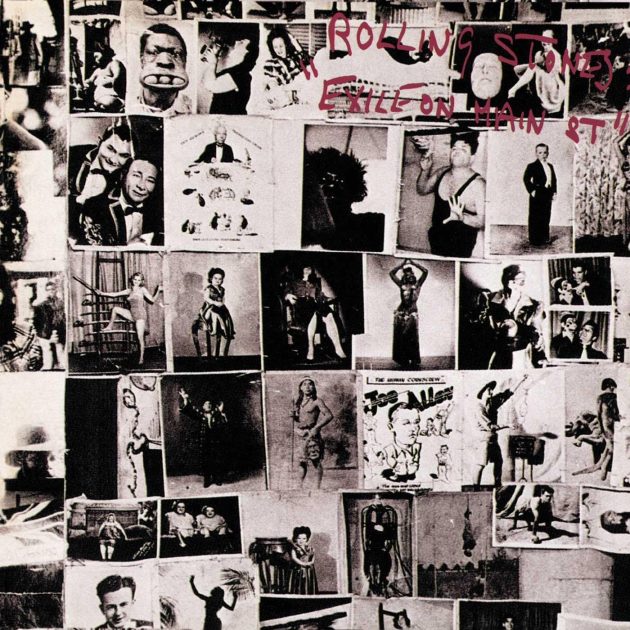
Released on May 12, 1972, this sprawling double LP captured a band operating at full creative tilt, despite circumstances that would have buried most acts.
Eighteen tracks, four sides of vinyl, and zero filler: this is one of those rare albums that earns every superlative thrown at it.
Before diving deep into the music, explore the complete history of the members of the Rolling Stones to understand the lineup that made this record possible.
Quick Navigation
- Exile on Main St: Born in Tax Exile and Chaos
- The Nellcôte Sessions: Music Brewed in a Basement
- Exile on Main St Track by Track: 18 Songs, Zero Filler
- The Session Players Who Made It Immortal
- From Mixed Reviews to Rock’s Greatest Album
- The Rolling Stones Discography: Where Does Exile Fit?
- Frequently Asked Questions About Exile on Main St
Exile on Main St: Born in Tax Exile and Chaos
In 1971, the British government was closing in on the Rolling Stones over unpaid taxes.
The band’s only option was to leave England entirely and live abroad as legal tax exiles.
Keith Richards rented Villa Nellcôte, a grand 16-room mansion in Villefranche-sur-Mer, near Nice in the South of France.
Its basement became the most famous makeshift recording studio in rock history.
The album did not spring fully formed from those French sessions alone.
Recording had begun as early as 1969, during the same sessions that also produced Sticky Fingers and material from Let It Bleed.
Tracks were laid down at Mick Jagger’s Stargroves estate in England and at Olympic Studios in London before the band relocated to France.
The title itself came from a place of knowing irony. They were literally exiles, making music on their own version of Main Street.
Charlie Watts once described Keith Richards’ working schedule as “Keith time,” a loose, nocturnal, chemically altered approach to the craft.
Jagger pushed for momentum and structure, while Richards was perfectly content to let music arrive when it arrived.
That productive friction gave the album its restless, combustible energy, and it is exactly the right kind of restless.
The Nellcôte Sessions: Music Brewed in a Basement
The Rolling Stones Mobile recording truck was parked outside Villa Nellcôte for much of the summer and fall of 1971.
This legendary studio on wheels also captured some of rock’s most important records, including Deep Purple’s “Smoke on the Water.” You can read about the band behind that track in this guide to the members of Deep Purple.
The Nellcôte basement was never designed to be a recording environment.
There was a single fan lodged in a corner window that barely moved the air, a detail that directly inspired the track “Ventilator Blues.”
Sessions typically began around midnight and ran until dawn, with band members, guests, and assorted hangers-on drifting in and out throughout.
Country legend Gram Parsons spent extended time at the villa during the sessions, and his presence helped deepen the country music thread running through songs like “Sweet Virginia” and “Torn and Frayed.”
Engineer Andy Johns worked around the acoustics of a 19th-century villa basement, placing microphones in corridors, under stairs, and in adjacent rooms to capture the right sound.
The result is a thick, warm, deliberately murky audio landscape that no amount of modern studio precision has ever been able to replicate.
When French authorities began investigating drug use at Nellcôte in late 1971, the Stones took their tapes and finished the album at Sunset Sound in Los Angeles.
Overdubs were added, the final mixes were completed, and the album was ready for release by spring 1972.
Exile on Main St Track by Track: 18 Songs, Zero Filler
The album opens with “Rocks Off”: dirty rhythm guitar, a swelling horn section, and Jagger singing about numbness and pleasure in the same breath.
It sets the tone perfectly: this record is alive, sweaty, and uninterested in being polished.
“Rip This Joint” is a two-minute rockabilly rocket with saxophonist Bobby Keys blowing baritone sax and the whole band playing at full sprint.
“Casino Boogie” features lyrics assembled using the cut-up method: the Stones wrote words on paper, pulled them out at random, and recorded the results cold.
Tumbling Dice was the lead single, reaching number five in the UK and number seven in the US, and remains one of the most perfectly constructed groove songs the band ever recorded.
“Sweet Virginia” is country soul at its finest, with Jagger on harmonica, Keys on saxophone, and a refrain that lands as both funny and genuinely moving.
“Loving Cup” was originally recorded at Olympic Studios in 1969 and was even performed at the July 1969 Hyde Park concert that followed Brian Jones’ death.
“Happy” was written and recorded in a single afternoon when Richards arrived at the studio early and found only Bobby Keys and drummer Jimmy Miller available.
Richards laid down guitar, bass, and lead vocals while Keys and Miller filled in their parts, with pianist Nicky Hopkins adding keys later.
It became Richards’ signature song and the album’s second single.
“Ventilator Blues” is the only track co-written by lead guitarist Mick Taylor, who believed he deserved more songwriting credit than Jagger and Richards were willing to acknowledge.
“Shine a Light” is the album’s spiritual centerpiece: a gospel-soaked, piano-drenched prayer featuring the late Billy Preston on organ and piano.
“Soul Survivor” closes the record with Richards’ raw guitar and Jagger singing about a doomed relationship that might be the death of him.
The full album is available to stream right now. Listen to the complete Exile on Main St album on YouTube.
The Session Players Who Made It Immortal
No honest account of this album is complete without crediting the musicians orbiting the core band.
Producer Jimmy Miller did double duty, contributing drums on key tracks including “Happy” and “Tumbling Dice” when Charlie Watts was unavailable or the moment called for it.
Saxophonist Bobby Keys appears throughout the record, his brawling tenor and baritone saxophone providing much of the soul and American swagger that sets Exile apart from anything else in the Stones catalog.
Pianist Nicky Hopkins, one of rock’s most in-demand session players, brought sophistication to tracks like “Loving Cup” and “Casino Boogie.”
Billy Preston, fresh from sessions with The Beatles, added church-hall organ to “Shine a Light” that turns the track into something genuinely transcendent.
The uncredited Dr. John played piano on “I Just Want to See His Face,” with Jagger reportedly improvising the lyrics in real time as the tape rolled.
Pedal steel guitarist Al Perkins, a frequent collaborator of Gram Parsons, added the country shimmer threaded through several tracks on the record’s second side.
Mick Taylor, regularly undervalued in popular retrospectives of the Stones, plays with a fluid, lyrical tone throughout.
His lead work on “Ventilator Blues” and “Let It Loose” is some of the finest rock guitar ever committed to tape.
From Mixed Reviews to Rock’s Greatest Album
Exile on Main St was not an immediate critical triumph when it was released.
In a July 1972 review for Rolling Stone magazine, critic Lenny Kaye praised its blues-rock foundation but suggested the band’s greatest album was still ahead of them.
Some reviewers found the murky production and loose-limbed sequencing inconsistent and hard to penetrate on first listen.
By the late 1970s, critical opinion had shifted dramatically.
The album was reassessed as the peak not just of the Stones’ career, but of rock music as a form.
Rolling Stone ranked Exile on Main St. at number seven on its 500 Greatest Albums of All Time in both 2003 and 2012, making it the highest-ranked Stones record on that list.
The 2020 revision dropped it slightly to number 14, but it remains the band’s top entry in every edition.
In 2012, the album was inducted into the Grammy Hall of Fame, the fourth Rolling Stones album to receive that honor.
Apple Music named it one of its 100 Best Albums ever.
A 2010 remastered and expanded reissue added 10 previously unreleased bonus tracks and charted at number one in the UK and number two in the US.
The record topped the British charts twice, 38 years apart, a feat almost without precedent in rock history.
The Rolling Stones Discography: Where Does Exile Fit?
Exile on Main St sits at the close of the greatest sustained creative run in Rolling Stones history.
Beginning with Beggars Banquet in 1968 and running through Let It Bleed, Sticky Fingers, and finally this double LP, the band produced four consecutive all-time masterpieces.
The album that followed, Goats Head Soup in 1973, is a strong record but it marks the beginning of a gradual creative cooling.
Exile was the last time everything aligned perfectly: the right lineup, the right producer, the right chaos, and the right collective ambition.
Some Girls in 1978 came closest to recapturing that fire, but Exile remains the high-water mark by a considerable margin.
The band’s most recent studio effort, Hackney Diamonds (2023), demonstrated the Stones still have creative reserves, but Exile is the album that defined the standard for everything that followed.
Affiliate Disclosure: As an Amazon Associate, I earn from qualifying purchases. If you click on any Amazon link on this site and make a purchase, I may receive a small commission at no extra cost to you. This helps support ClassicRockArtists.com and allows me to keep producing deep-dive content on the legends of rock. Thank you for your support.
Browse Rolling Stones Albums and Merch on Amazon
Frequently Asked Questions About Exile on Main St
When was Exile on Main St released?
Exile on Main St was released on May 12, 1972, by Rolling Stones Records.
How many tracks are on Exile on Main St?
The original album contains 18 tracks across four sides of a double LP.
A 2010 expanded reissue added 10 previously unreleased bonus tracks.
Where was Exile on Main St recorded?
The album was recorded across multiple locations between 1969 and 1972: Mick Jagger’s Stargroves estate in England, Olympic Studios in London, Villa Nellcôte in Villefranche-sur-Mer near Nice, France, and Sunset Sound Studios in Los Angeles.
Who produced Exile on Main St?
The album was produced by Jimmy Miller, who also contributed drums on several key tracks including “Happy” and “Tumbling Dice.”
What were the singles from Exile on Main St?
“Tumbling Dice” was released ahead of the album and reached number five in the UK and number seven in the US.
“Happy,” sung by Keith Richards, was the second single and peaked at number 22 in the United States.
What chart position did Exile on Main St reach?
The album reached number one in the UK, the US, and numerous other countries when it was first released in May 1972.
The 2010 reissue also hit number one in the UK and number two in the US.
Who played on Exile on Main St?
The core Rolling Stones lineup was Mick Jagger, Keith Richards, Charlie Watts, Bill Wyman, and Mick Taylor.
Key session contributors included Jimmy Miller, Bobby Keys, Nicky Hopkins, Billy Preston, Gram Parsons associate Al Perkins, and an uncredited Dr. John.
Is Exile on Main St considered the Rolling Stones’ best album?
Yes. Across five decades of critical reappraisal, Exile on Main St is consistently ranked as the band’s greatest work and one of the most significant albums in all of rock music.
What are all 18 songs on Exile on Main St?
The 18 tracks are: Rocks Off, Rip This Joint, Shake Your Hips, Casino Boogie, Tumbling Dice, Sweet Virginia, Torn and Frayed, Sweet Black Angel, Loving Cup, Happy, Turd on the Run, Ventilator Blues, I Just Want to See His Face, Let It Loose, All Down the Line, Stop Breaking Down, Shine a Light, and Soul Survivor.
Half a century on, Exile on Main St still sounds like nothing else in the canon: a filthy, glorious, impossibly alive piece of music that the Rolling Stones could only have made once, in exactly that place and at exactly that moment, and its status as one of rock’s greatest achievements has never been more secure.