

The Rolling Stones The Rolling Stones: The Definitive 1964 Debut Album Review
The Rolling Stones The Rolling Stones is the record that put one of rock’s greatest bands on the map, and sixty-one years after its release it still sounds like five people playing for their lives.
Released in the UK on April 17, 1964, on Decca Records, it shot to number one within two weeks and stayed there for twelve consecutive weeks.
It was the first non-Beatles album to top the British charts in over a year.
It sold more than 200,000 copies in the UK alone and spent 51 total weeks on the British chart.
In America, the same album arrived six weeks later retitled England’s Newest Hit Makers and peaked at number 11 on the Billboard 200.
For a full breakdown of the five men responsible, our guide to the members of The Rolling Stones gives you everything you need before you drop the needle.
Quick Navigation
Quick Navigation
- The Rolling Stones The Rolling Stones: UK vs US, Two Versions of the Same Debut
- Regent Sound Studios: Where Five Days Became Rock History
- The Rolling Stones The Rolling Stones: All 12 UK Tracks Reviewed
- England’s Newest Hit Makers: The American Version Explained
- Charts, Legacy, and Why This Album Belongs in Every Collection
The Rolling Stones The Rolling Stones: UK vs US, Two Versions of the Same Debut
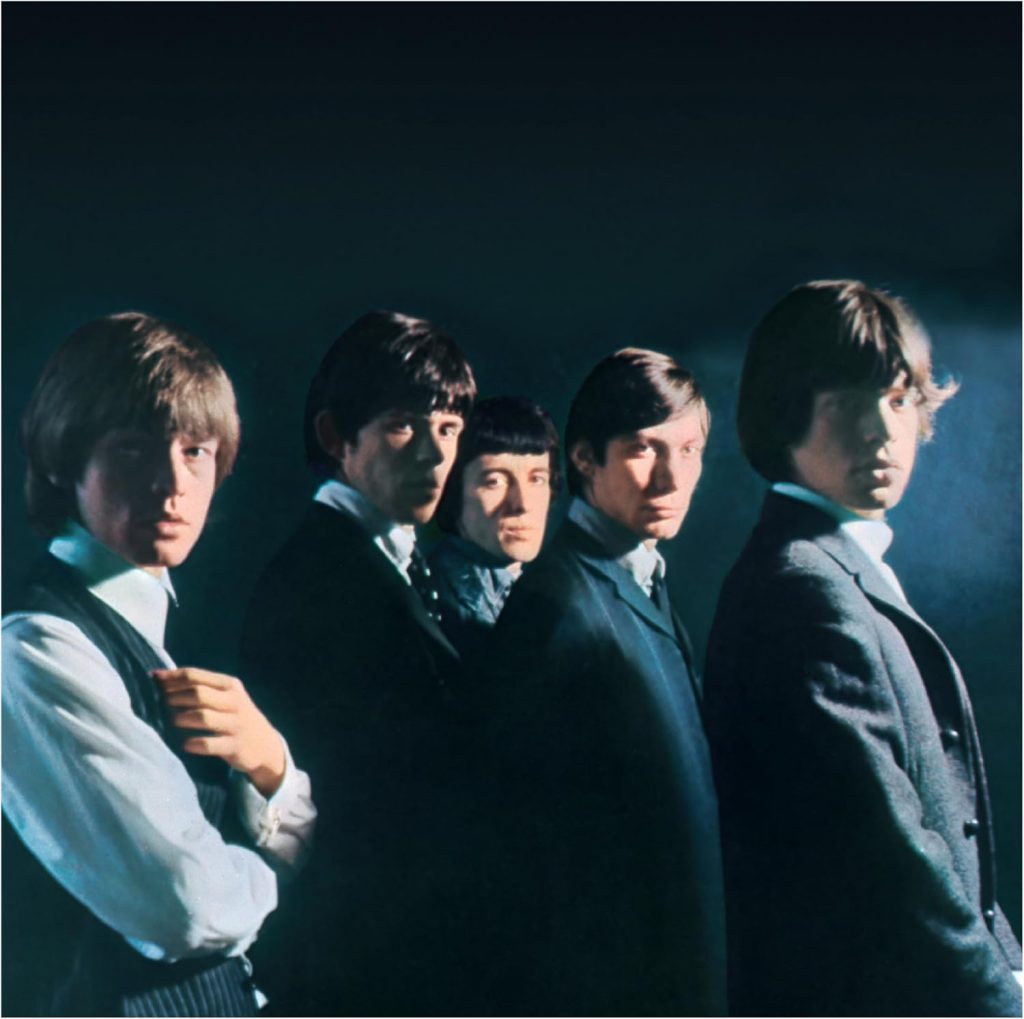
British listeners in April 1964 got twelve tracks pressed in mono, with no band name printed on the front cover.
That last detail was entirely deliberate.
Manager Andrew Loog Oldham pushed Decca to release it name-free, just five young men glowering at the camera.
His sleevenote made the case for why they did not need one: “The Rolling Stones are more than just a group, they are a way of life.”
Six weeks later, American audiences got a different product entirely.
London Records retitled the US release England’s Newest Hit Makers and adjusted the tracklist to suit American radio.
“Mona (I Need You Baby)” was replaced by “Not Fade Away,” the band’s recent UK hit single.
Some song titles were also shortened for the US pressing.
Critically, neither version was ever issued in true stereo.
Both the UK and US editions exist only in mono, recorded on a two-track machine under the conditions you will read about in the next section.
Collectors who want the full picture of this debut’s pressing variants will find detailed coverage in our piece on The Rolling Stones debut pressed and poured set for National Vinyl Record Day.
For the broader story of how this record fits into the decade that shaped rock, browse our 60s classic rock archive.
Regent Sound Studios: Where Five Days Became Rock History
The entire album was recorded at Regent Sound Studios, a cramped facility at 4 Denmark Street in London’s Tin Pan Alley district.
The sessions took place across five days spread between January 3 and February 25, 1964.
The studio’s walls were insulated with egg cartons.
The recording setup was two-track mono, with no budget for extensive re-takes.
Keith Richards later described the constraints plainly: “Under those primitive conditions it was easy to make the kind of sound we got on our first album.”
Co-manager Eric Easton shared production credit alongside Oldham, though neither had formal studio training.
A notable cameo occurred on February 4, the third recording day.
The album was running short of the required 30 minutes when American producer Phil Spector and singer-songwriter Gene Pitney dropped into the session unannounced.
Spector had been touring Britain with The Ronettes and knew the band from their January group tour.
Pitney produced a bottle of cognac.
Spector took Mick Jagger and a guitar out on the stairs.
The result was “Now I’ve Got a Witness” and “Little by Little,” both credited to the band pseudonym Nanker Phelge, which the Stones used for group compositions.
There was a sixth Rolling Stone present throughout these sessions: Ian Stewart, the classically-trained pianist who had co-founded the band with Brian Jones in 1962 but was quietly sidelined by Oldham for not fitting the image.
Stewart played piano on “Little by Little” and would remain the band’s road manager and unofficial sixth member for the rest of his life.
When the New Musical Express reviewed the finished album, it called it “probably the finest first LP ever” by a rock band, eulogising its “frenetic primal magnificence.”
The Daily Herald called it “a stinker.”
Oldham loved the conflict.
Jagger later summed up the recording simply: “I like our first album very much because it’s all the stuff we used to do on stage.”
You can hear the full UK album in sequence in this complete 1964 playthrough on YouTube to appreciate exactly how the twelve tracks flow from first note to last.
The official Stones home at rollingstones.com shows how this barebone debut connects to everything that followed over six decades.
The Rolling Stones The Rolling Stones: All 12 UK Tracks Reviewed
No competing review of The Rolling Stones The Rolling Stones covers all twelve tracks in the detail they deserve.
Here is every song, in sequence, with the full historical context behind each one.
1. Route 66
Written by Bobby Troup in 1946 and popularised by Chuck Berry‘s 1961 recording, this opener of The Rolling Stones The Rolling Stones album is one of the most confident intros of the era.
Jagger does not sound like a 20-year-old from Dartford, Kent.
He sounds like someone who grew up on American highways.
The band tears through it in under two and a half minutes and never looks back.
2. I Just Want to Make Love to You
Written by Willie Dixon and originally recorded by Muddy Waters as a slow smouldering blues, the Stones turn it into something urgent and uptempo.
Every instrument pulls in the same direction at the same moment.
This is the track where the band sounds most locked in as a single unit.
Richards drives the rhythm with a choppiness that would become his trademark across sixty years of recording.
3. Honest I Do
A 1957 hit for Chicago blues guitarist Jimmy Reed, this is the album’s most relaxed performance.
Jagger pulls back and lets the feel carry the song rather than pushing for drama.
It works as a deliberate change of pace after the opening two tracks.
Originally recorded by Bo Diddley, this is built on the Bo Diddley beat: that syncopated rhythm that runs underneath half of early rock and roll.
Brian Jones plays harmonica and the whole track has a hypnotic, circular momentum that makes it the most genuinely primitive performance on the album.
American listeners in 1964 did not hear this track: it was replaced by Not Fade Away on the US edition.
5. Now I’ve Got a Witness
A Nanker Phelge original built out of the chord framework from the Marvin Gaye cover recorded the same day.
This was an improvised jam that filled the remaining time after the cognac arrived on February 4 with Spector and Pitney in the room.
By any standard it is filler, but it is filler with genuine blues swing and a loose energy that the tighter tracks do not have.
Another Nanker Phelge composition from the same session, this one has more personality than its predecessor.
Stewart’s piano adds a dimension that the guitar-only tracks cannot match.
You can hear the band trying to impose its own stamp on the blues form rather than simply replicating it.
Written by Slim Harpo in 1957, Side B opens with Jones adding a slide-guitar break built on top of Harpo’s original arrangement.
The slide work here is subtle but effective, giving the track a humid, swampy quality that sounded like nothing else charting in Britain in 1964.
It is one of the more adventurous performances on the record, and a reminder of how vital Jones was to the early Stones sound.
8. Carol
A Chuck Berry original from 1958, this is the purest rock and roll performance on the album.
Richards plays as if everything is on the line on every note.
Jones and Richards lock their guitar parts so tightly the two become nearly indistinguishable, which was a rare achievement for a band this early in its studio career.
If you want one track from The Rolling Stones The Rolling Stones to play to someone who has never heard this album before, this is it.
9. Tell Me (You’re Coming Back)
The only Jagger/Richards original on the UK album, and it already points toward everything they would become as songwriters.
The ballad instinct is real and fully formed.
The same partnership would later produce Paint It Black, the heartbreak masterpiece Angie, and decades of radio staples after that.
This is where it all begins: one song, two writers, a preview of a partnership that would run for sixty-plus years.
Written by Holland-Dozier-Holland and originally a 1963 hit for Marvin Gaye, backed by The Supremes, the Stones strip every trace of Motown polish and make it confrontational.
Where Gaye was smooth and assured, Jagger is rawer and more demanding.
The contrast between the two versions captures precisely what the Stones were trying to do: take Black American music and expose the harder edge underneath it.
11. You Can Make It If You Try
Written by Ted Jarrett and originally recorded by Gene Allison in 1957, this is one of the underrated performances on the record.
Stewart’s organ gives the track a texture that resists the standard guitar-driven blues template.
Many fans and critics point to this as the moment where the band most successfully finds its own voice within a cover, rather than simply replicating the original.
12. Walking the Dog
Written and originally recorded in 1963 by Rufus Thomas, this closer is played with a loose, almost playful energy that perfectly offsets the heavier material earlier in the running order.
Charlie Watts and Bill Wyman are the best rhythm section on the planet for two and a half minutes.
Thomas scored a Top 10 US Hot 100 hit with this song just three months before the Stones recorded their version, meaning the band was covering something genuinely current at the time of recording.
The album ends on a grin, which is exactly right.
England’s Newest Hit Makers: The American Version Explained
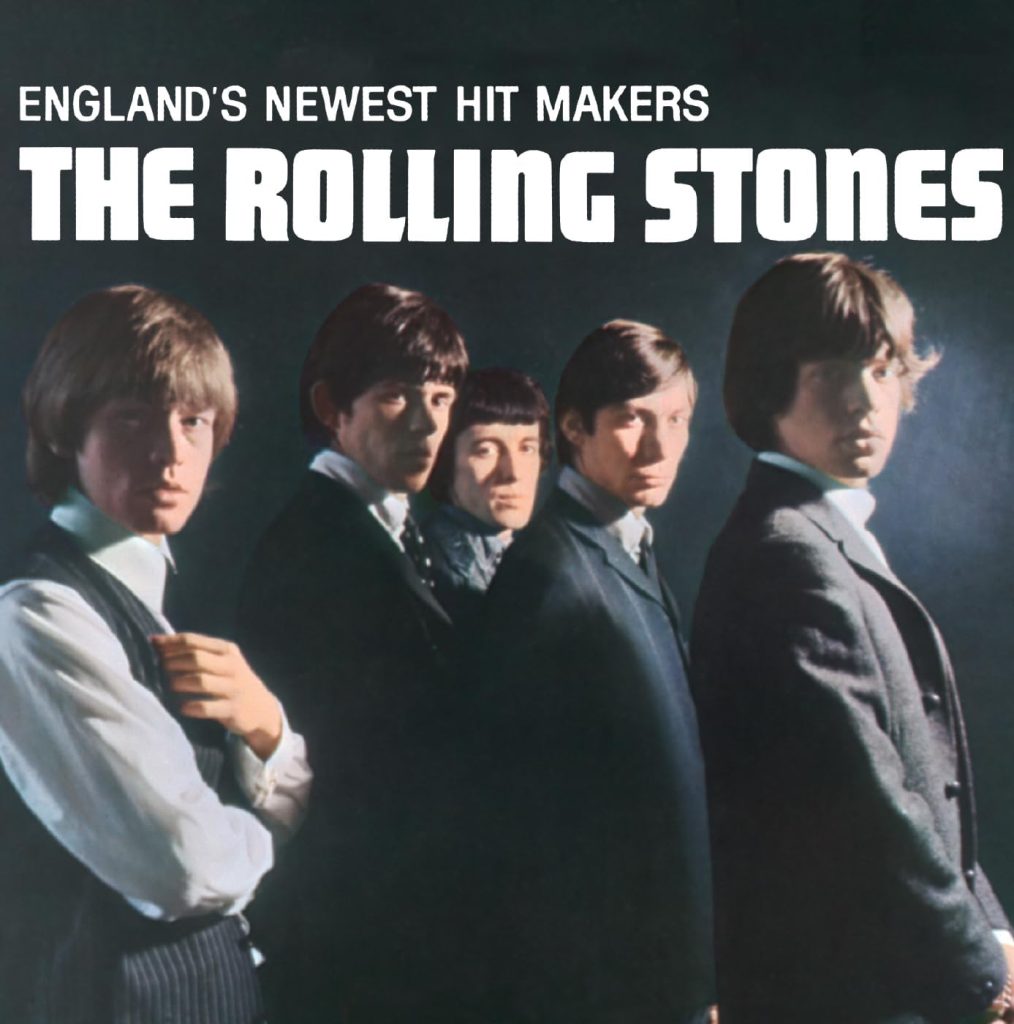
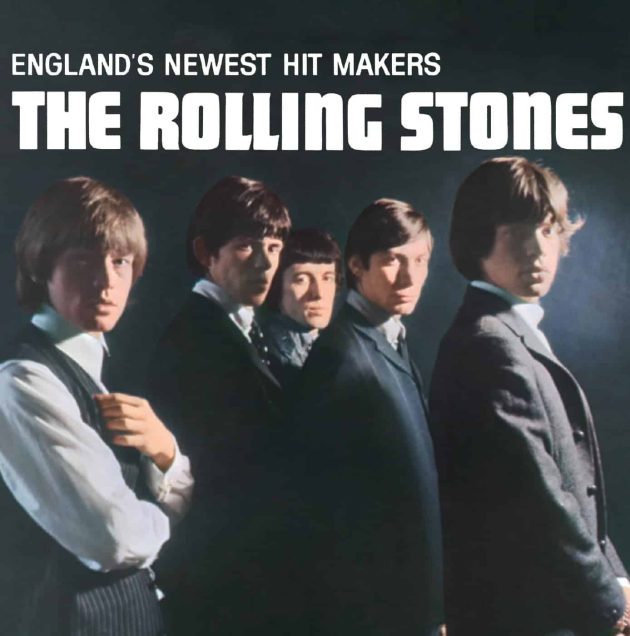
When London Records released the US edition, The Rolling Stones The Rolling Stones on May 29, 1964, the band name appeared prominently on the front cover for the first time, undoing Oldham’s no-name design for a new audience.
The subtitle “England’s Newest Hit Makers” did the marketing work that Oldham had refused to do at home, telling American buyers exactly what they were getting into at the height of the British Invasion.
“Mona (I Need You Baby)” was replaced by Not Fade Away, the Stones’ cover of the Buddy Holly and Norman Petty song that had been the band’s third UK single in February 1964.
Some titles were shortened: “Now I’ve Got a Witness (Like Uncle Phil and Uncle Gene)” became simply “Now I’ve Got a Witness,” quietly dropping the reference to Spector and Pitney from the title.
The US version peaked at number 11 on the Billboard 200 and later went gold in the United States.
That result made it one of the stronger American debut chart performances for a British band in 1964.
Our complete classic rock album reviews archive covers the full Stones discography in the same depth this debut deserves.
Affiliate Disclosure: I am an Amazon affiliate, and if you purchase through any Amazon links on this site, I may earn a small commission at no extra charge to you. This helps support ClassicRockArtists.com and keeps the deep dives coming. Thank you for your support.
Get England’s Newest Hit Makers (US Version) on Amazon
Charts, Legacy, and Why This Album Belongs in Every Collection
The numbers tell part of the story.
The album entered the UK Albums Chart on April 25, 1964 at number seven.
The following week it hit number one and stayed there for twelve consecutive weeks: the first time in over a year that a non-Beatles album had topped the British chart.
The total UK chart run was 51 weeks.
The album appears in 1001 Albums You Must Hear Before You Die, Robert Dimery’s definitive reference for serious music collectors.
It was also number one in Australia for three weeks.
The source material running through this album came almost entirely from Chess Records, the Chicago label that housed Muddy Waters, Howlin’ Wolf, and Chuck Berry.
The Stones did not just borrow these songs.
They believed in them completely, and the difference between reverence and imitation is audible on every track.
Within two years the Stones would release Aftermath, their first album composed entirely of original material.
By 1968 they had Beggars Banquet.
By 1969, Let It Bleed.
By 1972, the double album considered by many to be their masterpiece: Exile on Main St.
None of those records exist without what was figured out in five days in an egg-carton room on Denmark Street.
Oldham’s influence on the way this album was made, marketed, and positioned cannot be overstated.
He had previously done public relations work for The Beatles and drew on that experience to deliberately position the Stones as the dangerous alternative: edgier, more rebellious, and less interested in parental approval.
His slogan “Would you let your daughter marry a Rolling Stone?” ran in British music press and did exactly what it was supposed to do.
The collector market for the original, The Rolling Stones The Rolling Stones pressings remains strong today, and the reissue history of this album is its own story.
Our piece on the Rolling Stones Black and Blue reissue shows how the band has approached its catalog in the decades since.
From those egg-carton walls on Denmark Street to sold-out stadiums on every continent, the distance covered by this band is almost impossible to measure.
The Rolling Stones IMAX concert film puts what that journey looked like at its modern peak in full perspective.
The full catalog from this debut onward is available in our Rolling Stones albums and merch collection on Amazon.
Is the original UK vinyl worth owning over a reissue?
Yes, for serious collectors, but original Decca pressings in excellent condition command high prices on the secondary market.
The mono mix is the only version that has ever existed for this album, so any pressing you buy should be mono.
The Rolling Stones The Rolling Stones Reissues from later decades are more accessible and still sound excellent on a quality turntable.
How does this debut compare to the Stones’ later classics?
It is a different kind of record entirely.
Beggars Banquet, Let It Bleed, and Exile on Main St. are more ambitious and more fully realised as original artistic statements.
But this debut is the proof of concept: a raw, honest document of where the inspiration came from and what the band could do with it under pressure, with no budget, and on a two-week deadline.
Which version should a new listener buy first, the UK or the US?
Start with the UK version for the definitive original sequence.
Add England’s Newest Hit Makers for “Not Fade Away,” which is the most significant difference between the two editions, and to experience the album exactly as American audiences first heard it in the summer of 1964.
What makes The Rolling Stones The Rolling Stones the greatest debut album in classic rock?
When the New Musical Express reviewed it in April 1964, their verdict was “probably the finest first LP ever” by a rock band.
Sixty-one years later, nothing has happened to contradict that assessment, and if you have never heard The Rolling Stones The Rolling Stones from first track to final note, there has never been a better time to fix that.