

Tommy DeCarlo: The Voice That Kept Boston Alive
Tommy DeCarlo was one of the most unlikely success stories in classic rock history.
A devoted Boston fan who once stocked shelves at a Home Depot in Charlotte, North Carolina, tommy decarlo went from singing along to his favorite records to standing center stage as the lead vocalist of Boston itself.
His rise was not engineered by a label, a manager, or a calculated audition process.
It happened because he posted a few home recordings on MySpace, and the right person heard them at exactly the right time.
That person was Tom Scholz, the reclusive genius behind one of the best-selling debut albums in rock history.
When Brad Delp, Boston’s beloved original singer, died in March 2007, the band faced an impossible question: how do you replace a voice that defined a generation?
Scholz found his answer in a man who had spent his whole life loving that voice.
DeCarlo stepped in with humility, passion, and a vocal range that stunned audiences worldwide.
He carried Boston’s catalog with both reverence and conviction for nearly two decades, earning the respect of longtime fans who were initially skeptical any replacement could honor Delp’s memory.
Sadly, tommy decarlo passed away in early 2025, leaving behind a legacy that proved authenticity and love for the music can take a person further than ambition alone ever could.
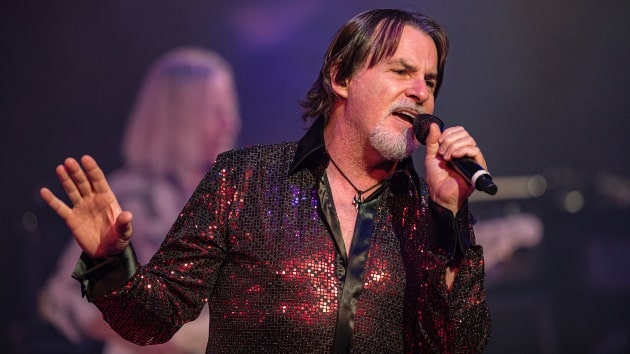
Table of Contents
- Early Life and Musical Roots of Tommy DeCarlo
- Cover Band Days and Early Performances
- Tommy DeCarlo Joins Boston
- The Boston Years: Carrying Brad Delp’s Legacy
- Tommy DeCarlo on Stage: Tours and Live Performances
- Career Challenges and Personal Struggles
- A Legacy Fulfilled: Tommy DeCarlo’s Later Years
- Recognition and Fan Appreciation
- Essential Boston Discography
- Frequently Asked Questions
Early Life and Musical Roots of Tommy DeCarlo
Tommy DeCarlo was born on September 13, 1970, in Charlotte, North Carolina.
He grew up in a working-class household where music was a constant presence in the home.
Like many kids of the 1970s and early 1980s, he was shaped by the FM radio explosion that brought classic rock of the 70s into every living room and car in America.
Boston was among the bands that hit him hardest.
The soaring harmonies and crystalline guitar tones of their debut record left a permanent mark on the young DeCarlo.
He began singing as a teenager, teaching himself to match the high notes of Brad Delp with a determination that bordered on obsession.
DeCarlo never pursued formal vocal training or enrolled in music school.
His education came entirely from listening, practicing, and performing whenever the opportunity arose.
Friends and family recalled that he had a remarkable natural voice, capable of reaching registers that most singers could not approach without years of professional coaching.
He was also deeply influenced by the 60s rock and pop tradition that laid the groundwork for the arena rock era he adored.
Despite his obvious talent, DeCarlo never made a serious push toward a professional music career in his younger years.
He settled into a steady working life, eventually taking a position at a Home Depot store in the Charlotte area.
Music remained a passion rather than a profession, at least for the time being.
Cover Band Days and Early Performances
Throughout his twenties and thirties, DeCarlo sang in local cover bands around the Charlotte area.
These were not nationally known outfits with record deals or major touring schedules.
They were the kind of groups that played bars, private parties, and community events on weekends.
For DeCarlo, though, these performances were not a consolation prize.
He genuinely loved performing for people and brought complete commitment to every show.
Boston’s material featured prominently in his setlists, and those who watched him perform in those years consistently noted that he had an uncanny ability to recreate Delp’s vocal style.
In the mid-2000s, DeCarlo discovered MySpace, the social networking platform that had become a de facto home for independent musicians.
He uploaded recordings of himself singing Boston covers from his home studio setup.
The quality was far from polished, but the raw talent was undeniable.
He was simply a fan sharing his love of a band, with no expectation that anyone significant would ever listen.
That assumption would prove spectacularly wrong.
Tommy DeCarlo Joins Boston
On March 9, 2007, Brad Delp, Boston’s irreplaceable original vocalist, died by suicide at his home in Atkinson, New Hampshire.
He was 55 years old.
The rock world was stunned.
Delp had been widely regarded as one of the finest pure singers in the history of rock music, and the notion of Boston continuing without him seemed almost inconceivable.
Tom Scholz, the band’s founder, guitarist, and primary songwriter, faced a decision that would define whether Boston could exist beyond the tragedy.
It was reportedly DeCarlo’s daughter who first made the connection.
She was friends online with members of Brad Delp’s family and, knowing of her father’s Boston covers on MySpace, sent a link along.
The recordings reached Tom Scholz, who was immediately struck by what he heard.
Scholz reached out to DeCarlo directly and invited him to audition.
By the summer of 2007, just months after Delp’s death, tommy decarlo had been named Boston’s new lead vocalist.
The announcement was met with a mixture of excitement and cautious skepticism from the band’s devoted fanbase.
DeCarlo was not a polished industry figure or a veteran of a well-known band.
He was a self-taught cover singer who had spent his career working retail and playing weekend gigs.
Scholz, however, was not looking for a replacement personality.
He was looking for a voice that could honor the music, and DeCarlo had exactly that.
The Boston Years: Carrying Brad Delp’s Legacy
DeCarlo’s debut with Boston came on the band’s 2007 summer tour, just weeks after he had been working his regular shift at Home Depot.
The transition was almost surreal in its speed.
One day he was a devoted fan; the next he was stepping into the biggest stages of his life, performing songs he had loved since childhood in front of crowds that had loved those same songs for thirty years.
From the very first shows, it was clear that DeCarlo was not attempting to impersonate Delp.
He brought his own warmth and sincerity to the performances while honoring the emotional core of the original recordings.
Audiences and critics who attended those early dates generally reported being moved by both the quality of his voice and the visible reverence he showed for the material.
Boston’s catalog is among the most technically demanding in rock, built around Delp’s extraordinary upper register and ClassicRockArtists.com’s own coverage has long noted how few singers can credibly handle that vocal architecture.
DeCarlo proved himself one of that rare group.
Songs like More Than a Feeling, which had defined the band’s debut album in 1976, required a vocalist who could hit soaring notes with both power and control.
Night after night, DeCarlo delivered those notes with a consistency that won over even the most skeptical longtime fans.
He also brought an emotional transparency to the performances that resonated deeply given the context.
Every time DeCarlo took the stage, there was an unspoken acknowledgment that he was doing this out of love, not calculation.
He had nothing to prove commercially and everything to give artistically.
That spirit permeated his work with the band throughout his tenure.
His work on songs from Boston’s 1986 album Third Stage was particularly noteworthy.
The record had produced massive hits, including Amanda, which reached number one on the Billboard Hot 100.
DeCarlo handled those ballads with a gentleness that never slipped into sentimentality.
He understood that the songs were bigger than any one performer, and he approached them accordingly.
Beyond the hit singles, DeCarlo also demonstrated range across deeper album cuts that tested different qualities of a vocalist.
He was equally effective on uptempo rockers and slow-building anthems, which gave Scholz the flexibility to construct setlists that drew from every corner of the band’s catalog.
His work with Boston on various tours over the following years reinforced his standing as one of the most capable live vocalists in the classic rock world.
He was not just filling a vacancy.
He had become a genuine member of the band.
DeCarlo also participated in recordings and continued to grow as a performer, shedding the initial nerves of those first summer shows and finding his own footing within the group’s identity.
His voice matured beautifully over the years, gaining a richness and authority that complemented Scholz’s layered guitar and keyboard arrangements.
The music news surrounding Boston during this period frequently highlighted the remarkable stability the band had found despite the unimaginable loss it had suffered.
Much of that credit belonged to DeCarlo’s steady presence and the quiet professionalism he brought to his role.
He was fond of saying in interviews that singing with Boston was a dream he never even knew he had until it became real.
That sense of grateful amazement never left him, and it showed every time he walked out in front of an audience.
Tommy DeCarlo on Stage: Tours and Live Performances
Tommy DeCarlo proved to be an exceptionally committed live performer throughout his years with Boston.
He embraced the physical demands of touring with a level of enthusiasm that belied his late entry into the professional music world.
Unlike many arena rock vocalists who pace themselves through long setlists, DeCarlo typically gave full effort from the opening note to the final encore.
Boston’s shows under his watch received strong reviews throughout the 2010s and into the 2020s.
He also made appearances at high-profile events outside of Boston’s touring schedule, including Alice Cooper‘s annual Christmas Pudding benefit concerts in Phoenix, Arizona, where he performed as recently as December 2023.
Those appearances introduced him to audiences beyond Boston’s core fanbase and reinforced his standing in the broader classic rock community.
Fans who had grown up with 80s classic rock particularly connected with his warmth and accessibility as a performer.
He was famously approachable at meet-and-greets and remained active on social media, sharing his gratitude for the journey he had been given.
Career Challenges and Personal Struggles
Taking over as lead vocalist of a band as beloved as Boston was not without its emotional weight.
DeCarlo entered a situation charged with grief, and he was acutely aware that some fans would never fully accept any replacement for Brad Delp.
He handled that pressure with grace, consistently declining to position himself as anything other than a custodian of music he deeply loved.
He spoke openly in interviews about the responsibility he felt toward Delp’s memory and toward the fans who had grown up with those songs.
The transition from a working retail job to international touring was also a significant personal adjustment.
DeCarlo had built a life in Charlotte around his family, friends, and community before the call from Scholz arrived.
Balancing the demands of a touring schedule with his personal commitments required ongoing effort and sacrifice.
Throughout it all, he maintained a grounded perspective that many in the music industry, who had spent their whole careers chasing fame, openly admired.
A Legacy Fulfilled: Tommy DeCarlo’s Later Years
In the final years of his life, tommy decarlo remained an active and visible part of Boston’s world.
He continued to perform, connect with fans online, and advocate for the music that had transformed his life.
He was a passionate voice for classic rock’s enduring relevance, frequently encouraging younger listeners to discover the catalog of artists who shaped the genre.
His YouTube presence, including a documentary-style video profile on his journey as Boston’s lead singer, gave fans an intimate look at the man behind the microphone.
The response from the community was overwhelmingly positive, filled with messages from fans who credited his vocal performances with keeping their love of Boston alive.
Tommy DeCarlo passed away in early 2025.
His family announced the news in a heartfelt statement, noting that he had touched countless lives through his music and his genuine, generous spirit.
The Global News report on his passing noted the outpouring of grief from the classic rock community worldwide.
His family shared a deeply personal tribute through his official Facebook page, expressing the profound loss felt by all who knew him.
The family’s Facebook announcement read, in part, that it was with heavy hearts that they shared the passing of their father, tommy decarlo.
The response from fans across the globe reflected just how deeply he had connected with people through his performances and his authenticity.
Recognition and Fan Appreciation
Tommy DeCarlo never won a Grammy Award or received a major industry citation in his own name.
His recognition came from a more personal and perhaps more meaningful source: the fans themselves.
Online forums and social media communities dedicated to Boston’s music consistently celebrated his contributions, and many fans who had initially been wary of any replacement for Delp ultimately credited DeCarlo with revitalizing their appreciation for the band’s live performances.
His story became something of a modern classic rock fairy tale, widely cited as proof that talent and passion can open doors that conventional paths cannot.
Music journalists who covered the evolution of classic rock through the 90s and beyond noted that DeCarlo represented a new kind of classic rock stewardship: not a nostalgia act, but a genuine caretaker of a living musical tradition.
Tom Scholz himself spoke warmly and publicly of DeCarlo on multiple occasions, praising his dedication, his vocal ability, and his character.
That endorsement from the band’s exacting and private founder carried enormous weight in the Boston community.
DeCarlo’s legacy is inseparable from Boston’s ongoing story, and the music he performed lives on in the recordings and memories of everyone who saw him take the stage.
Essential Boston Discography
The following albums represent the essential listening journey through Boston’s catalog, which tommy decarlo proudly carried forward throughout his tenure with the band.
- Boston (1976) — The landmark debut that introduced the world to Tom Scholz’s layered guitar symphonies and Brad Delp’s soaring vocals, becoming one of the best-selling debut albums in rock history.
- Don’t Look Back (1978) — The follow-up that cemented Boston’s commercial dominance, featuring tighter arrangements and the anthemic title track.
- Third Stage (1986) — Eight years in the making, this record debuted at number one and produced multiple chart hits, including the number one single Amanda.
- Walk On (1994) — A transitional album that saw Boston navigating lineup changes and the shifting landscape of 1990s rock.
- Life, Love & Hope (2013) — Boston’s most recent studio album, featuring contributions from Brad Delp recorded before his death alongside new performances from DeCarlo.
If you want to explore Boston’s full catalog, you can find their complete discography and albums through the link below.
Disclosure: As an Amazon affiliate, I make a small commission on any purchases made through this link at no extra cost to you. I thank you in advance.
Browse the Complete Boston Albums Discography on Amazon
Frequently Asked Questions
How did Tommy DeCarlo get discovered by Boston?
DeCarlo was discovered through his MySpace page, where he had posted home recordings of himself singing Boston cover songs.
His daughter, who was connected online with members of Brad Delp’s family, helped the recordings reach Tom Scholz after Delp’s death in 2007.
Scholz was so impressed that he invited DeCarlo to audition, and within months the former Home Depot employee had become Boston’s new lead vocalist.
What was Tommy DeCarlo doing before joining Boston?
Before joining Boston, DeCarlo worked at a Home Depot store in Charlotte, North Carolina.
He also sang in local cover bands in his spare time, performing Boston songs among other classic rock material at bars and private events.
He had no major industry experience or professional music career before Tom Scholz called.
How did fans react to Tommy DeCarlo replacing Brad Delp?
Initial fan reaction was cautious and, for some, skeptical.
Brad Delp was deeply beloved, and many longtime Boston supporters doubted any replacement could honor his memory.
However, after DeCarlo’s debut performances in the summer of 2007, the reception warmed considerably.
The majority of fans came to appreciate his vocal ability, his humility, and his evident love for the music.
When did Tommy DeCarlo pass away?
Tommy DeCarlo passed away in early 2025.
His family shared the news publicly, and the classic rock community mourned the loss of a vocalist who had given so much of himself to music he loved with his whole heart.
His passing marked the end of a remarkable journey that had taken him from stocking shelves in North Carolina to arenas around the world as the voice of tommy decarlo and of Boston.
What was Tommy DeCarlo’s most famous performance?
DeCarlo’s debut summer tour with Boston in 2007 remains perhaps his most historically significant performance, as it marked the moment he stepped into one of the most scrutinized roles in classic rock.
His appearances at Alice Cooper’s annual Christmas Pudding benefit concerts in Phoenix were also widely praised for showcasing his vocal range in a high-profile, all-star setting.
Any night he performed More Than a Feeling or Amanda in front of a packed arena could fairly be called a peak moment in his extraordinary career.