

Wild Horses by The Rolling Stones (1971): The Ballad That Breaks You
Wild Horses is one of the most emotionally raw songs The Rolling Stones ever put on tape.
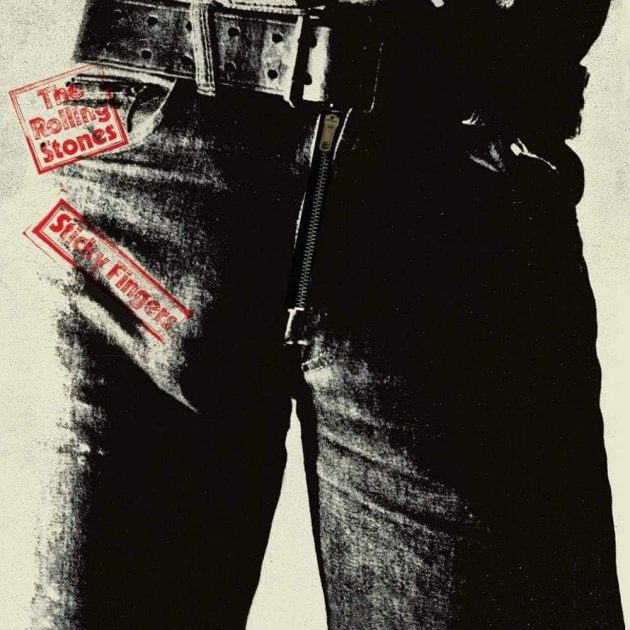
Released on Sticky Fingers in 1971, it captured a band at the peak of their powers choosing restraint over spectacle, and the result floored an entire generation.
Quick Navigation
What is the meaning of Wild Horses by The Rolling Stones?
“Wild Horses” is a rock ballad by The Rolling Stones about the pain of separation and the pull of devotion that overrides every other impulse in your life. Written by Mick Jagger and Keith Richards, the song uses the metaphor of wild horses to express that nothing could force the narrator away from the person he loves.
The Vibe: Genre, Mood, and Search Intent
This is not a typical Rolling Stones song, and that is exactly what makes it so devastating.
Where the Stones usually hit you with swagger, “Wild Horses” comes at you with open hands.
- Genre: Country Rock / Classic Rock Ballad
- Mood: Melancholic, Tender, Yearning
- Tempo: Slow burn
- Best For: Late-night drives, heartbreak playlists, quiet mornings
- Similar To: “Angie” by The Rolling Stones, “Landslide” by Fleetwood Mac
- Fans of The Rolling Stones also search: “best Rolling Stones ballads,” “saddest classic rock songs 1970s,” “Rolling Stones acoustic songs”
Behind the Lyrics: The Story of Wild Horses
The origins of “Wild Horses” are layered with grief, new life, and the wreckage of broken relationships.
Keith Richards began writing the melody as a lullaby for his newborn son Marlon, born in August 1969.
The phrase at the song’s core came from a darker place, though.
Earlier that year, Mick Jagger’s then-girlfriend Marianne Faithfull overdosed on sleeping pills.
When she regained consciousness, she told Jagger, “Wild horses wouldn’t drag me away.”
That phrase lodged itself in the song, even though the relationship was largely over by the time the track was recorded.
Jagger later said he was “definitely very inside this piece emotionally,” while remaining coy about its exact target.
Richards offered his own reading, saying it was, like “(I Can’t Get No) Satisfaction,” about the relentless grind of life on the road, about being a million miles from where you want to be.
The recording sessions took place from December 2 to 4, 1969, at Muscle Shoals Sound Studio in Sheffield, Alabama, while filmmakers Albert and David Maysles were shooting the documentary Gimme Shelter.
The sessions were sandwiched around the chaos of the Altamont Free Concert, which gives the song its strange atmosphere: tenderness born inside a storm.
The track was held back for over a year due to legal disputes with the band’s former label ABKCO Records and manager Allen Klein.
When it finally appeared on Sticky Fingers in 1971, it was the most quietly stunning moment on an already extraordinary record.
Before the Rolling Stones officially released the song, Gram Parsons heard a demo after the Altamont disaster and asked if his band, The Flying Burrito Brothers, could record it.
The Stones couriered a temporary mix and made the Burritos promise not to release it before the Stones’ own version.
The Flying Burrito Brothers’ cover appeared on their 1970 album Burrito Deluxe, beating the Stones to print by roughly a year.
For the full story behind the band who wrote it, see our guide to the members of The Rolling Stones.
The complete Wikipedia entry on the song’s history is also worth your time: Wild Horses on Wikipedia.
Technical Corner: The Gear Behind Wild Horses
The recording of “Wild Horses” is a clinic in understated technique.
Keith Richards developed the song using open tuning on a 12-string guitar, experimenting with what he called “translating” the slide work of Mississippi Fred McDowell into a 10-string open-tuned configuration.
On the final recording he plays both electric and 12-string acoustic guitar.
Mick Taylor contributes a Nashville-tuned acoustic guitar, a technique where the four lowest strings are strung an octave higher than standard, giving the arrangement its uniquely bright, chiming texture against Richards’ deeper acoustic lines.
The interplay between the two guitar parts is what gives the song its open, wide-sky feeling.
The piano on the track has its own story.
Regular Stones pianist Ian Stewart famously refused to play on it, dismissing its prevalence of minor chords.
In his place, session musician Jim Dickinson stepped in and played the tack piano part, whose slightly buzzy, percussive tone anchors the song in an old-South Americana feel.
Charlie Watts plays with characteristic restraint on drums, and Bill Wyman holds the bottom with a spare bass line that never competes with the emotion above it.
Producer Jimmy Miller, who helmed the Stones’ most creatively fertile run from Beggars Banquet through Exile on Main St., made the decisive call to let the song breathe.
There is almost no compression on Jagger’s vocal: it sounds like a man in a room, not a radio product.
The final mix was completed at Olympic Studios in London.
Legacy and Charts: Why Wild Horses Still Matters
“Wild Horses” was released as a US-only single on June 12, 1971, with “Sway” as its B-side.
It reached number 28 on the Billboard Hot 100 in the United States.
At the time, Billboard described it as “a potent followup” to “Brown Sugar” and praised its “change-of-pace rock ballad material.”
The song’s legacy has only grown in the decades since.
Rolling Stone magazine ranked it at number 334 on its 2004 list of the 500 Greatest Songs of All Time, then moved it up to number 193 on the revised 2021 list.
In 1995 the Stones recorded a stripped acoustic version for their album Stripped, proving the song could carry even more weight without amplification.
On screen, “Wild Horses” has appeared everywhere from Martin Scorsese’s Rolling Stones documentary Shine a Light (2008) to the film Adaptation (2002), and memorably during the fan-beloved memorial scene on Parks and Recreation.
It has been covered by artists including The Sundays, whose 1992 version introduced the song to a new generation of listeners.
Compare the slow-burn ache of this track with the Stones’ other landmark Angie (1973), and you begin to understand just how consistently they could tap into that vein.
Watch the official audio on YouTube here: Wild Horses – The Rolling Stones (Official Audio).
Listener’s Note: A Personal Take on Wild Horses
When I first heard “Wild Horses” on vinyl, something in the needle drop before the first chord already felt like a confession.
The opening guitar line doesn’t announce itself; it just arrives, like a thought you can’t shake.
Richards’ open-tuned 12-string has this particular resonance that feels both ancient and completely present, and when Jagger’s vocal comes in soft and unguarded, you realize this is a different band than the one snarling through “Brown Sugar” on side one of the same record.
There is a moment in the final chorus where Jagger’s voice cracks slightly on the word “away,” and it is one of the most honest 10 seconds in the entire Rolling Stones catalog.
No production trick covers it up.
Jimmy Miller was wise enough to leave it alone.
I’ve heard this song at funerals, at last calls, and through headphones at 35,000 feet, and it works every single time because it never pretends the pain isn’t real.
Affiliate Disclosure: As an Amazon Associate, I earn from qualifying purchases. If you click on an Amazon link on this site and make a purchase, I may receive a small commission at no extra cost to you. This helps support classicrockartists.com and keeps the deep dives on classic rock coming. Thank you for your support.
Collector’s Corner: Own Wild Horses on Vinyl or CD
Sticky Fingers is one of the essential vinyl purchases in any classic rock collection: the original Andy Warhol cover, the warm analog mastering, and side two’s slow-burn second half make it a record you return to again and again.
The 2015 reissue adds early acoustic takes of “Wild Horses” that are worth the price of admission alone.
Get Rolling Stones Albums and Merch at Amazon
Frequently Asked Questions About Wild Horses
Who wrote Wild Horses?
“Wild Horses” was written by Mick Jagger and Keith Richards. Richards developed the original melody and chord structure as a lullaby for his newborn son Marlon. Jagger wrote the verses, and the two completed the song using their long-standing method of Richards providing the riff and hook while Jagger shaped the narrative.
What album is Wild Horses on?
“Wild Horses” appears on Sticky Fingers, the eighth British studio album by The Rolling Stones, released on April 23, 1971. It was also issued as a US-only single on June 12, 1971, backed with “Sway.” The song was recorded in December 1969 at Muscle Shoals Sound Studio in Alabama but held back over a year due to label disputes.
What does Wild Horses mean?
The title phrase comes from the expression “wild horses couldn’t drag me away,” used to convey an absolute, unbreakable devotion. Marianne Faithfull reportedly said those words to Mick Jagger after waking from a drug overdose in 1969. The song uses that image throughout to describe someone trapped by longing, unable to leave despite knowing they should.
Did Wild Horses chart?
“Wild Horses” peaked at number 28 on the Billboard Hot 100 in the United States in 1971. It was a US-only single release and did not chart on the UK Singles Chart. Rolling Stone magazine later ranked it at number 193 on its updated 2021 list of the 500 Greatest Songs of All Time, up from number 334 in the original 2004 ranking.
You Might Also Like
Tumbling Dice – The Rolling Stones
Recorded in the same creative burst that produced Wild Horses, sharing the loose, country-inflected groove of early 1970s Stones.
Jumping Jack Flash – The Rolling Stones
A Richards open-tuned riff masterpiece that shows the same guitar architecture applied to raw rock intensity instead of tender longing.
Another track where the Stones strip the bravado back to expose raw emotional need, just set to a completely different rhythm decade.