

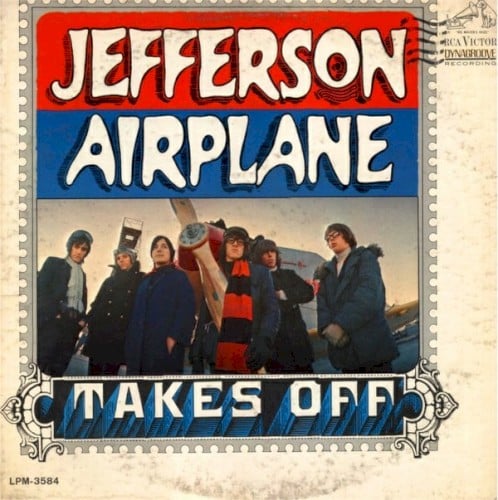
Jefferson Airplane Takes Off is the band’s debut studio album.
RCA Victor released it on August 15, 1966.
It arrived a year before Grace Slick joined and turned the group into a household name.
This is Jefferson Airplane before the myth took hold.
Five men and one woman make up the band on this record.
Signe Toly Anderson sings out front alongside Marty Balin.
It sold modestly and drew a censorship fight from its own label.
It still holds up as a genuinely good record from a band that hadn’t found its ceiling yet.
Affiliate Disclosure: I am an Amazon affiliate.
If you purchase through any Amazon links on this site I may earn a small commission at no extra charge to you.
📋 Table of Contents [+]
What Is Jefferson Airplane Takes Off
Jefferson Airplane Takes Off is the first studio album by Jefferson Airplane.
RCA Victor released it on August 15, 1966.
The band recorded it between December 1965 and March 1966 in Hollywood.
The eleven-song record runs just over half an hour.
It leans hard into folk rock, closer to the Byrds than to the psychedelia the band would chase a year later.
Founding singer Signe Toly Anderson and drummer Alex “Skip” Spence appear here and nowhere else.
Neither one plays on any later Jefferson Airplane studio album.
Recording Jefferson Airplane Takes Off in Hollywood
The band tracked the album at RCA Victor’s Hollywood studio.
Engineer Dave Hassinger ran the sessions.
Manager Matthew Katz and Tommy Oliver produced.
Katz described their approach as “fo-jazz.”
That was his shorthand for folk-rooted rock built on jazz chord voicings.
Liner notes came from San Francisco Chronicle critic Ralph J. Gleason, an early champion of the band’s home scene.
The sessions produced a record that sounds tighter and more restrained than what followed.
The Original 1966 Lineup Before Grace Slick
The Jefferson Airplane Takes Off lineup was Marty Balin on vocals and rhythm guitar and Signe Toly Anderson on vocals and percussion.
Jorma Kaukonen played lead guitar and Paul Kantner played rhythm guitar and sang.
Jack Casady played bass and Skip Spence played drums.
Spence left the band in May 1966, before the album even reached stores.
Spencer Dryden replaced him on drums.
Spence went on to join Moby Grape and later recorded the cult solo album Oar.
Anderson left that October to raise her newborn daughter.
Grace Slick stepped in for the follow-up record.
That completed the transition to the lineup most fans think of first.
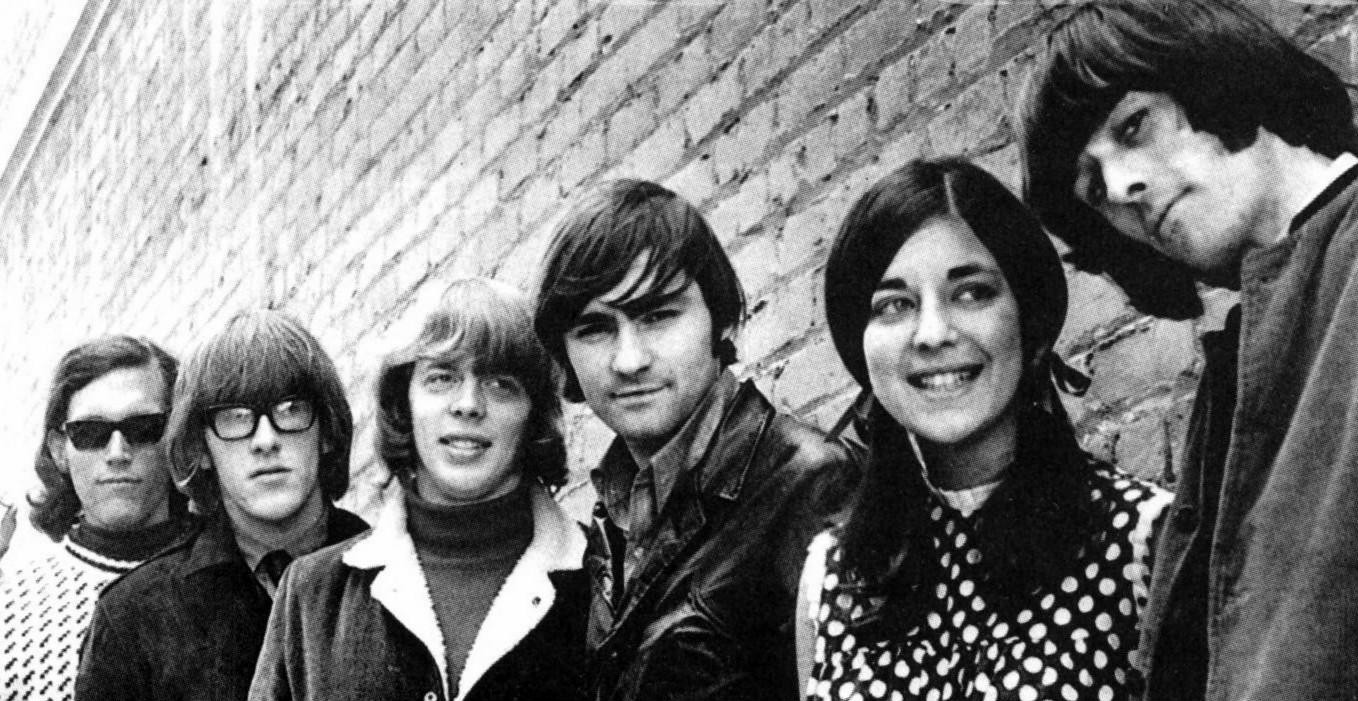
The lineup that recorded Jefferson Airplane Takes Off, before Skip Spence and Signe Anderson both left within the year.
Side One, Track by Track
Side one opens with “Blues from an Airplane,” a Balin and Spence co-write.
It sets the record’s folk-jazz tone in just over two minutes.
“Let Me In” and “Bringing Me Down” follow, both Balin and Kantner collaborations.
Both songs use a plainspoken young-adult voice unusual for pop radio at the time.
“It’s No Secret,” a Balin solo composition, became the album’s most enduring single.
It still gets airplay on classic rock stations today.
Side one closes with a cover of John D. Loudermilk‘s “Tobacco Road.”
The band stretches it out to give Kaukonen and Casady room to trade ideas.
Side Two, Track by Track
Side two opens gently with “Come Up the Years,” another Balin and Kantner ballad.
“Run Around” picks the tempo back up right after.
“Let’s Get Together” covers Dino Valenti’s hippie anthem.
Kantner, Anderson, and Balin trade verses on it, pointing straight at the communal idealism the Haight-Ashbury scene would soon claim as its own.
“Don’t Slip Away” pairs Balin and Spence again.
“Chauffeur Blues,” a Memphis Minnie blues standard, hands Anderson her lone lead vocal on the record.
The closer, “And I Like It,” is a Balin and Kaukonen original.
It stretches past three minutes and lets the guitar breathe.
| Track | Writer(s) | Lead Vocal |
|---|---|---|
| Blues from an Airplane | Balin, Spence | Balin |
| It’s No Secret | Balin | Balin |
| Tobacco Road | Loudermilk | Balin |
| Let’s Get Together | Powers (Valenti) | Kantner, Anderson, Balin |
| Chauffeur Blues | Melrose, Memphis Minnie | Anderson |
The RCA Censorship Fight Over Jefferson Airplane Takes Off
Shortly before release, RCA executives got nervous about the lyrics.
They read some lines as sexually suggestive or drug-referencing and sent the band back to the studio.
“Let Me In” originally sang “I gotta get in, you know where.”
That became “You shut your door, now it ain’t fair.”
“Run Around” swapped “that sway as you lay under me” for the tamer “that sway as you stay here by me.”
The label’s biggest target was “Runnin’ ‘Round This World,” pulled entirely from the album.
The problem line: “the nights I’ve spent with you have been fantastic trips.”
- “Let Me In” rewritten to remove implied propositioning.
- “Run Around” rewritten to soften a sexual image.
- “Runnin’ ‘Round This World” cut from the album entirely over the word “trips.”
Balin later shrugged it off.
He said the label “found all this meaning and gave it a great deal of importance, but ‘trips’ was just a slang word to us, part of the language.”
Marty Balin and Paul Kantner’s Songwriting Partnership
Balin wrote or co-wrote nine of the album’s eleven tracks.
That makes Jefferson Airplane Takes Off very much his record, before Slick’s arrival shifted the spotlight.
His partnership with Kantner produced the album’s most direct songs.
The lyrics are plainspoken, about wanting someone and not being able to have them.
Rock critic Jim DeRogatis later described the album as “dominated by Balin’s simple folk ballads, tarted up by Anderson’s fetching harmonies and the dexterous playing of Casady and Kaukonen.”
That songwriting chemistry between Balin and Kantner carried straight through to Surrealistic Pillow and beyond.
Jorma Kaukonen and Jack Casady’s Early Interplay
Kaukonen and Casady had played together since high school in Washington, D.C.
That history shows in how tightly their parts lock together here.
“Tobacco Road” and “And I Like It” give both players real room.
Both tracks foreshadow the interplay they would later build into a whole side project.
That side project became Hot Tuna, the acoustic blues outfit the two launched later.
They started it once Jefferson Airplane’s studio ambitions outgrew this kind of loose, rootsy playing.
Casady’s bass on Takes Off is melodic rather than purely rhythmic.
It already hints at the busier lines he would play on later records.
Producing Jefferson Airplane Takes Off
Dave Hassinger’s engineering keeps the mix uncluttered.
It sounds closer to a live folk club recording than the layered psychedelia RCA would later chase from the band.
Matthew Katz’s “fo-jazz” concept shows up most clearly in the chord voicings under “Come Up the Years” and “Don’t Slip Away.”
Those are jazz changes dressed in folk clothing.
Nothing here uses studio trickery for its own sake.
That is a contrast with the backwards tape and processed vocals that would define Surrealistic Pillow’s biggest hits.
That restraint is part of why the record still sounds honest rather than dated.
Chart Performance and 1966 Sales
Jefferson Airplane Takes Off peaked at number 128 on the Billboard 200.
It reached that spot on October 1, 1966, and spent eleven weeks on the chart.
Regional numbers were stronger than the national picture.
An estimated 10,000 to 20,000 copies sold in California, against roughly 1,000 nationally outside the state.
Those figures look modest next to Surrealistic Pillow’s later Top 10 run.
They were still enough to get RCA to fund a second album.
The label clearly saw something worth investing in.
The commercial breakthrough was still a year away.
Critical Reception Then and Now
Mojo-Navigator R&R News praised the vocal harmonies and arrangements on release.
The same review called the lead guitar work merely “respectable.”
Crawdaddy! critic Tim Jurgens went further, calling it “the most important album of American rock” released that year.
He still noted the record was “faulted.”
His verdict has aged well: “This is still a very good record, but we might have had a great one.”
Modern reassessments have been kinder across the board.
AllMusic settled on 3.5 out of 5 stars.
The Daily Vault called it “a formidable debut album.”
How Jefferson Airplane Takes Off Led to Surrealistic Pillow
Everything that changed between this record and Surrealistic Pillow came down to two lineup swaps within a single year.
Spencer Dryden’s jazz-trained drumming replaced Spence’s looser feel.
Grace Slick brought two Great Society songs, “White Rabbit” and “Somebody to Love,” straight into the band’s live set.
RCA’s willingness to fund a second album after modest Takes Off sales gave the retooled band the shot it needed.
Without this debut’s regional success, there is no guarantee the label sticks around for the record that actually broke the band nationally.
The Legacy of Jefferson Airplane Takes Off
Jefferson Airplane Takes Off rarely gets mentioned in the same breath as Surrealistic Pillow or Volunteers.
That is fair, given how much bigger those records loom.
But it captures a real moment, a Bay Area folk-rock band on the verge of becoming something else entirely.
The psychedelic scene had not fully formed around them yet.
The cover of “Let’s Get Together” previewed the communal spirit the Summer of Love would run with a year later.
For a band that became inseparable from 1967’s cultural explosion, Takes Off is the sound of the fuse being lit.
People Also Ask
Who sang lead on Jefferson Airplane’s first album?
Marty Balin sang lead on most tracks.
Signe Toly Anderson took the lead vocal on “Chauffeur Blues” and joined Balin and Kantner on “Let’s Get Together.”
Why was a song removed from Jefferson Airplane Takes Off?
RCA pulled “Runnin’ ‘Round This World” over a lyric the label read as a drug reference.
The label then rewrote lines on “Let Me In” and “Run Around” for the same reason.
Was Grace Slick on Jefferson Airplane’s debut album?
No, Slick joined in October 1966, two months after Takes Off was released.
She replaced Signe Toly Anderson.
How did Jefferson Airplane Takes Off perform commercially?
It peaked at number 128 on the Billboard 200 in October 1966.
That modest showing still convinced RCA to back a second album.
Hear It: “It’s No Secret” from Jefferson Airplane Takes Off
Jefferson Airplane’s Early Catalog on Amazon
Jefferson Airplane Takes Off
1966 Debut Album
The uncensored fo-jazz debut, before Grace Slick.
Signe Toly Anderson’s only studio album with the band.
🛒 Check Price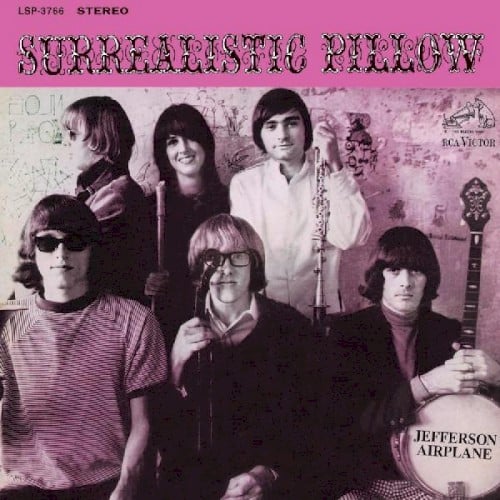
Surrealistic Pillow
1967 Breakthrough Album
Grace Slick’s first record with the band.
Home to “White Rabbit” and “Somebody to Love.”
🛒 Check Price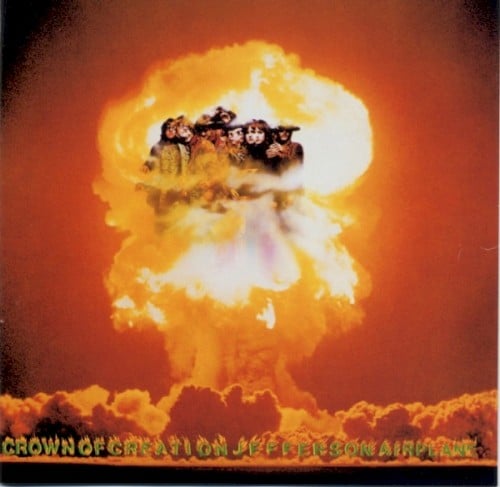
Crown of Creation
1968 Album
Spencer Dryden’s drumming fully locked in.
A harder, more electric follow-up to Pillow.
🛒 Check Price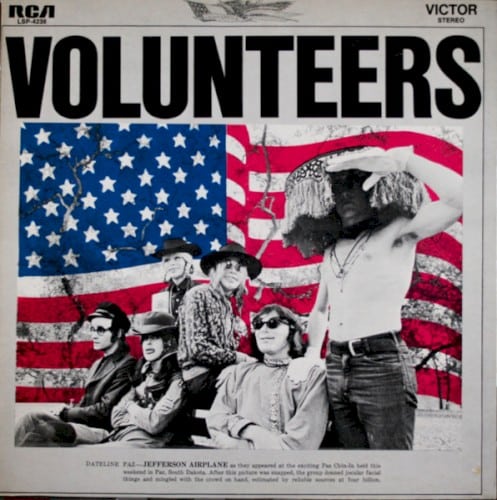
Volunteers
1969 Album
The band’s most political record.
Released the same year as Woodstock.
🛒 Check PriceHow to Listen to Jefferson Airplane Takes Off Today
Jefferson Airplane Takes Off streams on every major platform today.
It streams in its final, RCA-approved 1966 form.
The 2003 CD reissue adds the uncensored originals of “Let Me In” and “Run Around.”
It also restores the pulled “Runnin’ ‘Round This World” for listeners who want the version RCA didn’t want released.
Skip Spence’s original drumming survives only on this record.
He left for Moby Grape soon after, then went on to his own solo career.
Vinyl reissues turn up regularly on the secondhand market.
Collectors seek out the original mono or stereo pressings.
You Might Also Like
Crown of Creation: The 1968 Album
The lineup Takes Off set in motion, two records and one drummer swap later.
Jefferson Airplane Volunteers Album
Same rhythm section, a much angrier record three years on from this folk-rock debut.
Another band built on jazz-schooled chord changes hiding inside rock arrangements.
In the Court of the Crimson King
A different scene’s genre-defining debut, arriving three years after this one.
Jefferson Airplane Takes Off is a footnote next to Surrealistic Pillow only if you skip the record itself.
Play it next to the hits and hear a great American band figuring out what it wanted to become, right there on Jefferson Airplane Takes Off.