

Paul Kantner was the rhythm guitarist and political conscience who pushed Jefferson Airplane from a folk-rock club act into the loudest band of the San Francisco counterculture.
He co-founded the group in 1965 with Marty Balin.
He played rhythm guitar, sang harmony, and wrote or co-wrote most of its defiant anthems.
He was the only musician to appear on every Jefferson Airplane record and every Jefferson Starship record that followed.
When the Airplane broke apart, he built the Starship in its place and flew it for more than 40 years.
This biography traces the full arc, from a San Jose college dropout to a Rock and Roll Hall of Fame inductee.
Affiliate Disclosure: I am an Amazon affiliate and if you purchase through any amazon links on this site i may earn a small commission at no extra charge to you.
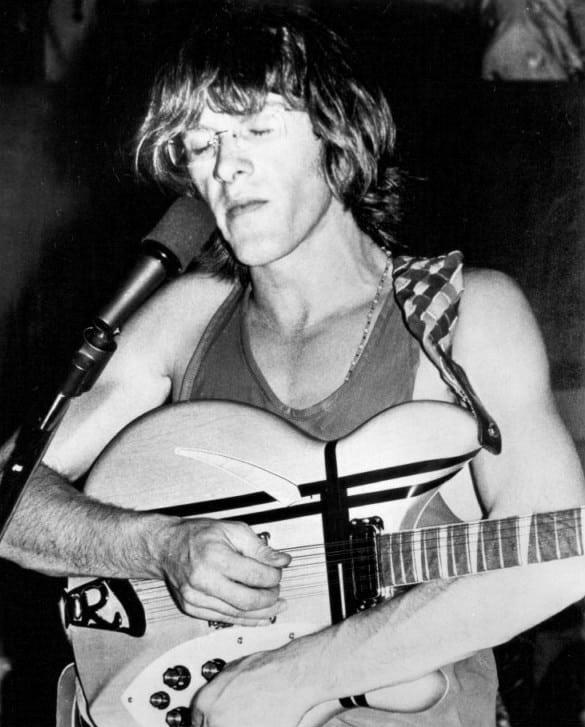
Image Credit: RCA Records promotional photo, public domain, via Wikimedia Commons
📋 Table of Contents [+]
Who Was Paul Kantner?
Paul Kantner was an American rock musician born on March 17, 1941, in San Francisco.
He co-founded Jefferson Airplane in 1965 and served as its rhythm guitarist and a lead vocalist.
He became the band’s dominant creative force from 1967 onward.
His songs pulled the group toward science fiction, radical politics, and communal utopia.
After Jefferson Airplane stopped touring in 1972, he launched Jefferson Starship and led it, on and off, until his death in 2016.
He is the connective thread between every version of the band, and you can trace all of them through the Jefferson Airplane members guide.
Paul Kantner’s Early Life in San Francisco
Paul Lorin Kantner grew up in the Bay Area in a difficult home.
His mother died when he was eight years old.
His father, a traveling salesman, sent him to a military boarding school soon after.
Kantner found refuge in science fiction novels and folk music.
He attended Santa Clara University, where he met future bandmate Jorma Kaukonen.
He later enrolled at San Jose State College and dropped out after three years.
By 1964 he was playing banjo and twelve-string guitar around the San Francisco and San Jose folk circuit.
💡 Did You Know?
As a teenager Kantner hit a tree head-on at 40 miles per hour on a motorcycle.
Surgeons inserted a metal plate in his skull, and he carried it for the rest of his life.
How Paul Kantner Co-Founded Jefferson Airplane
Marty Balin spotted Kantner playing at a folk club called the Drinking Gourd in the summer of 1965.
Balin was assembling a band to headline his new San Francisco club, the Matrix.
He asked Kantner to join, and Kantner brought in Kaukonen on lead guitar.
The classic lineup soon added bassist Jack Casady, drummer Spencer Dryden, and singer Grace Slick.
Slick replaced Signe Toly Anderson in late 1966.
The band signed to RCA Victor and became the first Bay Area group to land a major-label deal.
Their 1967 album Surrealistic Pillow broke them nationwide.
Kantner played on the hits but had not yet found his voice as a writer.
The Songs Paul Kantner Wrote for Jefferson Airplane
Paul Kantner turned into the band’s engine on the albums after Surrealistic Pillow.
He wrote “The Ballad of You and Me and Pooneil” and “Watch Her Ride” for After Bathing at Baxter’s in 1967.
He wrote the title song for Crown of Creation in 1968, borrowing lines from a John Wyndham novel.
He co-wrote “Wooden Ships” with David Crosby and Stephen Stills, a song about survivors fleeing a nuclear war.
He and Balin wrote “Volunteers,” the fist-raising closer of the 1969 album Volunteers.
He also wrote “We Can Be Together,” which put the phrase “up against the wall” on FM radio.
His themes were consistent: resist authority, drop out, and build something new.
Grace Slick handled the group’s other signature hits, “Somebody to Love” and “White Rabbit.”
Paul Kantner and Grace Slick
Kantner and Grace Slick began a romantic relationship in 1969.
Rolling Stone called them “the psychedelic John and Yoko.”
They never married.
Their daughter, China Wing Kantner, was born in January 1971.
The couple recorded two albums together away from the band, Sunfighter in 1971 and Baron von Tollbooth and the Chrome Nun in 1973.
They separated in 1975 when Slick married the band’s lighting designer.
They kept working together in Jefferson Starship for another decade.
Slick sang lead on Slick and Kantner’s early Airplane hits, including “Somebody to Love,” and her 1967 breakthrough gave Kantner the platform his songs needed.
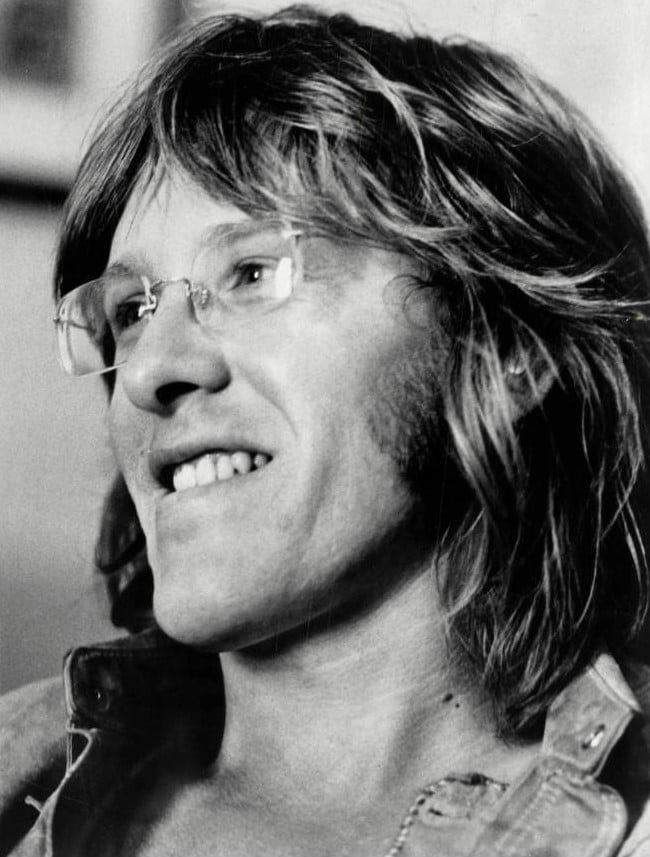
Image Credit: Grunt Records promotional photo, public domain, via Wikimedia Commons
Paul Kantner Invents the Starship on Blows Against the Empire
In 1970 Paul Kantner released a solo concept album called Blows Against the Empire.
He credited it to “Paul Kantner and Jefferson Starship,” the first time that name appeared anywhere.
The record tells the story of a group of outcasts who hijack a starship and escape a dying Earth.
The cast of players included Crosby, Graham Nash, Jerry Garcia, and Slick.
The song “A Child Is Coming” announced China’s impending birth.
The album earned a 1971 nomination for the Hugo Award, science fiction’s top prize.
Voters gave “no award” the majority that year, so the record did not win.
It remains the only rock album ever nominated for a Hugo.
Paul Kantner Builds Jefferson Starship
Kantner formalized Jefferson Starship as a working band in early 1974.
The lineup paired him and Slick with David Freiberg, Papa John Creach, drummer John Barbata, and young guitarist Craig Chaquico.
Marty Balin returned as a full member and gave the group a pop voice.
The debut, Dragon Fly, reached number 11 in 1974.
Red Octopus followed in 1975 and hit number one, carried by Balin’s ballad “Miracles.”
Spitfire and Earth kept the band in the top 10 through 1978.
Jefferson Starship had become a commercial rock machine, a long way from the barricades of 1969.
💡 Did You Know?
Kantner is the only person to play on every Jefferson Airplane and Jefferson Starship studio album.
Grace Slick, Marty Balin, and Jorma Kaukonen all left and rejoined at least once.
Kantner was the constant.
The 1980 Health Crisis
In October 1980 Kantner suffered a cerebral hemorrhage at age 39.
Doctors expected surgery, but he recovered without an operation.
He was back on stage within weeks.
The scare deepened his unease about where the band was heading.
Slick had already left once, in 1978, before returning in 1981.
Balin was gone, replaced by the harder-rocking Mickey Thomas.
Kantner felt the music drifting away from everything the name once stood for.
Why Paul Kantner Left Jefferson Starship in 1984
Paul Kantner quit Jefferson Starship in June 1984.
He was the last original Jefferson Airplane member still in the group.
He blamed the slick production, the corporate touring, and the loss of political content.
The final straw was a band vote to keep chasing radio hits.
He walked out with the intention of taking the name with him.
The remaining members wanted to keep touring under a version of the brand.
That set up a lawsuit that reshaped the band forever.
The Name Lawsuit and the Birth of Starship
Kantner sued his former bandmates over the “Jefferson Starship” name.
The group briefly billed itself as “Starship Jefferson” while lawyers argued.
A settlement arrived in March 1985.
The band shortened its name to Starship and scored huge 1980s hits like “We Built This City.”
The terms were strict: no act could use “Jefferson Starship” without Kantner, and no act could use “Jefferson Airplane” without Grace Slick.
Kantner had lost the band but won control of the words.
He would use that leverage within a decade.
The KBC Band and the 1989 Airplane Reunion
Kantner regrouped with Balin and Casady in the KBC Band from 1985.
The trio released one album in 1987 and toured behind the single “America.”
In 1989 the classic Jefferson Airplane lineup reunited, minus Spencer Dryden.
Kantner, Balin, Slick, Kaukonen, and Casady cut a self-titled album for Epic Records.
Slick has said the reunion started as a joke that grew serious.
The tour drew crowds but did not last.
It was the last time Slick recorded new rock music.
Paul Kantner in the Rock and Roll Hall of Fame
The Rock and Roll Hall of Fame inducted Jefferson Airplane in 1996.
Paul Kantner accepted alongside Balin, Kaukonen, Casady, and Signe Anderson.
Grace Slick could not attend because of a leg infection, so Kantner read her message aloud.
The Hall of Fame induction reunited the classic lineup on stage for the first time since 1970.
They played “Volunteers,” “Somebody to Love,” “White Rabbit,” and “Crown of Creation.”
Kantner told the room the band was “just one of the louder people on the scene.”
The Jefferson Starship Revival: 1992 to 2016
Kantner revived Jefferson Starship in early 1992, this time as a heritage act on his own terms.
Balin joined the new version in 1993, and Casady and Freiberg cycled through the ranks.
Singer Cathy Richardson and Kantner’s son Alexander later filled out the band.
The 2008 album Jefferson’s Tree of Liberty returned to folk protest songs.
Kantner also ran a spoken-word and sound project called the Windowpane Collective in 2010 and 2011.
He toured almost until the end, playing small theaters and festivals.
💡 Did You Know?
Kantner was a lifelong unfiltered Camel smoker and an open advocate for LSD and marijuana.
He also described himself flatly as a political anarchist in interviews.
How Did Paul Kantner Die?
Paul Kantner died on January 28, 2016, in San Francisco at age 74.
The cause was multiple organ failure and septic shock.
He had suffered a heart attack days earlier.
His death came on the same day as that of Signe Anderson, the original singer Grace Slick had replaced in the band.
Rolling Stone remembered him as the founder with “mad, epic ideas.”
He was working on Jefferson Starship shows and a memoir at the time.
Paul Kantner’s Legacy in Classic Rock
Kantner proved that a rock band could carry a political argument without losing an audience.
He fused folk harmony, hard rock, and science fiction into one recognizable sound.
He kept a San Francisco institution alive across five decades and a dozen lineups.
His anthems still open protest playlists today.
Jefferson Starship continues to tour with his blessing and some of his chosen players.
Few writers shaped the counterculture’s soundtrack as directly as he did.
People Also Ask
What instrument did Paul Kantner play?
Paul Kantner played rhythm guitar, mostly a Rickenbacker twelve-string, and sang harmony and some lead vocals.
Did Paul Kantner start Jefferson Starship?
Yes, he did.
He first used the name on his 1970 solo album Blows Against the Empire, then built it into a full band in 1974.
Were Paul Kantner and Grace Slick married?
No, they were not.
They were partners from 1969 to 1975 and had a daughter, China, but never married.
Why did Paul Kantner leave Jefferson Starship?
He quit in 1984 because he felt the band had traded its counterculture politics for commercial radio hits.
Is Paul Kantner in the Rock and Roll Hall of Fame?
Yes, he is.
He was inducted in 1996 as a member of Jefferson Airplane.
What songs did Paul Kantner write?
He wrote or co-wrote “Crown of Creation,” “Wooden Ships,” “Volunteers,” “We Can Be Together,” and “The Ballad of You and Me and Pooneil.”
How old was Paul Kantner when he died?
He was 74 years old.
He died in his native San Francisco on January 28, 2016.
Watch Jefferson Airplane Perform “Crown of Creation”
This 1968 Ed Sullivan Show performance features Kantner singing lead on his own song.
Essential Paul Kantner Albums to Own
These four records show the full span of Kantner’s writing, from psychedelic protest to arena rock.
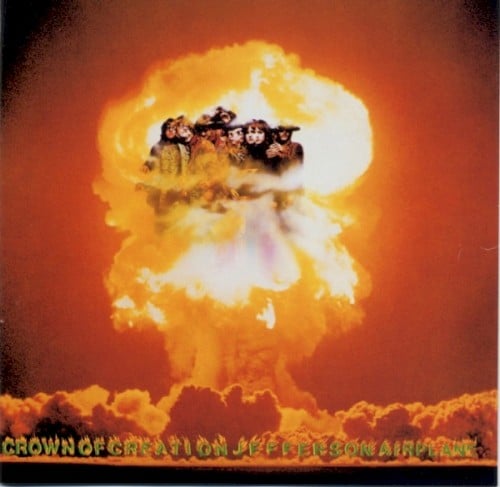
Jefferson Airplane: Crown of Creation
1968
Kantner’s title track is his first great statement of purpose.
Includes the co-write “Share a Little Joke” and the folk-rock peak “Lather.”
🛒 Check Price on Amazon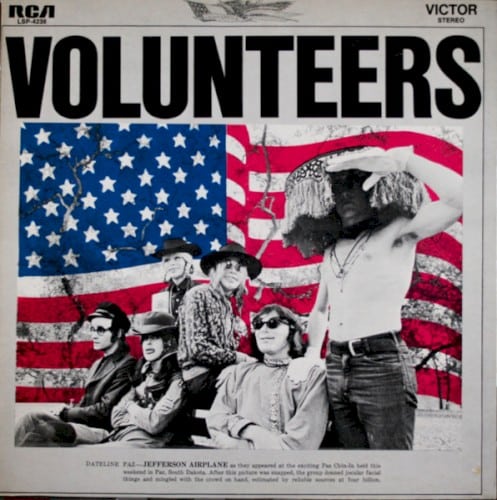
Jefferson Airplane: Volunteers
1969
The Kantner and Balin title track is the band’s loudest political moment.
Features “We Can Be Together” and the Kantner co-write “Wooden Ships.”
🛒 Check Price on Amazon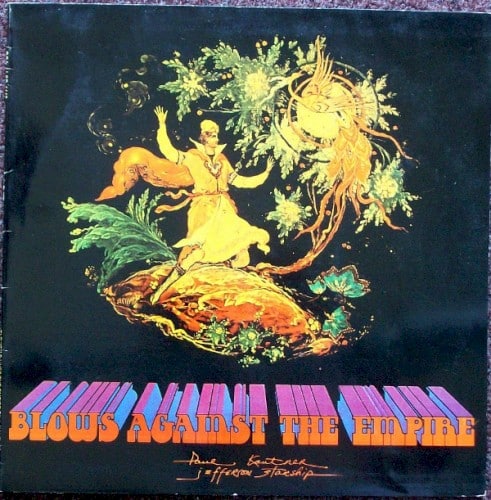
Paul Kantner: Blows Against the Empire
1970
The first record to carry the Jefferson Starship name.
A full science fiction concept album and a one-off Hugo Award nominee.
🛒 Check Price on Amazon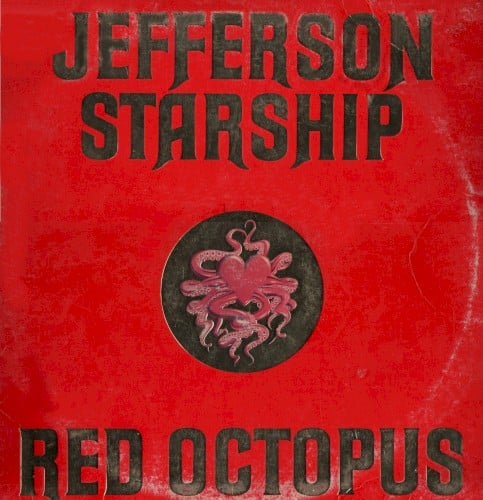
Jefferson Starship: Red Octopus
1975
Kantner’s Starship at its commercial peak, a number one album.
Balin’s “Miracles” sits next to Kantner’s harder rock cuts.
🛒 Check Price on AmazonYou Might Also Like
The bandmate who recruited Kantner in 1965 and later gave Jefferson Starship its biggest ballads.
Co-wrote “Wooden Ships” with Kantner and David Crosby during the same late-1960s California scene.
Shared the Woodstock stage and the CSNY orbit that fed Kantner’s Blows Against the Empire sessions.
Another West Coast frontman who pushed rock lyrics toward poetry and confrontation in the same years.
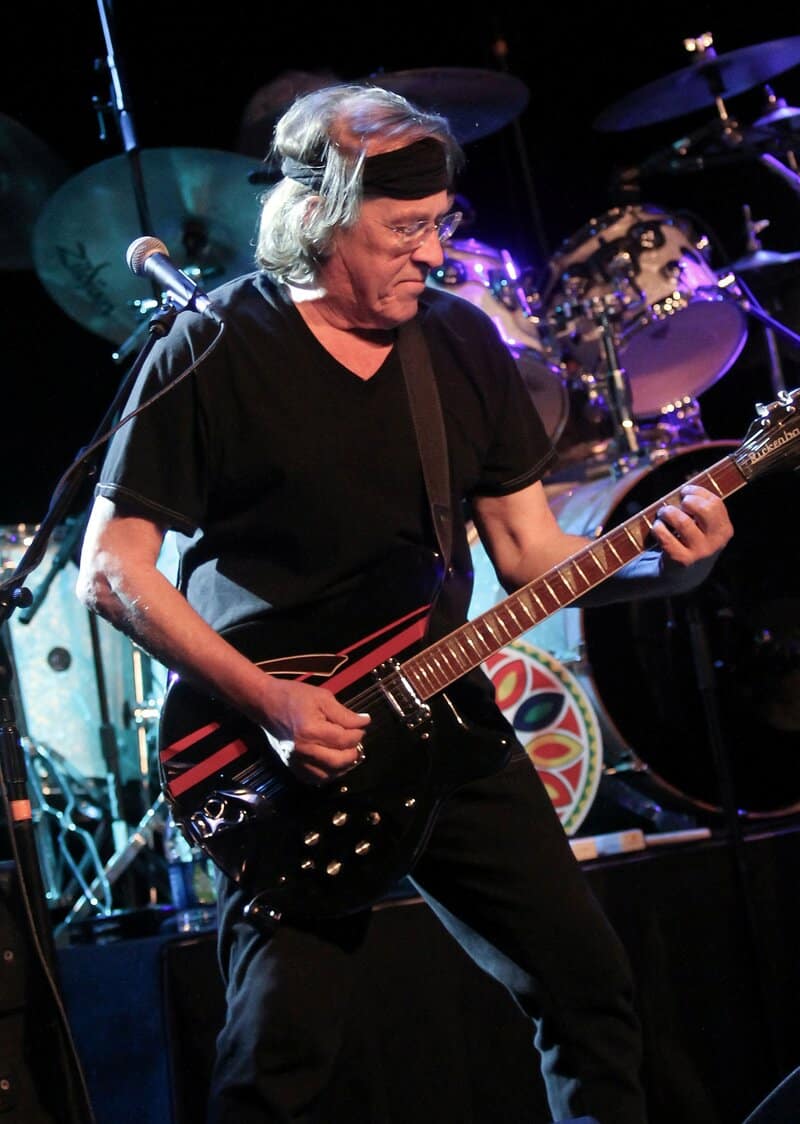
Image Credit: Photo by Craig ONeal, CC BY 2.0, via Wikimedia Commons
Paul Kantner spent 50 years turning San Francisco idealism into loud, argumentative rock, and the Starship he named still carries that flag.