

Rick Wakeman is the English keyboard player who turned the synthesizer into a lead rock instrument.
He is best known as the keyboardist of Yes.
Wakeman held that role across five separate periods between 1971 and 2004.
He also built a large solo career.
It began with the 1973 instrumental album The Six Wives of Henry VIII.
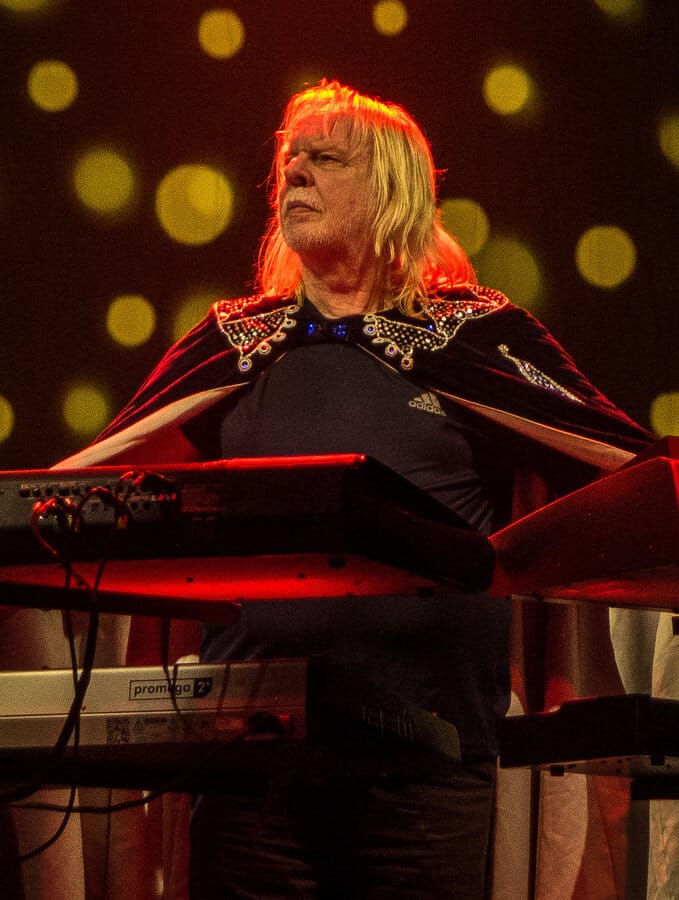
On stage Wakeman sat inside a semicircle of organs, Moogs and Mellotrons.
He usually wore a floor length sequined cape.
That look earned him the nickname the Caped Crusader of prog.
This biography covers his session years and his Yes tenures.
It also covers his concept albums, his health scares and his life in 2026.
Affiliate Disclosure: I am an Amazon affiliate and if you purchase through any amazon links on this site i may earn a small commission at no extra charge to you.
Image Credit: Photo by Stéphane Gallay, CC BY 2.0, via Wikimedia Commons
📋 Table of Contents [+]
⚡ Key Takeaways
- Rick Wakeman, born May 18, 1949, is the English keyboardist of Yes across five stints from 1971 to 2004.
- Wakeman released The Six Wives of Henry VIII in 1973 and Journey to the Centre of the Earth in 1974.
- Rick Wakeman had three heart attacks in 1974 at age 25, caused by heavy smoking and drinking.
- Yes, with Wakeman on keyboards, entered the Rock and Roll Hall of Fame on April 7, 2017.
- Rick Wakeman was appointed a CBE in 2021. He toured the United States with son Oliver Wakeman in March 2026.
Who Is Rick Wakeman?
Rick Wakeman is an English keyboardist, composer and broadcaster.
He was born on May 18, 1949, in Perivale, west London.
He turned 77 in May 2026.
Wakeman made the Minimoog and the Mellotron sound like a full orchestra.
His main fame comes from Yes, the progressive rock band he joined in 1971.
Away from Yes he has recorded dozens of solo albums.
They range across rock, classical and solo piano.
He also became a familiar television face in Britain.
Shows like Grumpy Old Men and Countdown made Wakeman a household name.
Fans call him the Caped Crusader.
He performs inside a wall of keyboards while wearing a glittering cape.
That wall has held a Hammond organ, a Minimoog and a Mellotron at once.
An RMI electric piano and a grand piano often sat alongside them.
💡 Did You Know?
David Bowie paid Wakeman nine pounds to play the Mellotron on the 1969 recording of “Space Oddity.”
How Did Wakeman Learn to Play Piano?
Wakeman started classical piano lessons at age seven.
He trained hard through his teens and passed a tough conservatory audition.
He enrolled at the Royal College of Music in London in 1968.
He studied piano, clarinet and orchestration there.
Wakeman left the college in 1969 before finishing his course.
He clashed with tutors over his long hair and his rock ambitions.
He also refused to follow the strict classical path.
Session work paid better and let him play every day.
His father Cyril was a pianist who encouraged the early practice.
Wakeman was raised in the South Harrow Baptist Church and was baptised at 18.
What Sessions Did Rick Wakeman Play On?
Rick Wakeman played on an estimated 2,000 recording sessions between 1969 and 1971.
He played the Mellotron on David Bowie‘s “Space Oddity” in 1969.
He returned to play piano across Bowie’s 1971 album Hunky Dory.
His parts include “Life on Mars?” and “Changes.”
Wakeman played the piano on Cat Stevens‘s “Morning Has Broken” in 1971.
He added keyboards to the Marc Bolan single “Get It On”.
He worked with Elton John on the 1971 album Madman Across the Water.
He cut tracks with Lou Reed as well.
In 1973 Wakeman played synthesizer on the Sabbath Bloody Sabbath track “Sabbra Cadabra.”
Session players earned a flat fee with no royalties.
These credits made his name long before they made him money.
Wakeman and the Strawbs
Rick Wakeman joined the British folk rock band the Strawbs in 1970.
He played on the studio album Dragonfly.
He also played on the 1970 live album Just a Collection of Antiques and Curios.
His solo spot on that record, “Temperament of Mind,” drew strong reviews.
Wakeman then recorded the 1971 Strawbs album From the Witchwood.
He left the Strawbs in 1971.
He wanted more keyboard room than a folk band could give him.
The move set up the biggest decision of his career.
Why Did Rick Wakeman Join Yes?
Rick Wakeman joined Yes in August 1971.
The band wanted a keyboardist who could push their sound toward classical scale.
He replaced founding member Tony Kaye.
Kaye preferred the Hammond organ and resisted newer synthesizers.
Wakeman brought the Minimoog, the Mellotron and the RMI piano into the group at once.
His first album with Yes was Fragile, released in November 1971.
Fragile gave each member a solo track.
Wakeman chose a keyboard arrangement of Brahms called “Cans and Brahms.”
The 1972 follow up Close to the Edge is often called the peak of the classic lineup.
That lineup paired Wakeman with bassist Chris Squire, guitarist Steve Howe, singer Jon Anderson and drummer Bill Bruford.
Why Did Rick Wakeman Leave Yes Five Times?
Rick Wakeman first left Yes in 1974.
He hated the double concept album Tales from Topographic Oceans.
He found the 1973 record long, vague and hard to perform.
He said so in public while the band was still touring it.
During one 1973 show a hot chicken curry was delivered to his keyboard rig.
He ate it on stage in the middle of a song.
Most sources count five separate Wakeman tenures in Yes between 1971 and 2004.
The stints are usually given as 1971 to 1974, 1976 to 1980, 1990 to 1992, 1995 to 1997 and 2002 to 2004.
He returned for Going for the One in 1977 and Tormato in 1978.
He left again over money and management.
The 1991 Union album and tour reunited Wakeman with a huge eight man Yes.
He also played in the spin off group Anderson Bruford Wakeman Howe.
That group released one album in 1989.
By 1983 the band had moved on without him.
Tony Kaye returned for the hit album 90125.
What Are Rick Wakeman’s Best Solo Albums?
Rick Wakeman’s best known solo albums are three concept records from the 1970s.
The Six Wives of Henry VIII arrived on January 23, 1973.
The all instrumental set gives one track to each wife.
It reached number seven in the United Kingdom and number 30 in the United States.
The record earned a gold disc.
Wakeman recorded it during breaks from the Close to the Edge sessions.
He used his Yes bandmates as the players.
Journey to the Centre of the Earth was taped live in London on January 18, 1974.
The venue was the Royal Festival Hall.
It used the London Symphony Orchestra and the English Chamber Choir.
The actor David Hemmings read the narration.
The album entered the United Kingdom chart at number one.
It reached number three in the United States.
The Myths and Legends of King Arthur followed in March 1975.
It reached number two in the United Kingdom.
Wakeman also scored the 1975 Ken Russell film Lisztomania.
He released the album No Earthly Connection in 1976.
💡 Did You Know?
Ken Russell cast Wakeman as the Norse god Thor in the 1975 film Lisztomania. Wakeman also wrote its score.
The King Arthur on Ice Spectacle
Rick Wakeman staged The Myths and Legends of King Arthur as a live show on ice.
The venue was the Empire Pool, Wembley, in May 1975.
The production used costumed figure skaters, a full rock band and a large orchestra with a choir.
Three shows sold out.
The sets, ice rink and payroll still cost far more than the tickets brought in.
Skating writers still call it one of the strangest ice shows ever mounted.
The losses helped push Wakeman toward serious money trouble later in the decade.
He has told the story on stage for 50 years.
How Many Heart Attacks Did Rick Wakeman Have?
Rick Wakeman had three heart attacks in 1974.
All three came before his 26th birthday.
The first two were minor and happened within days of each other.
The third and worst struck in July 1974.
It came soon after a concert at Crystal Palace Park in London.
He recovered at Wexham Park Hospital in Berkshire.
A doctor there told him to give up touring.
Wakeman ignored that advice.
He sketched parts of the King Arthur album from his hospital bed.
Doctors blamed heavy smoking, a poor diet and heavy drinking on the road.
Wakeman stopped smoking in 1979.
He stopped drinking in September 1985 after an alcohol crisis on tour in Australia.
Wakeman on Television and Radio
Rick Wakeman became a British television regular through his dry humor and quick storytelling.
He was a fixture on the BBC series Grumpy Old Men.
He complained on camera about modern life.
He appeared many times on the Channel 4 word game Countdown.
He often sat in the guest spot called Dictionary Corner.
Wakeman hosted his own show on the Planet Rock radio station from 2005 to 2010.
He mixed piano pieces with long comic monologues.
Those routines later filled several live DVDs.
This second career kept Wakeman famous during quiet spells for his music.
Rick Wakeman and the Rock and Roll Hall of Fame
Yes, with Rick Wakeman among the inductees, entered the Rock and Roll Hall of Fame on April 7, 2017.
The class also included Pearl Jam, Journey, Tupac Shakur and Joan Baez.
Wakeman used his acceptance speech for a six minute comedy routine.
He skipped the thank you notes entirely.
He joked about a recent prostate exam and about his own family.
Rolling Stone called it the most talked about speech of the night.
Yes then played “Roundabout” with Geddy Lee of Rush on bass.
He stood in for Chris Squire, who had died in June 2015.
Wakeman’s Family, Faith and Honours
Rick Wakeman has been married four times and has six children.
His wives were Rosaline Woolford, Danielle Corminboeuf, the model Nina Carter and, since 2011, Rachel Kaufman.
His son Adam Wakeman is a keyboardist.
Adam has toured for years with Ozzy Osbourne and Black Sabbath.
Wakeman is a practising Christian and speaks openly about his faith.
He was appointed a Commander of the Order of the British Empire in 2021.
The CBE was given for services to music and to broadcasting.
Wakeman said he was “stunned and genuinely very proud” at the news.
💡 Did You Know?
Oliver Wakeman, one of Wakeman’s six children, played keyboards in Yes from 2008 to 2011. His father had held the same job decades earlier.
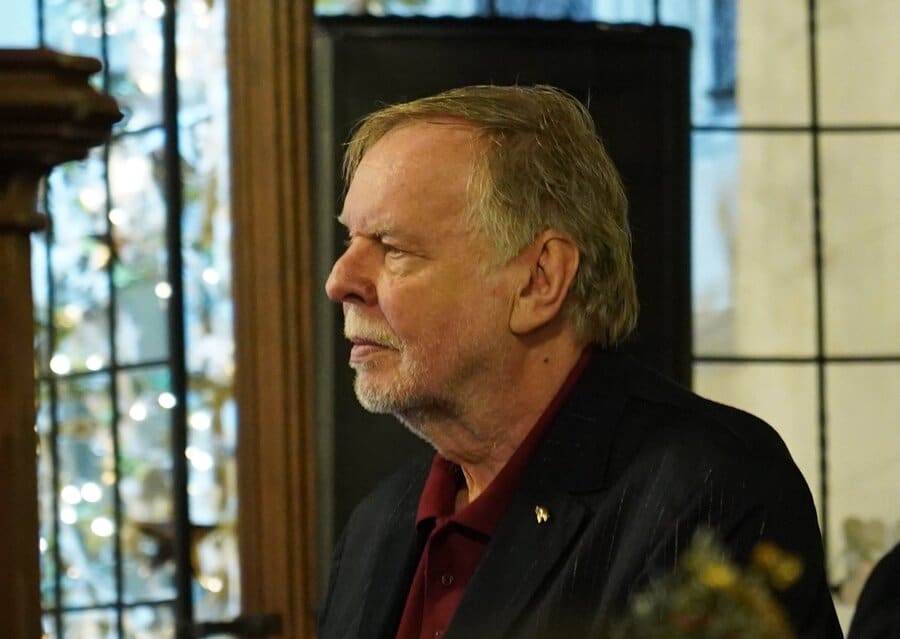
Image Credit: Photo by Steve Knight, CC BY 2.0, via Wikimedia Commons
What Is Rick Wakeman Doing Now?
Rick Wakeman is 77 and still recording and touring as of 2026.
His solo piano album Piano Portraits reached the United Kingdom Top 10 in 2017.
That was his first Top 10 there in about 42 years.
He followed it with Piano Odyssey in 2018 and The Red Planet in 2020.
A Gallery of the Imagination came in 2023.
In 2025 Wakeman was diagnosed with normal pressure hydrocephalus.
The condition is a build up of fluid on the brain.
He had spinal surgery earlier that year.
Brain surgery followed in the autumn of 2025 to fit a drainage shunt.
Wakeman called the operation “very successful.”
He played two United Kingdom charity concerts on December 19 and 20, 2025.
In March 2026 Wakeman toured the United States with his son Oliver Wakeman.
The run was billed as Wakeman & Son and was their first tour together.
He has since announced a United Kingdom tour called The Wizard of Prog for early 2027.
The current Yes lineup no longer includes any Wakeman.
Its 2026 dates are tracked on the site’s Yes tour page.
Rick Wakeman: People Also Ask
What is Rick Wakeman famous for?
Rick Wakeman is famous as the keyboardist of the progressive rock band Yes across five tenures between 1971 and 2004. He is also known for the 1970s solo concept albums The Six Wives of Henry VIII, Journey to the Centre of the Earth and The Myths and Legends of King Arthur. In Britain he is a television and radio personality too.
Why did Rick Wakeman leave Yes?
Wakeman first left Yes in 1974 because he considered the double album Tales from Topographic Oceans overblown and disliked performing it. He rejoined and departed four more times through 2004. The later splits were about musical direction, management and money rather than personal feuds.
How many heart attacks did Rick Wakeman have?
Rick Wakeman had three heart attacks in 1974, all when he was 25 years old. The first two were minor and the third came shortly after a concert at Crystal Palace Park in London. Doctors linked the attacks to heavy smoking, poor diet and heavy drinking.
Did Rick Wakeman play with David Bowie?
Wakeman played the Mellotron on David Bowie’s “Space Oddity” in 1969 and piano across the 1971 album Hunky Dory. His Hunky Dory parts include “Life on Mars?” and “Changes.” The two worked together as session leader and player rather than as bandmates.
Is Rick Wakeman still touring?
Rick Wakeman is still touring in 2026 at age 77, after recovering from brain surgery for normal pressure hydrocephalus in the autumn of 2025. He toured the United States with his son Oliver Wakeman in March 2026. He has also announced a United Kingdom tour called The Wizard of Prog for early 2027.
Watch Wakeman Play Merlin the Magician
This 1976 clip shows Wakeman performing “Merlin the Magician” from the King Arthur album.
The cape, the bank of keyboards and the sprint across the manuals are all on show here.
Wakeman Albums to Own
These four albums are the fastest way to hear what Wakeman brought to 1970s rock.
Affiliate Disclosure: I am an Amazon affiliate and if you purchase through any amazon links on this site i may earn a small commission at no extra charge to you.
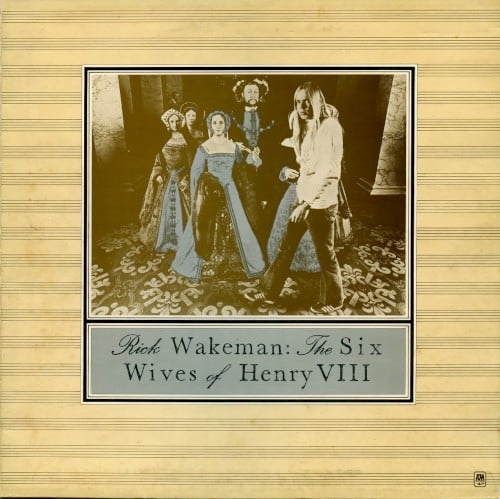
The Six Wives of Henry VIII
1973
Six instrumental portraits built on organ, Moog and Mellotron.
Features Chris Squire and Bill Bruford of Yes.
The record that launched his solo career.
🛒 Check Price on Amazon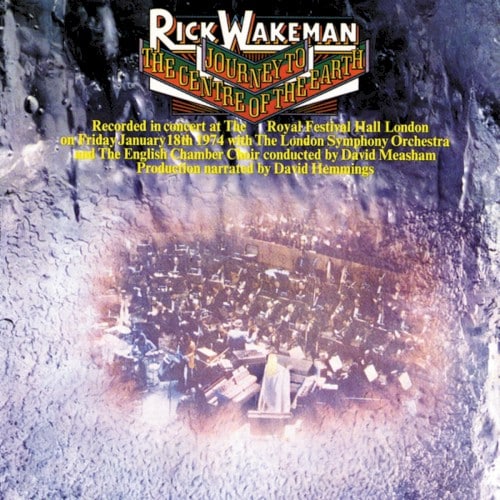
Journey to the Centre of the Earth
1974
Recorded live with the London Symphony Orchestra.
Entered the United Kingdom chart at number one.
Narration by the actor David Hemmings.
🛒 Check Price on Amazon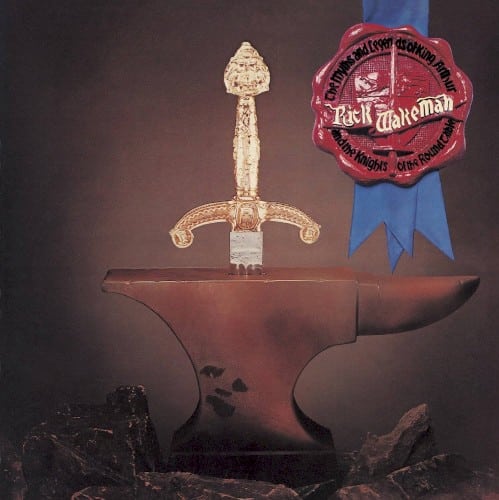
The Myths and Legends of King Arthur
1975
A concept album on Arthur, Guinevere and Merlin.
Home of the live favorite “Merlin the Magician.”
Reached number two in the United Kingdom.
🛒 Check Price on Amazon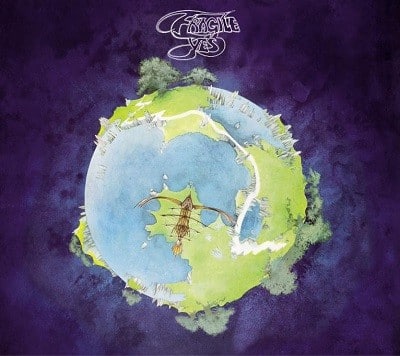
Yes: Fragile
1971
Rick Wakeman’s first album as a member of Yes.
Contains “Roundabout” and “Heart of the Sunrise.”
His solo piece is “Cans and Brahms.”
🛒 Check Price on Amazon🛒 Browse more Rick Wakeman records and box sets on Amazon
You Might Also Like
The high voice and lyrics that Wakeman scored during the classic Yes albums.
The drummer on Fragile and on Wakeman’s own Six Wives sessions before he left for King Crimson.
The 1971 record Wakeman did not play on, cut just before he replaced Tony Kaye.
The full lineup history of the band, from Peter Banks through every keyboard chair Wakeman held.
Last updated: September 1, 2026
Rick Wakeman remains the keyboard player who proved a synthesizer could carry a symphony, a cape and a curry on stage at once.