

Roundabout by Yes is one of the defining achievements of progressive rock, an eight-minute journey through interlocking guitar, bass, and keyboard passages that builds from an acoustic introduction to a full-band climax with the logic and momentum of a classical composition.
Written by vocalist Jon Anderson and guitarist Steve Howe, the track appeared on the Fragile album in 1972 and reached number 13 on the US Billboard Hot 100, an unusual chart performance for a song of its length and complexity.
The track remains one of the most beloved in progressive rock and has introduced each new generation of players to the possibilities of technically sophisticated rock music.
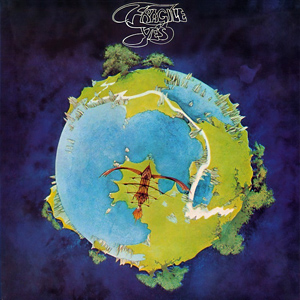
Affiliate Disclosure: I am an Amazon affiliate and if you purchase through any amazon links on this site i may earn a small commission at no extra charge to you.
| Song Title | Roundabout |
| Artist | Yes |
| Album | Fragile (1971) |
| Released | 1972 (US single) |
| Written By | Jon Anderson, Steve Howe |
| Producer | Eddy Offord, Yes |
| Label | Atlantic Records |
| Chart Peak | #13 US Billboard Hot 100 |
Table of Contents
- What Is Roundabout About?
- The Vibe: Genre, Mood, and Search Intent
- Behind the Lyrics: The Story of Roundabout
- Technical Corner: Instruments and Production
- Legacy and Charts: Why This Classic Still Matters
- Listener’s Note: A Personal Take
- Collector’s Corner: Own a Piece of Rock History
- Frequently Asked Questions About Roundabout
What Is Roundabout About?
This tune grew from images Jon Anderson collected during a tour drive through Scotland, specifically the experience of driving through mist and lochs and the sensation of roundabouts appearing and disappearing in the fog.
The lyric transforms these road images into something more metaphysical, a meditation on the journey of experience and the circular nature of things that return to their starting point transformed.
Anderson’s imagery is characteristically abstract, prioritising sound and association over narrative logic, which suits the music’s own preference for texture and movement over conventional structure.
The Vibe: Genre, Mood, and Search Intent
The track announces itself with a single sustained guitar note and then builds into one of the most intricately arranged pieces of music ever placed in a rock format, dense with rhythmic counterpoint and harmonic surprise at every turn.
- Genre: Progressive Rock, Art Rock, Classic Rock
- Mood: Expansive, Technically Dazzling, Epic
- Tempo: Variable, from intro (~90 BPM) to uptempo sections (~150 BPM)
- Best For: Progressive rock playlists, showcasing technical musicianship, epic rock collections
- Similar To: Yes “Heart of the Sunrise”, Emerson Lake and Palmer “Lucky Man”, Jethro Tull “Aqualung”
- Fans Also Search: Yes discography, Steve Howe guitar, Jon Anderson vocalist, Yes Fragile album
Behind the Lyrics: The Story of Roundabout
Jon Anderson has described writing the song during a tour bus journey through Scotland, collecting images from the landscape that he later assembled into the song’s lyric.
The roundabouts in the title are literal, the traffic circles that appear and disappear in Scottish road conditions, but Anderson transformed them into a metaphor for the circular patterns of experience.
Steve Howe contributed the guitar framework on which the song is built, developing the Spanish-influenced acoustic introduction that gives the track its distinctive opening.
Chris Squire’s bass work on Roundabout is one of the most celebrated in rock, a melodic and rhythmically independent performance that treats the bass as a lead instrument rather than a supporting one.
It was released as a single in the United States in January 1972 and reached number 13 on the US Billboard Hot 100, an impressive performance for a track running over eight minutes.
The Fragile album from which it came went platinum in the US, establishing Yes as one of the leading progressive rock acts in both the American and British markets.
Technical Corner: Instruments and Production
The track opens with Steve Howe’s Spanish-influenced acoustic guitar figure, recorded with a natural, room ambience that gives it a warm, intimate quality.
The track then builds through multiple distinct sections, each adding new instrumental layers while maintaining the rhythmic momentum established by the opening.
Chris Squire’s Rickenbacker bass is the most prominent non-guitar sound in the arrangement, playing lines that counterpoint the vocal melody rather than supporting it, a distinctive approach that made Squire one of the most influential bassists in rock.
Rick Wakeman‘s keyboard work weaves between synthesizer and organ textures throughout, adding harmonic colour and rhythmic complexity at multiple points in the arrangement.
Bill Bruford‘s drumming is precise and inventive, using the full kit vocabulary of progressive rock without sacrificing the song’s forward momentum.
Eddy Offord and Yes co-produced the track, with Offord’s studio expertise helping to balance the complex arrangement into something that remained coherent and exciting rather than overwhelming.
The production on Fragile is transparent enough to hear every instrument separately while retaining the blended quality that makes the group sound like a unified musical voice.
Legacy and Charts: Why This Classic Still Matters
Roundabout reached number 13 on the US Billboard Hot 100 in 1972 and became the most commercially successful single from the Fragile album, introducing millions of listeners to progressive rock who might otherwise have found the genre inaccessible.
The song has been covered, referenced, and sampled across multiple genres and decades, with a particularly prominent cultural moment coming from its use as the ending theme of JoJo’s Bizarre Adventure, the Japanese anime series, which introduced it to an enormous new international audience.
Chris Squire’s bass performance on the track is consistently cited by bass players as one of the defining moments in the history of the instrument in rock, influencing players from John Paul Jones to Geddy Lee.
It appears on every major list of essential progressive rock recordings and is routinely cited in discussions of the greatest moments in rock musicianship.
Yes continues to perform the song at every concert, and it has been a constant presence in their set list across all lineup changes and stylistic evolutions over five decades.
The song’s reach demonstrates that technical complexity and popular appeal are not mutually exclusive, that an audience will follow great musicianship wherever it leads.
Listener’s Note: A Personal Take
Roundabout is one of those songs that reveals more detail with every listen.
The first time through you might notice the opening guitar, the vocal, the bass.
The fifth time you start hearing what Rick Wakeman is doing in the background of the verses, and the fifteenth time you understand how Bill Bruford’s kick drum pattern relates to Chris Squire’s melodic bass line.
That kind of richness keeps listeners engaged for decades in a way that simpler music cannot.
What impresses me most now is that for all its complexity the song still has a pop heart.
The vocal melody is memorable and singable, the dynamics are clear, and the whole thing moves with genuine purpose.
The song is proof that technical mastery serves the music rather than replacing it.
Watch: Roundabout by Yes
Collector’s Corner: Own a Piece of Rock History
Yes: Fragile (1971)
Own the landmark album that gave the world this landmark track. Original Atlantic pressings, Steven Wilson remixes, and anniversary editions available.
Frequently Asked Questions
Who wrote Roundabout?
The song was written by Jon Anderson and Steve Howe of Yes. Anderson has described writing the lyric during a tour bus drive through Scotland, collecting images of lochs and roundabouts in the fog.
What is Roundabout about?
Roundabout is inspired by the experience of driving through the Scottish landscape, transforming literal road images into a metaphysical meditation on circular journeys and returning experiences. Anderson’s lyric prioritises imagery and association over narrative.
How high did Roundabout chart?
Roundabout reached number 13 on the US Billboard Hot 100 in 1972, an unusual chart performance for a track running over eight minutes. The Fragile album went platinum in the US.
What album is Roundabout on?
Roundabout appears on Fragile, Yes’s fourth studio album, released on Atlantic Records in November 1971. The album is considered one of the finest progressive rock recordings and introduced Rick Wakeman as the band’s keyboard player.
What is Chris Squire’s role in the song?
Chris Squire’s bass performance is one of the defining elements of the track, treating the bass as a lead and melodic instrument rather than a rhythm support. His Rickenbacker bass lines counterpoint the vocal melody throughout and are considered among the greatest bass performances in rock.
Who produced the album?
The album was produced by Eddy Offord and Yes. Offord was a key figure in Yes’s sound during their peak progressive rock period, helping balance their complex arrangements into coherent recordings.
Has the song appeared in popular culture?
Yes, the song became very widely known internationally through its use as the ending theme of the anime series JoJo’s Bizarre Adventure, which introduced it to a massive new audience and significantly boosted streaming numbers for the original recording.
What guitar does Steve Howe play on the track?
Steve Howe opens the track on a classical or Spanish-style acoustic guitar, playing a fingerpicked figure that has a Mediterranean quality unusual in rock music. Howe’s guitar collection and versatility were central to Yes’s sound throughout their classic period.
You Might Also Like
Deep Purple: Smoke on the Water (1972)
From the same year, Smoke on the Water shows the other great direction rock guitar was heading in 1972, a perfect contrast to Yes’s technical complexity.
Emerson, Lake and Palmer: Lucky Man (1970)
From the album released the year before Fragile, Lucky Man shares its combination of folk-influenced acoustic textures with progressive rock ambition, making the two recordings essential companions.
Argent: Hold Your Head Up (1972)
A fellow British progressive rock anthem from 1972, Hold Your Head Up shares the same gift for combining technical sophistication with a genuinely memorable melody and a powerful, uplifting chorus.
Decades on, Roundabout by Yes endures as one of the greatest songs in classic rock history, a recording that has outlasted trends and generations to remain as vital and exciting as the day it was made.