

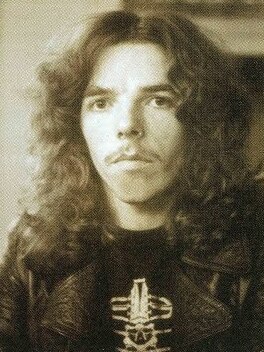
Mike Gibbins was the drummer who held Badfinger’s rhythm section together for a decade.
He joined the band in 1964, when it was still called the Iveys.
Gibbins played on every hit from “Come and Get It” to “Baby Blue.”
He also picked up a nickname from producer Phil Spector for his tambourine work.
Gibbins was one of two Badfinger members left standing after two bandmates died by suicide.
He spent years afterward fronting a rival version of the band on the road.
His own solo career only began once those legal fights were behind him.
Gibbins died in his sleep in Florida in 2005, the first of the classic lineup to go.
Affiliate Disclosure: I am an Amazon affiliate and if you purchase through any amazon links on this site i may earn a small commission at no extra charge to you.
Image Credit: 1974 Badfinger promotional footage, Warner Bros, CC BY 3.0, via Wikimedia Commons.
📋 Table of Contents [+]
⚡ Key Takeaways
- Mike Gibbins was born March 12, 1949, in Swansea, Wales, and joined the Iveys as drummer in 1964.
- He played on every classic Badfinger album, from Magic Christian Music through Wish You Were Here.
- Phil Spector nicknamed him “Mr. Tambourine Man” for his tambourine work on George Harrison’s All Things Must Pass.
- Gibbins led a rival touring version of Badfinger with Tom Evans in the early 1980s.
- Mike Gibbins died in his sleep on October 4, 2005, at age 56, the first of Badfinger’s classic lineup to pass away.
Who Was Mike Gibbins?
Mike Gibbins was the Welsh drummer who anchored Badfinger’s rhythm section from 1964 to 1975.
Michael George Gibbins was born on March 12, 1949, in Swansea, Wales.
He joined the band, then called the Iveys, as a teenager.
Gibbins stayed through the name change to Badfinger and the band’s biggest Apple Records hits.
He drummed on “Come and Get It,” No Matter What, and Day After Day.
He also played on Baby Blue, the song Breaking Bad brought back to the charts decades later.
Gibbins later led a competing version of Badfinger before he died in 2005.
Mike Gibbins’ Early Life in Swansea, Wales
Gibbins grew up in Swansea, an industrial port city in South Wales.
He began playing drums as a boy in the sea cadets.
He later worked around South Wales clubs in a group called the Misfits.
That local scene put him in direct contact with a rival Welsh band called the Iveys.
The two acts often crossed paths on the same small club circuit.
That circuit set up the audition that would change Gibbins’ life.
How Did Gibbins Join the Iveys?
Gibbins auditioned for the Iveys in 1964, while still playing with the Misfits.
He won the drum seat and joined Pete Ham, Ron Griffiths, and David Jenkins.
The Iveys built a following on the Swansea and London club circuits.
They signed to the Beatles’ new Apple Records label in 1968.
Their single “Maybe Tomorrow” gave the band its first minor hit that year.
Gibbins had gone from small Welsh clubs to a Beatles-owned label in four years.
From the Iveys to Badfinger: The Classic Lineup Forms
Ron Griffiths left the band in 1969, and Tom Evans switched from guitar to bass.
Guitarist Joey Molland auditioned soon after and won the open guitar spot.
The group changed its name to Badfinger later that year.
The new name came from “Bad Finger Boogie,” the working title of the Beatles song “With a Little Help from My Friends.”
Paul McCartney wrote and produced the band’s first hit, “Come and Get It,” in 1969.
Their first album together, No Dice, arrived in 1970.
Gibbins was the one member who had been there since the Iveys’ earliest days.
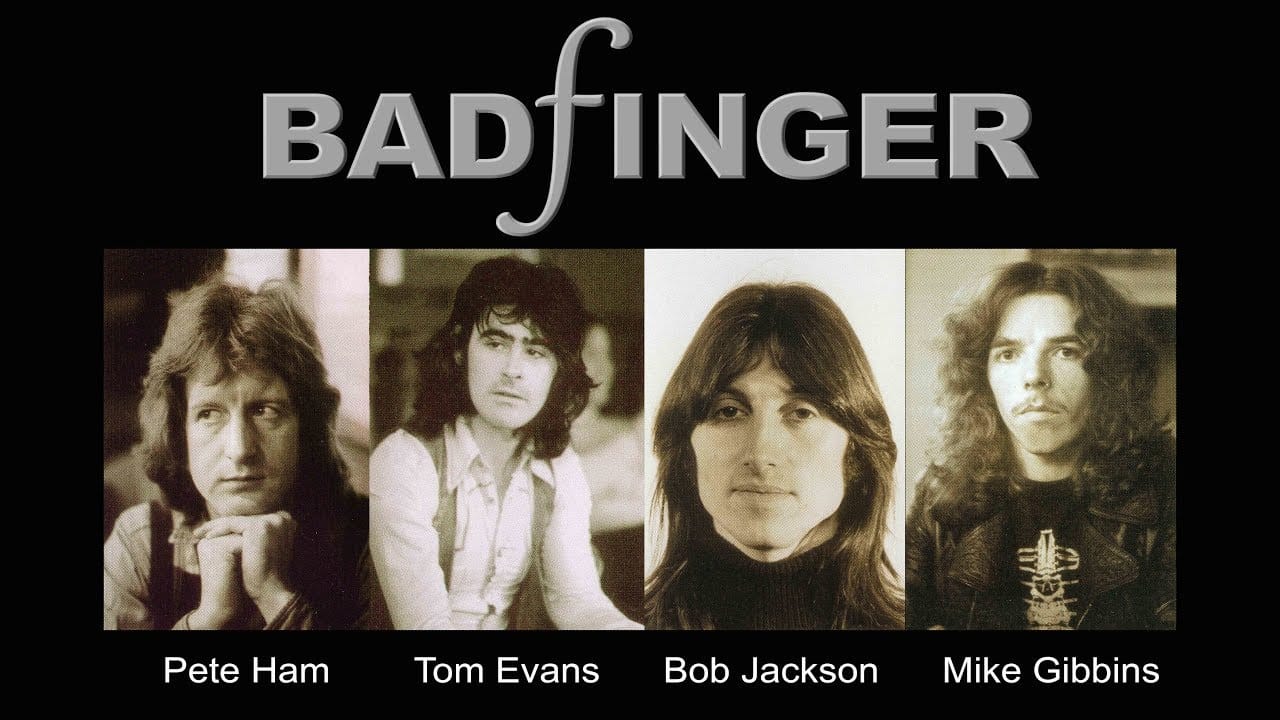
Badfinger in 1974, with Mike Gibbins on drums. Image credit: Warner Bros, CC BY 3.0, via Wikimedia Commons.
💡 Did You Know?
Gibbins wrote and sang two songs, “Rockin’ Machine” and “Back Again,” for Badfinger’s album Head First.
Warner Bros. shelved that record for 26 years after its 1974 lawsuit froze the band’s finances.
What Songs Did Mike Gibbins Write for Badfinger?
Gibbins started contributing songs early in the band’s Apple Records years.
He co-wrote “Rock of All Ages” with Ham and Evans, first released as the B-side of “Come and Get It” in 1969.
The song later appeared on the 1970 compilation Magic Christian Music.
Gibbins also wrote and sang “My Heart Goes Out,” released as a single from the 1974 self-titled Badfinger album.
His song “Loving You,” recorded during the Straight Up sessions, stayed unreleased until a 2010 reissue.
Ham and Molland’s songs dominated the albums, so Gibbins’ writing rarely reached wide notice.
Still, those credits show a drummer who wanted more than a seat behind the kit.
Gibbins and George Harrison’s All Things Must Pass
Badfinger became a house band for former Beatles recording solo albums in London.
Gibbins played tambourine on George Harrison’s 1970 triple album All Things Must Pass.
Producer Phil Spector liked his tambourine parts enough to give him a nickname.
Spector started calling him “Mr. Tambourine Man,” after the Bob Dylan song.
The name stuck with Gibbins for the rest of his career.
It was a small credit, but it put him inside one of the era’s biggest sessions.
Mike Gibbins at the Concert for Bangladesh
Harrison called on Badfinger again for his Concert for Bangladesh in August 1971.
Gibbins played acoustic rhythm guitar and tambourine, not drums, at the two benefit shows.
Jim Keltner and Ringo Starr handled the drum kit that day instead.
Gibbins stood alongside Ham, Evans, and Molland in Harrison’s oversized backing band.
The shows raised money for refugees and helped invent the modern benefit concert.
For Mike Gibbins, it meant sharing a stage with Harrison, Bob Dylan, and Eric Clapton in one afternoon.
Pete Ham’s Death and Badfinger’s First Breakup
Badfinger’s success hid a financial disaster building behind the scenes.
Manager Stan Polley controlled the band’s money and left the musicians living on small wages.
Warner Bros. sued the band in 1974 after a large advance disappeared into Polley’s accounts.
The lawsuit froze the group’s income while its records still sold worldwide.
Pete Ham died by suicide on April 24, 1975, three days before his 28th birthday.
His death ended the classic lineup and broke up Badfinger for the first time.
Gibbins stepped away from the band and went back to session work in Wales.
Mike Gibbins’ Session Work and Bonnie Tyler’s It’s a Heartache
Gibbins kept working as a drummer through the late 1970s.
He played on Bonnie Tyler‘s 1977 hit “It’s a Heartache,” a song that later topped charts worldwide.
The track gave Gibbins a hit record even while Badfinger’s own catalog sat frozen in court.
He also took studio work around Wales and England during those years.
Meanwhile, Evans and Molland began rebuilding Badfinger without him.
Gibbins would rejoin that story only once the band split into two rival camps.
💡 Did You Know?
Gibbins was survived by his wife and three sons.
Those sons later formed their own rock band, Seven Sisters, in Orlando.
The Two Rival Badfinger Bands of the 1980s
Evans and Molland reunited Badfinger in the late 1970s, releasing Airwaves in 1979.
Their partnership broke down again over unpaid royalties from “Without You.”
By 1982, Evans formed his own touring Badfinger with Gibbins on drums and Bob Jackson on keyboards.
Molland led a separate lineup, and both bands sometimes played the same American cities in the same week.
Fans often could not tell which version of Badfinger they were seeing.
Gibbins soon left that lineup, but the rivalry between Evans and Molland kept going without him.
Tom Evans’ Death and the End of the Reunion
Tom Evans died by suicide on November 19, 1983, in Surrey, England.
He was 36 years old, and his death came eight years after Ham’s.
Gibbins, Jackson, and Molland briefly reunited to tour as Badfinger the following year.
That 1984 tour marked one of the last times Mike Gibbins played under the Badfinger name.
The band’s history of two suicides made it one of rock’s most tragic stories.
Gibbins increasingly stepped back from full-time music after that tour.
Madfinger and Mike Gibbins’ Solo Albums
Gibbins settled in Florida and built a home recording studio.
In the late 1990s he formed a new band called Madfinger with former Iveys bassist Ron Griffiths.
He released his solo debut, A Place in Time, in the late 1990s.
Guitarist Rick Warsing played all the guitar and bass parts on that record.
Gibbins wrote every song, sang lead, and played all the percussion and keyboards himself.
He followed it with three more solo albums: More Annoying Songs, Archeology, and In the Meantime.
How Did Mike Gibbins Die?
Mike Gibbins died in his sleep at his home in Oviedo, Florida, on October 4, 2005.
The cause was a brain aneurysm.
He was 56 years old.
His death made him the first member of Badfinger’s classic lineup to die of natural causes.
Ham and Evans had both died by suicide years earlier.
News of his death reached fans through Billboard and other music outlets within days.
What Is Mike Gibbins’ Legacy in Badfinger’s Story?
Mike Gibbins gave Badfinger the steady drumming that let Ham and Molland’s songs breathe.
His tambourine work on All Things Must Pass linked him to one of rock’s biggest sessions.
He kept the Badfinger name alive on the road through the band’s darkest years.
His later solo records showed a songwriter who had waited decades for his turn.
Joey Molland outlived him by two decades as the last surviving member of the classic lineup.
Fans can find the full band story in the Members of Badfinger guide.
Mike Gibbins remains the drummer who held Badfinger together through its best songs and its worst years.
💡 Did You Know?
On A Place in Time, Gibbins played every keyboard and percussion part himself.
Guitarist Rick Warsing handled every guitar and bass part on the same record.
People Also Ask About Mike Gibbins
Who was Mike Gibbins in Badfinger?
Mike Gibbins was Badfinger’s drummer from 1964 until the band’s first breakup in 1975.
He played on the hits “Come and Get It,” “No Matter What,” and “Day After Day.”
He also wrote songs including “Rock of All Ages” and “My Heart Goes Out.”
How did Mike Gibbins die?
Mike Gibbins died on October 4, 2005, at his home in Oviedo, Florida.
He was 56 years old, and the cause was a brain aneurysm.
He died in his sleep.
Did Mike Gibbins play at the Concert for Bangladesh?
Yes, Gibbins played acoustic rhythm guitar and tambourine at the Concert for Bangladesh in 1971.
Jim Keltner and Ringo Starr played drums at that show instead.
Gibbins shared the stage with George Harrison, Bob Dylan, and Eric Clapton.
Was Mike Gibbins the last surviving member of Badfinger?
No, Joey Molland outlived him and became Badfinger’s last surviving classic member.
Pete Ham died in 1975, Tom Evans in 1983, and Mike Gibbins in 2005.
Molland lived until March 1, 2025.
What songs did Mike Gibbins write for Badfinger?
Gibbins co-wrote “Rock of All Ages” with Ham and Evans for the Magic Christian Music album.
He wrote “My Heart Goes Out” for a single from the 1974 self-titled Badfinger album.
His song “Loving You” stayed unreleased until a 2010 reissue of Straight Up.
Watch Mike Gibbins and Badfinger Perform
Essential Mike Gibbins and Badfinger Albums
These four albums track Gibbins from his first songwriting credit to Badfinger’s final classic-lineup record.
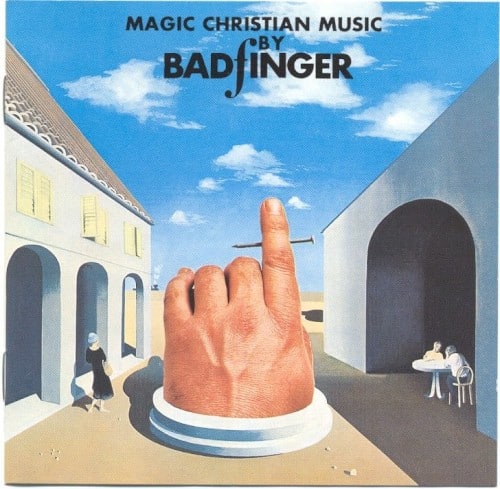
Magic Christian Music
1970
Home of “Rock of All Ages,” Gibbins’ first Badfinger songwriting credit.
The album that introduced the Badfinger name to the world.
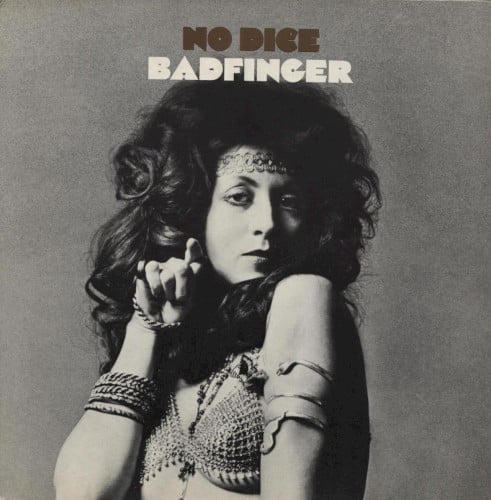
No Dice
1970
Gibbins’ drumming anchors “No Matter What” and “Without You.”
The album that turned Badfinger into a hit act.
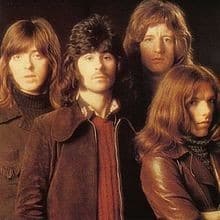
Straight Up
1971
Includes “Loving You,” Gibbins’ song later added to the 2010 reissue.
George Harrison and Todd Rundgren both worked on its production.
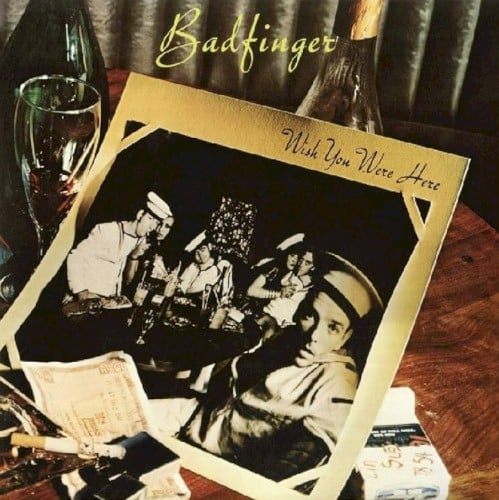
Wish You Were Here
1974
The last studio album from Badfinger’s classic lineup.
Pulled from shops within weeks by the Warner Bros. lawsuit.
Affiliate Disclosure: I am an Amazon affiliate and if you purchase through any amazon links on this site i may earn a small commission at no extra charge to you.
The “No Matter What” story breaks down the song Gibbins helped turn into a hit.
His work also runs through the site’s 70s stories and hits coverage.
You Might Also Like
Bobby Elliott: The Hollies Drummer’s 63-Year Career, 1963-2026
Elliott kept steady time for one British band across six decades, the same discipline Gibbins brought to Badfinger.
Roger Earl: Foghat’s Founding Drummer
Earl anchored a hard-touring 1970s rock band from behind the kit, much as Gibbins did for Badfinger.
Spencer Dryden: Jefferson Airplane’s Jazz-Trained Drummer
Dryden brought a jazz background to a psychedelic band, another drummer whose contributions were often overshadowed by singer-songwriters.
Bill Bruford: Yes and King Crimson’s Drummer
Bruford also wrote and released his own material outside his main band, following a path Gibbins later took with his solo albums.
Last updated: September 6, 2026
Mike Gibbins spent a decade behind the kit for one of Apple Records’ best bands.
He earned a nickname from Phil Spector, a hit record with Bonnie Tyler, and a handful of his own songs along the way.
He also carried the Badfinger name through its darkest, most litigious years.
Anyone new to the band can start with No Dice, then follow the thread to Pete Ham and Tom Evans.
The music Mike Gibbins helped make still holds up as some of the best power pop of the 1970s.