

Master of Puppets by Metallica is the defining achievement of thrash metal, an eight-minute examination of addiction and control that transformed the genre from an underground phenomenon into a force capable of challenging rock’s mainstream in 1986.
Written by James Hetfield, Lars Ulrich, Kirk Hammett, and Cliff Burton, Master of Puppets became the title track of Metallica’s third studio album and built its enormous reputation entirely without radio airplay or a commercial single release, spreading through tape trading, live performance, and word of mouth among metal devotees worldwide.
Affiliate Disclosure: I am an Amazon affiliate and if you purchase through any amazon links on this site i may earn a small commission at no extra charge to you.
The album on which Master of Puppets appeared was the last to feature bassist Cliff Burton, who died in a tour bus accident in September 1986, giving the recording an additional emotional weight that has only deepened with time and made it one of the most consequential albums in rock history.
| Song Title | Master of Puppets |
| Artist | Metallica |
| Album | Master of Puppets (1986) |
| Released | 1986 (album track; no commercial single) |
| Written By | James Hetfield, Lars Ulrich, Kirk Hammett, Cliff Burton |
| Producer | Flemming Rasmussen |
| Label | Elektra Records |
| Chart Peak | Did not chart as a single; album reached #29 US Billboard 200 |
Table of Contents
- What Is Master of Puppets About?
- The Vibe: Genre, Mood, and Search Intent
- Behind the Lyrics: The Story of Master of Puppets
- Technical Corner: Instruments and Production
- Legacy and Charts: Why This Classic Still Matters
- Listener’s Note: A Personal Take
- Watch: Master of Puppets by Metallica
- Collector’s Corner: Own a Piece of Rock History
- Frequently Asked Questions About Master of Puppets
- You Might Also Like
What Is Master of Puppets About?
This song is an anti-drug statement written from the perspective of the drug itself, which addresses its user as the master who will control and ultimately destroy the person who has surrendered to it.
James Hetfield wrote the lyric as a portrait of addiction, depicting the progressive loss of autonomy experienced by someone whose dependence has reached the point where the substance makes every decision for them.
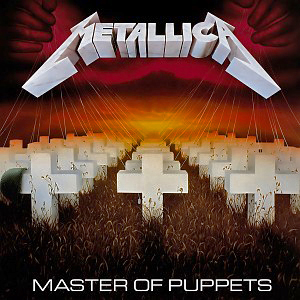
The title image of a cemetery of crosses being pulled by strings above, appears in the album artwork as a cemetery of crosses controlled from above, a visualisation of the way addiction reduces individual lives to something manipulated and disposable.
The lyric is more sophisticated than most metal writing of the period, combining visceral imagery with a coherent argument about the mechanics of dependency and the stages by which a person loses their identity to something external.
The Vibe: Genre, Mood, and Search Intent
The track opens with a clean guitar introduction that gives no warning of the wall of sound that follows, a structural choice that makes the entry of the full band feel overwhelming in exactly the way the song’s lyric describes.
- Genre: Thrash Metal, Heavy Metal, Hard Rock
- Mood: Relentless, Powerful, Darkly Triumphant
- Tempo: Fast (~212 BPM in main riff), with slower middle section
- Best For: Metal playlists, 1980s heavy rock, headphone listening at full volume
- Similar To: Metallica “Battery”, Black Sabbath “War Pigs”, Megadeth “Peace Sells”
- Fans Also Search: Metallica discography, Cliff Burton bass, thrash metal classics, Master of Puppets album
Behind the Lyrics: The Story of Master of Puppets
The song was written and developed during the sessions for Metallica’s third album, with all four members contributing to its construction, including the bass lines that Cliff Burton developed as melodic counterpoints to the main riff.
The band recorded the album at Sweet Silence Studios in Copenhagen with producer Flemming Rasmussen, who had worked with Metallica on their previous album Ride the Lightning and understood how to capture their live power in a studio recording.
The title track was the album’s centrepiece, running over eight minutes and containing multiple distinct sections including a clean guitar interlude that stands in sharp contrast to the aggression surrounding it.
The album was released in March 1986 without a commercial single, relying entirely on word of mouth, college radio, and the band’s reputation as one of the most powerful live acts in rock to build its audience.
Metallica was touring in support of the album with Ozzy Osbourne when Cliff Burton was killed in a tour bus accident in Sweden on 27 September 1986, an event that cast a long shadow over the recording and contributed to the album’s legendary status.
The recording became the definitive statement of what thrash metal was capable of, a demonstration that the genre could sustain extended compositions of genuine musical substance without sacrificing any of its visceral impact.
Technical Corner: Instruments and Production
The main riff is one of the most technically demanding in metal, requiring precise alternate picking at high tempo across a complex chord sequence that most rhythm guitarists cannot reproduce cleanly at full speed.
James Hetfield’s rhythm guitar tone was achieved through a combination of Marshall amplifiers and Mesa/Boogie equipment, producing the tight, precise distortion that became the sonic signature of Metallica’s mid-1980s recordings.
Lars Ulrich’s drumming drives the track at a relentless pace, with double bass drum patterns and snare work that maintains forward momentum even through the most technically demanding sections of the arrangement.
Cliff Burton’s bass work is audible throughout in a way unusual for metal recordings of the period, with his melodic lines giving the arrangement a harmonic richness that would be lost with a purely rhythmic bass approach.
Kirk Hammett’s guitar solo section is one of the most celebrated in metal, combining technical facility with genuine expressiveness and serving as one of the defining moments in his career as a soloist.
Flemming Rasmussen’s production captures the band with a directness and power that serves the music’s aggression, giving the recording a physical quality that is best experienced at high volume.
Legacy and Charts: Why This Classic Still Matters
Master of Puppets did not chart as a single and the album reached only number 29 on the US Billboard 200, but these numbers tell none of the story of what the recording achieved for heavy metal.
The album was the first metal record to go platinum in the US without any radio airplay or a commercial single release, demonstrating that a fanbase built through live performance and underground distribution could rival anything the mainstream music industry could produce.
The recording was entered into the National Recording Registry of the Library of Congress in 2016, one of the first metal recordings to receive that distinction and a recognition of its cultural significance beyond its genre.
The track gained a new generation of listeners in 2022 when it appeared in the fourth season of Netflix’s Stranger Things, performed in a pivotal scene by one of the show’s central characters, which sent the recording to number one on streaming charts worldwide.
Metallica has performed the song at virtually every concert since 1986, and it remains the centrepiece of their live shows, always closing or near-closing sets, always generating the most intense audience response of the night.
The song’s influence on subsequent metal and rock music is incalculable, having established both a compositional template and a production standard that shaped two generations of heavy music.
Listener’s Note: A Personal Take
The clean guitar introduction is a piece of misdirection so effective that even after hundreds of listens it still creates anticipation.
You know what is coming and still the entry of the full band hits with the force of something you did not entirely expect.
What stays with me most is the middle section, the quiet passage where Hetfield’s voice drops and the arrangement strips back before the final assault begins, a moment of genuine compositional intelligence in a song that is often thought of only in terms of its ferocity.
This recording is not just fast and loud, which is the simplest compliment metal receives. It is also well-constructed, emotionally varied, and musically coherent across all eight of its minutes, which is what makes it genuinely great.
Watch: Master of Puppets by Metallica
Collector’s Corner: Own a Piece of Rock History
Metallica: Master of Puppets (1986)
Own the album that changed heavy metal forever. Original Elektra Records pressings, remastered editions, and deluxe anniversary releases available.
Frequently Asked Questions About Master of Puppets
Who wrote Master of Puppets?
It was written by all four members of Metallica: James Hetfield, Lars Ulrich, Kirk Hammett, and Cliff Burton. All four received songwriting credit on the album, with Hetfield writing most of the lyrics.
What is Master of Puppets about?
The tune is an anti-drug song written from the perspective of the drug itself addressing its user. The lyric depicts addiction as a force that progressively strips away the individual’s autonomy until the substance controls every aspect of their existence.
Did Master of Puppets chart?
This song was not released as a commercial single and did not chart individually. The album reached number 29 on the US Billboard 200, but its cultural impact far exceeded what these figures suggest, going platinum in the US without radio support.
What makes Master of Puppets musically significant?
The song demonstrated that thrash metal could sustain extended compositions of genuine musical sophistication. Its combination of technical complexity, dynamic contrast, and compositional coherence across more than eight minutes set a standard the genre had not previously achieved.
Who was Cliff Burton?
Cliff Burton was Metallica’s bassist from 1982 until his death in a tour bus accident in September 1986. His melodic approach to bass playing and his classical music training were central to the sound of Metallica’s first three albums, and Master of Puppets features some of his finest recorded work.
Who produced Master of Puppets?
It was produced by Flemming Rasmussen at Sweet Silence Studios in Copenhagen. Rasmussen had worked with Metallica on Ride the Lightning and understood how to translate their live power into a recording that retained its physical impact.
Why did Master of Puppets become more famous in 2022?
Master of Puppets gained a massive new audience in 2022 through its appearance in the fourth season of Netflix’s Stranger Things, where the song was performed in a pivotal scene. The placement sent the track to number one on streaming charts globally and introduced it to millions of new listeners.
Is Master of Puppets in the Library of Congress?
Yes. The recording was entered into the National Recording Registry of the Library of Congress in 2016, one of the first heavy metal recordings to receive that recognition. The designation acknowledges its cultural, historical, and aesthetic significance in American music.
You Might Also Like
Black Sabbath: Paranoid (1970)
The founding document of heavy metal that established the template Master of Puppets would later perfect, Paranoid demonstrates the tradition of dark, aggressive rock that Metallica inherited and expanded beyond anything its originators imagined.
Led Zeppelin: Whole Lotta Love (1969)
The earlier great precedent for rock music built on an overwhelming riff and a performance of total physical commitment, Whole Lotta Love sits at the root of the tradition that Master of Puppets brought to its ultimate expression.
Deep Purple: Smoke on the Water (1972)
The riff that every rock guitarist learns first, Smoke on the Water represents the hard rock tradition from which Master of Puppets descended, demonstrating how a single great guitar figure can define a genre for generations.
Decades on, Master of Puppets by Metallica endures as one of the greatest songs in classic rock history, a recording that has outlasted trends and generations to remain as vital and exciting as the day it was made.