

Amanda by Boston is one of the purest expressions of melodic rock craftsmanship in classic rock history, a power ballad of such graceful construction and emotional sincerity that it reached number one on the US Billboard Hot 100 in 1986 and has remained a radio staple for four decades.
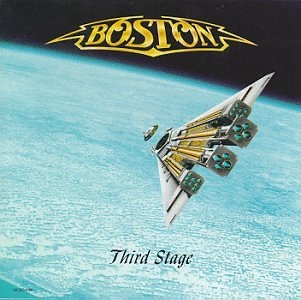
Written entirely by Tom Scholz and appearing on Boston’s long-awaited third album Third Stage, Amanda announced the band’s return after an eight-year gap with a song that demonstrated Scholz’s gift for melody had not diminished during the years he spent in his home studio perfecting every detail of the recording.
Affiliate Disclosure: I am an Amazon affiliate and if you purchase through any amazon links on this site i may earn a small commission at no extra charge to you.
Third Stage debuted at number one on the US Billboard 200 albums chart, confirming that the audience Boston had built with More Than a Feeling and Don’t Look Back had patiently waited nearly a decade for new music, and that Amanda was everything they had been hoping to hear.
| Song Title | Amanda |
| Artist | Boston |
| Album | Third Stage (1986) |
| Released | 1986 (single) |
| Written By | Tom Scholz |
| Producer | Tom Scholz |
| Label | MCA Records |
| Chart Peak | #1 US Billboard Hot 100 |
Table of Contents
- What Is Amanda About?
- The Vibe: Genre, Mood, and Search Intent
- Behind the Lyrics: The Story of Amanda
- Technical Corner: Instruments and Production
- Legacy and Charts: Why This Classic Still Matters
- Listener’s Note: A Personal Take
- Watch: Amanda by Boston
- Collector’s Corner: Own a Piece of Rock History
- Frequently Asked Questions About Amanda
- You Might Also Like
What Is Amanda About?
Amanda is a love song of complete emotional transparency, a declaration of devotion to a specific person that achieves its power through the sincerity of its expression rather than any complexity of metaphor or narrative.
Tom Scholz wrote it as a personal statement, giving the song a directness that connects with listeners who respond to music that says exactly what it means without irony or qualification.
The lyric describes the feeling of being in love as something that illuminates the rest of life, making ordinary experience feel meaningful and transforming the way the world looks to someone whose attention is fixed on another person.
The song is not about love’s complications or its difficulties but about the straightforward experience of cherishing someone, which is both its simplest quality and the source of its lasting appeal.
The Vibe: Genre, Mood, and Search Intent
The track opens with a guitar figure of characteristic Boston clarity, bright and ringing with the signature tone that Tom Scholz developed using his own custom amplification equipment and that no other band has been able to replicate convincingly.
- Genre: Classic Rock, Power Ballad, Arena Rock
- Mood: Romantic, Uplifting, Warm
- Tempo: Midtempo (~110 BPM)
- Best For: 1980s rock playlists, power ballad collections, driving music
- Similar To: Boston “More Than a Feeling”, Journey “Faithfully”, REO Speedwagon “Keep On Loving You”
- Fans Also Search: Boston discography, Tom Scholz guitar, Third Stage album, Boston power ballad
Behind the Lyrics: The Story of Amanda
Amanda was written by Tom Scholz during the extended recording process for Third Stage, which took approximately eight years from the completion of Boston’s second album Don’t Look Back in 1978 to its release in 1986.
Scholz is famously perfectionist in his approach to recording, constructing the arrangements in meticulous detail in his home studio in Massachusetts before presenting them to the rest of the band for completion.
The extended gap between albums created commercial and legal pressure on the band, with their label Epic Records eventually suing Scholz over delays, a dispute that was not resolved before Third Stage finally appeared on MCA Records.
The song was chosen as the lead single from Third Stage and began its climb to number one in the autumn of 1986, staying at the top of the US Billboard Hot 100 for two weeks.
Third Stage debuted at number one on the Billboard 200 albums chart the same week the single hit number one, a rare achievement that demonstrated the scale of the audience Boston had retained through nearly a decade of silence.
The song became the biggest commercial moment of Boston’s career, more successful even than More Than a Feeling in chart terms, and establishing it as the track most closely associated with the band’s legacy for a generation of listeners who came of age in the 1980s.
Technical Corner: Instruments and Production
Tom Scholz built his guitar sound using custom-designed amplification equipment he developed himself, including the Rockman headphone amplifier and associated processing gear that gave Boston recordings their distinctive compressed, singing tone.
The guitar tone on the recording is characteristic Boston, clean but with a warmth and sustain that comes from Scholz’s carefully refined signal chain rather than conventional amp distortion.
Brad Delp’s vocal performance is the emotional centrepiece of the recording, a delivery of such natural warmth and pitch accuracy that it makes the song feel effortless even though the melodic range it covers is substantial.
The production is the result of Scholz’s exhaustive process, with multiple passes and adjustments applied to every element until each sat precisely where he wanted it in the arrangement.
The layered guitar harmonies in the chorus sections are a Boston signature, built from multiple tracked performances that create a shimmering texture impossible to achieve with a single guitar player.
Scholz self-produced Third Stage with the same obsessive attention to sonic detail he had brought to Boston’s first two albums, resulting in a recording that sounds as clean and precise today as it did in 1986.
Legacy and Charts: Why This Classic Still Matters
Amanda reached number one on the US Billboard Hot 100 in 1986, making it Boston’s biggest commercial success and one of the most successful rock singles of the decade.
Third Stage became the best-selling album of 1986 in the United States, an achievement that established the commercial potential of carefully crafted melodic rock at a time when the genre was competing with synthpop and hair metal for radio attention.
The track has remained a consistent presence on classic rock radio in the four decades since its release, beloved by listeners who value its emotional directness and the quality of Brad Delp’s vocal performance.
The song was used in numerous films and television programmes of the late 1980s and 1990s, becoming one of the sonic markers of its era in the same way that Boston’s earlier hits had defined the 1970s.
Brad Delp, who delivered the definitive vocal performance on Amanda, died in 2007, and the song has since taken on additional resonance as a tribute to one of rock’s finest voices.
The song endures because it does something seemingly simple with exceptional skill, expressing genuine emotion through a melody and arrangement so well crafted that the craft becomes invisible and only the feeling remains.
Listener’s Note: A Personal Take
Amanda is a song that can sound like background music on a first listen and reveal itself to be something much more carefully made on the fifth.
The chorus melody is so natural and singable that it sounds inevitable, as though it could not have been written any other way, which is the hardest thing to achieve in commercial songwriting.
What always draws my attention is Brad Delp’s voice, which has a quality of emotional transparency rare even among great rock singers, carrying the feeling of the lyric so directly that analysing how he does it seems beside the point.
It is proof that in the right hands, a straightforward love song is as demanding and as rewarding a form as any in popular music.
Watch: Amanda by Boston
Collector’s Corner: Own a Piece of Rock History
Boston: Third Stage (1986)
Own the album that gave the world Amanda. Original MCA Records pressings and remastered editions available.
Frequently Asked Questions About Amanda
Who wrote Amanda?
The song was written entirely by Tom Scholz of Boston. Scholz wrote and produced all the material on Third Stage, as he had done on Boston’s first two albums, maintaining complete creative control over every aspect of the recording.
What is Amanda about?
This is a love song expressing complete devotion to a specific person, written with a directness and sincerity that connects with listeners who value emotional honesty over lyrical complexity. The song describes love as something that illuminates and transforms ordinary experience.
Did Amanda reach number one?
Yes. The single reached number one on the US Billboard Hot 100 in 1986 and stayed there for two weeks. Third Stage, the album it came from, also debuted at number one on the Billboard 200, making Boston one of the rare acts to simultaneously top both the singles and albums charts.
What album is Amanda on?
The song appears on Third Stage, Boston’s third studio album, released on MCA Records in 1986. The album came eight years after their second album Don’t Look Back and was the most anticipated rock release of the mid-1980s among the band’s enormous fanbase.
Why did it take Boston eight years to release Third Stage?
Tom Scholz’s perfectionist approach to recording meant that Third Stage took approximately eight years to complete. Scholz built the arrangements in exhaustive detail in his home studio in Massachusetts, and legal disputes with the band’s previous label Epic Records further delayed the album’s release.
Who sang the lead vocal?
The lead vocal was performed by Brad Delp, Boston’s lead vocalist from the band’s formation in 1976. Delp’s performance on Amanda is considered one of his finest recorded moments, demonstrating the natural warmth and pitch accuracy that made him one of rock’s most beloved vocalists.
Who produced the track?
The track was produced by Tom Scholz, who self-produced all of Boston’s albums. Scholz designed his own custom amplification equipment to achieve the guitar tones he wanted, and his production approach on this recording reflects decades of refinement in pursuit of a specific sonic ideal.
Is the song still played on radio?
Yes. The track has remained a consistent presence on classic rock radio since its release in 1986 and is among the most played songs in the format. Its combination of an exceptional vocal performance and a melody of genuine quality ensures it retains its appeal regardless of the decade in which it is heard.
You Might Also Like
Boston: More Than a Feeling (1976)
The song that made Boston famous a decade before Amanda, More Than a Feeling shares the same signature guitar tone and melodic ambition, establishing the sound that Tom Scholz would spend the next decade refining toward its ultimate expression.
Journey: Don’t Stop Believin’ (1981)
The fellow arena rock anthem that shares Amanda’s combination of melodic craftsmanship and emotional directness, Don’t Stop Believin’ and Amanda together define what made 1980s melodic rock so enduring and so widely loved.
REO Speedwagon: Keep On Loving You (1980)
The power ballad that preceded Amanda by six years and established the emotional template the song would perfect, Keep On Loving You demonstrates the tradition of melodic rock sincerity from which Boston’s greatest work emerged.
Decades on, Amanda by Boston endures as one of the greatest songs in classic rock history, a recording that has outlasted trends and generations to remain as vital and exciting as the day it was made.