

Jessie’s Girl by Rick Springfield reached number one on the US Billboard Hot 100 in August 1981, becoming one of the most recognizable rock hits of the decade and earning Springfield his first Grammy Award.
The song describes a narrator’s frustrated longing for his best friend Jessie’s girlfriend, tapping into a universal feeling of jealousy and desire that connected with listeners immediately on first hearing.
Affiliate Disclosure: As an Amazon Associate I earn from qualifying purchases. This helps support the site at no extra cost to you.
| Song | Jessie’s Girl |
| Artist | Rick Springfield |
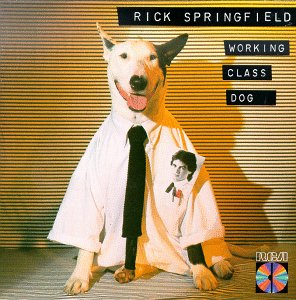
| Album | Working Class Dog (1981) |
| Written by | Rick Springfield |
| Produced by | Keith Olsen |
| Released | 1981 |
| Genre | Hard Rock, Power Pop |
| Record Label | RCA Records |
| Chart Peak | #1 US Billboard Hot 100 |
Table of Contents
Background and Meaning
Rick Springfield was born in Sydney, Australia, and built his early career in both Australia and the United Kingdom before relocating to the United States in the early 1970s.
He had scored a minor US hit with “Speak to the Sky” in 1972 but spent most of the following decade navigating the music industry without a major breakthrough.
By 1981, Springfield had landed the role of Dr. Noah Drake on the daytime television series General Hospital, giving him a national profile that radio success alone had not yet provided.
Jessie’s Girl was written by Springfield himself and drew on a real experience of wanting someone he could not have, translating a common emotional situation into a hook that radio programmers could not ignore.
The combination of a chart-topping single, a television presence, and an album that delivered on both fronts made 1981 the year Springfield’s career finally aligned the way it should have years earlier.
Musical Composition
The tune opens with a sharp, energetic guitar riff that establishes the song’s nervous, urgent energy before Springfield’s vocal enters.
Springfield plays all the guitar parts himself, combining rhythm and lead work with a directness that draws on both new wave efficiency and hard rock punch.
Producer Keith Olsen shaped the recording into a tight, radio-ready production that loses nothing in terms of guitar energy while remaining accessible to a wide pop audience.
The verse melody builds restrained tension that the chorus releases with an emotional force that mirrors the narrator’s frustration and longing.
The bridge section, where Springfield confronts his feelings most directly, gives the kind of structural arc that separates a song people remember from one they merely hear.
Chart Success and Impact
This classic reached number one on the Billboard Hot 100 and stayed there for two weeks, cementing Springfield’s status as a major pop rock presence at a time when the format was one of radio’s most competitive.
The song won the Grammy Award for Best Male Rock Vocal Performance in 1982, a recognition that underscored how the track stood out even in a crowded field.
The parent album Working Class Dog was certified platinum in the United States, confirming that Springfield’s audience extended beyond the soap opera fans who had first discovered him.
MTV’s early programming included the Jessie’s Girl video in regular rotation, bringing the song’s visual presentation to a new audience that was only beginning to experience music through television.
The success gave Springfield a momentum he sustained through several more albums, though no subsequent single ever matched the cultural grip of this one.
Lasting Legacy
Jessie’s Girl has appeared in an extraordinary number of films and television productions over the decades, used whenever a director needs a shorthand for a certain kind of early-1980s longing and frustration.
Its most celebrated placement came in Boogie Nights (1997), where the song appeared in a scene that became one of the film’s most-discussed moments.
Classic rock radio stations treat the song as a permanent fixture, and it surfaces regularly on decade-specific playlists and retrospective lists of the songs that defined 1981.
Springfield has performed the song thousands of times throughout his career and continues to include it in live setlists, a testament to how completely it has defined his public identity.
Few songs from the early 1980s have maintained their emotional accessibility as consistently as Jessie’s Girl by Rick Springfield, which lands with the same directness today as it did when it first hit the airwaves.
Watch the Official Video
Frequently Asked Questions
FAQ
- Who wrote Jessie’s Girl?
-
The song was written by Rick Springfield himself, based on a real experience he had of feeling attraction to a friend’s girlfriend, turned into a song with a universal enough emotional core to resonate with millions of listeners.
- Did this track reach number one?
-
Yes, it reached number one on the US Billboard Hot 100 in August 1981 and held the position for two weeks.
- What album is the song on?
-
The song on Working Class Dog, Rick Springfield’s fourth studio album, released in 1981 on RCA Records.
- Did Jessie’s Girl win a Grammy?
-
Yes. Jessie’s Girl won the Grammy Award for Best Male Rock Vocal Performance in 1982.
- Why is Jessie’s Girl still popular?
-
The song’s combination of an immediately memorable guitar riff, a universally relatable emotional situation, and decades of film and television placements have kept it in front of audiences long after the original chart run ended.
You Might Also Like
Sharp, urgent, and emotionally direct from its opening guitar line, Jessie’s Girl by Rick Springfield is one of the rare pop rock singles that captures a universal feeling so precisely that it never feels dated no matter when you hear it.