

Hip to Be Square by Huey Lewis and the News reached number three on the US Billboard Hot 100 in 1986, becoming one of the defining rock singles from the band’s commercial peak and a song whose lyrics provoked more cultural conversation than most hits of its era.
Written as a deliberate meditation on the appeal of conformity and middle-class contentment, the track delivered an unexpected message from a mainstream rock band at the height of its popularity.
Affiliate Disclosure: As an Amazon Associate I earn from qualifying purchases. This helps support the site at no extra cost to you.
| Song | Hip to Be Square |
| Artist | Huey Lewis and the News |
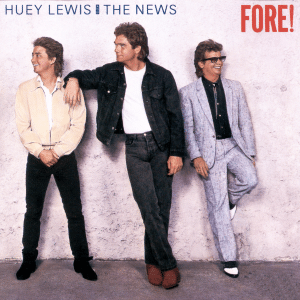
| Album | Fore! (1986) |
| Written by | Sean Hopper, Bill Gibson, Huey Lewis |
| Produced by | Huey Lewis and the News |
| Released | 1986 |
| Genre | Rock, Pop Rock |
| Record Label | Chrysalis Records |
| Chart Peak | #3 US Billboard Hot 100 |
Table of Contents
Background and Meaning
Huey Lewis and the News formed in San Francisco in 1979 and built a reputation through the early 1980s on energetic bar-band rock before breaking through commercially with Sports in 1983.
By 1986 they were one of the biggest-selling American rock acts working, and Fore! arrived with the expectations of a band that had just delivered one of the decade’s best-selling albums.
The lyrics of Hip to Be Square describe someone who has moved past youthful rebellion and counterculture attitudes into a comfortable, conventional adult life, presenting that transition not as defeat but as a genuine preference.
The satirical edge in the writing is sharp enough to sustain multiple readings, which is part of why the song has attracted continued cultural attention beyond the rock radio audience that originally received it.
Co-writers Sean Hopper and Bill Gibson shared the credit with Lewis, making it a genuine band collaboration rather than a solo composition dressed up as a group effort.
Musical Composition of Hip to Be Square
The track opens with a punchy horn-driven introduction that signals the band’s rhythm-and-blues roots before the guitar and vocals establish the song’s harder rock identity.
Huey Lewis’s vocal is delivered with an easy confidence that suits the subject matter, neither overselling the irony nor playing it completely straight, leaving the tone productively ambiguous.
The brass section, a hallmark of the band’s sound, gives Hip to Be Square a fullness and energy that most guitar-only rock productions of the era could not match.
The rhythm track drives the song with physical force, the result of the band’s years of live performance condensed into a studio recording that retains the feel of a room full of people playing together.
Producer Huey Lewis and the News kept the arrangement precise without stripping out the live energy, which was the balancing act that defined the band’s best studio work throughout the mid-1980s.
Chart Success and Impact
The single peaked at number three on the Billboard Hot 100, adding to the run of top-ten singles that made Fore! one of the year’s most commercially successful rock albums.
The album itself reached number one on the US Billboard 200 and was certified multiplatinum, confirming that the band had successfully followed up the massive commercial performance of Sports.
MTV rotation and extensive radio airplay gave Hip to Be Square a visibility that extended well beyond the band’s established fanbase and into the broader mainstream pop audience.
The song’s lyrical content generated discussion in the press and in casual conversation in a way that few rock singles managed, giving it a cultural presence beyond its chart position.
The success helped establish 1986 as one of the band’s strongest commercial years and positioned Huey Lewis and the News as one of America’s most reliable mainstream rock acts.
Lasting Legacy of Hip to Be Square
The song acquired an additional layer of cultural significance when it featured prominently in Mary Harron’s 2000 film American Psycho, where Christian Bale‘s Patrick Bateman delivers an extended monologue about its meaning.
That scene introduced the track to an entirely new audience and permanently attached a darkly comic dimension to a song that had already carried a degree of irony in its original 1986 context.
Classic rock radio formats have kept it in regular rotation, and it appears consistently on retrospective collections of the defining rock singles of the mid-1980s.
The track stands as a snapshot of a moment when American mainstream rock was confident, polished, and commercially dominant in a way that the genre has rarely matched before or since.
Few songs from the era have accumulated as many layers of cultural meaning as Hip to Be Square by Huey Lewis and the News, which continues to reward listening and discussion in equal measure.
Watch the Official Video
Frequently Asked Questions
FAQ
- Who wrote Hip to Be Square?
-
Sean Hopper, Bill Gibson, and Huey Lewis wrote it together, making it a genuine band collaboration that reflected a shared perspective on the appeal of conventional adult life.
- What does the song mean?
-
It describes someone who has left youthful rebellion behind and embraced mainstream middle-class life, presenting that choice as a conscious preference rather than a compromise.
- What album is it from?
-
It appears on Fore!, released by Huey Lewis and the News in 1986 on Chrysalis Records, the follow-up to their breakthrough album Sports.
- Why is the song associated with American Psycho?
-
The 2000 film features a scene where Christian Bale’s Patrick Bateman gives a detailed analysis of the track before committing a violent act, permanently linking the two in popular culture.
- How high did it chart?
-
It reached number three on the US Billboard Hot 100 in 1986, one of several top-ten singles from the Fore! album.
You Might Also Like


Punchy, brass-driven, and layered with more irony than its radio-friendly surface suggests, Hip to Be Square by Huey Lewis and the News is one of the mid-1980s rock hits that has only grown more interesting with the passage of time.