

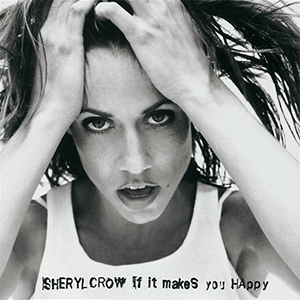
If It Makes You Happy by Sheryl Crow reached number ten on the US Billboard Hot 100 in 1996 and became the lead single from her self-titled second album, co-written with guitarist Jeff Trott and produced by Crow and Bill Bottrell.
The song’s central paradox, the admission that something makes you happy even as you acknowledge it probably isn’t good for you, gave If It Makes You Happy an emotional honesty that connected with a wide audience and established Crow’s second record as a more personal statement than the polished pop of Tuesday Night Music Club.
Affiliate Disclosure: As an Amazon Associate I earn from qualifying purchases. This helps support the site at no extra cost to you.
| Song | If It Makes You Happy |
| Artist | Sheryl Crow |
| Album | Sheryl Crow (1996) |
| Written by | Sheryl Crow, Jeff Trott |
| Produced by | Sheryl Crow, Bill Bottrell |
| Released | 1996 |
| Genre | Alternative Rock, Pop Rock |
| Chart Peak | #10 US Billboard Hot 100, #9 UK Singles Chart |
Table of Contents
Background and History
Sheryl Crow had recorded Tuesday Night Music Club largely as a collaborative project with a group of musicians in Pasadena, and its success created pressure about how to follow it with something that felt authentically her own.
She retreated to a more direct songwriting process for the second album, working primarily with Jeff Trott and taking greater control of the production alongside Bill Bottrell.
The self-titled album moved away from the loose studio-jam quality of the debut toward a more structured rock sound that placed Crow’s voice and perspective at the center of each track.
If It Makes You Happy emerged from writing sessions with Trott that Crow has described as focused on finding something that felt emotionally real rather than commercially calibrated.
The song’s guitar-driven approach and direct lyric gave the album its clearest statement of intent and became the track that established what the second record was doing differently from the first.
If It Makes You Happy and the Central Paradox
That song is built on a contradiction the lyric makes explicit: the speaker knows what she is doing is probably not good for her, but she is doing it anyway because it makes her happy.
That admission of self-aware ambivalence gave the song a psychological complexity that most pop radio of the period did not attempt, and Crow’s delivery of the central line carries both the defiance and the resignation simultaneously.
The lyric addresses a relationship or a way of living that the speaker cannot fully justify on rational grounds but refuses to abandon on emotional ones, a balance that connected with listeners who recognized the same tension in their own experience.
Crow has said the song came from a genuine personal place, a working-through of the gap between what you know you should want and what actually makes you feel alive.
That autobiographical grounding gave If It Makes You Happy a credibility that more generalized rock self-assertion could not match, and it established the emotional register that the self-titled album sustained across its other tracks.
If It Makes You Happy and the Recording Story
If It Makes You Happy opens with a distorted guitar figure that sets a harder, more aggressive tone than the acoustic warmth of much of Tuesday Night Music Club.
Crow’s vocal on the track is raspier and more strained than her debut performances, a quality that matched the lyric’s emotional tension and gave the recording an urgency that studio polish would have softened.
Jeff Trott’s guitar work throughout the track drives the arrangement forward without overloading it, preserving space for the vocal while maintaining the rock energy that distinguished the song from the adult contemporary territory Crow’s debut had partially inhabited.
Bill Bottrell’s co-production kept the arrangement honest and uncluttered, a choice that suited the lyric’s directness and prevented the track from sounding like it was trying to be something more commercially digestible than its emotional content warranted.
The production approach placed the song in the same alternative-leaning rock space that Alanis Morissette and Gin Blossoms were occupying simultaneously, connecting Crow to a mid-1990s rock sensibility while maintaining her distinctive vocal identity.
If It Makes You Happy and the Charts
If It Makes You Happy reached number ten on the US Billboard Hot 100 and number nine on the UK Singles Chart, a commercial performance that confirmed Crow’s crossover reach beyond the adult contemporary formats that had driven her debut.
The Sheryl Crow album debuted at number six on the Billboard 200 and was certified five times platinum in the United States, a strong commercial performance that demonstrated the second album could build on the audience established by Tuesday Night Music Club without simply repeating it.
The song’s chart position placed Crow in direct commercial comparison with the alternative rock acts dominating mid-1990s radio, and its harder edge gave her credibility in rock formats that the debut’s smoother sound had not fully accessed.
The Grammy nomination for Record of the Year recognized a performance that critics and industry had identified as the defining statement of Crow’s second commercial phase.
Lasting Legacy of If It Makes You Happy
If It Makes You Happy is the Sheryl Crow recording most consistently cited as the moment she established a rock identity distinct from the collaborative studio project that produced her debut.
The song’s central paradox has made it one of the more discussed examples of self-aware ambivalence in 1990s rock writing, a lyric that refuses easy resolution in favor of honest acknowledgment of how people actually make decisions about their lives.
Crow’s subsequent catalog built on the harder, more personally grounded approach that If It Makes You Happy established, and the song remained the centerpiece of her live sets as the track most immediately associated with her own artistic statement rather than her collaborators’.
Its place in the mid-1990s alternative landscape alongside recordings from Counting Crows and Everclear reflects how completely the post-grunge format had absorbed emotionally direct rock writing by the time the song reached radio.
More than thirty years after its release, If It Makes You Happy endures as the song that proved Sheryl Crow could write and perform rock on her own terms, and the recording that established the emotional honesty that has defined her best work ever since.
Watch the Official Video
Frequently Asked Questions
FAQ
- Who wrote If It Makes You Happy?
- Sheryl Crow and guitarist Jeff Trott co-wrote the song during sessions for her self-titled second album. Crow has described the writing as focused on finding something emotionally real, and the lyric’s central paradox, embracing something you know isn’t good for you, came from her own experience of the gap between rational self-knowledge and emotional need.
- What album is If It Makes You Happy from?
- The song appears on Sheryl Crow’s self-titled second album, produced by Crow and Bill Bottrell and released in 1996. The album debuted at number six on the Billboard 200 and was certified five times platinum in the United States, building on the commercial foundation of Tuesday Night Music Club while moving toward a harder, more personally authored rock sound.
- What is If It Makes You Happy about?
- The lyric addresses the experience of doing something you know may not be good for you because it makes you happy, a self-aware ambivalence that the speaker refuses to resolve in favor of comfortable certainty. Crow has said the song came from a genuine personal place, a working-through of the tension between what you think you should want and what actually makes you feel alive.
- What chart position did If It Makes You Happy reach?
- The song reached number ten on the US Billboard Hot 100 and number nine on the UK Singles Chart. Its chart performance confirmed Crow’s crossover reach into rock formats that the adult contemporary success of Tuesday Night Music Club had not fully accessed, and the song received a Grammy nomination for Record of the Year.
- Is Sheryl Crow still recording?
- Crow has continued recording and touring through the 2000s, 2010s, and 2020s, releasing multiple albums and performing consistently. She was inducted into the Rock and Roll Hall of Fame in 2024, recognizing a career built on the emotional directness and rock credibility that If It Makes You Happy established as the defining qualities of her work.
You Might Also Like
Built on a paradox that refuses resolution and delivered with a rawness that the debut’s collaborative polish had never approached, If It Makes You Happy stands as the Sheryl Crow recording that proved she could write and perform rock on her own terms and turn self-aware emotional ambivalence into one of the most played songs of 1996.