

I’d Do Anything for Love (But I Won’t Do That) by Meat Loaf reached number one on the Billboard Hot 100 in 1993 and became the best-selling single of that year in both the United States and the United Kingdom, taken from Bat Out of Hell II: Back into Hell, the long-awaited follow-up to one of the best-selling albums in rock history.
Written by Jim Steinman and produced by Steinman and Meat Loaf, the song’s twelve-minute album version was edited to five minutes for radio and featured an operatic structure, a duet with Lorraine Crosby, and a lyric that answered its own central question within the song itself.
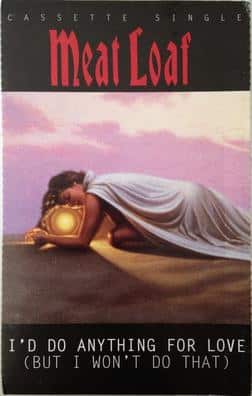
Affiliate Disclosure: As an Amazon Associate I earn from qualifying purchases. This helps support the site at no extra cost to you.
| Song | I’d Do Anything for Love (But I Won’t Do That) |
| Artist | Meat Loaf |
| Album | Bat Out of Hell II: Back into Hell (1993) |
| Written by | Jim Steinman |
| Produced by | Jim Steinman, Meat Loaf |
| Released | 1993 |
| Genre | Rock Opera, Power Ballad, Hard Rock |
| Chart Peak | #1 US Billboard Hot 100, #1 UK Singles Chart |
Table of Contents
Background and History
Meat Loaf and Jim Steinman had produced Bat Out of Hell in 1977, an album that defied commercial logic by selling slowly for years before becoming one of the best-selling records of all time.
The relationship between the two had fractured badly in the years following that debut, leading to separate projects and a legal dispute that kept the partnership dormant through most of the 1980s.
By the early 1990s, Steinman had accumulated a new body of material that he and Meat Loaf agreed would form the basis of a sequel, recorded with the same operatic ambition and melodic excess that had defined the original.
The recording of Bat Out of Hell II was itself a complex production involving orchestras, multiple vocalists, and arrangements of a scale unusual in rock recording of any era.
I’d Do Anything for Love (But I Won’t Do That) was designed to function as the album’s centerpiece, a full operatic statement that demonstrated what Steinman’s compositional approach could achieve when given no commercial constraints on length or structure.
I’d Do Anything for Love and Jim Steinman
Jim Steinman built the song around a central paradox: a declaration of total devotion followed by a single unnamed exception, with the lyric answering its own question about what “that” is across the course of the full-length album version.
Steinman’s writing drew on a tradition of theatrical excess that ran from Phil Spector’s Wall of Sound through Wagner’s operatic structures, using pop song form as a vessel for emotional and orchestral scale that most rock writing refused to attempt.
The duet structure brought in Lorraine Crosby as the female voice in the exchange, giving the song a dramatic dialogue that transformed what could have been a conventional power ballad into something closer to a miniature rock opera.
Steinman’s lyric for the female response sections answered the question the title posed: the things the speaker would not do included lying, forgetting, forgiving certain wrongs, and stopping at a designated point that changes meaning with each reading.
The combination of Steinman’s compositional ambition and Meat Loaf’s ability to deliver extreme emotional commitment without irony gave the song a quality that no other artist of the period could have achieved in quite the same way.
I’d Do Anything for Love and the Recording Story
I’d Do Anything for Love (But I Won’t Do That) runs nearly twelve minutes on the album, structured as a sequence of movements that build from an opening piano and orchestral section through multiple emotional peaks before resolving in its final exchange.
The radio edit reduced the track to approximately five minutes, removing the internal narrative but preserving the chorus and enough of the dramatic structure to communicate what the full version contained.
Meat Loaf’s vocal performance across the full version demands a range and sustained emotional intensity that few rock singers of the period could have matched, and the recording became a benchmark for what operatic rock singing required at its peak.
The production budget for Bat Out of Hell II was substantially larger than the original album’s, reflecting both the commercial expectations following that record’s sustained success and Steinman’s ambition to realize the new material at a scale the first album had not quite achieved.
The music video, directed by Michael Bay, adopted a Gothic fantasy visual language that matched the song’s operatic emotional register and became one of the more widely replayed rock videos of 1993.
I’d Do Anything for Love and the Charts
I’d Do Anything for Love (But I Won’t Do That) reached number one on the US Billboard Hot 100 and the UK Singles Chart, and became the best-selling single in both countries in 1993.
Bat Out of Hell II debuted at number one on the Billboard 200 and was certified fourteen times platinum in the United States, a commercial performance that exceeded what most observers had expected from a sequel to an album recorded sixteen years earlier.
The song’s chart dominance was global: it reached number one in fourteen countries and became one of the most commercially successful singles of Meat Loaf’s career despite, or perhaps because of, its unusual length and operatic structure.
The Grammy Award for Best Rock Vocal Performance, Solo, recognized a performance that the industry had identified as technically and emotionally exceptional within the format, and the win helped sustain the album’s commercial momentum into 1994.
Lasting Legacy of I’d Do Anything for Love
I’d Do Anything for Love (But I Won’t Do That) is the Meat Loaf recording most immediately recognized by listeners outside his core fanbase and the song that best demonstrates what Steinman’s compositional approach could achieve when fully realized.
The question of what “that” refers to became one of the more widely discussed lyrical puzzles of 1990s pop, generating articles, arguments, and eventual explanations from Steinman himself about the multiple answers embedded in the full album version.
The song’s success confirmed that rock operatics had not disappeared with the 1970s and that an audience existed for melodramatic excess executed at the highest level of craft, a confirmation that influenced how subsequent producers and artists approached the power ballad format.
Meat Loaf performed I’d Do Anything for Love consistently through his subsequent touring career, and the song remained the centerpiece of his live sets as the recording most completely identified with his commercial peak in the 1990s.
More than thirty years after its release, I’d Do Anything for Love (But I Won’t Do That) endures as the song that proved operatic rock ambition could reach the top of every chart simultaneously, and as Jim Steinman’s most complete demonstration of what rock songwriting looked like when scale and emotion were treated as unlimited resources.
Watch the Official Video
Frequently Asked Questions
FAQ
- What does “that” mean in I’d Do Anything for Love?
- Steinman answered this within the full twelve-minute album version, where the female vocal sections describe specific things the speaker will not do, including lying, forgetting, forgiving certain wrongs, and crossing a particular emotional threshold. The radio edit removed these answers, creating a puzzle that listeners debated for years before Steinman clarified that the lyric answered itself in the complete version.
- Who sings with Meat Loaf on I’d Do Anything for Love?
- Lorraine Crosby provides the female vocal in the duet sections of the song. Crosby was a British singer who had not achieved major commercial success before the recording, and her contribution to the track remained less widely recognized than Meat Loaf’s despite the duet structure being central to the song’s dramatic impact.
- Who wrote I’d Do Anything for Love?
- Jim Steinman wrote the song entirely himself. Steinman was responsible for the songwriting on the original Bat Out of Hell album and co-produced both records with Meat Loaf. His compositional approach drew on theatrical and operatic traditions to create a rock song of unusual length, emotional scale, and structural complexity.
- What album is I’d Do Anything for Love from?
- The song appears on Bat Out of Hell II: Back into Hell, released in 1993 as the sequel to the 1977 original. The album debuted at number one on the Billboard 200 and was certified fourteen times platinum in the United States, exceeding commercial expectations for a sequel recorded sixteen years after its predecessor.
- Did Meat Loaf win a Grammy for I’d Do Anything for Love?
- Meat Loaf won the Grammy Award for Best Rock Vocal Performance, Solo, for the song at the 1994 ceremony. The award recognized a vocal performance that the industry had identified as technically demanding and emotionally exceptional, and the win helped sustain the album’s commercial momentum into 1994.
You Might Also Like
Written by Jim Steinman at the full scale of his operatic ambitions, recorded with an orchestra and a duet partner who answered the lyric’s central question within the song itself, and delivered by Meat Loaf with a vocal commitment that no other rock singer of the period could have matched, I’d Do Anything for Love (But I Won’t Do That) stands as the recording that proved theatrical excess and commercial dominance were not mutually exclusive in 1993.