

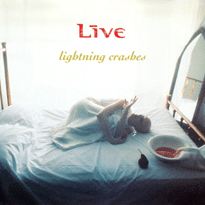
Lightning Crashes by Live reached number one on the US Billboard Mainstream Rock chart in 1994 and became the defining song from Throwing Copper, the album that debuted at number one on the Billboard 200 and went on to sell over eight million copies in the United States.
Written by vocalist Ed Kowalczyk and produced by Jerry Harrison of Talking Heads, the song addresses the cycle of birth and death through the simultaneous arrival of a new life and departure of another, a lyrical scope that gave it a gravity that most alternative rock of the period did not attempt.
Affiliate Disclosure: As an Amazon Associate I earn from qualifying purchases. This helps support the site at no extra cost to you.
| Song | Lightning Crashes |
| Artist | Live |
| Album | Throwing Copper (1994) |
| Written by | Ed Kowalczyk |
| Produced by | Jerry Harrison |
| Released | 1994 |
| Genre | Alternative Rock, Post-Grunge |
| Chart Peak | #1 US Billboard Mainstream Rock, #1 US Modern Rock |
Table of Contents
Background and History
Live formed in York, Pennsylvania in 1984 under the name Public Affection, built around vocalist Ed Kowalczyk, guitarist Chad Taylor, bassist Patrick Dahlheimer, and drummer Chad Gracey.
The band signed to Radioactive Records and released Mental Jewelry in 1991, building a following through relentless touring before recording Throwing Copper with producer Jerry Harrison.
Harrison, best known as the guitarist and keyboardist of Talking Heads, brought a production sensibility that allowed the album’s spiritual and philosophical ambitions to coexist with a radio-accessible rock sound.
Kowalczyk’s interest in spirituality and Eastern philosophy informed the lyrical direction of the album, and Lightning Crashes was the track that most directly addressed the big questions of life, death, and continuity that ran through Throwing Copper as a whole.
Lightning Crashes and the Life Cycle Lyric
The song presents two simultaneous events: a woman dying as another woman gives birth, with a soul passing from one state to the next in the moment between them.
Kowalczyk has said the song was inspired in part by the death of a friend’s girlfriend and by his broader interest in the idea that life and death are not opposites but points on a continuous cycle.
The lyric describes the dying woman’s placenta falling to the floor and the newborn’s cord being cut, images specific enough to be uncomfortable and precise enough to make the abstract life-cycle theme concrete and physical.
That specificity gave this tune a weight that more generalized rock anthems about life and mortality could not match, connecting with listeners who found the song’s directness more honest than the coded spiritual language common to mainstream rock.
The song drew comparisons to the same philosophical territory that U2 had navigated in their most ambitious writing, though Kowalczyk’s approach was more viscerally physical and less allegorical than the Irish band’s style.
Lightning Crashes and the Recording Story
The song opens with a clean guitar figure played by Chad Taylor, building slowly through the verse before expanding into a fuller arrangement as the song progresses.
Kowalczyk’s vocal begins in a restrained, almost liturgical register and builds gradually, matching the song’s narrative movement from the death of one life to the arrival of another.
Jerry Harrison’s production keeps the arrangement open and dynamic throughout, resisting the impulse to fill the quiet sections with additional instrumentation and letting the silence between notes carry the song’s emotional weight.
The song runs over five minutes, extended by alternative rock standards of the mid-1990s, and radio edits were required to make it fit standard programming slots.
The production approach connected to the same post-grunge alternative sound that Soundgarden and Alice in Chains had established on rock radio, while Kowalczyk’s philosophical lyrical register gave the band a distinct identity within that landscape.
Lightning Crashes and the Charts
Lightning Crashes reached number one on both the US Billboard Mainstream Rock Tracks and Modern Rock Tracks charts, making it the song that most completely crossed both format boundaries within Live’s catalog.
Throwing Copper debuted at number one on the Billboard 200 and was certified eight times platinum in the United States, a commercial performance that placed it among the most successful rock albums of 1994.
The album’s chart success was driven by four singles including Lightning Crashes, “Selling the Drama,” “I Alone,” and “All Over You,” each of which found significant radio support while the album sustained its position on the album chart.
The commercial peak of Throwing Copper coincided with the broader mid-1990s alternative rock moment when Green Day and The Cranberries were similarly building massive album-oriented audiences through sustained radio exposure.
Lasting Legacy
Lightning Crashes is the Live recording most consistently cited in retrospective coverage of 1990s alternative rock and the song that best represents what distinguished the band from their contemporaries.
Its willingness to address death, birth, and spiritual continuity in specific physical rather than abstract terms gave it a durability that more conventional rock themes could not match.
The song is regularly featured in memorial contexts and is frequently used in film and television when a scene requires a rock recording that carries genuine emotional and philosophical weight.
Live continued recording into the 2000s and 2010s with periods of dissolution and reformation, and this tune remained the central piece of their live sets regardless of which lineup was performing.
More than thirty years after its release, Lightning Crashes endures as one of the most philosophically ambitious mainstream rock singles of the 1990s and the recording that established Ed Kowalczyk’s ability to carry a lyric of genuine intellectual weight inside a format designed for radio.
Watch the Official Video
Frequently Asked Questions
FAQ
- What is Lightning Crashes about?
- The song presents two simultaneous events: a woman dying as another woman gives birth, with a soul transferring between them in the moment between death and new life. Kowalczyk has said the song was inspired partly by the death of a friend’s girlfriend and by his interest in the idea that life and death are not opposites but points on a continuous cycle.
- Who produced Lightning Crashes?
- Jerry Harrison of Talking Heads produced the song and the Throwing Copper album. Harrison’s production approach allowed the album’s spiritual ambitions to coexist with a radio-accessible rock sound, keeping the arrangements open and dynamic rather than filling them with additional instrumentation.
- What album is Lightning Crashes from?
- The song appears on Throwing Copper, Live’s second studio album, which debuted at number one on the Billboard 200 and was certified eight times platinum in the United States. The album sustained its commercial performance through four charting singles over the course of 1994 and 1995.
- Where is Live from?
- Live formed in York, Pennsylvania in 1984. Their mid-Atlantic origins placed them outside the Seattle grunge scene and the Los Angeles rock establishment, and Ed Kowalczyk’s philosophical and spiritual interests gave the band a lyrical identity that was distinctly their own within the mid-1990s alternative rock landscape.
- Is Ed Kowalczyk still in Live?
- Kowalczyk departed from Live in 2009 following disputes with his bandmates and pursued a solo career. The remaining members of Live continued performing with a different vocalist before eventually reuniting with Kowalczyk for touring and recording in subsequent years.
You Might Also Like
One of the only mainstream rock songs of the 1990s to address birth, death, and the transfer of a soul in specific physical terms rather than comfortable abstraction, Lightning Crashes stands as the Live recording that proved a Pennsylvania band could carry philosophical weight inside a radio format and turn the biggest questions about human existence into one of the most played songs of 1994.