

Members of Motorhead: Complete Story & Where Are They Now
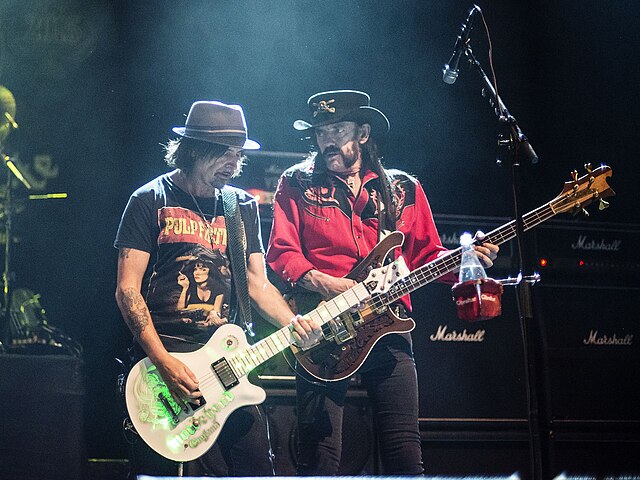
Ever wondered what happened to the members of Motorhead after their legendary 40-year run that redefined heavy metal?
From 1975 until the band disbanded in 2015, the story of Motorhead members reads like a rock and roll odyssey filled with triumph, tragedy, and uncompromising dedication to the loudest, fastest music on Earth.
Whether you’re curious about the classic lineup that created Ace of Spades, the member changes that shaped their evolving sound, or where these classic rock artists ended up after the final curtain call, this complete guide reveals the full story behind one of music’s most influential heavy metal bands.
Image Credit: Photo by Jessica Branstetter, CC BY 2.0, via Wikimedia Commons
Affiliate Disclosure: I am an Amazon affiliate. If you purchase through Amazon links on this page I may earn a small commission at no extra cost to you.
📋 Table of Contents [+]
The Original Members of Motorhead
When Ian Fraser Kilmister, better known as Lemmy, was unceremoniously fired from space rock pioneers Hawkwind in May 1975, he had no intention of fading into obscurity.
Within months of returning to London, Lemmy formed Motorhead, naming the band after the final song he had written for Hawkwind.
The original 1975 lineup featured Lemmy on bass and lead vocals, Larry Wallis on guitar and vocals, and Lucas Fox on drums.
This initial formation recorded sessions that would later become the On Parole album, though it wouldn’t see release until 1979 after Motorhead had already achieved chart success.
Wallis brought substantial experience to the fledgling band, having previously played with UFO and the psychedelic rock outfit Pink Fairies.
His gritty guitar work on tracks like “Vibrator” showcased the raw energy that would become Motorhead’s signature sound.
However, the original lineup proved unstable from the start.
Fox’s performances during early recording sessions were deemed unreliable, leading to his replacement by Phil Taylor in December 1975.
Taylor, nicknamed “Philthy Animal,” brought a powerful, aggressive drumming style that perfectly complemented Lemmy’s thundering bass lines.
Lemmy Kilmister’s Role in Formation
Lemmy was arrested for suspected cocaine possession during Hawkwind’s North American tour, though the substance was later determined to be amphetamines.
This incident led to his firing, but it also sparked the creation of one of rock’s most influential bands.
Lemmy’s vision for Motorhead was simple yet revolutionary: create the dirtiest rock and roll band in the world.
His distinctive bass playing style, using heavily distorted bass guitar played through Marshall stacks typically used for lead guitar, became the foundation of Motorhead’s wall of sound.
As the band’s primary songwriter and only constant member throughout its 40-year existence, Lemmy’s artistic vision never wavered.
His gravelly voice, leather-clad image, and uncompromising attitude toward music made him one of rock’s most iconic figures.
Early Musical Background of Key Members
Before forming Motorhead, Lemmy had spent a decade honing his craft with various bands including Sam Gopal and the Rockin’ Vickers.
His five-year stint with Hawkwind from 1970 to 1975 taught him the dynamics of touring and the power of loud, aggressive music, playing on albums like Space Ritual and singing lead vocals on the hit single Silver Machine.
Phil Taylor had been playing in local bands around the London area before meeting Lemmy through a mutual friend.
His drumming influences included Mitch Mitchell from the Jimi Hendrix Experience and Ian Paice of Deep Purple, both known for their powerful, innovative styles.
Larry Wallis had already established himself as a capable guitarist in the British rock scene before joining Motorhead.
His work with Pink Fairies on their 1973 album Kings of Oblivion demonstrated his ability to deliver raw, unpolished rock and roll with punk attitude.
💡 Did You Know?
Lemmy got his nickname from his habit of asking people to “lemme a fiver” when he was short on cash. The name stuck and became synonymous with one of rock’s most legendary figures. He was also briefly a roadie for Jimi Hendrix, who allegedly told him he’d never be good at guitar, prompting Lemmy to switch to bass instead.
Motorhead Lineup Changes Through the Years
The first major lineup change came in March 1976 when Motorhead auditioned Edward “Fast Eddie” Clarke as a potential second guitarist.
After rehearsing just one song as a four-piece, Larry Wallis decided to leave, and Clarke took over as the sole guitarist.
This personnel shift proved to be one of the most significant moments in Motorhead’s history.
The lineup of Lemmy, Clarke, and Taylor became known as the classic Motorhead lineup, releasing five successful studio albums between 1977 and 1982.
Their self-titled debut album Motorhead arrived in August 1977, followed by the explosive Overkill in 1979.
The band nearly disbanded in April 1977 due to poor reviews and minimal interest from record companies.
However, a farewell show at London’s Marquee Club on April 1, 1977, turned into an unexpected opportunity when Ted Carroll from Chiswick Records offered them studio time.
Instead of recording a single, they laid down 13 tracks that became their debut album.
The classic lineup era saw Motorhead transform from struggling underdogs into chart-topping heavy metal legends.
The Formation of the Classic Lineup
Fast Eddie Clarke met Phil Taylor when the drummer applied for work on a houseboat Clarke was refitting.
Their instant chemistry translated into a powerful musical partnership that defined Motorhead’s sound for years to come.
Clarke’s nickname “Fast” didn’t come from his speed playing ability, but rather from his skillful tremolo picking technique on a single note.
His raw, Chuck Berry-influenced guitar style at 78 RPM perfectly complemented Lemmy’s distorted bass.
The three amigos, as they became known, shared a chemistry that was both creative and volatile.
Their 1980 album Ace of Spades became Motorhead’s signature release, with its title track reaching number 15 on the UK singles chart.
The live album No Sleep ’til Hammersmith, recorded during their 1981 Short Sharp Pain in the Neck tour, reached number one on the UK Albums Chart.
This period represented the commercial and creative peak of the classic lineup era.
🎸 EXPLORE THE MOTORHEAD DISCOGRAPHY 🎸
From their explosive debut to their final studio album, discover the complete collection that defined heavy metal history.
SHOP MOTORHEAD ALBUMS NOWThe Departure of Fast Eddie Clarke
Tensions within the classic lineup came to a head in May 1982 during Motorhead’s US tour.
Clarke left the band while on tour, with the final straw being the recording sessions for the Stand by Your Man EP with Wendy O. Williams and the Plasmatics.
Clarke allegedly felt this collaboration compromised the band’s principles, though he later disputed this version of events.
In subsequent interviews, Clarke claimed that Phil Taylor was the main instigator in his exclusion from the band.
His last gig with Motorhead took place at the New York Palladium on May 14, 1982.
Clarke would later say he had imagined dying onstage with Motorhead, making his departure particularly painful.
Former Thin Lizzy guitarist Brian Robertson was brought in to replace Clarke, initially to complete the touring cycle.
Robertson remained with Motorhead for about 18 months, playing his final show on November 11, 1983.
Lemmy later described working with Robertson on Another Perfect Day as exceptionally difficult, creating an atmosphere that didn’t suit Motorhead’s raw energy.
💡 Did You Know?
The Ace of Spades album was recorded in just six days at Jackson’s Studio in Rickmansworth. Despite its rushed recording schedule, it became Motorhead’s most commercially successful album and spawned their signature anthem that continues to define heavy metal to this day.
New Blood: Later Members Who Joined
Motorhead became a four-piece band in early 1984 when both Michael “Wurzel” Burston and Phil Campbell were hired following extensive auditions.
Lemmy had initially planned to hire only one guitarist, but upon hearing Wurzel and Campbell play together, he hired both.
This twin guitar attack would characterize Motorhead’s sound for the next decade.
In February 1984, the new lineup recorded a version of Ace of Spades for the BBC sitcom The Young Ones.
Shortly after, Phil Taylor left the band and was replaced by former Saxon drummer Pete Gill.
However, Taylor returned to Motorhead in March 1987, replacing Gill who left by mutual agreement.
With Philthy Animal back on drums, Motorhead released Rock ‘n’ Roll in 1987 and the critically acclaimed 1916 in 1991.
After recording just one song for the 1992 album March Or Die, Taylor was fired, with Lemmy explaining that he could no longer pull his weight.
Session drummer Tommy Aldridge completed most of the album’s recording.
Mikkey Dee, formerly of King Diamond, where he played drums on the classic album Abigail, joined Motorhead in August 1992.
His first gig with the band was on August 30, 1992, at the Saratoga Performing Arts Center in New York.
Wurzel left Motorhead in 1995, returning the band to a power trio format with Lemmy, Phil Campbell, and Mikkey Dee.
This final incarnation remained stable for 20 years until Lemmy’s death in December 2015.
🎵 MOTORHEAD LIVE ALBUMS COLLECTION 🎵
Experience the raw power and energy of Motorhead’s legendary live performances captured on vinyl and CD.
DISCOVER LIVE RECORDINGSWhere Are the Members of Motorhead Today?
When Lemmy Kilmister died on December 28, 2015, just two days after his 70th birthday, Motorhead came to an immediate end.
The day after his death, longtime members Mikkey Dee and Phil Campbell both confirmed that Motorhead had disbanded.
Neither felt it would be appropriate to continue without their leader and friend.
Lemmy had been diagnosed with prostate cancer just days before his death, though the official cause was cardiac arrhythmia and congestive heart failure.
His passing marked the end of a 40-year journey that transformed heavy metal and influenced countless classic rock bands.
The remaining members of Motorhead’s final lineup have continued making music, honoring Lemmy’s legacy while forging their own paths forward.
Phil Campbell: Current Projects and Tours
Phil Campbell, who served as Motorhead’s guitarist from 1984 until 2015, wasted no time in forming a new band after Motorhead’s dissolution.
In 2016, he launched Phil Campbell and the Bastard Sons, a true family affair featuring his three sons Todd, Dane, and Tyla, along with vocalist Neil Starr (later replaced by Joel Peters).
The band released their self-titled EP in November 2016, followed by their debut studio album The Age of Absurdity in January 2018.
Campbell also released his first solo album, Old Lions Still Roar, in October 2019.
The album featured guest appearances from rock royalty including Rob Halford, Alice Cooper, Dee Snider, and Joe Satriani.
Phil Campbell and the Bastard Sons have since released additional albums including We’re The Bastards in 2020 and Kings of the Asylum in September 2023.
In 2025, Campbell marked the band’s 50th anniversary with tribute tours throughout the UK and Europe.
Those performances featured both Motorhead classics and original material from his new band.
On 9 May 2025, Campbell attended the dedication of a bronze Lemmy Kilmister statue in Burslem, Stoke-on-Trent, Lemmy’s hometown, where he personally placed a portion of Lemmy’s ashes inside the memorial.
Campbell remains one of the most active keepers of the Motorhead flame, having spent 31 years with the band and appeared on every studio album from Orgasmatron to Bad Magic.
💡 Did You Know?
Phil Campbell first met Lemmy when he was just 12 years old after a Hawkwind gig, asking for an autograph. Twelve years later, he would join Lemmy’s band Motorhead and remain with them for over three decades, becoming the second longest-serving member behind Lemmy himself.
Mikkey Dee: Drumming with the Scorpions
Mikkey Dee joined German rock legends Scorpions in 2016, less than a year after Motorhead’s dissolution.
He initially filled in for James Kottak on the band’s North American tour before being announced as a permanent member in September 2016.
Dee has appeared on Scorpions’ 2022 album Rock Believer and continues to tour extensively with the band.
His goal with Scorpions, as he has stated in interviews, is to bring tightness and heaviness while capturing the energy of their late 1970s peak.
In early 2025, Dee faced a serious health scare when he was hospitalized with sepsis after a sprained foot became infected.
He underwent three surgeries and spent three weeks in the hospital in his hometown of Gothenburg, Sweden.
The infection was so severe that Dee later joked he was almost playing drums in heaven with Lemmy.
Due to his recovery, Scorpions postponed their Las Vegas residency from February 2025 to August 2025.
Dee returned to the stage on 15 March 2025 at the Vive Latino festival in Mexico City, Scorpions’ first live show in more than seven months, with his son Marcus filling in on a few songs while his foot continued healing.
Throughout his 23 years with Motorhead, from 1992 to 2015, Dee contributed to albums including Bastards, Inferno, and Motorizer.
He remains one of heavy metal’s most respected drummers, known for his powerful double bass technique and precise timekeeping.
Remembering the Classic Lineup Members
Tragically, all three members of Motorhead’s classic lineup have passed away.
Phil “Philthy Animal” Taylor died on November 11, 2015, at age 61 from liver failure.
He had been in poor health for several years following surgery to repair a brain aneurysm in 2010.
Just six weeks later, on December 28, 2015, Lemmy Kilmister passed away at age 70.
Upon hearing of Taylor’s death, Lemmy had posted on Facebook expressing his devastation at losing one of his best friends.
Fast Eddie Clarke, the last surviving member of the classic trio, died on January 10, 2018, at age 67 from pneumonia.
Clarke had formed the band Fastway after leaving Motorhead in 1982, releasing the single Say What You Will and maintaining a solo career while occasionally collaborating with former bandmates.
He reunited with Lemmy on stage in Birmingham on November 6, 2014, to play Ace of Spades, one of their final performances together.
Other notable members who have passed include Michael “Wurzel” Burston, who died in 2011, and Larry Wallis, who passed away in September 2019.
Their contributions to Motorhead’s sound and legacy remain an integral part of rock history.
🎤 COMPLETE YOUR MOTORHEAD COLLECTION 🎤
From the original lineup through the final years, own every chapter of Motorhead’s incredible journey.
BROWSE FULL CATALOGMusical Legacy of Motorhead Members
The members of Motorhead left an indelible mark on heavy metal that continues to influence artists across multiple genres decades after the band’s formation.
Often credited as a bridge between punk rock and heavy metal, Motorhead helped pioneer speed metal and thrash metal movements.
Their approach united rockers and punks in the late 1970s, creating a fanbase that transcended traditional genre boundaries.
Bands like Metallica, Slayer, Megadeth, and Anthrax have all cited Motorhead as a major influence on their sound and attitude.
The band’s refusal to compromise their loud, fast, and raw approach inspired countless classic rock artists to prioritize authenticity over commercial appeal.
Motorhead’s distinctive aesthetic, from their iconic Snaggletooth logo designed by artist Joe Petagno to their leather and studs image, became synonymous with heavy metal culture.
In 2005, Motorhead won a Grammy Award for Best Metal Performance for their cover of Metallica’s “Whiplash.”
The band was nominated for the Rock and Roll Hall of Fame in 2019, though only Lemmy was initially included in the nomination.
This sparked controversy as Phil Campbell and Mikkey Dee, who had been in the band longer than anyone except Lemmy, were excluded.
Songwriting Contributions by Each Member
Lemmy Kilmister was the primary songwriter throughout Motorhead’s career, penning most of the band’s lyrics and many of their musical foundations.
His writing often covered themes of war, abuse of power, substance use, and most famously, gambling, as heard in the iconic Ace of Spades.
However, contrary to popular belief, many of Motorhead’s most memorable riffs came from their guitarists.
Fast Eddie Clarke created the legendary riff for Ace of Spades, along with numerous other classic Motorhead tracks during his tenure from 1976 to 1982.
Albums like Bomber and Iron Fist showcased Clarke’s raw, Chuck Berry-influenced guitar work at breakneck speed.
Phil Campbell has stated that during his time with Motorhead, most of the riffs were his creation.
When the band operated as a three-piece from 1995 to 2015, everyone looked to Campbell to start songs.
Songwriting credits were typically shared among all members performing on each album, though Lemmy retained individual credits for certain tracks.
Phil Taylor’s powerful drumming style, particularly his pioneering double bass drum technique showcased on tracks like “Overkill,” helped define the sound that would influence thrash and speed metal for generations.
Mikkey Dee brought a more technically precise approach to Motorhead’s later albums, contributing to releases like Hammered, The World Is Yours, and Aftershock.
Influence on Heavy Metal and Beyond
Motorhead’s influence extends far beyond their album sales and chart positions.
For a full ranked breakdown of the catalog discussed throughout this page, see Motorhead Albums Ranked and Best Motorhead Songs. Lemmy’s life away from the band was captured in full in the 2010 Lemmy documentary.
The band united punk and metal audiences at a time when these scenes were often segregated, proving that aggression and speed could appeal to fans across subculture divides.
Lemmy’s approach to bass playing, treating it essentially as a rhythm guitar tuned down an octave, revolutionized how the instrument could function in a rock context.
His use of heavily distorted bass through Marshall stacks created a wall of sound that influenced countless bassists in extreme music.
The band’s uncompromising attitude toward their music and image set a standard for authenticity in rock.
Lemmy’s famous quote, “We are Motorhead, and we play rock and roll,” despite their obvious metal sound, demonstrated their refusal to be pigeonholed.
Motorhead’s impact on the new wave of British heavy metal in the late 1970s and early 1980s cannot be overstated.
Bands like Iron Maiden, Saxon, and Diamond Head all emerged during this period, inspired in part by Motorhead’s success and approach.
Albums like Orgasmatron, Sacrifice, and Overnight Sensation continued to push heavy metal boundaries throughout the 1980s and 1990s.
Even later releases like Snake Bite Love and We Are Motorhead maintained the band’s relentless energy and commitment to their sound.
💡 Did You Know?
Motorhead holds the record in the Guinness Book of World Records for being “the loudest band in the world.” At a 1984 show in Cleveland, their sound levels were measured at 130 decibels, louder than a jet engine at takeoff. The band wore earplugs on stage to protect their hearing from their own volume.
Essential Motorhead Albums Featuring Different Lineups
Throughout their 40-year career, the members of Motorhead created a discography that spans 22 studio albums and 10 live recordings.
Each lineup brought its own character to the band’s sound while maintaining the core Motorhead identity.
The Classic Lineup Era (1977-1982): The Lemmy, Fast Eddie Clarke, and Phil Taylor trio produced some of Motorhead’s most essential albums.
Motorhead (1977) established their raw, uncompromising sound with tracks like “Motorhead” and “White Line Fever.”
Overkill (1979) showcased Phil Taylor’s pioneering double bass drum technique on the title track and featured instant classics like “Damage Case.”
Bomber (1979) arrived just seven months after Overkill, demonstrating the band’s incredible work ethic with tracks like “Stone Dead Forever.”
Ace of Spades (1980) became Motorhead’s signature album, with its title track becoming one of rock’s most recognizable anthems.
No Sleep ’til Hammersmith (1981) captured the classic lineup’s explosive live power and reached number one on the UK Albums Chart.
Iron Fist (1982) was the final studio album featuring the classic trio.
The Twin Guitar Era (1984-1995): With Phil Campbell and Wurzel on guitars, Motorhead expanded their sound.
Orgasmatron (1986) marked the beginning of the twin guitar lineup’s studio work.
Rock ‘n’ Roll (1987) and 1916 (1991) showcased the band’s continued evolution.
The Final Lineup Era (1995-2015): Lemmy, Phil Campbell, and Mikkey Dee created the longest-lasting Motorhead incarnation.
Bastards (1993) featured Mikkey Dee’s debut with the band.
Sacrifice (1995), Overnight Sensation (1996), and Snake Bite Love (1998) maintained their momentum through the 1990s.
We Are Motorhead (2000), Hammered (2002), Inferno (2004), and Kiss of Death (2006) proved Motorhead’s consistency into the new millennium.
Motorizer (2008), The World Is Yours (2010), Aftershock (2013), and Bad Magic (2015) rounded out their studio discography with undiminished power.
Essential Live Albums: Beyond No Sleep ’til Hammersmith, Motorhead released several other stellar live recordings.
What’s Wordsworth (1983), No Sleep at All (1988), and Live at Brixton Academy (2003) captured different eras of the band’s live intensity.
Stage Fright (2005), Better Motorhead than Dead: Live at Hammersmith (2005), and Clean Your Clock (2016) documented their relentless touring schedule.
The World Is Ours – Vol 1: Everywhere Further Than Everyplace Else (2011) and The World Is Ours – Vol 2: Anyplace Crazy as Anywhere Else (2012) showcased the final lineup’s global reach.
Frequently Asked Questions About Motorhead Members
Who were the original members of Motorhead?
The original members of Motorhead in 1975 were Lemmy Kilmister on bass and vocals, Larry Wallis on guitar, and Lucas Fox on drums.
However, Fox was replaced by Phil “Philthy Animal” Taylor in December 1975, and Wallis left in March 1976, with “Fast” Eddie Clarke taking over on guitar.
The lineup of Lemmy, Clarke, and Taylor became known as the classic Motorhead lineup.
Are any members of Motorhead still alive?
Yes, two members of Motorhead are still alive: Phil Campbell and Mikkey Dee.
Phil Campbell served as Motorhead’s guitarist from 1984 to 2015 and currently leads Phil Campbell and the Bastard Sons.
Mikkey Dee was Motorhead’s drummer from 1992 to 2015 and now plays with the Scorpions.
All three members of the classic lineup (Lemmy, Fast Eddie Clarke, and Phil Taylor) have passed away.
What are the members of Motorhead doing now?
Phil Campbell is actively touring and recording with Phil Campbell and the Bastard Sons, featuring his three sons.
In 2025, he marked the band’s 50th anniversary with special tribute concerts.
Mikkey Dee continues drumming with the Scorpions and returned to their 60th anniversary tour in March 2025 after recovering from a serious sepsis infection.
Both musicians remain dedicated to honoring Motorhead’s legacy while pursuing their current musical projects.
Why did Fast Eddie Clarke leave Motorhead?
Fast Eddie Clarke left Motorhead in May 1982 during their US tour.
The commonly cited reason was his disapproval of the band’s collaboration with Wendy O. Williams and the Plasmatics on the Stand by Your Man EP, which Clarke felt compromised Motorhead’s principles.
However, Clarke later disputed this version, claiming that Phil Taylor was instrumental in his exclusion from the band.
His departure marked the end of Motorhead’s classic lineup era.
How many members did Motorhead have?
Throughout their 40-year career, Motorhead had numerous members, though they primarily operated as a power trio.
The most notable members were Lemmy Kilmister (1975-2015), Phil Taylor (1975-1984, 1987-1992), Fast Eddie Clarke (1976-1982), Phil Campbell (1984-2015), Mikkey Dee (1992-2015), and Michael “Wurzel” Burston (1984-1995).
Other members included Larry Wallis, Lucas Fox, Brian Robertson, and Pete Gill.
Lemmy was the only constant member throughout the band’s entire existence.
🎸 MOTORHEAD COMPLETE DISCOGRAPHY 🎸
Build your ultimate Motorhead collection with these essential albums

🎵 MOTORHEAD (1977)
The debut album that launched a legend.
Featuring the classic lineup of Lemmy, Fast Eddie Clarke, and Phil Taylor, this raw and uncompromising release established Motorhead’s signature sound.
Essential tracks include the title song “Motorhead” and “White Line Fever.” Read the full review.

🎵 OVERKILL 50TH ANNIVERSARY
The album that defined speed metal.
Phil Taylor’s pioneering double bass drum technique on the title track revolutionized heavy metal drumming.
This 50th anniversary edition celebrates one of Motorhead’s most influential releases. Read the full review.
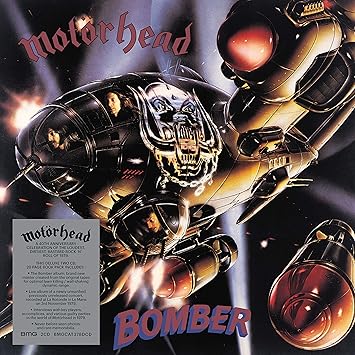
🎵 BOMBER (1979)
Released just seven months after Overkill.
The classic lineup’s incredible work ethic produced another masterpiece featuring “Stone Dead Forever” and the thundering title track.
A testament to Motorhead’s relentless creative energy. Read the full review.
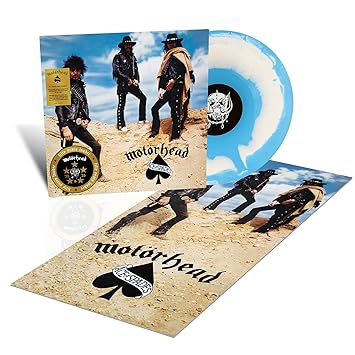
🎵 ACE OF SPADES (1980)
Motorhead’s signature masterpiece.
The title track became one of rock’s most recognizable anthems, featuring Fast Eddie Clarke’s legendary riff.
This album defined Motorhead’s sound and cemented their place in rock history. Read the full review.

🎵 NO SLEEP ‘TIL HAMMERSMITH (1981)
The ultimate live heavy metal album.
Recorded during the 1981 Short Sharp Pain in the Neck tour, this release reached number one on the UK Albums Chart.
Captures the classic lineup’s explosive live power at their absolute peak. Read the full review.
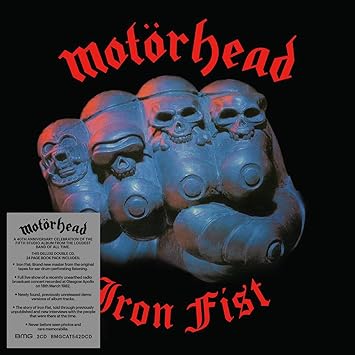
🎵 IRON FIST (1982)
The classic lineup’s final studio album.
Lemmy, Fast Eddie Clarke, and Phil Taylor’s last collaboration featured powerful tracks that maintained their uncompromising approach.
Marks the end of an era in Motorhead’s legendary history. Read the full review.

🎵 ORGASMATRON (1986)
Phil Campbell’s studio debut with Motorhead.
The twin guitar lineup featuring Campbell and Wurzel expanded Motorhead’s sound while maintaining their raw power.
Marks the beginning of a new era that would last over three decades. Read the full review.

🎵 1916 (1991)
A critically acclaimed masterpiece.
The haunting title track showcased Motorhead’s depth beyond pure speed and aggression.
Phil Taylor’s return to the band helped create one of their most diverse and powerful albums. Read the full review.
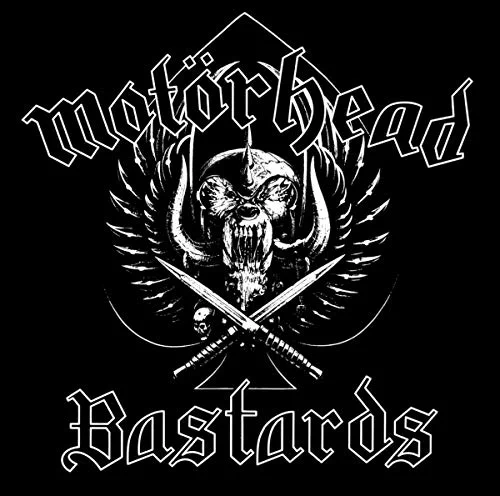
🎵 BASTARDS (1993)
Mikkey Dee’s debut with Motorhead.
The former King Diamond drummer brought technical precision while maintaining Motorhead’s raw intensity.
Marked the beginning of the final lineup that would last 20 years. Read the full review.
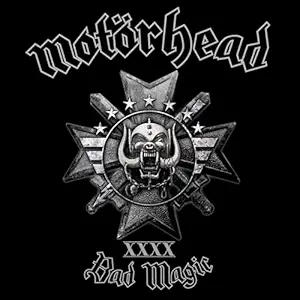
🎵 BAD MAGIC (2015)
Motorhead’s final studio album.
Released months before Lemmy’s death, this powerful swan song proved the band never lost their edge.
A fitting conclusion to 40 years of uncompromising rock and roll. Read the full review.
💰 SUPPORT CLASSICROCKARTISTS.COM 💰
When you purchase through these Amazon affiliate links, you help support ClassicRockArtists.com at no additional cost to you. Every album sale helps us continue bringing you comprehensive coverage of classic rock bands and their members. Rock on and thank you for your support!
Explore More Classic Rock Bands
Discover the complete stories behind other legendary classic rock artists:
- Members of Black Sabbath
- Members of Motley Crue
- Alice in Chains Members
- Stone Temple Pilots Members
- Members of Fleetwood Mac
- Members of The Doors
- Guns N’ Roses Members
- Members of The Rolling Stones
- Tears for Fears Members
- Members of Cream
- Members of Styx
- Members of Buffalo Springfield
- Members of Deep Purple
Affiliate Disclosure
This article contains affiliate links to Amazon. As an Amazon Associate, I earn from qualifying purchases at no additional cost to you. This helps support ClassicRockArtists.com and allows me to continue bringing you comprehensive classic rock content. All album recommendations are based on their musical merit and historical significance.
Sources
- Motorhead Wikipedia Entry
- List of Motorhead Band Members
- Official Motorhead Website
- Rolling Stone Magazine
- Ultimate Classic Rock
Last updated: November 24, 2025
Tags: #MembersOfMotorhead #MotorheadMembers #ClassicRock #RockHistory #Motorhead #RockLegends #ClassicRockArtists #RockBands #MusicHistory #VintageRock #RockStars #1970sMusic #RockBiography #ClassicRockBands #MusicLegends #RockIcon