

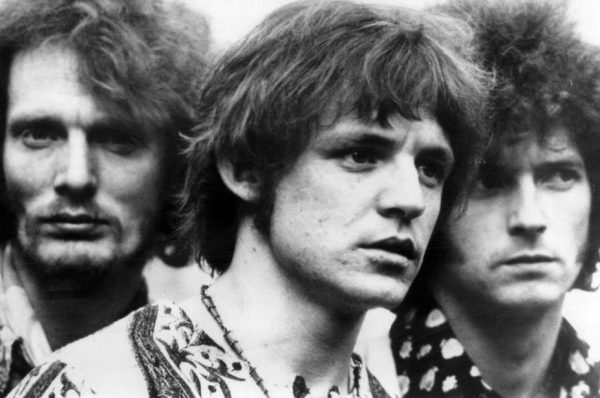
The members of Cream are Eric Clapton, Jack Bruce, and Ginger Baker.
They formed the greatest power trio in rock history in London in July 1966.
Their two-year run produced four landmark studio albums and a number one Billboard 200 record.
They built a blueprint for heavy, improvisational rock that bands still follow today.
Their story is one of extraordinary talent and bitter feuds.
It is a legacy that refuses to fade more than five decades later.
Whether you are discovering Cream for the first time or tracking Eric Clapton’s 2026 tour, this guide covers it all.
It has the full history, every solo career, the awards, and the latest news on each of the members of Cream.
📋 Table of Contents [+]
⚡ Key Takeaways
- Cream formed in London in July 1966. Eric Clapton, Jack Bruce, and Ginger Baker became rock’s first true supergroup.
- The members of Cream released four studio albums in just over two years: Fresh Cream (1966), Disraeli Gears (1967), Wheels of Fire (1968), and Goodbye (1969).
- Wheels of Fire hit number one on the Billboard 200 in 1968. It became the first platinum double album in history.
- Cream entered the Rock and Roll Hall of Fame in 1993 and won a Grammy Lifetime Achievement Award in 2006.
- Jack Bruce died in 2014 at 71. Ginger Baker died in 2019 at 80. Eric Clapton is the only surviving member of Cream today.
Who Were the Original Members of Cream?
The members of Cream were guitarist Eric Clapton, bassist Jack Bruce, and drummer Ginger Baker.
Cream arrived in 1966 as the world’s first true supergroup.
That concept had never existed in rock music before.
All three musicians had already made names for themselves in the British blues scene.
Each brought a distinct musical vocabulary to the group.
Together they created something far greater than the sum of its parts.
The lineup never changed during the band’s active years.
That made their musical unity remarkable given the tension underneath.
How Was Cream Formed as Rock’s First Supergroup?
Cream formed when Ginger Baker approached Eric Clapton in the spring of 1966.
Baker pitched a blues-focused supergroup.
Clapton agreed on one condition: Jack Bruce had to play bass.
Baker and Bruce had a volatile history together.
They had clashed in the Graham Bond Organisation, a training ground for British blues talent.
Baker reluctantly agreed, knowing Bruce’s musicianship was exceptional.
Their first unofficial show was at the Twisted Wheel club in Manchester on July 29, 1966.
Two nights later they made their official debut.
That show was at the Sixth Annual Windsor Jazz and Blues Festival.
The audience reaction was immediate and electric.
Critics knew something entirely new had just been born.
Where Did the Band Name Cream Come From?
Cream took its name because the trio were seen as the “cream of the crop” of British blues musicians.
Before settling on Cream, they reportedly considered “Sweet ‘n’ Sour Rock ‘n’ Roll.”
That detail comes from Wikipedia’s history of the band.
The final name reflected how the members of Cream saw themselves.
They believed they were the most accomplished musicians on the London blues circuit.
It is a short, confident name for a band that changed rock music.
What Musical Backgrounds Shaped the Members of Cream?
Eric Clapton began his career with the Roosters.
He joined the Yardbirds in 1963.
His tenure with John Mayall’s Bluesbreakers, from 1965 to 1966, cemented his reputation.
Fans spray-painted “Clapton Is God” on walls across London.
He arrived at Cream as the most celebrated guitarist in Britain.
Jack Bruce was born in Scotland in 1943.
He trained first as a classical cellist.
He won a scholarship to the Royal Scottish Academy of Music and Drama.
He left classical study behind to pursue blues and jazz.
His training gave him a harmonic sophistication most rock bassists lacked.
He played with the Graham Bond Organisation and briefly with Manfred Mann before joining Cream.
He carried a jazz sensibility that defined the band’s improvisational identity.
Ginger Baker built his style through deep immersion in jazz.
African rhythms shaped him too, and later took him to Nigeria.
His polyrhythmic approach and twin bass drums were unlike anything rock audiences knew.
Baker had already proven himself as one of Britain’s most advanced drummers.
He brought an orchestral depth to the drum kit.
What Albums Did the Members of Cream Record Together?
The members of Cream recorded four studio albums in just over two years.
Each release pushed further into psychedelia, blues, and extended improvisation.
Their catalog remains essential listening for classic rock fans.
The Four Studio Albums That Changed Rock
Fresh Cream arrived in December 1966.
It announced the power trio format to the world.
The debut blended blues covers with originals like “I Feel Free” and “N.S.U.”
It proved Cream was a serious creative force, not just a covers band.
Fresh Cream reached number six on the UK Albums Chart.
It hit number 39 on the Billboard 200 and later earned RIAA Gold status.
Disraeli Gears, released in November 1967, is the band’s widely regarded masterpiece.
Producer Felix Pappalardi captured Cream at its most focused.
“Sunshine of Your Love” became one of rock’s most defining riffs.
“White Room” and “Strange Brew” showed the band’s songwriting depth.
Disraeli Gears reached number four on the Billboard 200.
It earned an RIAA Platinum certification and remains one of the era’s best-selling albums.
Wheels of Fire arrived in August 1968 as an ambitious double album.
One disc was studio recordings, the other was live performance.
The live disc captured Cream at full improvisational power.
Extended versions of “Crossroads” and “Spoonful” stretched well beyond ten minutes.
Wheels of Fire hit number one on the Billboard 200.
It was the first platinum-certified double album in recorded music history.
Goodbye, released in March 1969, was a fitting farewell.
It featured “Badge,” co-written by Eric Clapton and George Harrison.
The track stands as one of Clapton’s finest guitar performances.
The album combined live cuts from the farewell tour with three new studio tracks.
Goodbye reached number two on the Billboard 200.
It hit number one on the UK Albums Chart.
What Awards and Chart Records Do the Members of Cream Hold?
The members of Cream hold four RIAA-certified albums and two certified hit singles.
They also hold two of rock’s highest institutional honors.
“Sunshine of Your Love” reached number five on the Billboard Hot 100 in 1968.
It earned an RIAA Gold single certification.
“White Room” reached number six on the Billboard Hot 100 that same year.
It earned a BPI Gold certification in the UK.
Cream entered the Rock and Roll Hall of Fame in 1993.
That came more than 25 years after the band had last played together.
For the induction, the members of Cream performed three songs.
They played “Sunshine of Your Love,” “Crossroads,” and “Born Under a Bad Sign.”
That last song had been played live only a handful of times before.
Eric Clapton later said the pre-ceremony rehearsal was their first time playing together in 25 years.
Cream won a Grammy Lifetime Achievement Award in February 2006.
The award recognized the band’s lasting influence on modern music.
Did the Members of Cream Ever Reunite?
Yes, the members of Cream reunited in May 2005.
They played four sold-out shows at London’s Royal Albert Hall.
The concerts ran on May 2, 3, 5, and 6.
All four London shows sold out within an hour of going on sale.
It was one of the most anticipated reunion events in rock history.
Fans had waited a lifetime to see the band together again.
Watch the iconic Cream perform “Stormy Monday” from the 2005 reunion to hear how powerfully they still played.
Cream then played three shows at New York’s Madison Square Garden.
Those shows ran October 24, 25, and 26, 2005.
The Royal Albert Hall shows were filmed and released as Royal Albert Hall London May 2-3-5-6 2005 on Amazon.
It remains the definitive document of Cream’s reunion.
Critics noted Baker’s drumming was as ferocious as ever.
The chemistry between all three members of Cream remained undeniable.
The 2005 shows were the only formal reunion Cream ever played.
Watch the Members of Cream Perform Live
This official live video captures the members of Cream performing “Sunshine of Your Love.”
It was filmed at the 2005 Royal Albert Hall reunion, 37 years after the song was written.
What Internal Tensions Divided the Members of Cream?
Cream made some of the most thrilling music of the 1960s.
Yet the band was in near-constant conflict.
The tension between its members was not a footnote.
It was a central force in shaping the music and ending the band.
The Bruce-Baker Feud: Origins and Impact
The animosity between Jack Bruce and Ginger Baker pre-dated Cream entirely.
It had already produced fireworks in the Graham Bond Organisation.
Baker famously pulled a knife on Bruce during one mid-1960s confrontation.
The story illustrates the depth of their hostility.
When Cream formed, Eric Clapton often played peacekeeper between his bandmates.
Despite the conflict, Bruce and Baker shared a tight rhythmic connection on stage.
Their shared grounding in jazz polyrhythms let them lock together in a unique groove.
It was conflict and genius coexisting in the same band.
Why Did the Members of Cream Break Up in 1968?
The members of Cream broke up in 1968 for three reasons.
The Bruce-Baker tension was constant, Clapton was tired of loud jamming shows, and touring had worn everyone down.
In May 1968, at the peak of their success, the band announced it would split.
The news shocked fans who had no idea the band was falling apart.
Clapton later cited exhaustion with their loud, jam-heavy shows.
He had grown drawn to the song-focused style of bands like the Band.
That style clashed with Cream’s improvisation-heavy approach.
Baker called the band’s final year “agony.”
He said the extreme volume had permanently damaged his hearing.
The band played a 22-show farewell tour across 19 US venues.
That tour ran from October 4 to November 4, 1968.
The members of Cream closed it out at London’s Royal Albert Hall.
Those final shows, on November 25 and 26, 1968, were filmed for posterity.
Where Are the Members of Cream Today?
Of the original three members of Cream, only Eric Clapton is alive today.
Jack Bruce died in 2014.
Ginger Baker died in 2019.
Clapton is the sole carrier of the band’s living legacy.
All three left permanent marks on music that are still felt today.
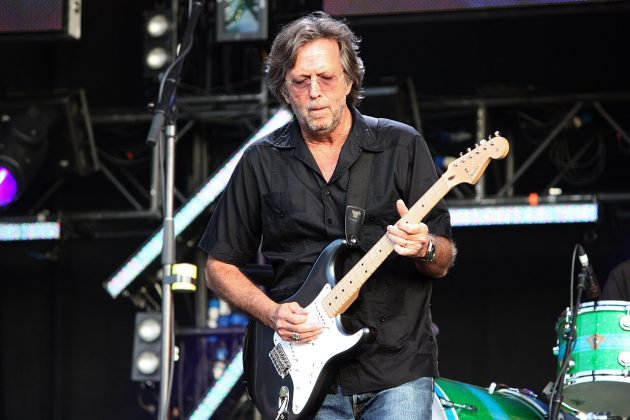
What Is Eric Clapton Doing in 2026?
Eric Clapton turned 81 in March 2026.
He remains one of rock’s most active performers.
Clapton’s 2026 European tour confirms Slowhand is far from finished.
Dates across multiple countries were announced for summer and autumn.
His 2024 album Meanwhile marked his 22nd solo studio release.
Check the latest Eric Clapton concert schedule for current touring information.
Clapton has spoken openly about his health challenges in recent years.
Peripheral neuropathy has caused numbness in his hands.
It forces him to adapt his playing technique.
Recent reviews confirm his playing remains emotionally powerful.
Clapton has entered the Rock and Roll Hall of Fame three times.
He went in as a solo artist, with Cream, and with the Yardbirds.
How Did Jack Bruce’s Solo Career Define His Legacy?
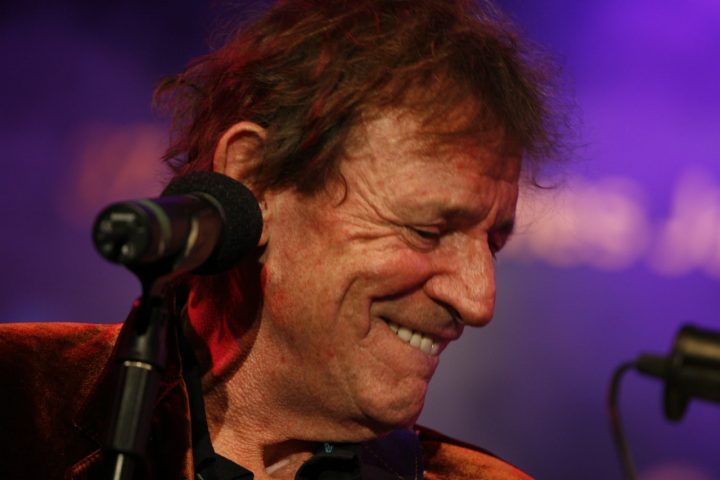
Jack Bruce died on October 25, 2014, at age 71.
He died from liver disease at his home in Suffolk, England.
He had undergone a liver transplant in 2003 that nearly ended his life.
He kept recording and performing with remarkable determination.
His final album, Silver Rails, was released in March 2014.
It came just months before his death and stands as a dignified final statement.
Bruce built one of the most musically diverse solo careers in classic rock.
His debut solo album, Songs for a Tailor (1969), remains his most celebrated work.
It proved his talents went far beyond the bass guitar.
The album showcased him as a vocalist, pianist, cellist, and composer.
It won critical acclaim across rock and jazz circles.
Harmony Row (1971) followed as an equally ambitious record.
It further established Bruce as a serious solo artist.
Bruce was ranked number eight on Rolling Stone’s list of the greatest bassists.
Geddy Lee, Sting, and Geezer Butler have all cited him as a primary influence.
What Happened to Ginger Baker After Cream?
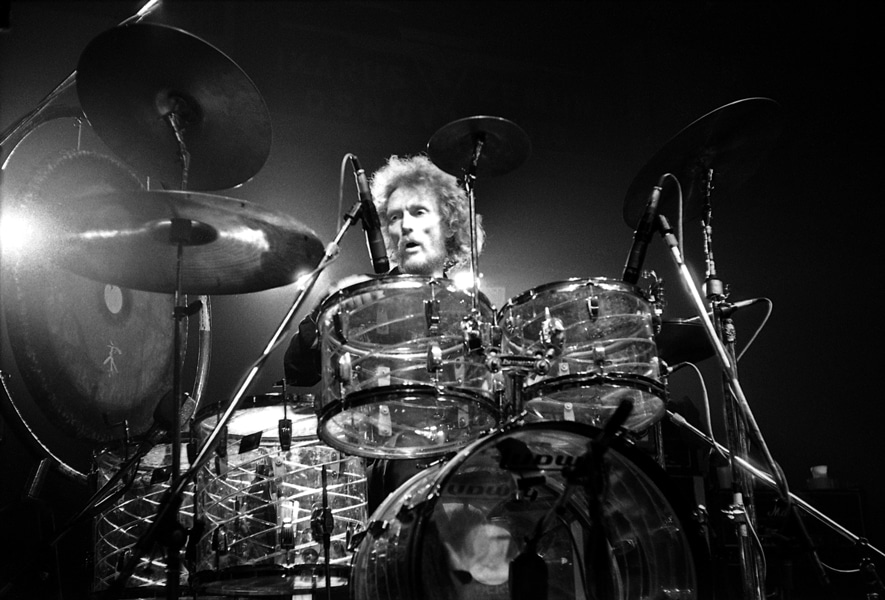
Ginger Baker died on October 6, 2019, at age 80.
He had struggled for years with chronic obstructive pulmonary disease and osteoarthritis.
His later years were captured in the 2012 documentary “Beware of Mr. Baker.”
It showed both his musical brilliance and his combative personality.
Baker remained one of rock’s most respected drummers until his final days.
After Cream disbanded, Baker formed Blind Faith in 1969.
That group paired him again with Clapton, plus Steve Winwood and Ric Grech.
Baker then pursued one of rock’s most adventurous post-band paths.
He traveled to Nigeria in the early 1970s to build a recording studio.
Paul McCartney recorded the Wings album “Band on the Run” at Baker’s Lagos studio in 1973.
That gave the facility a permanent place in rock history.
Baker also worked closely with Fela Kuti during his time in Nigeria.
Together they explored the intersection of jazz, rock, and Afrobeat.
How Did the Members of Cream Shape Classic Rock Songwriting?
Cream’s impact cannot be measured in record sales alone.
Those figures were enormous for their era regardless.
They changed what audiences expected from a live rock show.
They changed studio recording and the relationship between musicians on stage.
Jack Bruce was Cream’s primary songwriter and most prolific lyricist.
He often collaborated with poet Pete Brown.
Bruce wrote or co-wrote most of the band’s celebrated songs.
That includes “White Room,” “I Feel Free,” “N.S.U.,” and “Sunshine of Your Love.”
His classical training gave those songs a harmonic depth other blues-rock bands lacked.
Eric Clapton shaped the band’s songwriting direction too.
He brought a catalogue of American blues standards into their repertoire.
His take on Robert Johnson’s “Crossroads” became one of rock’s most famous guitar performances.
Clapton co-wrote “Sunshine of Your Love” with Bruce and Pete Brown.
He contributed the immortal opening riff.
Ginger Baker’s writing centered on the drum kit as a lead instrument.
“Toad” was the first extended drum solo on a rock studio album.
It set a precedent that John Bonham and Neil Peart would later follow.
Baker’s rhythms folded in African polyrhythms years ahead of the mainstream.
Which Bands Were Directly Influenced by the Members of Cream?
The influence of the members of Cream on rock music is staggering.
Jimmy Page credited Cream’s extended improvisation as foundational to Led Zeppelin.
Geddy Lee of Rush has cited Jack Bruce as his primary bass influence.
Rush’s own power trio format descended directly from Cream’s blueprint.
Tony Iommi of Black Sabbath pointed to Cream’s heavy, blues-based riffing as an influence on early metal.
Jimi Hendrix and Cream were rivals and mutual admirers in the late 1960s.
Both camps pushed each other to greater instrumental heights.
The power trio concept traces straight back to Clapton, Bruce, and Baker.
You hear it in ZZ Top, Muse, and the White Stripes.
Solo Careers: Where Did the Members of Cream Go Next?
All three members of Cream pursued wide-ranging careers after the band disbanded.
Their paths were as different as their personalities.
They ranged from mainstream rock to African percussion to avant-garde jazz.
Together they produced decades of music that deepened Cream’s legacy.
Eric Clapton’s Essential Solo Discography
After Cream, Clapton formed Blind Faith.
He then joined Delaney and Bonnie on the road.
From there he launched one of rock’s most successful solo careers.
With Derek and the Dominos he recorded the epic “Layla” in 1970.
461 Ocean Boulevard (1974) marked his comeback from heroin addiction.
It reached number one in both the US and UK.
Slowhand (1977) remains one of his best-loved studio albums.
It produced the hits “Cocaine,” “Wonderful Tonight,” and “Lay Down Sally.”
You can get Slowhand on Amazon as one of his definitive recordings.
Unplugged (1992) became his biggest commercial achievement.
It earned six Grammy Awards, including Album of the Year.
Pick up the Unplugged album on Amazon to hear the performance that reintroduced him to a new generation.
“Tears in Heaven” followed the tragic death of his son Conor in 1991.
It became one of the most emotionally resonant songs of his career.
From the Cradle (1994) returned Clapton to the electric blues of his roots.
It won him a Grammy for Best Traditional Blues Album.
His collaboration with B.B. King on Riding with the King (2000) celebrated the blues tradition at his music’s foundation.
The complete Eric Clapton album reviews section covers his full catalogue in depth.
Jack Bruce’s Solo Albums and Key Collaborations
Jack Bruce formed West, Bruce and Laing in 1972.
His partners were guitarist Leslie West and drummer Corky Laing of Mountain.
The trio released Why Dontcha on Amazon, a hard-driving blues-rock record.
It reached number 26 on the Billboard 200.
Bruce also paired with guitarist Robin Trower in the 1970s and early 1980s.
Their work is available as BLT and Truce on Amazon.
It showcases some of Bruce’s most muscular post-Cream bass work.
In 1994, Bruce reunited with Ginger Baker and added guitarist Gary Moore to form BBM.
Their album Around the Next Dream on Amazon came closest to recapturing Cream’s chemistry.
The album reached number nine on the UK charts.
Bruce’s wider catalogue spans over a dozen solo albums.
Explore it through the Jack Bruce discography on Amazon.
Ginger Baker’s Post-Cream Projects
Ginger Baker’s Air Force formed in 1969 as a large-scale ensemble.
It blended rock, jazz, and African music into a new kind of performance.
The group played the Bath Festival of Blues in 1970 and recorded two albums.
The Baker Gurvitz Army formed in 1974 with brothers Paul and Adrian Gurvitz.
Their self-titled debut reached number 22 on the Billboard 200.
It is available as The Baker Gurvitz Army on Amazon.
Baker’s later solo work moved deeper into jazz and world percussion.
That includes the acclaimed Horses and Trees on Amazon (1986).
It featured jazz pianist Jaki Byard and multi-instrumentalist Bill Frisell.
Baker worked with African musicians throughout the 1980s and 1990s.
He never let himself be defined by his classic rock past.
People Also Ask About the Members of Cream
Who were the original members of Cream?
The only lineup Cream ever had was Eric Clapton on guitar and vocals, Jack Bruce on bass and lead vocals, and Ginger Baker on drums.
They formed in London in July 1966 and stayed together until their final show in November 1968.
Are any members of Cream still alive in 2026?
As of 2026, Eric Clapton is the only surviving member of Cream.
Jack Bruce died on October 25, 2014, at age 71, and Ginger Baker died on October 6, 2019, at age 80.
What is Eric Clapton doing in 2026?
Eric Clapton is touring Europe in 2026 and continues to perform live despite managing peripheral neuropathy in his hands.
He released his 22nd solo studio album, Meanwhile, in October 2024 and shows no signs of stopping.
Why did the members of Cream break up?
Cream broke up in 1968 due to ongoing tension between Jack Bruce and Ginger Baker, Eric Clapton’s dislike of the band’s loud jam-heavy shows, and pure touring exhaustion.
The split was announced at the height of their commercial success.
Did the members of Cream ever reunite?
Yes, Cream reunited in May 2005 for four sold-out shows at London’s Royal Albert Hall, followed by three shows at New York’s Madison Square Garden that October.
It was the only formal reunion the band ever performed.
How many albums did Cream record together?
Cream released four studio albums together: Fresh Cream (1966), Disraeli Gears (1967), Wheels of Fire (1968), and Goodbye (1969), which topped the UK Albums Chart.
The band also released several live albums and compilations after splitting.
Essential Albums From the Members of Cream
These four studio albums are the complete recorded legacy the members of Cream built together.

Fresh Cream
1966 debut studio album
Where the power trio format began.
RIAA Gold certified, UK number six.
🛒 Check Price on Amazon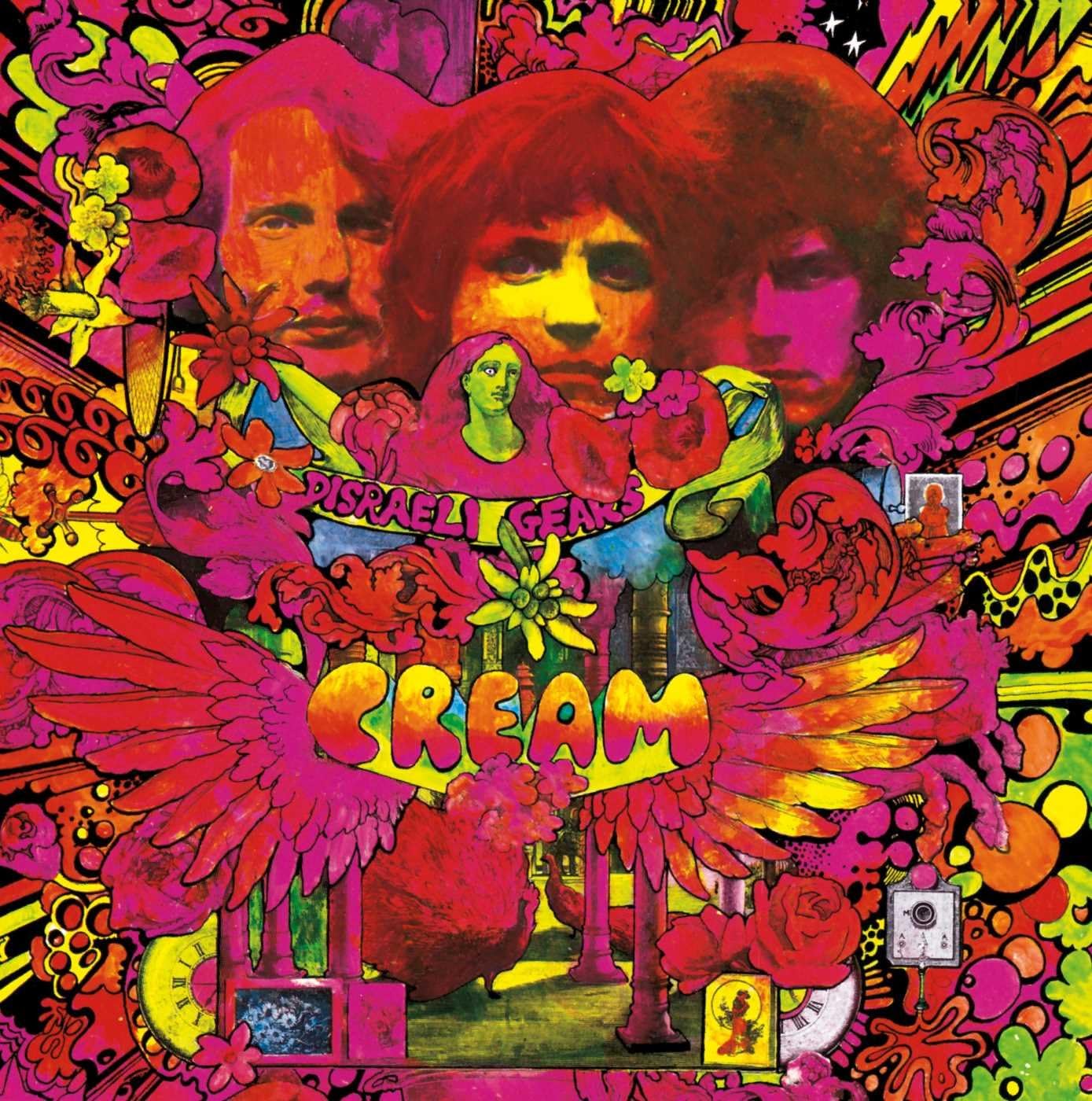
Disraeli Gears
1967 masterpiece
Home of “Sunshine of Your Love.”
RIAA Platinum, US Billboard number four.
🛒 Check Price on Amazon
Wheels of Fire
1968 studio/live double album
First platinum double album ever.
Hit number one on the Billboard 200.
🛒 Check Price on Amazon
Goodbye
1969 farewell album
Features Clapton and Harrison co-write “Badge.”
UK number one, RIAA Gold certified.
🛒 Check Price on AmazonAffiliate Disclosure: This article contains affiliate links to Amazon. As an Amazon Associate, I earn from qualifying purchases at no additional cost to you. This helps support the site and allows me to continue bringing you classic rock content. All album recommendations are based on their musical merit and historical significance.
You Might Also Like
Members of Guns N’ Roses: The Complete Story
A lineup whose internal feuds, like the Bruce-Baker rivalry, nearly overshadowed the music itself.
Members of Yes: Full Lineup History and Where They Are Now
Progressive virtuosos who, like Cream, pushed extended improvisation into arena rock.
Members of Styx: Complete Band History and Current Lineup
A band shaped by the same songwriting tension that defined Cream’s short run.
Members of Stone Temple Pilots: Full Story and Latest News
A band whose story, like Cream’s, includes the death of an original member.
Sources:
Wikipedia: Cream Discography
Britannica: Cream British Rock Group
Guitar World: The Story of Cream
LTC News: Eric Clapton Health Updates
NPR: Jack Bruce Obituary
Last updated: August 24, 2026
The story of the members of Cream is one of the most consequential chapters in rock history: a brief, incandescent collaboration between three geniuses whose influence endures every time someone plugs in a guitar and turns up the volume.