

Neil Young Harvest Moon: A Return to Acoustic Intimacy After Two Decades
Neil Young Harvest Moon arrived on November 2, 1992, as a deliberate return to the warm, acoustic sound that defined his career-defining 1972 album Harvest. This 21st studio release reunited Young with the Stray Gators and marked a pivotal shift from the electric intensity of his Crazy Horse collaborations. The album’s mature perspective on long-term relationships and its meticulously crafted analog production made it both a commercial resurgence and a creative reaffirmation.
- Artist: Neil Young
- Album: Harvest Moon
- Released: November 2, 1992
- Label: Reprise Records
- Producer: Neil Young, Ben Keith
- Recorded: 1992, Redwood Digital, Woodside, California
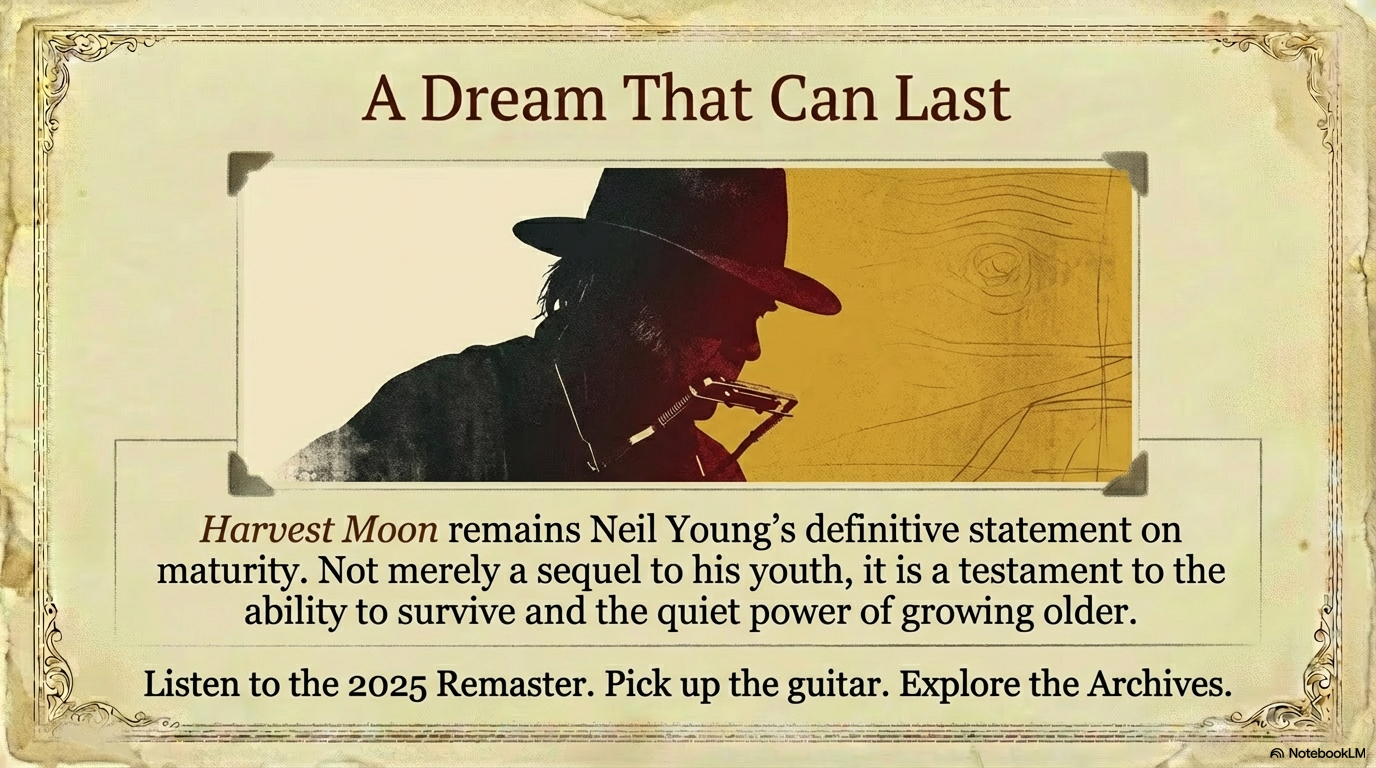
Table of Contents
Own Neil Young’s Harvest Moon on Vinyl or CD

Experience the warm analog sound of this classic 1992 release, featuring the reunited Stray Gators and legendary vocal harmonies from Linda Ronstadt and James Taylor.
Album Overview & Release Context
By late 1992, Neil Young had spent two years touring with Crazy Horse, delivering the raw electric power of Ragged Glory and the live document Weld. The constant volume took its toll. Young developed tinnitus from the sustained noise exposure, forcing him to reconsider his approach. He retreated to his ranch in Woodside, California, and picked up his acoustic guitar.
The timing was significant. Twenty years had passed since Harvest topped the charts and produced “Heart of Gold,” his only number-one single. Fans had spent two decades asking for a sequel. Young resisted the pressure for years, refusing to retrace his steps simply because the market demanded it. But in 1992, the songs arrived naturally, and he followed them.
Young recorded the album at Redwood Digital, utilizing 1970s-era analog equipment despite working with a digital recording board. This hybrid approach allowed him to capture the warmth and immediacy he wanted. The sessions moved quickly once he reunited with co-producer Ben Keith and the Stray Gators.
Why This Album Matters
Neil Young Harvest Moon demonstrated that an artist could revisit past territory without repeating himself. The album shares sonic DNA with Harvest, but the perspective is entirely different. Where the 1972 album captured a young artist navigating fame and relationships, this record reflects a mature partnership and the passage of time.
The album arrived during a period when classic rock artists often struggled to remain relevant. Young proved that authenticity and craft could still connect with audiences. The record outsold both Freedom and Ragged Glory, eventually earning multi-platinum certification. It demonstrated sustained commercial viability without compromise.
For the broader rock landscape, the album reinforced the value of acoustic songcraft during an era dominated by grunge and alternative rock. Artists across genres recognized that intimate, well-constructed songs could still resonate. The album’s success validated a return to fundamentals.
Recording Sessions & Production
Young approached these sessions with specific sonic goals. He wanted the warmth and presence of 1970s recordings but needed to work within modern studio capabilities. The solution involved using vintage microphones, analog compressors, and tube preamps while tracking to digital media. This gave him the best of both approaches.
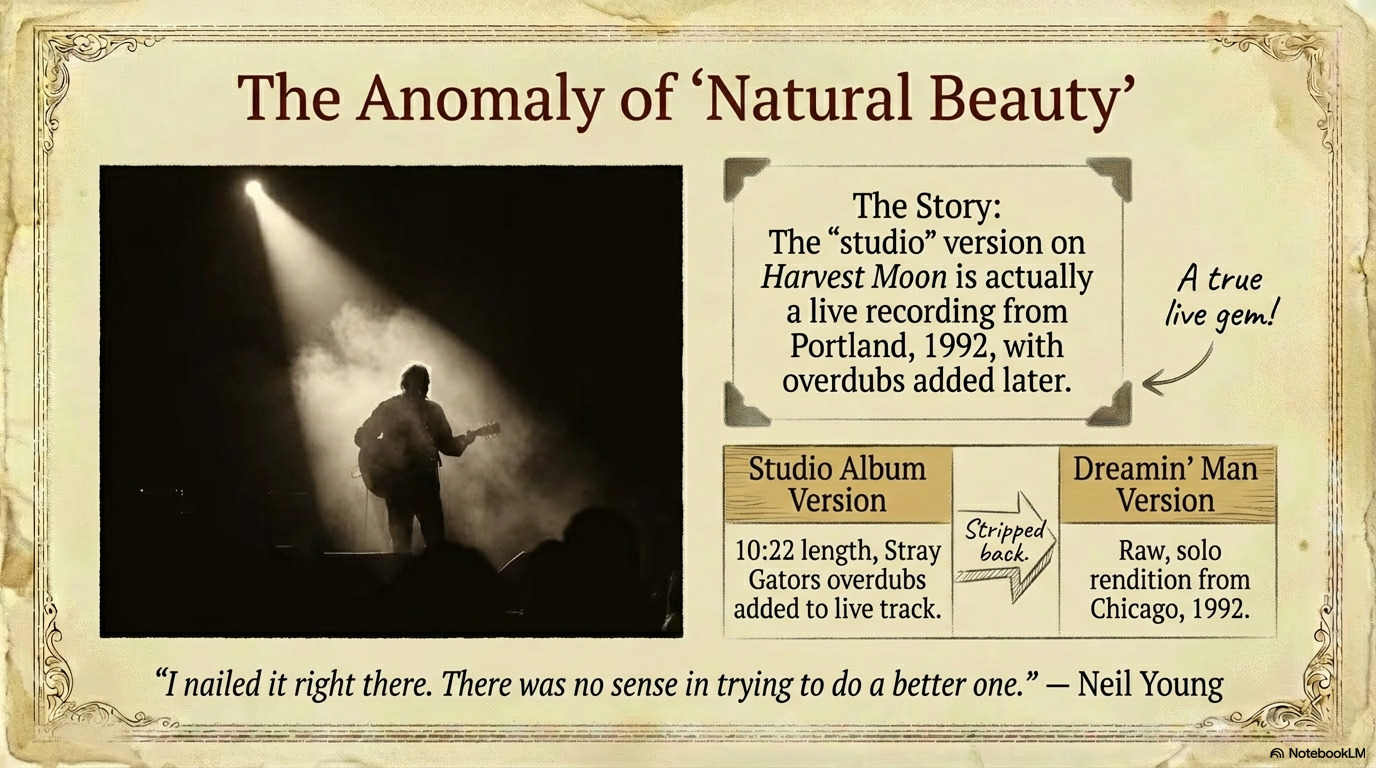
Ben Keith’s role as co-producer proved essential. Keith understood Young’s vision instinctively and knew how to capture spontaneous performances. Several tracks were recorded in single takes, preserving the emotional immediacy. “Natural Beauty,” the album’s ten-minute closing epic, came from a live performance at Portland’s Civic Auditorium. Young felt he nailed it in one pass and saw no reason to recreate it in a studio.
The production philosophy emphasized space and dynamics. Young avoided overdub-heavy arrangements, preferring to let each instrument breathe. Tim Drummond played broom percussion on the title track rather than full drums, creating a gentle shuffle. These choices reinforced the album’s intimate character.
The entire recording process took roughly three months from initial tracking to final mixing. Young worked quickly once the songs crystallized, maintaining momentum throughout the sessions. This efficiency preserved the album’s cohesive feel.
Musicians & Personnel
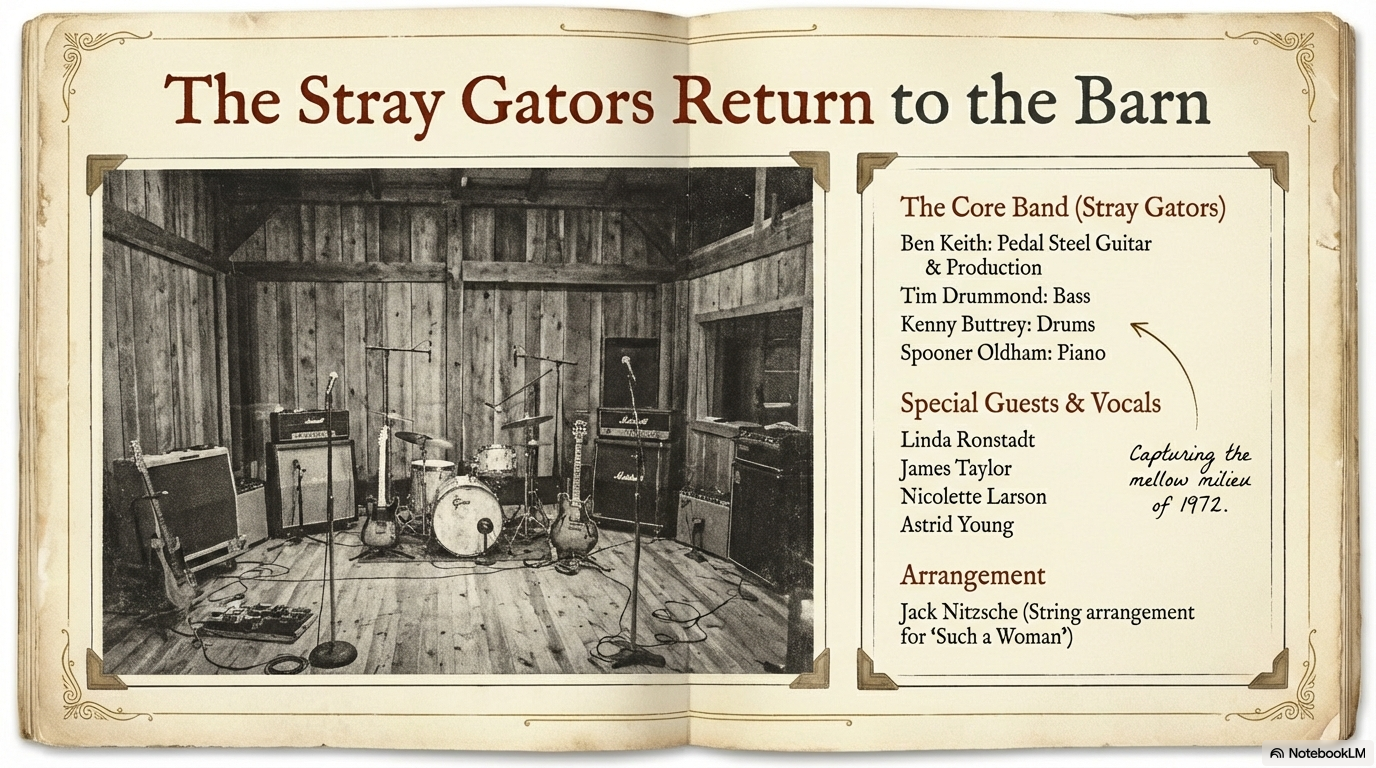
The Stray Gators reunion gave the album its foundation. Ben Keith handled pedal steel guitar and Dobro, bringing the same melodic sensitivity he contributed to the original Harvest sessions. His steel work on “Unknown Legend” and the title track defined the album’s sonic signature.
Tim Drummond returned on bass guitar after two decades. His understated playing provided exactly the right amount of movement without overwhelming the arrangements. Kenny Buttrey came back on drums, though several tracks used minimal percussion. Spooner Oldham contributed piano and pump organ, adding textural depth to the quieter moments.
The vocal harmonies elevated several tracks beyond Young’s solo capabilities. Linda Ronstadt, James Taylor, and Nicolette Larson each brought their distinctive voices to the sessions. Their contributions on “Unknown Legend” and “Harvest Moon” created lush, ethereal backing vocals that recalled the best California folk-rock traditions.
Astrid Young, Neil’s half-sister, also appeared on backing vocals. Young assembled this particular group because he trusted them completely and because they understood the material’s emotional requirements. The chemistry between all participants is audible throughout the record.
Track-by-Track Highlights
The album contains ten songs spanning forty-nine minutes:
- “Unknown Legend” – 4:32
- “From Hank to Hendrix” – 5:12
- “You and Me” – 3:45
- “Harvest Moon” – 5:03
- “War of Man” – 5:41
- “One of These Days” – 4:55
- “Such a Woman” – 4:36
- “Old King” – 2:57
- “Dreamin’ Man” – 4:36
- “Natural Beauty” – 10:22
“Unknown Legend” opens the album with one of Young’s most personal compositions. He wrote the song about his wife Pegi, recalling memories of her working at Alex’s bar in California. Young started the lyrics fifteen years earlier but couldn’t complete them until he found old notes scribbled on a newspaper. The finished song celebrates a long partnership with genuine affection.
“From Hank to Hendrix” uses musical icons to measure time in a relationship. The song acknowledges how partnerships evolve and endure through different eras. Young’s guitar work shifts between delicate fingerpicking and more forceful strumming, reflecting the lyrical themes.
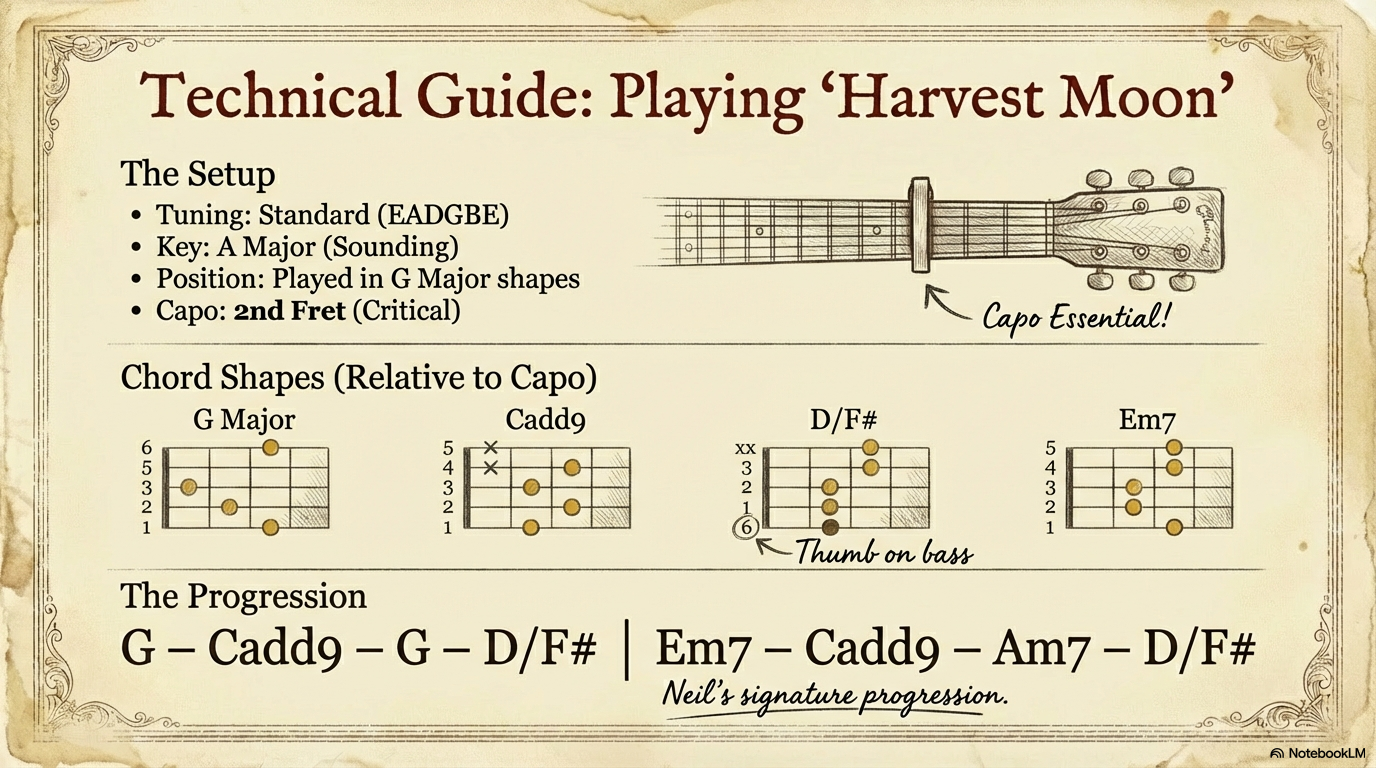
The title track became the album’s signature moment. Recorded in 3/4 time with Young playing a capo on the second fret, the song captures a specific late-night intimacy. The arrangement features just acoustic guitar, bass, brushed percussion, and layered harmonies. Its simplicity is deceptive; every element serves the emotional core.
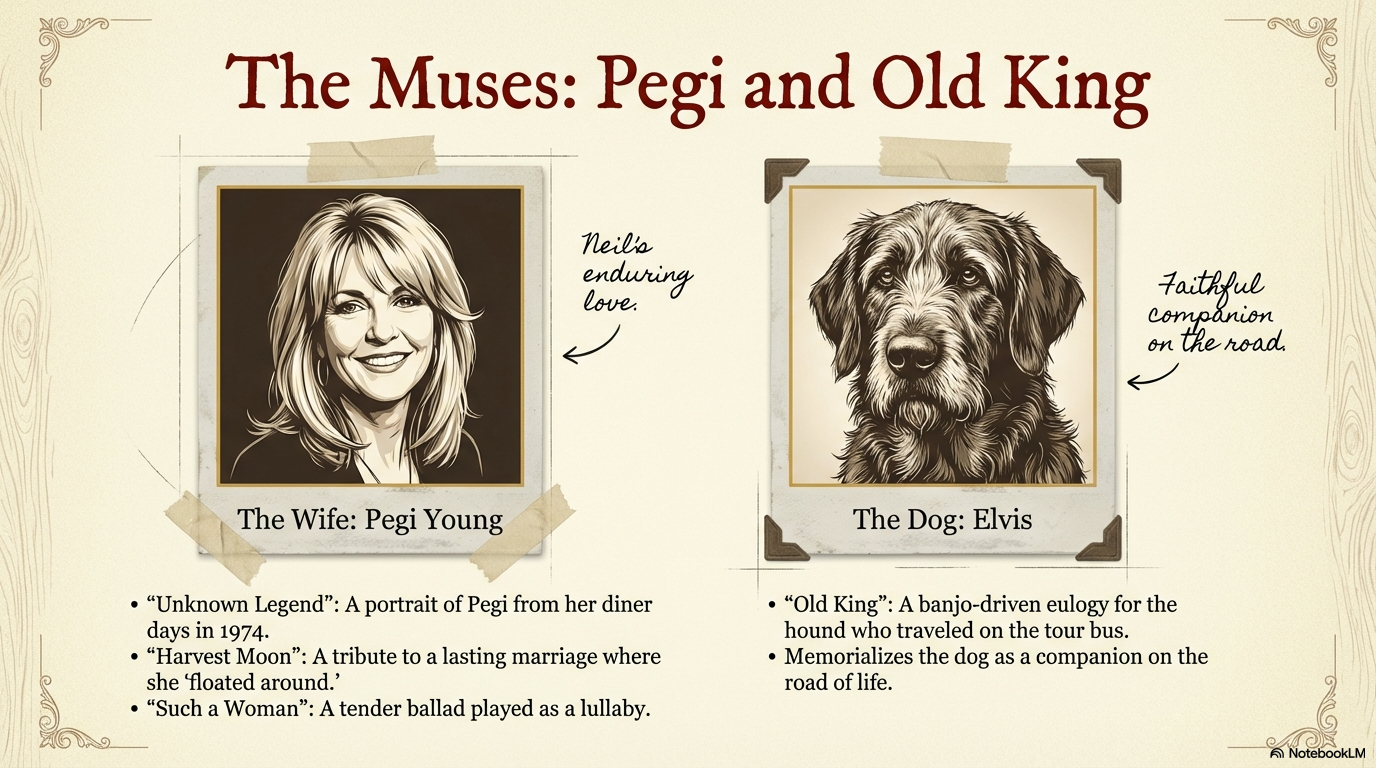
“Old King” provides a lighter moment, celebrating Young’s dog Elvis with genuine warmth and humor. The song runs less than three minutes but captures real affection for a companion animal. Young’s delivery is relaxed and unforced.
“Natural Beauty” closes the album with a sprawling live recording that addresses environmental themes and the passage of time. The ten-minute runtime allows Young to build gradually, moving from quiet reflection to powerful declaration. He recorded it at Portland’s Civic Auditorium and felt the performance captured something unrepeatable. The decision to use a live take rather than recreate it in the studio demonstrates Young’s commitment to emotional authenticity.
Singles & Chart Performance
The album entered the Billboard 200 at number sixteen on November 21, 1992. It peaked at number sixteen in the United States and reached number nine in the United Kingdom. The commercial performance exceeded expectations for a deliberately uncommercial album by a veteran artist.
Reprise released “Harvest Moon” as the lead single. The song received substantial adult contemporary radio play and charted modestly. “Unknown Legend” followed as the second single, finding similar success on album rock and AAA formats. Neither single aimed for Top 40 dominance; the promotional strategy targeted Young’s established audience and the album-oriented rock market.
The album achieved double platinum certification in the United States, selling over two million copies. In Canada, it reached five-times platinum status. The UK certified it gold. These sales figures represented Young’s strongest commercial performance since the early 1970s.
In the 1991-1992 period surrounding the release, the album generated approximately $2,635,000 in sales revenue. This financial success gave Young continued creative freedom to pursue projects without commercial pressure.
Critical Reception
Contemporary reviews recognized the album as a significant artistic statement. Rolling Stone praised Young’s refusal to simply recreate Harvest, noting instead that he had grown into the material naturally. Critics appreciated the mature perspective and the careful production work.
Some reviewers questioned whether the album’s quieter approach would satisfy fans of Young’s electric work. The mellow tone and lack of distorted guitars represented a deliberate choice, not a compromise. Most critics ultimately concluded that the album succeeded on its own terms.
The album earned the 1994 Juno Award for Album of the Year, recognizing its impact in Young’s native Canada. This marked one of several Juno wins throughout his career. The award validated the album’s artistic achievement beyond commercial success.
Retrospective assessments have been consistently positive. The album appears on numerous best-of-the-1990s lists and maintains strong critical standing. AARP included the title track on their list of “16 Songs Everyone Over 50 Should Own,” acknowledging its multigenerational appeal.
Musical Style & Themes
The album draws from country rock, folk, and Americana traditions. Young’s acoustic guitar work anchors nearly every track, often featuring open tunings and capo placements that create ringing, resonant tones. Ben Keith’s pedal steel adds melodic counterpoint without overwhelming the arrangements.
Lyrically, the album explores mature relationships and the passage of time. Unlike the yearning romanticism of Young’s earlier work, these songs acknowledge partnership as an ongoing process. “From Hank to Hendrix” explicitly addresses how relationships survive decades. “You and Me” celebrates enduring connection without sentimentality.
The production aesthetic emphasizes warmth and presence. Young achieved this through careful microphone placement, vintage equipment, and minimal processing. The mixes create sonic space, allowing each instrument to occupy its own frequency range. This clarity serves the intimate material perfectly.
Environmental themes appear most prominently on “Natural Beauty,” where Young addresses ecological destruction and human responsibility. These concerns had appeared in his work before, but here he approaches them with weary resignation rather than anger. The ten-minute runtime allows him to develop these ideas fully.
Album Artwork & Packaging
The album cover features a sepia-toned photograph of a rural barn under moonlight. The image was shot by Joel Bernstein, Young’s longtime visual collaborator. The cover design deliberately evokes nostalgia without becoming precious or overly sentimental.
Inside the CD booklet, additional photographs document the recording sessions and live performances. The design maintains a consistent earth-toned aesthetic that reinforces the music’s organic quality. The packaging includes complete lyrics and musician credits.
The visual presentation aligns perfectly with the album’s sonic approach. Both emphasize authenticity and craftsmanship over flash. The muted color palette and rural imagery create immediate associations with Young’s established iconography while avoiding direct repetition of earlier album designs.
Legacy & Influence
Neil Young Harvest Moon demonstrated that established artists could create vital work decades into their careers without chasing trends or compromising their vision. The album influenced how the music industry viewed veteran performers. Record labels began recognizing that authenticity could generate sustainable commercial success.
Within Young’s discography, the album occupies a crucial position. It bridged his 1970s peak with his 1990s renaissance, proving he could still craft cohesive, emotionally resonant albums. The success gave him confidence to continue following his instincts rather than market expectations.
Musicians across genres cite the album as influential. The Americana and alt-country movements that emerged in the late 1990s drew inspiration from its acoustic approach and mature songwriting. Artists recognized that intimate production could create powerful connections with audiences.
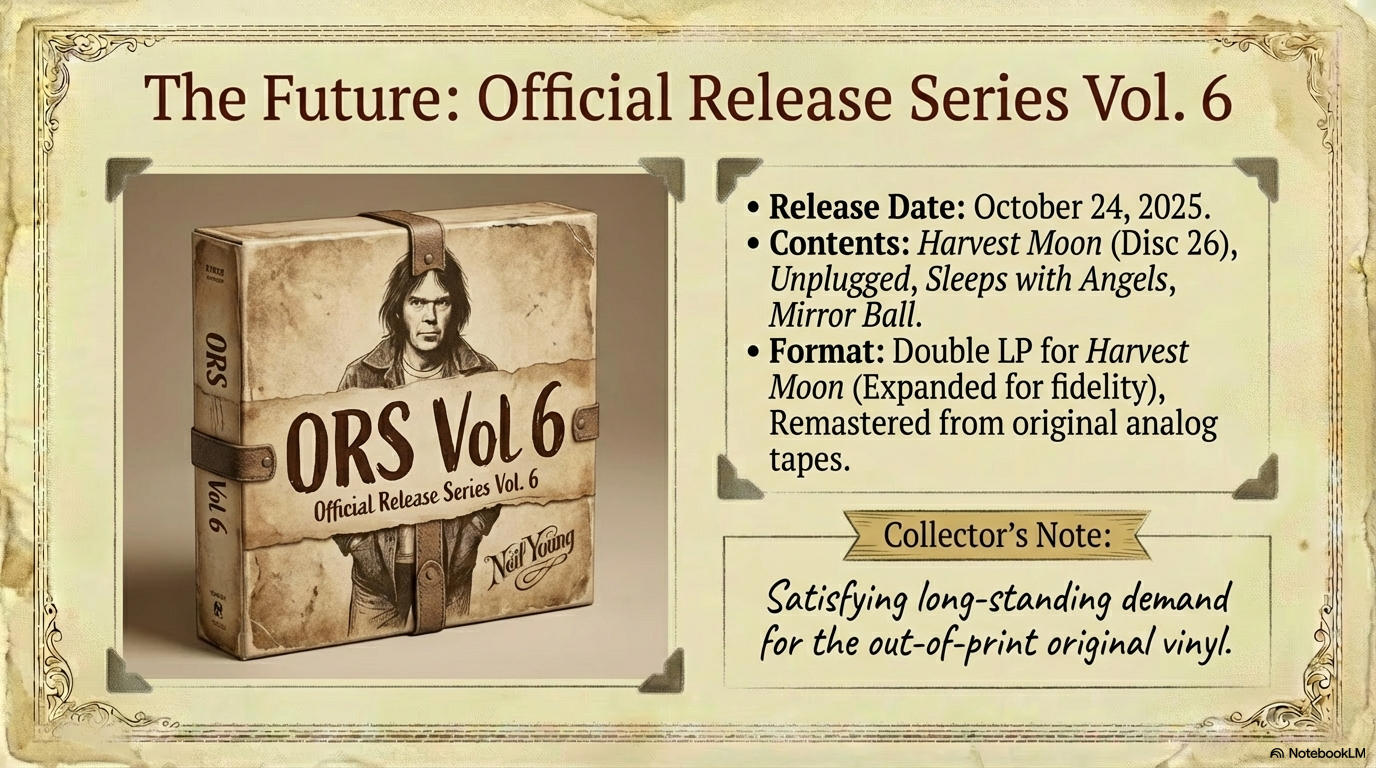
The album has been reissued multiple times, most significantly as part of the Official Release Series Vol. 6 box set released on October 24, 2025. This collection includes newly remastered versions of Harvest Moon, Unplugged, Sleeps with Angels, and Mirror Ball on both CD and vinyl. The remaster preserves the original’s warmth while improving clarity and dynamic range.
For fans exploring Neil Young’s extensive catalog, this album represents an essential entry point. It demonstrates his ability to evolve while maintaining core artistic values. The album’s enduring appeal confirms that genuine emotion and careful craft transcend temporary trends.
Conclusion
More than three decades after its release, this album remains a touchstone for listeners seeking authenticity and emotional depth. Young created a sequel that honored its predecessor without repeating it, achieving both commercial success and artistic integrity. The reunited Stray Gators, the legendary vocal harmonies, and Young’s mature songwriting combined to create something that still resonates. Anyone seeking to understand Young’s sustained relevance should recognize how Neil Young Harvest Moon balances nostalgia with genuine artistic growth.
Explore more Neil Young coverage including Heart of Gold, the complete tour history, and his Buffalo Springfield origins.