

Blind Faith Blind Faith Review: The Supergroup Not Polished Record
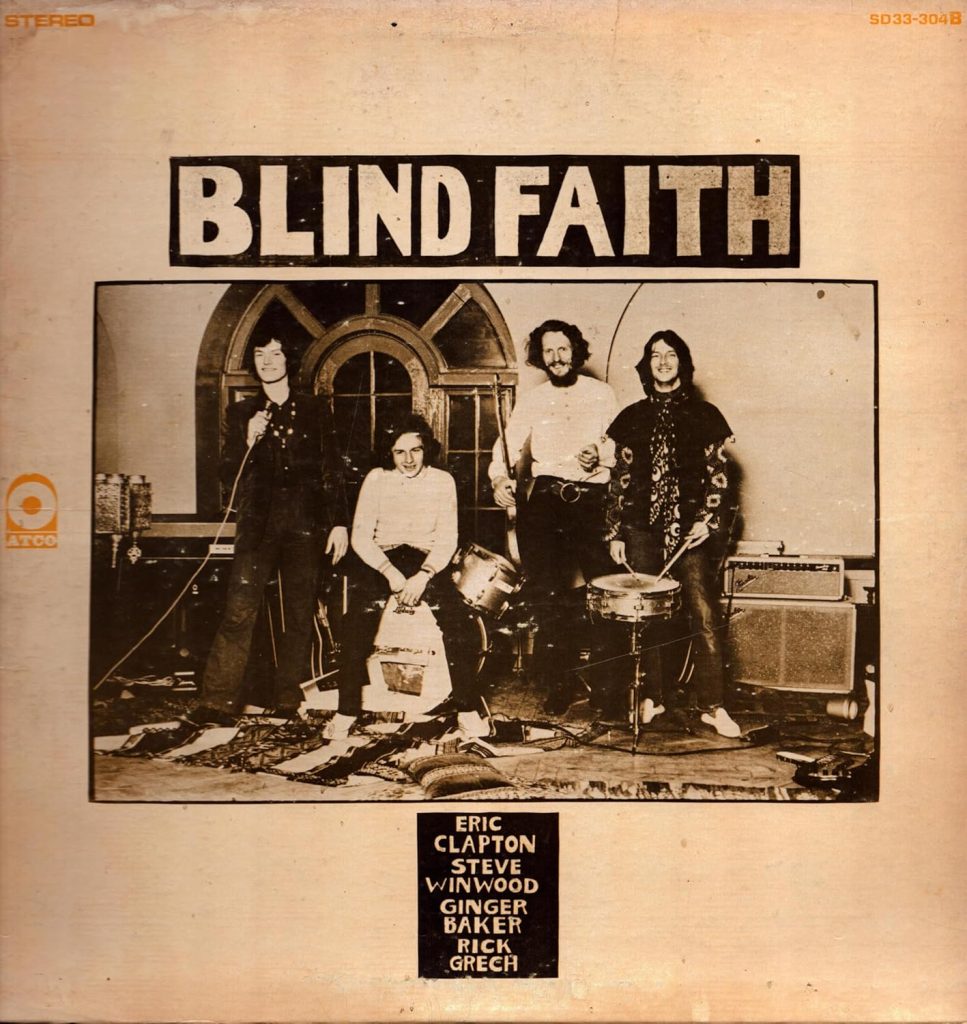
The self-titled Blind Faith Blind Faith album remains one of the most extraordinary debut records in classic rock history, a one-shot masterpiece born from the wreckage of two legendary bands.
If you want to understand how Eric Clapton moved on after Cream collapsed, this album is the starting point.
Quick Navigation
Quick Navigation
- The Supergroup Story Behind the Album
- The Sound of Blind Faith
- Had to Cry Today: The Album Opens With a Hammer
- Can’t Find My Way Home: Winwood’s Finest Moment
- Presence of the Lord: Clapton’s Confession
- Do What You Like and the Jazz-Tinged Chaos
- The Blind Faith Legacy: Why It Still Matters
- Final Verdict
The Supergroup Story Behind the Blind Faith Album
By early 1969, Eric Clapton had watched Cream implode under the weight of its own excess and internal tension.
Steve Winwood had just seen Traffic fall apart at nearly the same moment.
The two musicians found each other, brought in drummer Ginger Baker from Cream’s ashes and bassist Ric Grech from Family, and created something that felt both inevitable and reckless.
According to Wikipedia’s entry on the album, Blind Faith performed a famous free concert in Hyde Park before the record was even finished, drawing a crowd estimated at 100,000 people.
That kind of pressure, the weight of a hundred thousand expectations before a note was officially released, tells you everything about why this project felt so fragile.
The Cream era had pushed Clapton toward blues virtuosity; Blind Faith pushed him toward something more inward.
The Sound of the Blind Faith Album
This record sounds like four musicians feeling their way forward in the dark, and that honesty is what makes it great.
It is not polished in the way that a calculated supergroup product would be.
Producer Jimmy Miller, who had just come off the Rolling Stones’ Beggars Banquet, gave the sessions enough room to breathe without letting them drift into self-indulgence, mostly.
Clapton’s guitar work here is noticeably restrained compared to his Cream recordings.
He plays with intention rather than velocity, which in 1969 was actually a bold creative choice.
Winwood brings Hammond organ, piano, and his unmistakable voice, a voice that sounds like it has already seen several lifetimes of heartache.
For a deeper look at how Clapton evolved as a guitarist across this period, the Layla album story picks up directly where Blind Faith left off.
Had to Cry Today: The Album Opens With a Hammer
The opening track hits with a grinding, hypnotic riff that feels like it was excavated from the earth rather than composed.
Winwood’s vocal delivery on “Had to Cry Today” carries a fatigue that no twenty-year-old should possess, and yet it feels completely authentic.
The song stretches past eight minutes, cycling through tension and release in a way that owes as much to jazz as to rock.
Baker’s drumming is the unsung force here: precise where it needs to be, sprawling where it earns the space.
You can hear the full Blind Faith Blind Faith album experience in this Blind Faith full album listen on YouTube, which makes clear just how strong this opening statement really is.
Can’t Find My Way Home: Winwood’s Finest Moment
Of everything on this record, “Can’t Find My Way Home” is the track that has aged with the most grace.
Winwood plays acoustic guitar and sings with a simplicity that cuts straight through.
There are no effects, no studio tricks, no layered overdubs fighting for space.
Just a voice, a guitar, and a lyric about being lost that somehow sounds more honest than almost anything else released that year.
It holds up in 2026 as well as it did when it first played on FM radio in 1969.
That is a rare and difficult thing for any song to achieve.
Presence of the Lord: Clapton’s Confession on the Blind Faith Album
Eric Clapton wrote “Presence of the Lord” as the first song he had ever composed entirely on his own, and the vulnerability shows in the best possible way.
The lyrics are a direct expression of spiritual searching, written by a man who had just emerged from one of the most celebrated and exhausting chapters of his career.
Clapton’s playing on this track is measured and devotional.
He does not shred; he speaks.
Fans who followed his solo career will recognize this introspective quality as something that deepened considerably on records like 461 Ocean Boulevard and Unplugged.
The seeds of that later wisdom are right here, in 1969, on this track.
Do What You Like and the Jazz-Tinged Chaos
The album’s most divisive track is also its most revealing.
“Do What You Like” runs over fifteen minutes and features extended improvised solos from every member, including a drum solo from Baker that will test the patience of listeners who are not already fans.
Taken as a snapshot of four elite musicians playing without a net, it is fascinating.
Taken as a piece of structured songwriting, it falls short.
This tension between freedom and focus is the central drama of the Blind Faith project as a whole.
You can watch a short clip of Clapton and Winwood discussing this era in this Blind Faith clip on YouTube.
The Blind Faith Legacy: Why It Still Matters
One album, one tour, then silence.
Blind Faith never recorded another record together, and that abrupt ending turned this single release into something more mythological than any multi-album catalog might have achieved.
It influenced the blues-rock and Southern rock movements that followed, and its production aesthetic echoed through the early 1970s in ways that are still audible today.
For context on where Clapton went next, the Slowhand album and From the Cradle both carry traces of the musical philosophy Blind Faith established.
Winwood’s trajectory toward Traffic’s landmark later records also runs directly through this album.
The story of what these musicians did next is inseparable from what they built together here.
Final Verdict on the Blind Faith Album
Blind Faith Blind Faith is not a perfect record.
The sequencing is uneven, the closing track overstays its welcome, and the album sometimes feels more like a session than a statement.
But the highs, “Can’t Find My Way Home,” “Presence of the Lord,” and the opening salvo of “Had to Cry Today,” are among the finest recordings any of these musicians ever put to tape.
The Blind Faith album stands as proof that sometimes the most important thing a band can do is show up, play with complete honesty, and get out before the myth collapses.
Affiliate Disclosure: As an Amazon Associate, I earn from qualifying purchases. This means that if you click on a link to a classic rock album or piece of gear on this site and make a purchase, I may receive a small commission at no extra cost to you. This helps support classicrockartists.com and allows me to keep providing deep-dive content on the legends of rock. Thank you for your support!
Listen to Blind Faith on Amazon Music or Grab the CD
Also worth exploring: Browse the Eric Clapton Discography on Amazon