

Blind Faith: The Original Rock Supergroup That Defined 1969
Blind Faith arrived in 1969 as the world’s first true rock supergroup, a breathtaking union of four musicians whose combined talent had already reshaped the landscape of British rock.
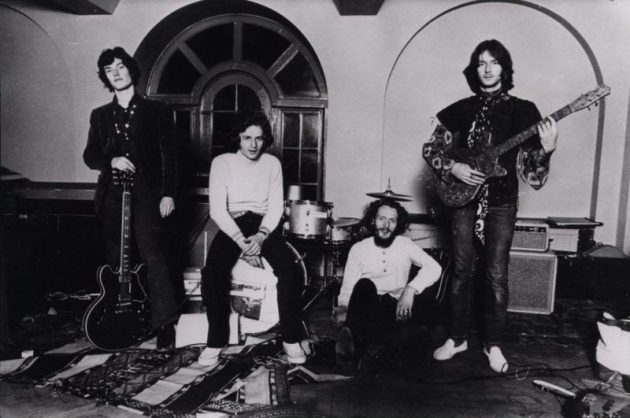
Guitarist Eric Clapton, drummer Ginger Baker, vocalist and multi-instrumentalist Steve Winwood, and bassist Ric Grech brought staggering credentials to a project that promised something completely unprecedented in popular music.
The concept was electric: unite the finest players from the most exciting bands of the era, strip away commercial expectation, and allow virtuosos to create together without restriction.
The 1960s British rock scene had already produced extraordinary music, but nothing quite like what Blind Faith promised.
What emerged was an album of timeless power, a historic free concert before more than one hundred thousand people in London’s Hyde Park, and a turbulent American tour that exposed both the brilliance and the fragility of the project.
Despite lasting only a single year and releasing just one studio album, Blind Faith left a mark on rock history that remains vivid more than half a century later.
This is the complete story of Blind Faith: the musicians who formed them, the music that defined them, and the enduring legacy they created.
▼ Table of Contents
- The Early Lives of the Blind Faith Members
- The Bands That Shaped a Generation
- The Formation of Blind Faith
- The Blind Faith Album: An Instant Classic
- The Hyde Park Concert and American Tour
- Career Challenges: The Weight of Expectation
- Life After Blind Faith
- Recognition and Lasting Legacy
- Essential Discography
- Frequently Asked Questions
The Early Lives of the Blind Faith Members
Eric Clapton was born on March 30, 1945, in Ripley, Surrey, and was raised by his maternal grandparents after his mother emigrated to Canada.
He discovered the guitar as a teenager and was immediately consumed by the American blues recordings of Robert Johnson, Muddy Waters, and Buddy Guy.
Ginger Baker was born on August 19, 1939, in Lewisham, southeast London, and developed a ferocious drumming style shaped by jazz legends such as Phil Seamen and Max Roach.
Baker honed his craft in the British rhythm and blues underground, becoming a key member of the pioneering Graham Bond Organisation in the early 1960s alongside the formidable bassist Jack Bruce.
Steve Winwood was born on May 12, 1948, in Birmingham, and was something of a child prodigy, mastering keyboards, guitar, and bass before most teenagers had picked up their first instrument.
He shot to fame as the teenage lead vocalist of the Spencer Davis Group, where his extraordinary soulful voice powered classic hit singles including “Keep On Running” and “Gimme Some Lovin’.”
Ric Grech was born on November 1, 1946, in Bordeaux, France, to a British father and a French mother, and grew up in Leicester, England.
Grech was a versatile multi-instrumentalist who played violin, bass, and cello, and made his reputation with the innovative British rock band Family, one of the most inventive and underrated acts of the late 1960s.
The Bands That Shaped a Generation
Before Blind Faith could exist, each of its members first reached the heights of British rock with their respective previous groups, laying the creative groundwork for everything that followed.
Eric Clapton and Ginger Baker joined forces with bassist Jack Bruce in 1966 to form Cream, a trio widely credited as the first rock power trio and one of the most influential groups in the history of the genre.
The complete Cream lineup brought together three technically brilliant and temperamentally driven musicians who pushed hard rock, blues, and psychedelia to their absolute outer limits.
Their debut, Fresh Cream (1966), announced a new era of British rock with a raw, electrifying energy that immediately demanded the attention of listeners around the world.
Disraeli Gears (1967) elevated the band to international stardom, its psychedelic imagery and blues firepower yielding the immortal riff of “Sunshine of Your Love.”
Wheels of Fire (1968) became the world’s first platinum-certified double album, cementing Cream as one of the most commercially and artistically dominant forces of the era.
By the time Goodbye arrived as their farewell record in early 1969, Cream had already announced their dissolution, leaving both Clapton and Baker searching urgently for their next creative chapter.
Jack Bruce launched a prolific and celebrated solo career that demonstrated the full depth of his musical vision, including the acclaimed Songs for a Tailor (1969), the adventurous Harmony Row (1971), and the ambitious Out of the Storm (1974).
Steve Winwood, meanwhile, had already departed the Spencer Davis Group to form Traffic in 1967, a more adventurous rock collective that gave his musical ambitions the room they needed to breathe.
Traffic’s exploratory blend of rock, folk, and jazz, combined with Winwood’s remarkable vocal power, made him one of the most sought-after musicians in Britain, and it was only a matter of time before someone proposed something even more ambitious.
The Formation of Blind Faith
The story of Blind Faith began in late 1968, when Eric Clapton and Ginger Baker started playing together informally following the collapse of Cream, each seeking a new creative outlet for energies that had no other channel.
Baker suggested inviting Steve Winwood to one of their casual sessions, recognising that Winwood’s extraordinary vocal range and keyboard mastery could elevate their music to an entirely new level.
The three musicians quickly identified an extraordinary chemistry between them, and began holding regular rehearsals at Winwood’s Berkshire home through the early months of 1969.
To complete the lineup, the group sought a bassist who could match their level, and their choice fell on Ric Grech, who was persuaded to leave Family at a pivotal moment in that band’s career.
Grech’s versatility and musicianship made him a natural fit, and the four-piece began developing original material almost immediately, building a sound unlike anything any of them had created before.
The name Blind Faith was reportedly suggested by Baker, and it captured something essential about the venture: a courageous leap into the unknown by four musicians prepared to trust entirely in the music above commercial calculation.
Word spread rapidly through the music industry, and their manager Robert Stigwood, who had also steered Cream through their extraordinary rise, began making arrangements for the group’s formal public debut.
The Blind Faith Album: An Instant Classic
Recording sessions for the Blind Faith debut album began in early 1969 at London’s Morgan Studios, with the acclaimed producer Jimmy Miller guiding the work with a light but assured hand.
Miller, who had brought a similarly adventurous sensibility to his work with the Rolling Stones on Beggars Banquet and Let It Bleed, proved an ideal collaborator for a group determined to resist commercial convention.
The self-titled Blind Faith album contained just six tracks, but each one was a carefully crafted statement of intent, ranging from delicate acoustic balladry to ferocious, extended instrumental workouts.
The album opened with “Had to Cry Today,” a Winwood composition that began with a deceptively gentle acoustic passage before erupting into a blues-drenched riff of extraordinary muscular power.
Winwood’s “Can’t Find My Way Home” was an entirely different proposition: a haunting, largely acoustic meditation on loss and spiritual longing that became one of the most beloved songs in the Blind Faith catalogue.
Clapton contributed “Presence of the Lord,” his very first published composition, a devotional and deeply personal song that revealed a spiritual dimension rarely visible in his earlier blues recordings.
Winwood also wrote the shimmering “Sea of Joy” and contributed to the group’s interpretation of Buddy Holly’s “Well All Right,” giving the record a warmth and range that few albums of the era could match.
Baker closed the album with “Do What You Like,” a sprawling fifteen-minute showcase that provided each band member with extended solo passages, demonstrating the extraordinary technical command that had made them all famous.
Clapton’s guitar work throughout the album was among the finest of his career to that point, combining his signature blues intensity with a new melodic openness and emotional sensitivity rarely heard in his previous output.
Winwood’s Hammond organ and piano filled the sonic space left by the absence of a second guitarist, creating a richly layered orchestral sound that became one of the record’s most distinctive qualities.
The recording process was not without its difficulties, as the four musicians were still establishing their group identity, and the considerable weight of public expectation pressed heavily on every session.
The album’s cover generated immediate and significant controversy upon release, featuring a topless eleven-year-old girl holding a chrome model airplane: a deliberately provocative image photographed by Bob Seidemann, intended as a metaphor for innocence confronting technology.
American pressings were issued with an alternate cover showing a straightforward group photograph, as US distributors correctly anticipated the controversy the original image would generate.
Released in August 1969, the Blind Faith album debuted at number one in both the United Kingdom and the United States: a remarkable achievement for a group that had yet to perform a full concert tour.
Critical and public responses were extraordinary: here was an album that felt simultaneously raw and refined, steeped in the blues yet adventurous enough to encompass gospel, jazz, folk, and hard rock within a single cohesive vision.
Listeners can experience the full power of the Blind Faith recordings by visiting the band’s official YouTube Music channel, where the complete catalogue is available to stream.
The Hyde Park Concert and American Tour
Before the album had even reached record shop shelves, Blind Faith made their first major public appearance on June 7, 1969, at a free open-air concert in London’s Hyde Park.
More than 100,000 people gathered on a warm summer afternoon to witness what many already sensed would be a defining moment in British rock history.
The sheer scale of the crowd testified to the extraordinary reputations of all four musicians, who had collectively been responsible for some of the most thrilling music of the entire decade.
The performance was not universally praised: some observers noted that the group appeared to still be finding its footing as a live unit, and the sonic challenges of performing to an open-air audience of that scale were considerable.
Nevertheless, the sheer fact of seeing Clapton, Baker, Winwood, and Grech sharing a stage created a sense of occasion that even the most reserved critics found difficult to resist.
The American dates quickly became one of the most anticipated classic rock tours of 1969, launching in July and carrying the band across the United States through August.
The group performed in enormous arenas and stadiums, facing audiences far larger than any of them had encountered as a collective, and the logistical and artistic demands were immense.
The opening act for the American dates was Delaney and Bonnie and Friends, a loose collective of gospel-inflected Southern rock musicians whose relaxed communal approach to performing made a profound impression on Eric Clapton.
Clapton was visibly captivated by the warm, spontaneous spirit of Delaney and Bonnie’s sets, a sharp contrast to the pressure-cooker atmosphere surrounding Blind Faith on the same stages.
American audiences frequently seemed more focused on celebrating the individual legends before them than engaging with new material, a dynamic that frustrated the musicians and accelerated growing tensions within the group.
Baker later recalled the tour as underprepared and at times chaotic, noting that the band had rehearsed far too little before being thrust in front of the largest crowds of their careers.
Despite these internal pressures, the Blind Faith live performances were frequently electrifying, with Clapton’s guitar and Winwood’s vocals reaching heights that justified every ounce of the extraordinary expectation surrounding them.
Critics who attended multiple shows noted a distinct improvement as the tour progressed, as the musicians grew more comfortable with each other in a live setting and began pushing their performances toward something genuinely transcendent.
By the time the American dates concluded in late August, however, it was becoming painfully clear to everyone involved that Blind Faith was not a band built for the long term.
Career Challenges: The Weight of Expectation
The fundamental challenge facing Blind Faith was one that no amount of musical talent could resolve: the weight of public expectation was simply too enormous for any band to sustain.
Fans expected a recreation of Cream from those devoted to Clapton and Baker, and something even more ambitious from those who followed Winwood, leaving the group little room to establish its own distinct identity.
Clapton found the experience of being treated as a rock deity deeply uncomfortable, having spoken candidly about his disillusionment with the reverence that had followed him since his days with Cream.
The communal warmth of Delaney and Bonnie’s musical world represented everything Blind Faith was not: relaxed, instinctive, and entirely free from the weight of its own mythology.
Baker and Winwood each harboured their own creative visions, and the productive dialogue that might have driven the band forward was increasingly undermined by management pressures and commercial considerations.
By autumn 1969, Blind Faith had quietly ceased to function as a unit, never issuing a formal breakup announcement, simply drifting apart as each musician turned toward new and independent paths.
Life After Blind Faith
In the years and decades that followed, each of the four musicians continued working at the highest levels of the industry, their post-group careers reflecting diverse and restless creative ambitions.
Eric Clapton joined Delaney and Bonnie as a touring member directly after the Blind Faith dates, before forming his own group, Derek and the Dominos, in 1970.
The Dominos produced the towering Layla and Other Assorted Love Songs, a masterwork widely regarded as one of the defining albums of the 1970s and a cornerstone of Clapton’s extraordinary legacy.
Ginger Baker moved swiftly, launching Ginger Baker’s Air Force almost immediately after Blind Faith’s dissolution: a sprawling, jazz-inflected big band project that gave full expression to his longstanding fascinations with African rhythms and jazz fusion.
Baker continued pushing boundaries throughout the decade, later founding the Baker Gurvitz Army, a hard rock trio with brothers Adrian and Paul Gurvitz that released three albums between 1974 and 1976.
Steve Winwood re-formed Traffic in 1970, producing what many consider the band’s finest work before eventually embarking on a hugely successful solo career that came to define his reputation in the 1980s.
His solo albums Arc of a Diver (1980) and Back in the High Life (1986) were both transatlantic chart successes, introducing Winwood to vast new audiences who had no prior connection to his work with Traffic or Blind Faith.
Winwood remained an active and respected recording and touring artist throughout the 1990s, continuing to release music that drew on his remarkable breadth of influence and technical mastery.
Ric Grech worked with various artists following the split, including brief stints with Traffic and Ginger Baker’s projects, but health problems curtailed his career through the 1980s.
Grech died on March 17, 1990, at the age of 43, leaving behind a legacy as one of the most versatile and accomplished bassists of the classic rock era.
Recognition and Lasting Legacy
The legacy of Blind Faith cannot be measured in chart positions or sales figures alone, though their self-titled debut reaching number one simultaneously in the United Kingdom and the United States speaks volumes about their immediate impact.
Their greatest contribution may well be conceptual: by establishing that the finest musicians of an era could unite to create something greater than any of them could achieve individually, Blind Faith invented the template that rock supergroups have followed for decades since.
From Asia and the Traveling Wilburys to Audioslave and Them Crooked Vultures, the supergroup concept that Blind Faith pioneered became one of rock music’s most enduring and commercially reliable ideas.
Clapton’s subsequent reunion with Baker and Bruce in 2005, when Cream performed to sold-out audiences at London’s Royal Albert Hall, demonstrated that the bonds forged during those extraordinary years remained profoundly powerful.
Those performances, including the celebrated rendition of “Stormy Monday” from the 2005 Royal Albert Hall concerts, reminded the world precisely why Cream, and by extension Blind Faith, had mattered so deeply.
ClassicRockArtists.com is dedicated to celebrating the enduring legacy of bands and artists like Blind Faith, whose music continues to inspire new generations of musicians, critics, and fans.
For the latest classic rock news and stories, keep this site bookmarked and stay connected with the music that has shaped decades of rock history.
Essential Discography
- Blind Faith (1969): The band’s sole studio album, debuting at number one in both the UK and the US, and featuring enduring rock classics including “Can’t Find My Way Home,” “Presence of the Lord,” and “Had to Cry Today.”
Blind Faith released only one album during their brief existence, but that single record was more than sufficient to guarantee their permanent place in rock history.
Shop for Blind Faith albums and related releases on Amazon: Browse Blind Faith on Amazon
Frequently Asked Questions
Who Were the Members of Blind Faith?
Blind Faith consisted of four musicians: Eric Clapton on guitar and vocals, Ginger Baker on drums and percussion, Steve Winwood on lead vocals, keyboards, and guitar, and Ric Grech on bass and violin.
Each had already achieved significant international fame with their previous groups before joining Blind Faith in 1969, which is precisely what made their collaboration so eagerly anticipated by the music world.
How Many Albums Did Blind Faith Record?
Blind Faith recorded and released only one self-titled studio album, which appeared in August 1969 and topped the charts in both the United Kingdom and the United States.
The album contained six tracks, including the fan favourites “Can’t Find My Way Home” and “Presence of the Lord,” both of which have since become genuine rock standards.
Why Did Blind Faith Break Up?
Blind Faith dissolved in late 1969 due to a combination of overwhelming commercial pressure, unresolved creative tensions, and the individual members’ desire to pursue new and independent projects.
Eric Clapton’s growing attraction to the musical community of Delaney and Bonnie was a significant factor, as their informal and joyful approach to music-making contrasted sharply with the high-pressure environment surrounding Blind Faith on tour.
What Is Blind Faith’s Most Famous Song?
“Can’t Find My Way Home,” written by Steve Winwood, is widely regarded as the most celebrated song in the Blind Faith catalogue, universally praised for its timeless melodic beauty and emotional resonance.
“Presence of the Lord,” Eric Clapton’s first published composition, is also held in enormous regard by fans and music critics worldwide.
Did Any Blind Faith Members Reunite After the Band Split?
While Blind Faith itself never formally reunited, Eric Clapton and Ginger Baker both participated in the historic 2005 Cream reunion concerts at the Royal Albert Hall in London, alongside Jack Bruce.
Those landmark performances reminded countless fans around the world of just how significant Blind Faith had been, and remains, in the history of rock music.