

Baker Bruce Moore: The Heavy Blues Legacy of BBM
Baker Bruce Moore, often abbreviated as BBM, stands as one of the most formidable power trios in the history of British blues-rock.
Formed in 1993, this short-lived but explosive collective brought together three of the most virtuosic musicians to ever grace a stage.
The group consisted of legendary drummer Ginger Baker, world-renowned bassist and vocalist Jack Bruce, and the incendiary Northern Irish guitarist Gary Moore.
Their formation sent shockwaves through the industry, as it reunited two-thirds of the iconic members of Cream for a new decade.
While their time together was fleeting, the musical output of Baker Bruce Moore remains a benchmark for instrumental prowess and raw emotional power.
Exploring the history of this supergroup requires looking at the deep roots of 1960s blues and the evolution of heavy rock.
The Foundation: Early Musical Roots
The story of Baker Bruce Moore begins with the disparate yet parallel journeys of its three masters.
Ginger Baker and Jack Bruce shared a volatile chemistry that dated back to the early London jazz and R&B scene.
They both refined their craft under the tutelage of Alexis Korner, a pivotal figure in the British blues movement.
Significantly, their collaboration in the Graham Bond Organisation laid the groundwork for the aggressive rhythm section style they would later perfect.
In contrast, Gary Moore grew up in Belfast, inspired by the blues-rock explosion occurring across the Irish Sea.
Moore was heavily influenced by Peter Green, whose melodic sensibilities would eventually blend with Moore’s high-speed technicality.
The trio shared a common language rooted in the improvisational freedom of the 60s music scene.
First Major Band Connections
Before the inception of Baker Bruce Moore, the members dominated the charts with legendary ensembles.
The most obvious precursor was the 1966 debut of Fresh Cream, which redefined what a rock trio could achieve.
Alongside Eric Clapton, Baker and Bruce created a sonic wall that influenced every hard rock band that followed.
Furthermore, Baker participated in the short-lived but influential Blind Faith, further cementing his supergroup status.
The drummer later explored world music and jazz-fusion with Ginger Baker’s Air Force.
Meanwhile, Jack Bruce established himself as a solo artist with the acclaimed Songs for a Tailor.
Moore had his own brush with greatness in Thin Lizzy, contributing his signature “fire and ice” guitar tone to their legacy.
The Peak Era: Around The Next Dream
The formation of Baker Bruce Moore in the early 90s was a calculated attempt to recapture lightning in a bottle.
They signed with Virgin Records and entered the studio to record their debut album.
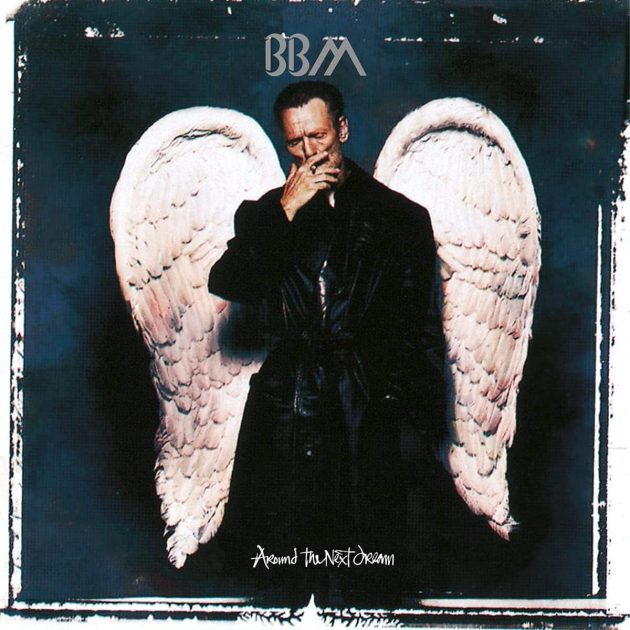
The resulting work, Around the Next Dream, was released in 1994 to significant commercial success.
Musically, the album was a direct descendant of the psychedelic blues found on Disraeli Gears.
Moore’s guitar work on tracks like “Waiting in the Wings” echoed the soaring solos of the late 60s while maintaining 90s production values.
Significantly, the album reached number nine on the UK Albums Chart, proving the public’s hunger for high-caliber blues-rock.
The chemistry between Bruce and Moore was particularly potent, as seen in their shared vocal duties and tight arrangements.
Critics often noted that Moore’s playing was more aggressive than Clapton’s, giving BBM a heavier edge.
Songs like Why Does Love (Have To Go Wrong?) showcased their ability to blend melancholy lyrics with explosive instrumental breaks.
The band embarked on a European tour, where their live performances became legendary for their extended improvisations.
During these shows, they would often revisit classics from the Wheels of Fire era, thrilling older fans.
This period represented a brief moment where the past and present of British rock collided with perfect precision.
Career Challenges and Internal Friction
Despite the success of the album, the old demons of the Baker-Bruce relationship began to resurface.
Ginger Baker was notoriously difficult to work with, and his relationship with Jack Bruce had been strained for decades.
Moore found himself caught in the middle of two dominant personalities who had a long history of professional and personal conflict.
In contrast to the harmony on the record, the backstage atmosphere during the tour was reportedly cold.
The band suffered from “supergroup syndrome,” where individual egos often overshadowed the collective goal.
Furthermore, the pressure to replicate the success of Cream led to creative frustrations within the trio.
By the time the tour concluded, the members decided to part ways rather than attempt a second album.
The Revival of Individual Paths
Following the dissolution of Baker Bruce Moore, each member returned to their prolific solo careers.
Jack Bruce continued to push boundaries, releasing experimental albums like Harmony Row and later, Out of the Storm.
Ginger Baker moved to South Africa, where he continued to record and maintain his reputation as rock’s most temperamental percussionist.
Gary Moore returned to his blues roots, further solidifying his status as a guitar god throughout the late 90s.
In 2005, a true revival occurred when the original Cream reunited for shows at the Royal Albert Hall.
Fans could witness the power of a Cream Stormy Monday video 2005 performance, showcasing that the old magic was still there.
While BBM never reunited, the respect between the musicians remained evident in later interviews.
Recognition and Musical Innovation
The legacy of Baker Bruce Moore is defined by their uncompromising commitment to musical excellence.
They are recognized for bridging the gap between the classic blues of the 70s and modern hard rock.
Significantly, their work is often cited by guitarists as a masterclass in the “less is more” philosophy of blues phrasing.
Each member has been inducted into various halls of fame, cementing their status as pioneers.
Baker Bruce Moore remains a vital chapter for anyone exploring the history of the Classic Rock Artists website.
Essential Discography
- Around the Next Dream (1994): The only studio album from the trio, featuring high-energy blues-rock and chart-topping singles.
- Goodbye (1969): While a Cream album, it features the template for the Baker-Bruce interaction used in BBM.
- Blind Faith (1969): The self-titled debut of Baker’s previous supergroup, essential for understanding his collaborative history.
- Baker Gurvitz Army (1974): A key project for Baker in the 70s, showcasing his transition into harder rock territories.
Click here to purchase Around the Next Dream on Amazon
Frequently Asked Questions
Why did Baker Bruce Moore break up?
The band dissolved primarily due to long-standing personal tensions between Ginger Baker and Jack Bruce, which made long-term collaboration impossible.
Is BBM considered a Cream clone?
While they shared two members and a similar power trio format, Gary Moore’s more modern and aggressive guitar style gave BBM a distinct sound separate from the 1960s group.
What was the band’s biggest hit?
“Where in the World” and “Waiting in the Wings” were popular tracks, but their most enduring piece of work is the complete album, which remains a favorite among blues-rock enthusiasts.
The legacy of Baker Bruce Moore serves as a testament to the enduring power of the blues and the unmatched talent of three master musicians.