

Lucky Man by Emerson, Lake and Palmer is one of the most enduring tracks in the progressive rock canon, a gentle folk ballad written by Greg Lake as a teenager that concludes with one of the most celebrated Moog synthesizer solos in music history.
Affiliate Disclosure: I am an Amazon affiliate and if you purchase through any amazon links on this site i may earn a small commission at no extra charge to you.
Appearing on the band’s self-titled debut album in 1970, the song was something of an afterthought when it was recorded, a simple song that Lake had written years earlier and offered up when the band needed one more track to complete the album.
What happened at the end of that session, when Keith Emerson improvised a Moog synthesizer solo over the outro, transformed it from a pleasant album filler into one of the most distinctive and recognisable recordings of its era.
| Song Title | Lucky Man |
| Artist | Emerson, Lake and Palmer |
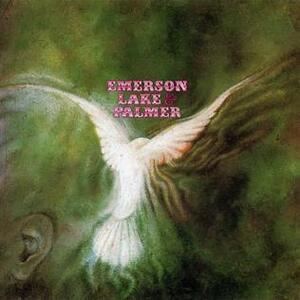
| Album | Emerson, Lake and Palmer (1970) |
| Released | 1970 (album track, later single) |
| Written By | Greg Lake |
| Producer | Greg Lake |
| Label | Island Records (UK), Cotillion Records (US) |
| Chart Peak | Did not chart as original single; became a classic rock radio staple |
| Notable For | Moog synthesizer solo by Keith Emerson |
Table of Contents
- What Is Lucky Man About?
- The Vibe: Genre, Mood, and Search Intent
- Behind the Lyrics: The Story of Lucky Man
- Technical Corner: Instruments and Production
- Legacy and Charts: Why This Classic Still Matters
- Listener’s Note: A Personal Take
- Collector’s Corner: Own a Piece of Rock History
- Frequently Asked Questions About Lucky Man
What Is Lucky Man About?
Lucky Man is a cautionary tale about a wealthy nobleman who has everything the world can offer, land, title, gold, beauty, and fine horses, but dies in a war, his luck and privilege unable to protect him from the randomness of mortality.
Greg Lake wrote the lyric as a teenager and has said it was a simple morality tale about the limits of worldly success, a theme that gave the song a philosophical weight unusual for a folk ballad written by a sixteen-year-old.
The final line, ‘And oh what a lucky man he was’, functions as bitter irony, the nobleman’s luck revealed to be an illusion, worth nothing at the moment it was most needed.
The Vibe: Genre, Mood, and Search Intent
The track moves through three distinct phases: an intimate acoustic folk ballad, a fuller rock arrangement, and then the extraordinary synthesizer coda that transforms the entire song in its final minutes.
- Genre: Progressive Rock, Folk Rock, Art Rock
- Mood: Reflective, Elegiac, Cosmic
- Tempo: Midtempo, building to expansive (~100 BPM)
- Best For: Progressive rock playlists, late-night listening, songs about fate and mortality
- Similar To: Yes “Roundabout”, Jethro Tull “Aqualung”, Free “All Right Now”
- Fans Also Search: Emerson Lake and Palmer discography, Keith Emerson Moog synthesizer, ELP debut album
Behind the Lyrics: The Story of Lucky Man
Greg Lake wrote the song when he was around sixteen years old, long before he joined King Crimson and then formed Emerson, Lake and Palmer with Keith Emerson and Carl Palmer.
The song was a piece of juvenilia that Lake had essentially forgotten about until the debut album sessions needed one more track to fill out the running time.
He recorded the basic acoustic guitar and vocal quickly, and the other band members added their parts with minimal rehearsal.
The recording might have remained an album deep cut had Keith Emerson not decided to add a Moog synthesizer part over the outro as an experiment.
Emerson had recently acquired one of the early Moog synthesizers and was still exploring its capabilities when he improvised the descending melodic line that closes the track.
That improvisation, recorded in a single take, became one of the most famous moments in progressive rock history and demonstrated to a generation of musicians what the synthesizer could do in a rock context.
Technical Corner: Instruments and Production
The core of this track is Greg Lake’s acoustic guitar performance and vocal, recorded with a warmth and intimacy that gives the song its folk character.
Lake produced the track himself, keeping the arrangement minimal through the verses and building gradually toward the rock section in the later passages.
Carl Palmer’s drumming enters subtly and builds to a more prominent role as the song progresses, never dominating but adding rhythmic purpose to what began as a solo performance.
Keith Emerson’s Moog synthesizer solo at the end of the song is a cascade of descending pitches with natural pitch instability characteristic of early analog synthesis.
The Moog at this time had no pitch correction and required physical manipulation of the pitch wheel to stay in tune, which gave Emerson’s lines their human, slightly imprecise quality.
The effect created by the synthesizer at this moment in 1970 was genuinely novel: most listeners had never heard that sound in a rock context, and it suggested possibilities for rock music that bands would spend the next decade exploring.
Greg Lake’s final vocal note is held under the Moog solo, creating a harmonic interaction between voice and synthesizer that is unexpectedly beautiful.
Legacy and Charts: Why This Classic Still Matters
Lucky Man appeared on the ELP debut album in 1970 and became one of the most played tracks on progressive rock radio throughout the decade, despite not being released as a conventional hit single in most markets.
Keith Emerson’s Moog solo at the end of the track is widely credited with introducing the synthesizer to a mainstream rock audience and demonstrating its expressive potential as a lead instrument.
The influence of that solo on subsequent keyboard-driven rock is incalculable, inspiring players from Rick Wakeman to Rick Wright to explore what synthesis could contribute to rock arrangements.
It appears on virtually every compilation of essential progressive rock and is routinely cited in discussions of the most important keyboard moments in rock history.
The song also stands as an unusual example of a piece of teenage juvenilia becoming a landmark recording, the accidental nature of its completion giving it a spontaneity that more deliberate compositions often lack.
Greg Lake performed the song as a solo artist throughout his career, and the song’s simple, direct emotional core has made it one of the most beloved pieces in ELP’s catalogue.
Listener’s Note: A Personal Take
I have heard it hundreds of times and the Moog solo still catches me when it arrives.
The song sets up the moment so well, building gradually from a gentle folk ballad to a fuller arrangement, that when the synthesizer enters at the end it feels like the arrival of something genuinely new.
What Emerson plays is not technically complicated but it is perfectly placed and the tone is unlike anything else in rock at that moment.
What moves me most is the combination of the lyric’s message about the futility of luck and the synthesizer’s sound at the end.
The Moog seems to embody exactly the cosmic indifference the lyric is describing, something vast and beautiful and completely unconcerned with the nobleman’s fate.
This is a song about mortality that ends with a sound that seems to belong to something much larger than any individual life.
Watch: Lucky Man by Emerson, Lake and Palmer
Collector’s Corner: Own a Piece of Rock History
Emerson, Lake and Palmer: Debut Album (1970)
Own the debut album that introduced the world to this track. Original Island Records and Cotillion pressings, remastered editions, and anniversary releases available.
Frequently Asked Questions About Lucky Man
Who wrote Lucky Man?
Lucky Man was written by Greg Lake, reportedly when he was around sixteen years old. Lake had the song in his back catalogue for years before offering it up as a last-minute addition to the ELP debut album sessions.
What is Lucky Man about?
The song is a morality tale about a wealthy nobleman who possesses every worldly advantage but dies in battle, his luck and privilege unable to protect him from mortality. The final line, ‘And oh what a lucky man he was’, functions as bitter irony.
What is the Moog synthesizer solo on Lucky Man?
Keith Emerson improvised the Moog synthesizer solo at the end of the song in a single take during the debut album sessions. The descending melodic cascade became one of the most celebrated keyboard moments in rock history and is widely credited with introducing the synthesizer to a mainstream rock audience.
What album is Lucky Man on?
Lucky Man appears on Emerson, Lake and Palmer’s self-titled debut album, released in 1970 on Island Records in the UK and Cotillion Records in the US. The album established the trio as one of the leading progressive rock acts.
Who produced the song?
The song was produced by Greg Lake, who recorded the basic acoustic guitar and vocal himself before the other band members added their parts. The minimal, spontaneous recording process contributed to the track’s organic quality.
Was the recording spontaneous?
Yes. The song was added to the album sessions at the last minute when additional material was needed. Keith Emerson’s Moog synthesizer solo was improvised in a single take and recorded without planning. The accidental nature of the recording is part of what gives the track its spontaneous energy.
What label released the album?
The song was released on Island Records in the UK and Cotillion Records in the US as part of the ELP debut album in 1970. Island Records was home to many of the most important progressive and art rock acts of the early 1970s.
Is the Moog solo a landmark in synthesizer history?
Yes. Keith Emerson’s Moog solo is widely considered one of the most significant moments in the history of the synthesizer in rock, demonstrating the instrument’s expressive potential and inspiring a generation of keyboard players to explore its possibilities.
You Might Also Like
Black Sabbath: Iron Man (1970)
Released the same year as Lucky Man, Iron Man represents a very different vision of 1970 heavy rock, making the two songs a fascinating study in the contrasting directions rock was taking at the dawn of the decade.
Free: All Right Now (1970)
Another 1970 classic that shares this song’s year of release, All Right Now demonstrates the breadth of great rock music produced in that pivotal year for heavy and progressive music.
Black Sabbath: Paranoid (1970)
A fellow 1970 landmark from the heavier end of the rock spectrum, Paranoid and this track together show just how wide the creative range of that single year really was.
Decades on, Lucky Man by Emerson, Lake and Palmer endures as one of the greatest songs in classic rock history, a recording that has outlasted trends and generations to remain as vital and exciting as the day it was made.