

Aqualung by Jethro Tull is one of the most recognisable and musically complex songs in progressive rock, a track that opens with one of the great guitar riffs in rock history before expanding into a meditation on religion, homelessness, and human dignity.
Affiliate Disclosure: I am an Amazon affiliate and if you purchase through any amazon links on this site i may earn a small commission at no extra charge to you.
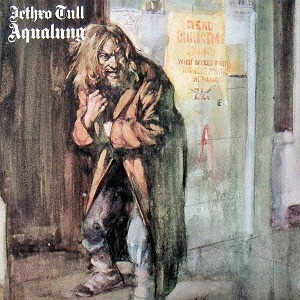
Written by Ian Anderson and his then-wife Jennie Anderson after Jennie photographed a homeless man near the Thames, it became the title track of the band’s fourth studio album and one of the most discussed and debated songs in rock.
The song’s juxtaposition of its powerful guitar riff with a compassionate and morally serious lyric gave the track a depth that set it apart from most hard rock of its era.
| Song Title | Aqualung |
| Artist | Jethro Tull |
| Album | Aqualung (1971) |
| Released | 1971 (single/album track) |
| Written By | Ian Anderson, Jennie Anderson |
| Producer | Terry Ellis, Ian Anderson |
| Label | Chrysalis Records |
| Chart Peak | #33 UK Singles Chart |
Table of Contents
- What Is Aqualung About?
- The Vibe: Genre, Mood, and Search Intent
- Behind the Lyrics: The Story of Aqualung
- Technical Corner: Instruments and Production
- Legacy and Charts: Why This Classic Still Matters
- Listener’s Note: A Personal Take
- Collector’s Corner: Own a Piece of Rock History
- Frequently Asked Questions About Aqualung
What Is Aqualung About?
Aqualung is a portrait of a homeless man observed on the streets of London, sketched with enough compassion to make him real and enough moral weight to challenge the listener’s comfortable distance from poverty.
Ian Anderson wrote the lyric after his wife Jennie showed him photographs she had taken of homeless people near the Thames, and the images of the men she captured gave the song its specific and human detail.
The song also functions as an implicit critique of institutional religion, which Aqualung Part 2 makes explicit, arguing that the organised church has abandoned the people who need compassion most while preserving its own wealth and power.
The Vibe: Genre, Mood, and Search Intent
The track alternates between two completely distinct musical worlds within a single track, the crushing riff-driven rock sections that represent the man’s harsh physical reality and the delicate acoustic passages that reveal his inner life.
- Genre: Progressive Rock, Hard Rock, Folk Rock
- Mood: Bleak, Compassionate, Powerful
- Tempo: Variable, from acoustic (~70 BPM) to hard rock (~120 BPM)
- Best For: Progressive rock playlists, songs with serious themes, classic rock deep cuts
- Similar To: Jethro Tull “Thick as a Brick”, Yes “Roundabout”, Emerson Lake and Palmer “Lucky Man”
- Fans Also Search: Jethro Tull discography, Ian Anderson flute, Aqualung album concept
Behind the Lyrics: The Story of Aqualung
Jennie Anderson’s photographs of a homeless man sleeping near the Thames gave Ian Anderson the specific visual material he needed to write the song, and the opening verses read almost like a photographic description.
The name Aqualung itself came from Jennie’s suggestion, inspired by the man’s laboured, wheezing breathing, which sounded to her like scuba equipment.
Ian Anderson built the lyric in two distinct movements, the first a portrait of the man himself, the second a broader philosophical argument about religion and the failure of institutions to care for the vulnerable.
Produced by Terry Ellis and Anderson, the track was recorded at Island Studios in London in late 1970 and early 1971, with Anderson conducting an orchestra as well as playing guitar and flute.
Martin Barre‘s guitar work on this track is among the most celebrated in progressive rock, the opening riff in particular having been cited by countless rock guitarists as one of the greatest in the genre.
The song reached number 33 on the UK Singles Chart but became far more significant as an album track, a centrepiece of one of the most important progressive rock albums of the 1970s.
Technical Corner: Instruments and Production
The opening guitar riff is played on a Gibson Les Paul, tuned slightly lower than standard to give it additional weight.
The riff is built on a chromatic descending figure that creates a sense of relentless downward pressure, matching the lyric’s vision of a man ground down by circumstance.
Ian Anderson’s flute, one of rock’s most distinctive instruments, is used throughout the acoustic sections to provide a contrasting voice, melodic and plaintive against the guitar’s aggression.
The acoustic guitar passages were recorded with an intimacy that places the listener close to the instrument, creating a chamber-music quality that makes the hard rock sections even more forceful by contrast.
John Evan’s keyboard work is subtle but important, adding harmonic colour in the background without drawing attention away from the guitar and flute interplay.
The drum performance by Clive Bunker is particularly strong in the rock sections, with a controlled power that gives the arrangement its physical authority.
Terry Ellis and Ian Anderson’s production captures the full dynamic range of the song, from the whispered acoustic passages to the full-band attack of the hard rock sections, without sacrificing clarity at either extreme.
Legacy and Charts: Why This Classic Still Matters
The song has become one of the most analysed tracks in progressive rock, with its lyrical combination of social observation and religious critique generating decades of academic and critical discussion.
Ian Anderson has repeatedly had to clarify that the album was not intended as a concept album about religion, despite the thematic coherence of the LP’s second half, which argues that institutionalised faith is a human construction rather than divine truth.
The song appears on virtually every list of essential progressive rock tracks and is cited by rock guitarists as a touchstone of riff writing, Martin Barre’s opening figure being consistently ranked among the great rock guitar openings.
Jethro Tull performed the song as a centrepiece of their live shows throughout their career, and Ian Anderson continues to perform it as a solo artist.
The song has appeared in films, television programmes, and documentaries dealing with themes of homelessness and social justice, its specific compassionate portrait of one man giving it a relevance that abstract political songs rarely sustain.
Rolling Stone included it among the greatest songs in rock history, and its combination of musical complexity and lyrical seriousness remains a model for what progressive rock at its best can achieve.
Listener’s Note: A Personal Take
Martin Barre’s opening riff is one of those sounds that arrives in the memory fully formed, a piece of rock guitar that cannot be improved upon or imagined differently.
Hearing it for the first time as a teenager, I noticed the riff before I understood the lyric.
By the second listen the words began to register, and by the third I understood that this was a song with something genuinely important to say.
What strikes me now is how the music serves the lyric so precisely.
The hard riff sections are about the man’s suffering.
The acoustic sections are about his inner life, the small dignities he holds onto.
Ian Anderson understood that a song about a complicated subject required a complicated musical structure, and he delivered one of the most fully realised pieces in the rock repertoire.
Watch: Aqualung by Jethro Tull
Collector’s Corner: Own a Piece of Rock History
Jethro Tull: Aqualung (1971)
Own the album that gave the world this landmark track. Original Chrysalis pressings, anniversary editions, and Steven Wilson remixes all available.
Frequently Asked Questions About Aqualung
Who wrote Aqualung?
Aqualung was written by Ian Anderson and Jennie Anderson (his then-wife). The lyric was inspired by photographs Jennie took of homeless men near the Thames in London.
What is Aqualung about?
The song is a portrait of a homeless man on the streets of London, written with compassion and moral seriousness. The song’s second movement critiques institutional religion for abandoning the vulnerable people it claims to serve.
What is the opening guitar riff of Aqualung?
The opening guitar riff is played by Martin Barre on a Gibson Les Paul, tuned slightly below standard for additional weight. It is built on a chromatic descending figure and is consistently ranked among the greatest rock guitar openings.
What album is Aqualung on?
Aqualung appears on the Jethro Tull album of the same name, released on Chrysalis Records in 1971. The album is widely considered one of the greatest progressive rock recordings and one of the most important albums of the 1970s.
Was it a concept album?
Ian Anderson has always maintained that the album was not a concept album, despite the thematic coherence of its second half, which deals with organised religion and faith. Anderson has said the album is simply a collection of songs connected by shared themes.
Who produced the album?
The album was produced by Terry Ellis and Ian Anderson. Ellis was the co-founder of Chrysalis Records and one of the most important figures in British rock management and production during the 1970s.
Is Martin Barre’s guitar riff famous?
Yes. Martin Barre’s opening riff is one of the most celebrated in progressive and classic rock, consistently ranked among the great guitar figures in rock history. Barre played a Gibson Les Paul, slightly detuned, to achieve the riff’s distinctive heaviness.
Did Ian Anderson play flute on the record?
Yes. Ian Anderson’s flute is one of the most distinctive sounds on the album, used most prominently in the acoustic sections of the title track. Anderson’s flute playing was one of Jethro Tull’s most recognisable trademarks throughout their career.
You Might Also Like
John Lennon: Imagine (1971)
Released the same year, Imagine shares its seriousness of purpose and its willingness to use a pop rock song as a vehicle for a genuine moral argument.
Elton John: Tiny Dancer (1971)
Another 1971 classic that demonstrates the extraordinary creative range of that year in rock, Tiny Dancer’s romantic sweep and orchestral production provide a very different kind of emotional experience from the song’s moral weight.
Deep Purple: Smoke on the Water (1972)
From the following year, Smoke on the Water is the other great hard rock riff of the era, making it a natural companion piece for anyone exploring the outer edges of early 1970s heavy rock.
Decades on, Aqualung by Jethro Tull endures as one of the greatest songs in classic rock history, a recording that has outlasted trends and generations to remain as vital and exciting as the day it was made.