

Imagine by John Lennon is one of the most performed and most debated songs in popular music history.
Affiliate Disclosure: I am an Amazon affiliate and if you purchase through any amazon links on this site i may earn a small commission at no extra charge to you.
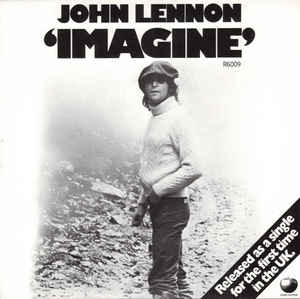
Released on October 11, 1971 in the UK, Imagine reached number 1 on the UK Singles Chart.
Written by John Lennon and produced by Lennon, Yoko Ono, and Phil Spector, Imagine appeared on the 1971 album of the same name.
Furthermore, Imagine combines a simple piano melody with a lyric of remarkable philosophical ambition.
Indeed, few songs have asked as much of their listeners or given as much back.
| Song Title | Imagine |
|---|---|
| Artist | John Lennon |
| Album | Imagine (1971) |
| Released | October 11, 1971 (UK) |
| Genre | Soft Rock, Art Rock, Piano Rock |
| Label | Apple Records |
| Writer | John Lennon |
| Producer | John Lennon, Yoko Ono, Phil Spector |
| Peak Chart | #1 UK / #3 US (1971) |
- What Is the Song About?
- The Vibe: Genre, Mood, and Feel
- Behind the Lyrics
- How It Was Made: The Sound and Production
- Legacy and Charts: Impact and Endurance
- A Listener’s Note
- Watch the Official Video
- Collector’s Corner
- Frequently Asked Questions
What Is the Song About?
The song asks listeners to picture a world without the divisions that cause conflict.
There are no countries, no religions, and no possessions in the world Lennon describes.
However, the song is not a political tract.
It is an invitation rather than a demand.
Lennon frames each idea with the phrase “imagine” as a gentle prompt rather than an instruction.
Notably, the recording carries no anger.
The piano melody and Lennon’s vocal are both unhurried and warm.
As a result, Imagine reaches listeners who might resist the same ideas in a more confrontational form.
The song succeeds because it makes its vision feel achievable rather than utopian.
For many listeners, it remains the clearest single statement of what Lennon believed music could do.
The Vibe: Genre, Mood, and Feel
The song sits within the soft rock and piano rock traditions of the early 1970s.
The arrangement is deliberately spare.
Piano, strings, and Lennon’s voice carry almost the entire weight of Imagine.
Moreover, the production by Phil Spector adds a gentle warmth without adding clutter.
The mood throughout is reflective and generous.
There is no urgency in the performance.
In particular, the tempo creates a quality of spaciousness that matches the lyric’s subject matter.
The strings arrive late and underline rather than overpower.
Similarly, Lennon’s piano playing is simple and unhurried throughout.
The result is a recording that feels both intimate and universally addressed at the same time.
Behind the Lyrics
The lyric of Imagine draws directly on Yoko Ono’s conceptual art book Grapefruit, published in 1964.
Ono’s book used instructional prompts that asked readers to picture various states of being.
However, Lennon did not credit Ono as a co-writer when it was first released.
He later acknowledged her contribution publicly, saying the song was “just what Yoko and I believe.”
Furthermore, the lyric reflects Lennon’s reading of radical humanist philosophy.
The line about possessions is the most personal.
Lennon wrote the song while living at Tittenhurst Park, a large country estate, which made the lyric deliberately ironic.
Consequently, this invites the critique that it was written by a wealthy man asking others to give up wealth.
Lennon acknowledged this tension directly in interviews.
At the same time, the song does not pretend the change it describes would be easy or without cost.
How It Was Made: The Sound and Production
Imagine was recorded at Tittenhurst Park in Ascot, England, in May 1971.
Additional recording took place at Record Plant in New York.
In addition, Phil Spector mixed and co-produced the recording during sessions in New York.
Lennon performed the piano part of Imagine live in the studio without overdubs.
The string arrangement was recorded at Abbey Road Studios in London.
Additionally, Spector’s contribution was more restrained than his Wall of Sound work elsewhere.
He understood that the song required space rather than density.
The vocal performance was recorded in a single session.
Meanwhile, Yoko Ono was present throughout the Imagine recording sessions and contributed to creative decisions.
The final mix preserves the piano as the dominant element from beginning to end.
Legacy and Charts: Impact and Endurance
Imagine reached number 1 on the UK Singles Chart in 1971.
In the United States, the song peaked at number 3 on the Billboard Hot 100 on its original release.
However, it returned to the charts multiple times after Lennon’s death in December 1980.
It reached number 1 in the UK again following his murder and became the signature song of his memorial.
Furthermore, the song has been covered by hundreds of artists across every genre.
Rolling Stone magazine has consistently ranked the song among the greatest songs ever recorded.
In particular, the song’s political resonance has made Imagine the anthem of choice at peace rallies and humanitarian events worldwide.
Yoko Ono finally received a co-writing credit on Imagine in 2017.
As a result, the official record now reflects the genuine collaborative origin of the lyric.
The recording remains the defining statement of Lennon’s solo career and one of the central documents of twentieth-century popular culture.
A Listener’s Note
The opening piano figure is one of the most recognizable sounds in recorded music.
Those first four bars signal that something genuinely considered is about to happen.
Moreover, the simplicity of Imagine rewards full attention.
The lyric is more carefully constructed than it first appears, with each verse building on the one before.
Watch the Official Video
Watch John Lennon performing Imagine in this official video:
Collector’s Corner
Original Apple Records pressings of the Imagine single from 1971 are valued by collectors of rock history.
In particular, UK pressings with the original Apple label and picture sleeve in strong condition are consistently sought after.
Similarly, original vinyl pressings of this album carry an analog warmth that later digital formats do not fully replicate.
You Might Also Like
Bob Marley’s most universally loved recording combined memories of Trenchtown life with a message of comfort that has reached listeners across every culture and generation for fifty years.
Cat Stevens’s farewell to a departing lover became a song about the difficulty of caring for someone you can no longer protect, a meditation on love and its limits that has resonated across generations.
Neil Young’s only US number one combined Nashville simplicity with a lyric about searching for something real, a song that defined the early 1970s singer-songwriter moment with lasting authority.
Frequently Asked Questions
What is Imagine about?
The song asks listeners to picture a world without national borders, organized religion, or private property. Lennon frames each idea as an invitation rather than a demand, using the word “imagine” to soften the radical nature of the vision. The song draws on concepts from Yoko Ono’s conceptual art book Grapefruit and from Lennon’s reading of humanist philosophy. The song reaches listeners across political lines because it presents its ideas with warmth rather than anger.
Who wrote and produced the recording?
Imagine was written by John Lennon, with significant conceptual contributions from Yoko Ono, who received an official co-writing credit in 2017. The recording was produced by John Lennon, Yoko Ono, and Phil Spector. Spector’s production on Imagine was notably restrained compared to his Wall of Sound work, understanding that the song required space rather than layering.
Where was the song recorded?
Imagine was recorded at Tittenhurst Park in Ascot, England, in May 1971, with additional recording and mixing at Record Plant in New York. The string arrangement was recorded at Abbey Road Studios in London. Lennon played the piano part live in the studio, preserving the natural feel of the performance rather than assembling it from multiple takes.
How did Imagine chart?
Imagine reached number 1 on the UK Singles Chart in 1971. In the United States, it peaked at number 3 on the Billboard Hot 100 on original release. After Lennon’s murder in December 1980, it returned to the top of the charts in several countries and has re-entered charts multiple times since, making it one of the most enduringly popular songs in chart history.
Did Yoko Ono co-write the recording?
Yoko Ono contributed significantly to the conceptual framework of Imagine, drawing on her book Grapefruit, which used instructional prompts asking readers to imagine various states of being. Lennon acknowledged her contribution publicly in interviews but did not credit her as co-writer at the time. In 2017, Ono received an official co-writing credit on Imagine, formally recognizing what Lennon himself had long acknowledged.
What album is the song from?
Imagine is the title track and opening song of Lennon’s second solo studio album, released on Apple Records in September 1971. The album also produced on Apple Records reached number 1 in both the UK and US. It is widely regarded as Lennon’s finest solo work and one of the essential albums of the early 1970s singer-songwriter era.
How has the song been used in public life?
Imagine has been performed at major world events including the opening ceremony of the 2012 London Olympics and the 2001 Concert for New York City following the September 11 attacks. It has been used as an anthem at peace demonstrations, humanitarian campaigns, and memorials across the world. Furthermore, the song has been covered by hundreds of artists, making it one of the most performed pieces of music in the last fifty years.
Why does Imagine endure as a classic?
Imagine endures because the world it describes has not yet arrived. The gap between Lennon’s vision and current reality keeps the song perpetually relevant. Additionally, the musical simplicity makes it accessible to anyone regardless of background or language. The combination of an achievable-sounding vision, a gentle piano melody, and Lennon’s direct vocal delivery creates a recording that continues to move listeners fifty years after its creation.
The song endures because the world it imagines has not yet been built, and that gap keeps it alive.