Break On Through (To the Other Side) by The Doors (1967): The Debut That Lit the Fuse
Break on through to the other side the doors, five words that arrived in January 1967 and immediately told you this was not like anything else on the radio.
This was the opening statement of one of rock’s most dangerous bands, and half a century later it still opens with the energy of a door being kicked off its hinges.
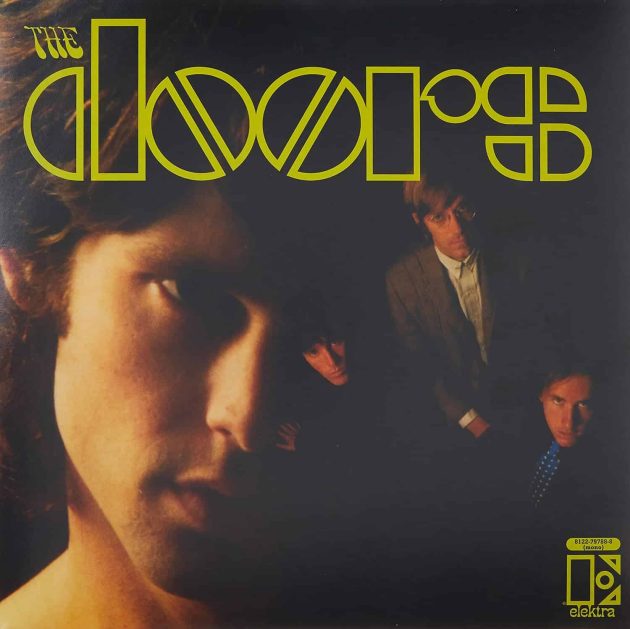
Get The Doors (1967) on Vinyl or CD at Amazon.
Affiliate Disclosure: I am an Amazon affiliate and if you purchase through any amazon links on this site i may earn a small commission at no extra charge to you. This helps support classicrockartists.com and allows me to keep providing deep-dive content on the legends of rock. Thank you for your support!
Quick Navigation
What is the Meaning of Break On Through (To the Other Side) by The Doors?
“Break On Through (To the Other Side)” is Jim Morrison’s call to destroy the psychological and cultural barriers that separate ordinary consciousness from a deeper, wilder reality. Rooted in Morrison’s reading of William Blake and Aldous Huxley, the song argues that liberation, emotional, sexual, and spiritual, lies just beyond the wall society builds around you.
The Vibe: Genre, Mood, and Search Intent
This track hits like a controlled detonation: urgent, tight, and coiled with energy that never fully releases.
It doesn’t sprawl the way some of The Doors’ longer pieces do, it attacks in under two and a half minutes and leaves a crater.
- Genre: Psychedelic Rock, Proto-Punk, Garage Rock
- Mood: Urgent, Defiant, Liberatory
- Tempo: Driving, relentless bossa nova pulse
- Best For: Starting a road trip, first-song-of-the-night playlists, the opening minute of a workout
- Similar To: Cream’s “I Feel Free”, a similar sense of euphoric boundary-breaking in the same era
- Fans of The Doors also search: “best psychedelic rock songs 1960s,” “Jim Morrison poetry and music,” “The Doors debut album ranked”
Behind the Lyrics: The Story of Break On Through (To the Other Side)
Jim Morrison arrived at The Doors’ early rehearsals already saturated in William Blake, Nietzsche, and Aldous Huxley’s The Doors of Perception, the very book that gave the band its name.
The concept of a membrane between ordinary waking life and a more intense mode of experience was not abstract poetry to Morrison; it was a personal obsession.
When the band began shaping what would become their debut single, Morrison channeled that obsession directly into the lyric, with the narrator urging a lover, and by extension the listener, to stop standing at the threshold and step through it.
The original lyric included the phrase “she gets high,” a reference that radio programmers at the time found unacceptable.
The label required the band to replace it with the now-famous truncated “she gets”, leaving a blunt, slightly absurd gap that Morrison hated but which, ironically, gives the word an almost percussive quality on record.
The full, uncensored version remained in heavy rotation at live shows, where Morrison frequently restored the original lyric with visible satisfaction.
For deeper context on the song’s place in The Doors’ catalogue, the Wikipedia entry for “Break On Through” documents the censorship history and recording timeline in detail.
Technical Corner: The Gear Behind Break On Through (To the Other Side)
The rhythmic engine of “Break On Through” is John Densmore’s bossa nova drum pattern, a deliberate choice that gives the song its coiled, forward-leaning momentum without ever tipping into chaos.
Densmore had trained in jazz and it shows: the kick-snare pattern is economical and precise, leaving space for everything else to breathe.
Ray Manzarek anchored the low end using the Vox Continental organ’s bass octave keys with his left hand, a necessity born of The Doors having no dedicated bassist.
His right hand delivered the song’s stabbing, repetitive organ riff, a two-note motif so simple it almost sounds obvious until you realize nothing else would have worked as well.
Robby Krieger’s guitar part is tight and percussive, locked into Densmore’s groove rather than soloing over it.
The track was produced by Paul A. Rothchild and recorded at Sunset Sound in Hollywood.
Rothchild’s production philosophy on the debut was to capture the band live with as little studio embellishment as possible, and “Break On Through” reflects that: it sounds like four people in a room playing as one unit, which at that stage in 1966, they were.
Legacy and Charts: Why Break On Through (To the Other Side) Still Matters
Commercially, “Break On Through” was not an immediate success: it peaked at number 126 on the Billboard Hot 100 in early 1967, failing to crack the top 100 on its original release.
Radio programmers were wary of Morrison and the song’s barely concealed edge, and the censored lyric stripped some of the track’s internal logic.
The real vindication came later, when the song became the lead track on The Doors’ debut album, which eventually climbed to number two on the Billboard 200 on the back of “Light My Fire” and never left the cultural conversation again.
The song has been licensed for dozens of films and television productions over the decades, and it remains the quintessential choice for any director who needs to signal that a character is about to do something they cannot take back.
It was inducted into the Grammy Hall of Fame as part of The Doors’ debut album’s broader recognition, and Rolling Stone has consistently placed it among the greatest rock songs ever recorded.
Listener’s Note: A Personal Take on Break On Through (To the Other Side)
The first time I put the debut LP on a turntable and the needle dropped into that bossa nova kick pattern, I remember thinking: this band is not trying to entertain you.
They are trying to unsettle you.
There is a quality to Manzarek’s organ stab, that two-note figure hammered over and over, that feels less like music and more like someone knocking on a wall, testing to see if it’s hollow.
Morrison’s vocal delivery in the verses is almost conversational, which makes the moment the chorus breaks open land harder than if he’d been screaming from bar one.
It’s a short song, under two and a half minutes, and that brevity is part of the power: it arrives, it detonates, and it’s gone before you’ve fully processed what just happened.
Collector’s Corner: Own Break On Through (To the Other Side) on Vinyl or CD
The Doors’ 1967 self-titled debut is the essential place to hear “Break On Through” the way it was meant to be heard, as the opening broadside of one of rock’s most complete debut records.
The 180-gram reissue pressing has excellent clarity on Densmore’s drum transients and Manzarek’s low-end organ work.
Get The Doors (1967) on Vinyl or CD at Amazon.
Affiliate Disclosure: I am an Amazon affiliate and if you purchase through any amazon links on this site i may earn a small commission at no extra charge to you.
Frequently Asked Questions About Break On Through (To the Other Side)
Who wrote “Break On Through (To the Other Side)”?
“Break On Through” is credited to all four members of The Doors: Jim Morrison, Ray Manzarek, Robby Krieger, and John Densmore. Morrison supplied the central lyric concept and vocal melody, while the arrangement, including Densmore’s signature bossa nova drum pattern, was developed collaboratively during the band’s rehearsals at the London Fog club on the Sunset Strip in 1966.
What album is “Break On Through” from?
The song is the opening track on The Doors’ self-titled debut album, released in January 1967 on Elektra Records. It was also released as the band’s debut single, though it failed to chart significantly at the time. The album itself became one of the defining records of the psychedelic rock era.
Why was “Break On Through” censored?
The original lyric contained the phrase “she gets high,” which Elektra Records required the band to change for radio play due to the line’s explicit drug reference. The released single features the truncated “she gets,” omitting the final word. Morrison restored the original lyric regularly in live performances and reportedly never accepted the edit.
Did “Break On Through” chart?
The original 1967 single peaked at a modest number 126 on the Billboard Hot 100, making it a commercial disappointment on release. Its stature grew enormously over the following decades through album sales, radio play, and film licensing, and it is now considered one of the landmark debut singles in rock history.
You Might Also Like
Light My Fire – Story & Meaning (1967)
The other half of The Doors’ debut-era one-two punch, where Robby Krieger’s flamenco guitar instincts turned a three-minute single into a seven-minute album centerpiece.
Riders on the Storm – Story & Meaning
The polar opposite in tempo and texture, where “Break On Through” ignites, “Riders on the Storm” drifts through Morrison’s final recording sessions like smoke through rain.
Members of The Doors: Complete Story & Where Are They Now
Understand the four individuals whose chemistry produced this debut, and trace what each of them built, and survived, in the decades since.