

John Densmore: Biography & The Drummer Who Said No
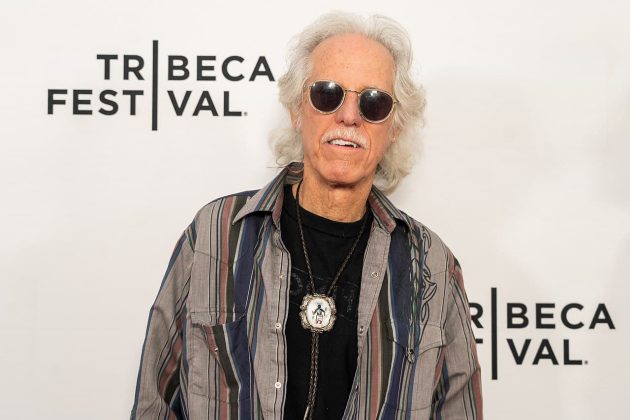
John Densmore is the jazz-trained drummer who powered one of rock music’s most singular and enduring bands, The Doors, through six extraordinary studio albums and a cultural conversation that has never quieted.
He brought a rhythmic intelligence rooted in jazz to a group that famously had no bassist, filling every sonic gap with taste, dynamics, and percussive precision that set him apart from every other rock drummer of his generation.
Born in 1944 in Santa Monica, California, John Densmore came of age in Los Angeles at the exact moment music and politics were reshaping each other, and he helped reshape both.
Yet beyond the stage, it is his moral courage that defines him most sharply against the classic rock archetype.
He turned down offers reportedly worth more than fifteen million dollars in combined licensing fees, fought former bandmates in court to protect The Doors’ name, and built a post-band life anchored in writing, activism, and the defence of artistic integrity.
This biography traces every chapter of John Densmore, from his earliest drumming lessons through his place among rock’s most principled and innovative percussionists.
Few rock musicians can claim both genuine musical innovation and decades of principled public advocacy as a legacy, but John Densmore occupies that rare space with total conviction.
John Densmore on Amazon
Vinyl, CDs, his memoirs Riders on the Storm and The Doors: Unhinged — all in one place.
Affiliate Disclosure: I am an Amazon affiliate and if you purchase through any amazon links on this site i may earn a small commission at no extra charge to you.
Table of Contents (Click to Expand)
- Early Life and the Making of a Jazz-Fired Drummer
- First Steps: Pre-Doors Bands and the Road to Venice Beach
- John Densmore and The Doors: Building an American Rock Legend
- Career Challenges: Loss, Tinnitus, and Life Without Morrison
- John Densmore in the Courtroom: Protecting The Doors’ Legacy
- Revival, Memoirs, and a Life in Words
- Recognition and the Hall of Fame
- John Densmore’s Essential Discography with The Doors
- Frequently Asked Questions About John Densmore
Early Life and the Making of a Jazz-Fired Drummer
John Paul Densmore was born on December 1, 1944, in Santa Monica, California, and grew up in the Canoga Park neighbourhood of the San Fernando Valley in Los Angeles.
His family was not professionally musical, but John Densmore showed a natural pull toward rhythm from an early age, eventually setting aside childhood clarinet lessons to focus entirely on the drum kit.
He pursued formal drum instruction during his teenage years and threw himself into the vocabulary of jazz, studying the work of innovative percussionists including Elvin Jones and Philly Joe Jones.
He was equally captivated by the rhythmic complexity of Indian classical music, particularly the work of sitarist Ravi Shankar, whose polyrhythmic sensibility would later surface in the unusual time feels and global textures Densmore brought to The Doors.
Densmore enrolled at Santa Monica City College and later pursued studies in Los Angeles, where the city’s thriving counterculture scene provided an education no classroom could match.
His appetite for jazz, world music, and improvisation set him apart from peers who were still copying the beat patterns of Chuck Berry records.
First Steps: Pre-Doors Bands and the Road to Venice Beach
Before The Doors existed, John Densmore was already active in the Los Angeles music scene, playing with local groups and sharpening the dynamic range that would soon define his recorded work.
A pivotal connection came through his practice of transcendental meditation, which placed him in the same circle as guitarist Robby Krieger.
Together, Densmore and Krieger were playing locally when their paths crossed with keyboardist Ray Manzarek and a young UCLA film student and poet named Jim Morrison.
Morrison had spent months on the rooftop of a Venice Beach building writing songs and poetry, and when Manzarek heard him recite the lyrics that would become “Moonlight Drive,” the blueprint for The Doors took shape immediately.
The four musicians formed The Doors in 1965, rehearsing intensively and building a sound that fused blues, jazz, and psychedelia into something Los Angeles had not yet produced.
Just as acts like the Jefferson Airplane were electrifying the San Francisco scene, The Doors were carving out their own distinctly dark and literary Los Angeles identity across the clubs of the Sunset Strip.
A residency at the Whisky a Go Go sharpened their performance into something formidable and sometimes dangerous, setting the stage for a recording deal with Elektra Records.
John Densmore and The Doors: Building an American Rock Legend
The Doors released their self-titled debut, The Doors, in January 1967, an album that announced their arrival with the confidence of a band that had spent two years perfecting every arrangement.
It opened with Break on Through (To the Other Side), a frenetic, driving track that showcased John Densmore’s ability to lock into an unstoppable groove while leaving space for Morrison’s voice to dominate the centre.
The album also contained the sprawling eleven-minute epic The End, a ritualistic, improvised meditation that pushed rock’s structural limits further than almost anyone had attempted.
On that track, Densmore’s percussion was barely audible at times, a hushed wash of brushes and restrained strikes that made Morrison’s spoken passages feel like a genuine ceremony rather than a performance.
The album’s commercial breakthrough arrived with Light My Fire, a seven-minute rock landmark built on John Densmore’s iconic Latin-inflected, rumba-tinged drum pattern, which gave the song its unmistakable propulsion.
That single reached number one in the United States in the summer of 1967, making The Doors one of the biggest acts in the country almost overnight.
The Albums That Defined a Generation
The Doors released Strange Days later in 1967, a darker and more experimental follow-up that deepened the band’s psychedelic reach and proved the debut was no fluke.
The album showcased Densmore’s ability to shift between intensity and extreme delicacy within a single track, nowhere more vividly than on the closing epic When the Music’s Over, a seventeen-minute live-studio piece that remains one of the most demanding recordings in the band’s catalogue.
In 1968, Waiting for the Sun became the band’s only album to reach number one in the United States, driven in part by the anthemic hit Hello, I Love You.
The more orchestrated The Soft Parade arrived in 1969, a divisive record that polarised critics but produced the horn-driven pop hit Touch Me, which reached the top five.
John Densmore reportedly expressed reservations about the album’s heavy use of session musicians and orchestral arrangements, believing they pulled the band away from the raw four-piece energy that had made them extraordinary.
The band answered that criticism directly with Morrison Hotel in 1970, a blues-driven return to stripped-back recording that let the instruments breathe and the players interact with immediate honesty.
The album produced Roadhouse Blues, one of the most enduring tracks in the entire Doors catalogue, a relentless rolling blues number that has never left classic rock radio in more than fifty years.
Densmore’s drumming on Roadhouse Blues is elemental: a rhythmic push that never lets up, perfectly matched to the song’s unstoppable forward momentum.
John Densmore’s Drumming Style: Jazz at the Heart of Rock
What separated John Densmore from the era’s power drummers was not volume or aggression, but musical intelligence and compositional awareness.
His jazz training gave him the capacity to think beyond the beat, to treat silence as a structural element, and to serve the whole band’s sound rather than dominate it.
He could shift from a flamenco-inflected feel to a thunderous climax within a single song, responding to Morrison’s vocal shifts in real time the way a jazz drummer shadows an improvising soloist.
Because The Doors famously had no bassist, Manzarek covered the bass lines on a keyboard pedal setup, which meant John Densmore had to simultaneously provide rhythmic grounding and create space for the melody.
The result was a drumming approach unlike any other in rock, blending the improvisational freedom of jazz with the physicality of the blues.
The Doors’ final studio album with Morrison, L.A. Woman, released in April 1971, is widely considered both a masterpiece and the most emotionally complex work John Densmore ever committed to tape.
The sprawling title track, L.A. Woman, finds Densmore at his most loose and joyous, riding a funky blues groove with an ease that belied the personal tensions within the band at the time.
The album’s haunting closer, Riders on the Storm, became one of the most recognisable recordings in rock history, its atmospheric piano and Morrison’s whispered vocal riding above Densmore’s softly insistent, rain-like brushwork on the cymbals.
Career Challenges: Loss, Tinnitus, and Life Without Morrison
Jim Morrison died in Paris on July 3, 1971, at the age of 27, just three months after the release of L.A. Woman.
His death devastated John Densmore personally, shattering a creative partnership that had defined his entire professional life and leaving a silence no drummer could fill.
The three surviving members released two albums without their frontman, Other Voices (1971) and Full Circle (1972), before formally dissolving the band in 1973.
Densmore and Krieger subsequently formed The Butts Band, a roots-rock project that released two albums in the mid-1970s and blended hard rock with reggae, though it never captured the alchemical intensity of The Doors.
John Densmore also confronted a serious personal health challenge throughout this period: tinnitus, the persistent ringing in the ears caused by years of exposure to high stage volumes.
He has spoken candidly about the condition over the years, framing it as both a physical cost of the craft and a reason he has always been deliberate about the live commitments he accepts.
These were years of genuine difficulty, but they were also the years in which John Densmore began building the second act of his life as a writer and advocate.
John Densmore in the Courtroom: Protecting The Doors’ Legacy
No chapter of John Densmore’s post-Doors life attracted more public attention than his principled stand against the commercial exploitation of the band’s music.
He reportedly refused offers worth more than fifteen million dollars in combined licensing fees from major corporations, including an automobile manufacturer and a leading technology company, both seeking to use The Doors’ recordings in advertising campaigns.
John Densmore maintained, publicly and consistently, that Jim Morrison would never have sanctioned the use of his voice to sell products, and that honouring that belief was not negotiable regardless of the financial reward on offer.
The situation became legally charged in 2002 when Manzarek and Krieger began touring as “The Doors of the 21st Century,” fronted by Ian Astbury of The Cult.
Densmore filed suit against his former bandmates, arguing that using The Doors name without Morrison’s estate was both legally improper and a betrayal of everything the band had stood for.
He won the case in 2005, forcing the touring project to rebrand, eventually continuing as Manzarek-Krieger.
John Densmore later documented the entire episode in his second book, The Doors: Unhinged (2013), offering a detailed personal account of the legal battle and the emotional weight it carried for everyone involved.
Critics of his position argued that he cost himself and his former bandmates significant income.
Densmore’s response was consistent: some things matter more than money.
Revival, Memoirs, and a Life in Words
Long before the courtroom drama, John Densmore had channelled his experience of The Doors into his first memoir, Riders on the Storm: My Life with Jim Morrison and The Doors, published in 1990.
The book offered a candid, street-level account of the band’s rise, Morrison’s excesses, and the complicated joy of living inside a cultural phenomenon at full speed.
It remains one of the most readable first-hand accounts of the Morrison era, a worthy companion to the acclaimed Morrison biography No One Here Gets Out Alive.
Densmore has also remained deeply engaged with Morrison’s broader literary output, which spanned poetry, prose, and screen treatments and is explored further across the collection of Jim Morrison’s books.
Away from writing, John Densmore has contributed to theater productions, pursued solo percussion projects, and remained active on the lecture circuit, speaking about music, activism, and the ethics of artistic legacy.
He maintains a presence at his official website, where new generations of Doors fans can follow his ongoing work and advocacy.
You can hear him speak candidly about his life, music, and principles in this YouTube interview, which captures the thoughtfulness that has always defined him as an artist.
On the live front, former Doors guitarist Robby Krieger has continued to celebrate the catalogue with his acclaimed full Morrison Hotel revival concert in Los Angeles, keeping the music in front of new audiences.
Recognition and the Hall of Fame
The Doors were inducted into the Rock and Roll Hall of Fame in 1993, a recognition of their singular and irreplaceable place in the history of American rock music.
John Densmore was included in the induction alongside Manzarek, Krieger, and the posthumous recognition of Jim Morrison.
The band also received a Grammy Lifetime Achievement Award, cementing their status as one of the defining groups of the entire rock era.
Alongside pioneering groups like the members of Cream, The Doors are now studied in music programmes and universities as architects of a distinctly intellectual and emotionally charged approach to rock music.
Their six studio albums have been remastered across multiple generations of technology, most recently as a landmark Dolby Atmos Blu-Ray box set that places Densmore’s drumming in three-dimensional sonic space for the first time.
That release confirmed something that longtime fans have always understood: the drumming on these records is as compositional and essential as any other element in the band’s sound.
John Densmore’s Essential Discography with The Doors
The following six studio albums represent the complete recorded body of work John Densmore created with The Doors between 1967 and 1971.
- The Doors (1967) – The debut that introduced jazz-driven psychedelic rock to the American mainstream, containing Break on Through, Light My Fire, and The End; a record that sounds as urgent and original today as it did on release.
- Strange Days (1967) – A darker, more experimental follow-up featuring People Are Strange and Love Me Two Times, two Krieger-written songs that proved the band’s songwriting extended far beyond Morrison.
- Waiting for the Sun (1968) – The band’s only number one album, housing Hello, I Love You and the politically pointed Five to One, with Densmore’s drumming at its most propulsive and direct.
- The Soft Parade (1969) – A divisive but commercially successful record featuring Touch Me and ambitious orchestral arrangements that challenged the band’s core identity.
- Morrison Hotel (1970) – The raw blues comeback that produced Roadhouse Blues and showed a band that could reinvent itself without losing its essential power.
- L.A. Woman (1971) – Morrison’s stunning farewell to the studio, featuring the title track, Riders on the Storm, and Love Her Madly, one of the band’s final top-twenty singles.
John Densmore on Amazon
Vinyl, CDs, his memoirs Riders on the Storm and The Doors: Unhinged — all in one place.
Affiliate Disclosure: I am an Amazon affiliate and if you purchase through any Amazon links on this site I may earn a small commission at no extra charge to you. This helps support classicrockartists.com and allows me to keep providing deep-dive content on the legends of rock. Thank you for your support!
Frequently Asked Questions
Why is John Densmore called “The Drummer Who Said No”?
John Densmore earned this reputation by refusing to license The Doors’ music for major advertising campaigns, turning down offers reportedly totalling more than fifteen million dollars from automobile and technology companies.
He argued consistently that Jim Morrison would never have endorsed the use of his recordings to sell consumer products, and he held that position against significant financial pressure and conflict with his former bandmates.
Did John Densmore win his lawsuit against Ray Manzarek and Robby Krieger?
Yes, he won the lawsuit in 2005.
Manzarek and Krieger had been touring as “The Doors of the 21st Century” with Ian Astbury on lead vocals, and Densmore successfully argued that the surviving members could not use The Doors name without the agreement of all parties, including Morrison’s estate.
What books has John Densmore written?
He has written two books: Riders on the Storm: My Life with Jim Morrison and The Doors (1990), a candid personal memoir of the band’s life together, and The Doors: Unhinged (2013), which chronicles his legal battle with Manzarek and Krieger over the right to use The Doors name.
What makes John Densmore’s drumming style unique?
Densmore’s drumming is rooted in jazz rather than pure rock, giving it an improvisational quality and dynamic subtlety that was rare in the genre during the late 1960s.
Because The Doors had no bassist, he had to simultaneously anchor the rhythm and leave melodic space for Manzarek’s keyboard bass, which shaped his entire approach to the instrument.
What is John Densmore doing today?
He remains active as a writer, public speaker, and cultural advocate, engaging with audiences through personal appearances, his official website, and his Facebook page.
He continues to speak about music, the ethics of commercialism in art, and the enduring power of everything John Densmore and The Doors created for rock history.