

The Who Won’t Get Fooled Again is one of rock music’s most powerful political statements, an eight-minute synthesizer-driven epic that concludes with one of the most thrilling screams in the history of recorded music.
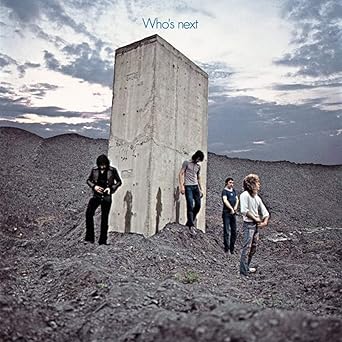
Get The Who Won’t Get Fooled Again on Vinyl or CD at Amazon
Affiliate Disclosure: I am an Amazon affiliate and if you purchase through any Amazon links on this site I may earn a small commission at no extra charge to you. This helps support ClassicRockArtists.com. Thank you for your support!
Released in 1971 on the album Who’s Next, Won’t Get Fooled Again was written by Pete Townshend as a cynical commentary on revolution and the inevitable tendency of successful revolutions to produce new versions of the same oppression they replaced.
The song’s opening synthesizer sequence, which was revolutionary in 1971, announced a new era of rock production and demonstrated The Who’s willingness to embrace technology without sacrificing the band’s raw, live energy.
Quick Navigation
What is the meaning of The Who Won’t Get Fooled Again?
Won’t Get Fooled Again articulates a profound political cynicism about the nature of revolutionary change, arguing that successful revolutions inevitably create new versions of the same oppressive structures they destroyed.
Townshend was writing in the context of the late 1960s youth revolution, which by 1971 had largely dissipated without producing the fundamental social transformation its participants had hoped for.
The famous final line about meeting the new boss and discovering he is the same as the old boss is one of the most quoted lines in rock history, capturing a worldview that has only grown more relevant in the decades since.
Townshend has described the song as anti-revolutionary rather than anti-revolution, arguing that the problem is not the impulse to change the world but the human tendency to replicate old power structures once change has been achieved.
The Vibe: Genre, Mood, and Sound of The Who Won’t Get Fooled Again
Won’t Get Fooled Again is one of the most sonically ambitious recordings in classic rock, combining a cycling synthesizer pattern, Keith Moon’s explosive drumming, and Roger Daltrey’s extraordinary vocal range into something genuinely unprecedented.
The song builds relentlessly for eight minutes, with the famous synthesizer break providing a moment of strange, dislocating quiet before the final, devastating verse.
- Genre: Hard rock, art rock, proto-punk
- Mood: Urgent, defiant, politically charged, cathartic
- Tempo: Driving mid-tempo with explosive dynamic shifts
- Key Instruments: Synthesizer, electric guitar, bass, drums
- If you like this, try: The Who’s Baba O’Riley, Behind Blue Eyes, Led Zeppelin’s Kashmir
Behind the Lyrics
The first verse establishes the revolutionary moment with vivid imagery of banners flying, the new order arriving, and the old order being swept aside.
Townshend describes the atmosphere with a mixture of excitement and unease, the narrator caught between hope and the instinct that something important is being lost in the turmoil.
The chorus declaration of not getting fooled again builds in intensity with each repetition, transforming from a personal resolve into a universal warning.
The famous synthesizer break that replaces the final verse creates a moment of strange suspension, as if time itself has stopped to contemplate the song’s thesis before Roger Daltrey’s scream brings everything crashing back to reality.
That scream, which opens the final verse, is one of the most physically affecting sounds in rock music, an eruption of pure vocal power that carries all the frustration and defiance the song has been building toward.
The final verse and its devastating conclusion about meeting the new boss complete the song’s argument with terrible logic, the narrator’s hard-won cynicism presented not as defeat but as a kind of freedom.
Recording Story and Production
Won’t Get Fooled Again was recorded at Olympic Studios in Barnes, London and at Stargroves, Mick Jagger’s country house, using the Rolling Stones’ mobile recording truck in 1971.
Producer Glyn Johns worked with the band to capture the enormous energy of their live performances in a studio context, a challenge given The Who’s reputation as one of the most powerful live acts in rock.
The synthesizer sequence that runs throughout the song was created by Pete Townshend on a Lowrey organ modified to produce the cycling, hypnotic pattern that became the song’s backbone.
Keith Moon’s drumming is a controlled explosion of creativity, providing fills and accents that propel the song forward while somehow holding the whole arrangement together.
John Entwistle’s bass playing is characteristically melodic and inventive, running counter-lines that add harmonic complexity beneath Townshend’s guitar.
Roger Daltrey’s vocal performance is among the finest in his career, ranging from conversational verses to the legendary scream that punctuates the song’s climactic transition.
Glyn Johns has described the recording sessions as among the most intense he experienced, with the band performing at a level of energy that was almost physically overwhelming in the studio.
Chart Performance and Legacy
Won’t Get Fooled Again reached number nine on the UK Singles Chart and number fifteen on the Billboard Hot 100 on its original release in 1971.
Who’s Next became one of the best-selling albums of 1971 and is consistently ranked among the greatest rock albums ever recorded by critics and musicians alike.
Rolling Stone ranked Won’t Get Fooled Again among the 500 Greatest Songs of All Time and cited it as the definitive statement of 1970s rock cynicism.
The song became the theme music for the television series CSI: Miami, introducing it to a new generation of listeners who then sought out the original recording.
Townshend’s final couplet about the new boss being the same as the old boss has entered the general political vocabulary as a shorthand for post-revolutionary disillusionment.
Listener’s Note: A Personal Take on The Who Won’t Get Fooled Again
The synthesizer opening is still startling after all these years. It announces the song with such confident strangeness that you immediately know you are in the presence of something unusual.
Keith Moon’s drumming in the final verse before the scream is as exciting as drumming gets. He is simultaneously holding the band together and threatening to disintegrate it.
Daltrey’s scream is one of those moments in music that you cannot prepare for no matter how many times you have heard it. It always arrives with full force.
The political message has only grown more resonant with time. Townshend was writing about something that turns out to be a permanent feature of human political life, not just a 1970s phenomenon.
Affiliate Disclosure: I am an Amazon affiliate and if you purchase through any Amazon links on this site I may earn a small commission at no extra charge to you. This helps support ClassicRockArtists.com. Thank you for your support!
Collector’s Corner: Own The Who Won’t Get Fooled Again on Vinyl or CD
Who’s Next on Track Records is one of the great rock albums in any format, with the original 1971 pressing commanding significant collector interest for its raw, powerful sound.
The 2003 remaster and the subsequent Super Deluxe Edition offer substantial bonus material including the complete Lifehouse demos that preceded the album.
Get The Who Who’s Next on Vinyl or CD at Amazon
Frequently Asked Questions About The Who Won’t Get Fooled Again
What is the message of Won’t Get Fooled Again?
Won’t Get Fooled Again argues that political revolutions inevitably produce new versions of the same oppressive structures they replace. The famous final line about meeting the new boss who is the same as the old boss encapsulates Pete Townshend’s cynicism about the possibility of genuine political change.
Who performs the scream in Won’t Get Fooled Again?
The legendary scream that opens the final verse of Won’t Get Fooled Again was performed by Roger Daltrey. It is widely considered one of the greatest vocal moments in rock history and has been described as the most thrilling single note in rock music.
What is the synthesizer instrument used in Won’t Get Fooled Again?
Pete Townshend used a modified Lowrey organ to create the cycling synthesizer sequence that runs through Won’t Get Fooled Again. The hypnotic pattern was one of the first prominent uses of electronic synthesis in mainstream rock music and helped define the sound of 1970s arena rock.
You Might Also Like
The enduring power of The Who Won’t Get Fooled Again rests on its refusal to offer comfort. In a world of rock anthems that promise transformation, this song insists on the harder truth, and that honesty is exactly what makes it timeless.