

Baba O’Riley by The Who is one of the most recognized opening tracks in rock history, built around a hypnotic synthesizer pattern that Pete Townshend composed as part of an ambitious multimedia project called Lifehouse.
Affiliate Disclosure: I am an Amazon affiliate and if you purchase through any amazon links on this site i may earn a small commission at no extra charge to you.
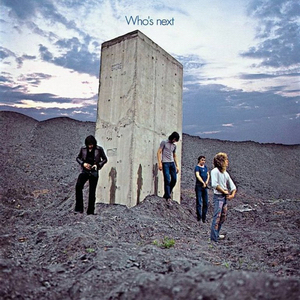
Released on the 1971 album Who’s Next, the song takes its name from two figures Townshend admired: spiritual leader Meher Baba and minimalist composer Terry Riley, whose influence is directly audible in the synthesizer introduction.
More than fifty years after its release, Baba O’Riley remains a staple of classic rock radio and one of the defining recordings in The Who’s catalog.
| Song Title | Baba O’Riley |
| Artist | The Who |
| Album | Who’s Next (1971) |
| Release Year | 1971 |
| Written By | Pete Townshend |
| Producer | The Who, Glyn Johns |
| Label | Track Records / Decca Records |
| Chart Peak | #1 UK Albums (Who’s Next) |
Background and Meaning
Townshend wrote Baba O’Riley as the opening piece of Lifehouse, a large-scale concept he developed in the early 1970s involving live performance, audience interaction, and electronic composition.
The Lifehouse project was ultimately set aside, but several of its songs, including Baba O’Riley, were recorded for Who’s Next and became some of the band’s most celebrated work.
The synthesizer introduction was programmed by Townshend using a Lowrey organ fed through a synthesizer, creating a looping pattern intended to reflect the repetitive nature of daily life.
Roger Daltrey delivers the lead vocal with a directness that suits the song’s themes of hard work, community, and the search for something larger than everyday routine.
The violin section at the close of the song was performed by Dave Arbus of the band East of Eden, bringing an unexpected folk texture to the outro that became one of the track’s most distinctive features.
Keith Moon and John Entwistle anchor the rhythm section throughout the track with the precision and power that defined The Who’s approach to live and studio performance alike.
Notable Lyrics
“Out here in the fields, I fight for my meals / I get my back into my living.”
These opening lines frame the song as a statement about honest labor and the dignity of working people, setting a tone of resilience that carries through the entire track.
“Don’t cry, don’t raise your eye / It’s only teenage wasteland.”
This phrase, which many listeners mistakenly believe is the song’s title, captures the frustration of young people who feel overlooked and undervalued by the society around them.
Cultural Impact
Baba O’Riley became one of the most frequently played tracks on classic rock radio from the moment Who’s Next was released, and it has never lost that position.
The song’s synthesizer introduction influenced a generation of rock musicians who recognized it as proof that electronic instruments could anchor a hard rock recording rather than merely decorate one.
It has been used extensively in film and television, most notably as the theme for the long-running series The Wire, which introduced the track to an entirely new audience in the 2000s.
Alongside Won’t Get Fooled Again and My Generation, Baba O’Riley is consistently cited as one of the essential tracks in The Who’s body of work.
Fun Facts
The song was not released as a commercial single in the United Kingdom until 1979, eight years after the album, when it reached number nine on the UK Singles Chart.
Townshend has described the song as an optimistic piece despite the bleakness of some of its imagery, intended as a celebration of ordinary people and their capacity to endure.
The Who performed Baba O’Riley at virtually every major concert throughout their career, and it consistently opened their live sets as one of the most powerful album-opener-to-stage translations in rock history.
Why It Still Resonates
Baba O’Riley holds its place in the classic rock canon because its central message, that ordinary people have worth and strength, is one that never goes out of date.
The combination of Townshend’s synthesizer programming, Daltrey’s vocal performance, and the unexpected violin coda creates a listening experience that feels both carefully constructed and emotionally spontaneous.
For anyone coming to The Who for the first time, Baba O’Riley remains the single best introduction to a band that consistently used rock music to say something larger than the song itself.