

Neil Young Old Man is one of the most touching songs about the unexpected kinship between generations, a meditation on how the same dreams, the same loves, and the same loneliness connect people across the divide of age.
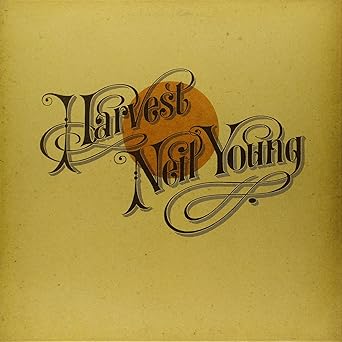
Get Neil Young Old Man on Vinyl or CD at Amazon
Affiliate Disclosure: I am an Amazon affiliate and if you purchase through any amazon links on this site i may earn a small commission at no extra charge to you. This helps support classicrockartists.com and allows me to keep providing deep-dive content on the legends of rock. Thank you for your support!
Released in 1972 on the album Harvest, Old Man was written after Neil Young purchased his Broken Arrow Ranch in Northern California and met Louis Avila, the elderly caretaker who had tended the property for years before Young arrived.
Young was struck by the recognition that this old man’s life, with its loves and losses and disappointments, mirrored his own despite the decades between them, and that insight became the emotional engine of the song.
Quick Navigation
What is the meaning of Neil Young Old Man?
Old Man is about the recognition that age does not fundamentally separate people as much as society suggests, that the young man and the old man share the same essential human experiences of love, loneliness, and the search for meaning.
Young at twenty-four saw in Louis Avila, who was in his sixties, a reflection of his own desires and fears, a revelation that prompted both humility and a kind of comfort.
The song is also an implicit critique of the generation gap mythology of the late 1960s and early 1970s, which insisted that young and old inhabited entirely different worlds with nothing in common.
Young has described Old Man as one of his most personal songs, noting that the conversation it imagines with the caretaker was one he wished he could have had with his own father.
The Vibe: Genre, Mood, and Sound of Neil Young Old Man
Old Man is a warm, acoustic-centered folk rock song that perfectly captures the gentle Californian atmosphere of early 1970s singer-songwriter music.
The banjo that opens the song gives it an immediate folk authenticity while the full band arrangement that follows adds emotional depth without ever overplaying.
- Genre: Folk rock, country rock, singer-songwriter
- Mood: Warm, reflective, tender, philosophical
- Tempo: Gentle, unhurried, conversational
- Key Instruments: Banjo, acoustic guitar, bass, drums, pedal steel guitar
- If you like this, try: Neil Young’s Heart of Gold, James Taylor’s Fire and Rain, Jackson Browne’s Doctor My Eyes
Behind the Lyrics
The opening address to the old man, noting that he has the same look in his eyes that Young sees in his own mirror, establishes the song’s central insight before it has even had time to develop.
Young catalogues the things that connect them across generations with disarming simplicity, love and loneliness and the gold that he has found and the places he has been.
The observation that the old man does not need anyone and that love is only love cuts to the heart of what Young is trying to say, that the essential experiences of human life remain constant regardless of age.
The repeated declaration “old man, look at my life, I’m a lot like you were” grows more powerful with each pass, building from a tentative observation to an almost shocking recognition of shared humanity.
Young’s voice, which has always had a quality of vulnerability that is unusual in rock music, is perfectly suited to these lyrics, carrying the song’s emotional weight without ever straining for effect.
The banjo figures that punctuate the verses add a touch of American folk tradition that grounds the song in a specific cultural landscape while its emotional content remains universal.
Recording Story and Production
Old Man was recorded at Quadrafonic Sound Studios in Nashville, Tennessee in February 1971 as part of the Harvest sessions produced by Elliot Mazer and Neil Young himself.
The recording brought together a remarkable collection of musicians including members of the Stray Gators, Young’s touring band, and Linda Ronstadt and James Taylor who contributed backing vocals.
The banjo part that opens the song was played by Young himself, establishing the folk-country atmosphere that distinguishes Old Man from his more rock-oriented work.
Elliot Mazer’s production is a model of restraint, creating space around each instrument so that the arrangement breathes naturally without feeling crowded.
Tim Drummond’s bass playing is particularly noteworthy, his melodic fills adding warmth and movement without ever pushing the song toward a harder sound than it requires.
The Nashville session musicians who contributed to Harvest brought a country-influenced precision to the recordings that complemented Young’s more spontaneous approach and created the album’s distinctive sound.
Chart Performance and Legacy
Old Man reached number thirty-one on the Billboard Hot 100 on its release as a single in February 1972, while Harvest itself reached number one on the Billboard 200 and became the best-selling album of 1972.
Rolling Stone ranked Harvest among the 500 Greatest Albums of All Time and Old Man is consistently cited as one of the defining songs of the singer-songwriter era.
The song has endured as a favorite for listeners of all ages, its themes of shared humanity across generational lines proving as relevant to older listeners as to the young audiences who first embraced it.
Young performed Old Man at his 2014 induction ceremony for Buffalo Springfield into the Rock and Roll Hall of Fame, demonstrating the song’s continued emotional significance to him personally.
The song has been covered by numerous artists across multiple genres and remains a standard in acoustic folk-rock repertoire.
Listener’s Note: A Personal Take on Neil Young Old Man
The banjo opening immediately signals that this is going to be something gentle and true, music that asks nothing of you except attention.
Young’s voice at its most vulnerable is one of rock’s great instruments. There is no artifice here, just a young man speaking honestly about something he has understood and wants to share.
The simple observation at the heart of the song, that old and young are more alike than they are different, seems obvious once stated. But it takes a real writer to transform the obvious into the profound.
This song gets better with age in ways that not many songs do. At twenty it is a revelation. At fifty it is something closer to a mirror.
Affiliate Disclosure: I am an Amazon affiliate and if you purchase through any Amazon links on this site I may earn a small commission at no extra charge to you. This helps support ClassicRockArtists.com. Thank you for your support!
Collector’s Corner: Own Neil Young Old Man on Vinyl or CD
Harvest is one of the most essential vinyl records in any classic rock collection, with original 1972 pressings on Reprise Records offering warm, immediate sound that transfers beautifully to modern playback systems.
Harvest has been reissued numerous times and in 2021 received a 50th Anniversary Edition with expanded documentation of the recording sessions.
Get Neil Young Harvest on Vinyl or CD at Amazon
Frequently Asked Questions About Neil Young Old Man
Who is the Old Man in Neil Young’s song?
The old man in the song is Louis Avila, the caretaker of Neil Young’s Broken Arrow Ranch in Northern California. Young was struck by the recognition that Avila’s life experiences, his loves and loneliness, mirrored his own despite the decades between them.
What album is Old Man by Neil Young on?
Old Man appears on Neil Young’s fourth studio album Harvest, released in February 1972 on Reprise Records. Harvest was the best-selling album of 1972 in the United States and contains several of Young’s most beloved songs including Heart of Gold and The Needle and the Damage Done.
What instrument opens Old Man by Neil Young?
Old Man opens with a banjo figure played by Neil Young himself, establishing the song’s folk-country atmosphere before the full band enters. The banjo gives the song an immediate authenticity that distinguishes it from Young’s more rock-oriented recordings.
You Might Also Like
The enduring wisdom of Neil Young’s “Old Man” is its refusal to sentimentalize the connection it describes. Young observes rather than emotes, trusts his listener to feel what he has felt, and produces something that grows more resonant with every passing year.
If you appreciate that raw, honest approach to songwriting and the legendary figures who shaped the era, you might also like:
The Power Trio Dynamics of Cream
Just as Neil Young found power in simplicity, the members of Cream proved that three exceptionally talented musicians could redefine the boundaries of rock. By blending blues-rooted honesty with instrumental mastery, Eric Clapton, Jack Bruce, and Ginger Baker created a body of work that—much like “Old Man”—only feels more influential as time goes on.
The Resilience and Tragedy of Badfinger
The Resilience and Tragedy of Badfinger
For those who are moved by the “rising and setting suns” of life described in Young’s lyrics, the story of the members of Badfinger is a deeply resonant one. Their music captured a specific kind of melodic optimism and heartfelt storytelling that remains a cornerstone of the classic rock era, even as the band faced their own stormy days.
The Experimental Spirit of King Crimson If you admire artists who, like Young, refuse to stay in one place musically, the ever-evolving members of King Crimson are essential. They shared that same commitment to artistic integrity and observational depth, constantly pushing the limits of what a rock band could be while maintaining a sound that was uniquely, and sometimes hauntingly, their own.
Plus + Want to see how the legends of the 70s are continuing their journey today? Dive into the latest on the members of Yes or explore the enduring legacy of the members of Buffalo Springfield.