Motley Crue Live Wire: The 1981 Track That Started Everything
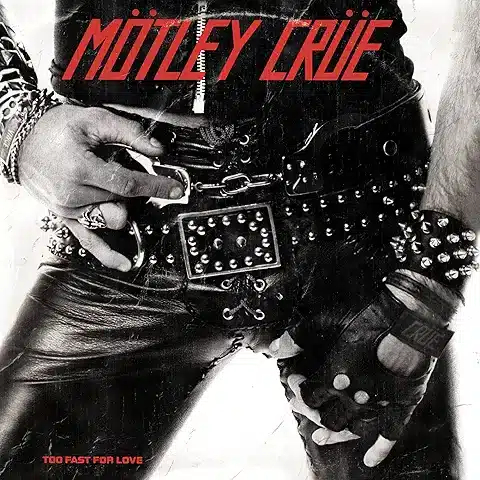
Motley Crue Live Wire arrived in 1981 as the opening track on Too Fast for Love, and it announced the band with the kind of blunt, physical force that either grabs you in the first ten seconds or loses you forever.
Most people who heard it were grabbed.
The track is built on a riff that does not negotiate.
It states its terms immediately, at volume, and the rest of the song spends three and a half minutes confirming that those terms are non-negotiable.
Nobody in 1981 had quite heard a band introduce itself this way from a debut album released on their own label out of the back of a van.
Forty-plus years later, the entry point still sounds like a dare.
Affiliate Disclosure: I am an Amazon affiliate and if you purchase through any amazon links on this site i may earn a small commission at no extra charge to you. This helps support classicrockartists.com and allows me to keep providing deep-dive content on the legends of rock. Thank you for your support!
Quick Navigation
- Motley Crue Live Wire: What the Song Demands of You
- Too Fast for Love: The Album That Launched Everything
- How Nikki Sixx Wrote the Track
- Motley Crue Live Wire and the Los Angeles Scene in 1981
- The Four Musicians Who Made It Hit
- Live Wire as a Concert Weapon
- Motley Crue Live Wire in the Long View
- Watch Motley Crue Live Wire Now
Motley Crue Live Wire: What the Song Demands of You
Motley Crue Live Wire does not ease the listener in.
The opening riff from Mick Mars lands like something falling through the ceiling, heavy and immediate and entirely without apology.
The lyric is a declaration of dangerous attraction, the kind of song that describes a specific kind of person by describing the effect that person has on everyone around them.
The narrator is a threat to your equilibrium.
He is not apologizing for it.
He is advertising it.
That swagger, delivered with total conviction by a band that genuinely believed every word of it, is what separates the track from the long list of early 80s hard rock songs that made similar promises and could not back them up.
Motley Crue Live Wire backed everything up, and the audience at every show they played in 1981 felt it before the song was thirty seconds old.
Too Fast for Love: The Album That Launched Everything
Too Fast for Love was released in 1981 on Leathür Records, a label the band created themselves when no major label would sign them, and it was pressed, packaged, and sold by the band members out of their own vehicles at shows along the Sunset Strip.
Elektra Records eventually signed Motley Crue and re-released the album in 1982 with a remixed, cleaned-up production, but the original version captured on the self-released pressing carries a raw urgency that no remix could fully replicate.
The album opened with Live Wire for a reason.
Nothing else on the record could have served as the introduction the band needed to make, and nothing else in the genre at that moment made quite the same first impression.
Too Fast for Love established the template that the band refined across the next decade of records, and the opening track set every expectation that the rest of the album was built to fulfill.
How Nikki Sixx Wrote the Track
Nikki Sixx wrote Live Wire during the period when Motley Crue was establishing its identity in the Los Angeles club scene, and the song reflects exactly where the band was at the time: hungry, loud, certain of themselves, and completely uninterested in making concessions to anyone who expected something more polished.
Sixx had a gift for compression in a lyric, the ability to put a complete persona into a few lines that told you everything about the character without explaining anything about them.
The live wire of the title is not a metaphor that requires interpretation.
It is a direct statement about the kind of energy the band brought to every show and the kind of danger they wanted you to feel in the room with them.
The writing served the performance, and the performance delivered everything the writing promised.
Motley Crue Live Wire and the Los Angeles Scene in 1981
The Sunset Strip in 1981 was a proving ground where bands competed for attention from labels, managers, and the audiences who showed up at the Troubadour and the Whisky a Go Go and the Starwood every weekend looking for something that felt new and dangerous.
Motley Crue Live Wire was built for exactly that environment.
It was too loud, too fast, and too convinced of itself to succeed anywhere else, and on the Strip it succeeded completely.
The song and its history are inseparable from that specific moment and place, and it carries the energy of that scene in a way that a thousand retrospective documentaries have tried and failed to fully capture.
You had to be there, or you had to hear the record.
The record did an honest job of conveying what being there felt like.
The Four Musicians Who Made It Hit
The four members of Motley Crue were operating as a unit with something to prove in 1981, and the track reflects that collective hunger more than any individual performance within it.
Mick Mars built the riff that anchors everything, a part that defines the song’s identity before a single word is sung.
Tommy Lee drove the track with the kind of playing that sounds effortless and is anything but, keeping the energy at a sustained level that most drummers could not have maintained for the length of a full set, let alone a career.
Vince Neil sang it like a man who had already decided the crowd was his before the first verse ended.
Together, they produced a performance that sounded like four people who had been playing together for years and had the confidence to match.
They had not been together long.
The confidence was real anyway.
Live Wire as a Concert Weapon
Live Wire became a fixture in the Motley Crue set list almost immediately and remained there across decades of touring because the song works on a live audience the way few album tracks ever manage to.
It does not require the listener to already know the band or the album.
It announces itself, establishes its terms, and commands the room within the first thirty seconds of the riff hitting the air.
Tommy Lee’s drum solo, often incorporated into the live version of the song during the bigger arena tours, extended the track into a showcase that the audience understood as a gift rather than an indulgence.
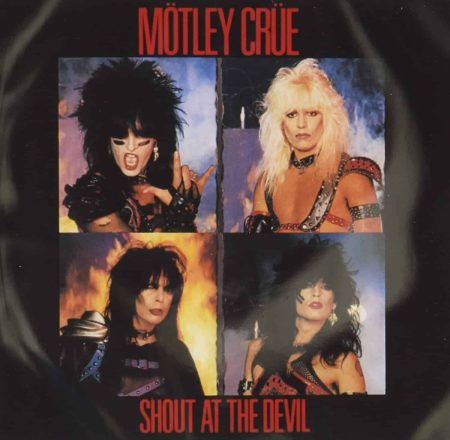
The song earned that space because the band had been delivering on its promise since 1981, and by the time they were playing stadiums it had accumulated the weight of everything that had followed it in the catalog, from Shout at the Devil through the Dr. Feelgood era.
Motley Crue Live Wire in the Long View
What Motley Crue Live Wire accomplished in the context of the band’s full history is a specific and important thing: it established the identity that every subsequent record either deepened or complicated, and it did so with the directness that only a debut track can achieve.
By the time Looks That Kill arrived in 1983, the audience already knew what Motley Crue was, and Live Wire was a significant reason for that.
It told you who they were before the industry decided who they should be.
That honesty, that unmediated first statement, is the kind of thing that accumulates meaning with time rather than losing it.
The band continues to perform today, and their official website has current information on all upcoming shows and releases.
Watch Motley Crue Live Wire Now
The official video below captures Motley Crue Live Wire in the form the band chose to present it, and it delivers everything the studio recording promises at a volume appropriate to the song.
Affiliate Disclosure: This post contains affiliate links. If you purchase through them, we may earn a small commission at no extra cost to you.
The Too Fast for Love album, where Motley Crue Live Wire opened one of the most consequential debuts in hard rock history, is available on Amazon, and it sounds exactly as loud and as certain of itself as it did the day the band pressed it themselves in 1981.