Shout at the Devil: Motley Crue’s 1983 Satanic Statement
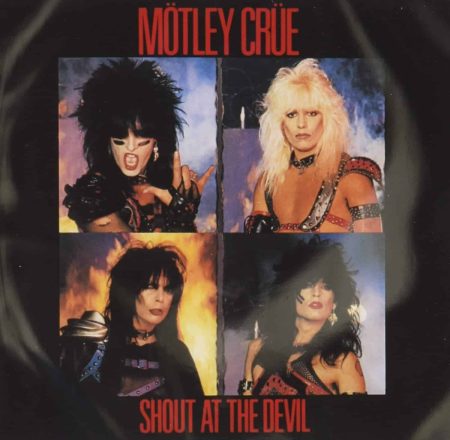
Shout at the Devil arrived on September 26, 1983, and it announced a version of Motley Crue that no one in the mainstream had fully prepared for.
The song was not a radio single calculated to please program directors.
It was a declaration, built around a chant that Nikki Sixx designed to feel like a ritual and a riff that Mick Mars constructed to feel like something crawling out of a place with no name.
If you were paying attention to hard rock in 1983, the moment you heard this track you understood that the rules for how far a rock band could go had just been redrawn.
Affiliate Disclosure: I am an Amazon affiliate and if you purchase through any amazon links on this site i may earn a small commission at no extra charge to you.
Quick Navigation
- What Shout at the Devil Is Really About
- The Making of Shout at the Devil in 1983
- Nikki Sixx and the Satanic Imagery
- The Controversy That Followed the Album
- The Song That Launched Them Into Arenas
- Shout at the Devil in Concert
- The Music Video and Motley Crue’s MTV Presence
- Where Shout at the Devil Stands Today
- Watch Shout at the Devil Now
What Shout at the Devil Is Really About
Shout at the Devil was never a sincere endorsement of Satanism, regardless of what the album art and the pentagram imagery suggested.
Nikki Sixx used the concept as a vehicle for something more personal: rebellion against every institution, authority, and expectation that had tried to define him since childhood.
The devil in the song was a stand-in for everything the band had been told they could not do, could not become, and could not say in public.
Shouting at that force rather than submitting to it was the entire point of Motley Crue’s existence in 1983, and the song made that point at full volume with no room for misinterpretation.
For teenagers who felt that same friction with the world around them, this song was a release valve that nothing else on the radio in 1983 could provide.
The Making of Shout at the Devil in 1983
Motley Crue recorded the Shout at the Devil album with producer Tom Werman at Cherokee Studios in Hollywood.
Werman had worked with the band on Too Fast for Love and understood their approach: fast, loud, deliberately threatening to anyone over thirty.
The title track was built from a riff that Mick Mars had been developing, a descending figure that carried the weight of something ancient and wrong.
The opening chant, which Sixx conceived as a crowd-participation device even before the song had been heard by any crowd, gave the track a ceremonial quality that separated it from anything else Motley Crue had recorded before.
Tommy Lee’s drumming on the track drove the rhythm with a precision that gave the song its structure while everything else around it felt deliberately unstable.
Nikki Sixx and the Satanic Imagery
Nikki Sixx made the decision to use pentagrams, inverted crosses, and ceremonial imagery across the album artwork and in the band’s live presentation.
He understood exactly what that imagery would communicate to parents, radio programmers, and community organizations across the country.
He also understood what it would communicate to a teenager who had spent years being told that music with this much aggression was morally dangerous and socially unacceptable.
The imagery was a provocation designed to attract the audience that needed it most and repel the audience that would never understand it anyway.
Sixx was not confused about what he was doing: he was using the shock value of the aesthetic to build a wall between Motley Crue and every band that was trying to be liked by everyone.
The Controversy That Followed the Album
Radio stations in several markets refused to add the title track to their rotation in 1983.
Parent groups organized letter campaigns and called for the album to be pulled from store shelves, which had the entirely predictable effect of making teenagers want it more than anything else in the record store.
The controversy that surrounded the album’s most radio-friendly track, Looks That Kill, was mild compared to what the title song generated in communities where rock music was already viewed with suspicion.
Motley Crue’s management recognized that the controversy was doing more promotional work than any advertising budget could match, and the band did nothing to calm it.
Every protest against the record was a news item, and every news item was another reason for someone who had not heard the album to find out what all the noise was about.
The Song That Launched Them Into Arenas
The Shout at the Devil album debuted at number 17 on the Billboard 200 and eventually went triple platinum in the United States.
That commercial result was built on the back of a touring schedule that all four members of Motley Crue maintained with a physical commitment that few bands of the era could match.
The title track became the centerpiece of a live show that graduated from small clubs to theaters and then into arenas over the course of eighteen months.
The revenue generated by that run funded the production scale that made subsequent albums possible and gave the band the leverage to demand creative control over everything they recorded.
Without the commercial success of this song and this album, the path to Home Sweet Home and Kickstart My Heart would not have existed in the same form.
Shout at the Devil in Concert
The chant that opens the studio recording became something else entirely in a live arena.
Thousands of people shouting the phrase back at the stage created a shared ritual that bonded the audience to the band in a way that a conventional song opening never could.
Tommy Lee’s drum kit, which grew to incorporate increasingly elaborate hydraulic rigs and pyrotechnic triggers over the years, found one of its most natural homes in this track.
The song worked at any scale, from the theater dates of 1983 to the stadium runs of the decade that followed, because the chant element gave it a flexibility that purely riff-driven tracks could not replicate.
Motley Crue continues performing for audiences today, and their 2026 Carnival of Sins tour brings this song to a new generation of live rock fans.
The Music Video and Motley Crue’s MTV Presence
The music video for the track leaned directly into the ceremonial imagery of the album art.
MTV was still defining its relationship with heavy metal in 1983, and the clip gave the network something that tested the outer limits of what it would put into rotation.
The visual approach created an identity for the band that photographs and radio play alone could never have generated.
Viewers who saw the video before hearing the album arrived at the record store with a clear expectation of what they were going to buy, and the album delivered on that expectation at every turn.
Motley Crue’s command of the visual medium during this period was as important to their commercial development as anything they recorded, and this video was where that relationship between the band and the camera became serious.
Where Shout at the Devil Stands Today
Shout at the Devil has been part of every significant Motley Crue setlist for more than four decades.
It survived lineup changes, commercial peaks and valleys, a hiatus, and the kind of internal conflicts that destroyed other bands from the same era.
Younger audiences who encountered the band through the 2019 Netflix biopic The Dirt and then went searching for the back catalog found this song and understood immediately why the band had generated that level of reaction in 1983.
The official Motley Crue website reflects a band still active and still positioned around the identity this song helped create.
After forty-plus years, Shout at the Devil remains exactly what Nikki Sixx intended it to be: a song that refuses to ask permission from anyone.
Watch Shout at the Devil Now
The official video below captures the track at its most confrontational.
Affiliate Disclosure: This post contains affiliate links. If you purchase through them, we may earn a small commission at no extra cost to you.
If you want the complete Shout at the Devil album in your collection, the Shout at the Devil album on Amazon is worth adding.