

Deep Purple Burn is the song that announced a new era, a six-minute hard rock statement released in February 1974 that left no doubt the band had rebuilt itself into something worth paying attention to.

Affiliate Disclosure: I am an Amazon affiliate and if you purchase through any amazon links on this site I may earn a small commission at no extra charge to you.
Deep Purple Burn: The Song That Changed Hard Rock
Ian Gillan and Roger Glover left Deep Purple in June 1973, and the question facing Ritchie Blackmore, Jon Lord, and Ian Paice was not whether the band could survive, but whether the rebuilt version would be worth the effort.
The answer arrived when the needle dropped on “Burn.”
Blackmore’s opening riff comes at you in fourths and fifths, modal and medieval, nothing like anything that had opened a Deep Purple record before.
The album reached number three in the UK and number nine in the US, with number one positions in Austria, Denmark, Germany, and Norway confirming that the band had not just survived the transition but accelerated through it.
The song that opens the record carries the weight of the entire rebuild, and it delivers.
The Mark III Lineup: A Completely Different Band
The lineup that recorded Deep Purple Burn was the Mark III configuration: Blackmore on guitar, Jon Lord on keyboards, Ian Paice on drums, David Coverdale on lead vocals, and Glenn Hughes on bass and vocals.
Coverdale was 21 years old when he answered an advertisement in Melody Maker seeking a replacement for Gillan.
He had been working as a salesman in Saltburn, Yorkshire, and had never made a studio recording before the Burn sessions began.
Glenn Hughes came from the British funk rock band Trapeze, where he had built a reputation as a bassist with a countertenor range that had no business being as powerful as it was.
The Members of Deep Purple page covers every lineup in full, but the Mark III pairing of Coverdale and Hughes changed what the band was capable of vocally, immediately and permanently.
Blackmore recruited Hughes partly on the understanding that a co-lead vocalist arrangement was part of the deal, a structure that made the dual-voice approach on “Burn” possible.
How Ritchie Blackmore Wrote the Deep Purple Burn Riff
Blackmore built the central riff on medieval modal scales, specifically the intervals of fourths and fifths that he had become increasingly drawn to through his interest in Renaissance music.
He acknowledged a connection to George Gershwin’s 1924 composition “Fascinating Rhythm,” a jazz standard whose rhythmic structure he filtered through hard rock amplification to produce something new.
Glenn Hughes confirmed the Gershwin influence in interviews: “Blackmore came up with that classic rock riff, but there’s a lot of talk about it being ripped from something that was written in the forties.”
Eddie Van Halen named “Burn” as one of his all-time favourite guitar riffs, saying of the experience of hearing it: “Just the power. It just engulfs you. You just feel it, you know?”
The riff runs for six minutes without losing momentum, which is why Deep Purple chose it to open every concert for two straight years.
It replaced “Highway Star” as the band’s live opener in 1974, which tells you something about how much confidence the band had in what they had written.
David Coverdale and Glenn Hughes: Two Voices, One Stage
Coverdale took the verses and main chorus, while Hughes pushed in on the chorus and bridge with a range that lifted the song into a different register entirely.
Coverdale described the writing process: “I was a complete unknown but I was involved in writing ‘Burn’ from the start. Ritchie was obviously the chief composer but I was given a cassette tape of the songs-in-progress and sent back to the north of England to work on the lyric with Glenn Hughes.”
He wrote multiple lyrical versions before the final text was chosen, with early drafts described as science-fiction poems that reflected Blackmore’s interest in the supernatural and medieval history.
The songs Smoke on the Water and Highway Star had defined what a Deep Purple vocal could be, but “Burn” added a second voice that pushed against the first rather than reinforcing it.
The writing credits list Blackmore, Coverdale, Hughes, Lord, and Paice, making it a genuinely collaborative composition from a lineup that had existed for less than three months before the sessions began.
David Coverdale went on to build Whitesnake into one of the most commercially successful acts of the 1980s, but “Burn” remains the moment that introduced him to the world.
Deep Purple Burn Live: The California Jam Performance
The Mark III lineup built “Burn” into their concert opener within weeks of the album’s release, and the song replaced Child in Time as the standard show opener for 1974 and 1975.
The most significant early performance came on April 6, 1974, at the California Jam festival at Ontario Motor Speedway, co-headlined with Emerson, Lake and Palmer in front of more than 300,000 people.
That show was filmed and broadcast on television, giving the Mark III lineup its widest exposure at a single moment.
When Ian Gillan rejoined for the 1984 reunion, the song was quietly removed from setlists because Gillan declined to perform material from the Coverdale and Hughes era.
It took decades before “Burn” returned to live Deep Purple sets in any consistent way.
Recording at Clearwell Castle
The album was recorded in November 1973 at Clearwell Castle in Gloucestershire, England, using the Rolling Stones Mobile Studio.
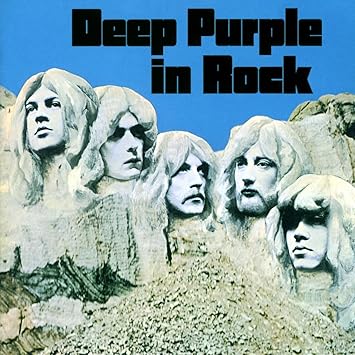
Engineer Martin Birch, who had worked with Deep Purple since Deep Purple in Rock in 1970, handled the sessions.
The castle setting produced its own energy: band members later noted they stayed up late writing because the location was reportedly haunted and going to sleep felt less appealing than continuing to work.
The album was self-produced by the band, giving Blackmore the creative control that shaped the record’s sound from the first note of the opening track forward.
Martin Birch would go on to produce Iron Maiden and Fleetwood Mac, but his work on the Deep Purple catalog in this period remains some of the finest recorded hard rock of the decade.
People Also Ask
Who wrote Burn by Deep Purple?
“Burn” is credited to all five Mark III members: Ritchie Blackmore, David Coverdale, Glenn Hughes, Jon Lord, and Ian Paice. Blackmore built the central riff, while Coverdale and Hughes collaborated on the lyrics from cassette tapes Blackmore sent them before the sessions began.
What is Deep Purple Burn about?
The lyrics describe a threatening, supernatural female figure and carry themes of fire, witchcraft, and destruction. Coverdale wrote multiple lyrical versions before the final text was chosen. The subject matter aligns with Blackmore’s documented interest in medieval history and the occult.
Is the Burn riff based on a Gershwin composition?
Yes. Blackmore acknowledged that the riff connects to George Gershwin’s 1924 jazz standard “Fascinating Rhythm.” Glenn Hughes confirmed the link in interviews. Blackmore filtered the rhythmic structure through medieval modal scales, building the riff on intervals of fourths and fifths.
What Deep Purple lineup recorded Burn?
The Mark III lineup: Ritchie Blackmore on guitar, Jon Lord on keyboards, Ian Paice on drums, David Coverdale on lead vocals, and Glenn Hughes on bass and vocals. Coverdale and Hughes replaced Ian Gillan and Roger Glover, who both departed in June 1973 following the band’s second Japan tour.
Did Deep Purple Burn chart?
The album reached number three in the UK and number nine in the US, with number one positions in Austria, Denmark, Germany, and Norway. The title track was released as a single in the US and Japan. It later appeared at number 45 on the UK singles chart when re-released in 1978.
Watch: Deep Purple Burn 1974 Live Video HQ
Watch: Deep Purple — Burn 1974 Live Video HQ
Affiliate Disclosure: I am an Amazon affiliate and if you purchase through any amazon links on this site I may earn a small commission at no extra charge to you. This helps support classicrockartists.com and allows me to keep providing deep-dive content on the legends of rock. Thank you for your support!
As an Amazon Associate, I earn from qualifying purchases.
Burn
1974 — Expanded 2005 Edition
The Mark III debut.
Contains Burn, Mistreated, and the full first Coverdale and Hughes album. The 2005 expanded edition adds bonus tracks from the original sessions.

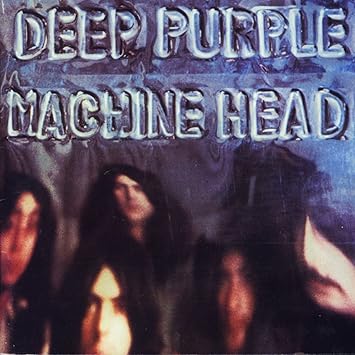
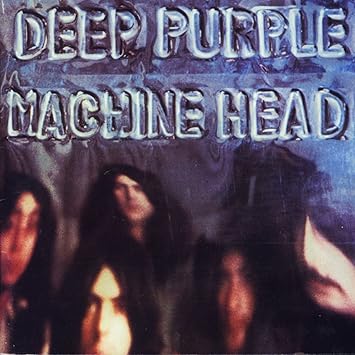
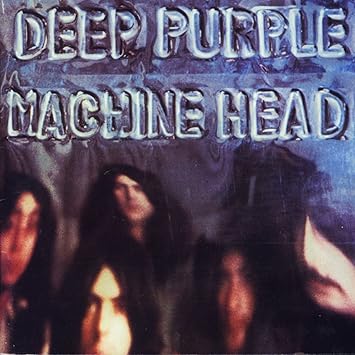
Machine Head
1972 — Mark II at Full Power
Smoke on the Water and Highway Star on one record.
The album that defined what Mark II Deep Purple could do. Essential listening before or after Burn.

Come Taste the Band
1975 — 35th Anniversary 2CD
Coverdale and Hughes, Mark IV.
Tommy Bolin replaced Blackmore. The 35th anniversary edition gives this underrated record the presentation it deserves.

The Very Best of Deep Purple
Compilation — All Eras
Every lineup, one disc.
Burn sits alongside Smoke on the Water, Highway Star, and Perfect Strangers. The right starting point for anyone new to the catalog.
You Might Also Like
Fifty years on, Deep Purple Burn holds its place as one of the defining recordings in hard rock history, built by a lineup that had everything to prove and proved it in six minutes flat.