

Deep Purple Stormbringer is one of the most misunderstood songs in the band’s catalog, and that misunderstanding cost them one of their greatest guitarists.

Affiliate Disclosure: I am an Amazon affiliate and if you purchase through any amazon links on this site i may earn a small commission at no extra charge to you.
What Is Deep Purple Stormbringer?
Stormbringer is the title track from Deep Purple’s ninth studio album, released in November 1974.
It arrived just months after Burn, the album that introduced the Mark III lineup of the band.
The track opens the album with a raw, funky swagger that was unlike anything Deep Purple had done before.
Glenn Hughes and David Coverdale handled the vocals, sharing lines across a groove that owed more to soul and R&B than to the band’s hard rock roots.
Ritchie Blackmore played the riff, but he hated everything it represented.
The Song Itself
The opening riff of Deep Purple Stormbringer is deceptively simple.
It locks into a mid-tempo groove before the verse hits with a kind of menacing swagger.
Coverdale’s vocal is rougher and bluesier than what fans expected from the band’s Machine Head era.
Hughes layers underneath with a high, almost gospel-tinged counterpoint that pushes the song into unexpected territory.
Jon Lord’s keyboards sit low in the mix here, less orchestral and more rhythmic than his classic work.
Ian Paice drives the whole thing with a pocket that is looser and more soulful than his previous playing with the Mark II lineup.
The lyrics draw on Michael Moorcock’s Elric of Melniboné mythology to paint the Stormbringer as a supernatural force, a bringer of chaos that can’t be stopped or reasoned with.
It’s a fantasy-tinged piece of hard rock mythology, and it fits the era perfectly.
Deep Purple Stormbringer and Blackmore’s Exit
Ritchie Blackmore made no secret of his disdain for the direction Deep Purple Stormbringer represented.
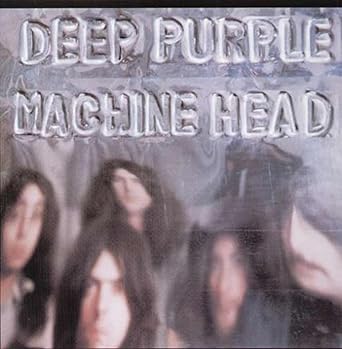
He had built his reputation on classical-influenced heavy rock, the kind of music Machine Head and Smoke on the Water defined.
The funk and soul elements that Coverdale and Hughes brought into the Stormbringer album felt alien to him.
He reportedly referred to the material as “funk” in a tone that made clear it was not a compliment.
By the time the album was released, his departure was effectively already decided.
He left the band in April 1975 and formed Rainbow shortly after.
The irony is that Stormbringer the song is one of the stronger tracks on the record, even if it symbolized everything that drove Blackmore away.
Coverdale and Hughes: The New Voice of Deep Purple
David Coverdale and Glenn Hughes joined Deep Purple together in 1973, brought in to replace Roger Glover and Ian Gillan.
Their vocal combination was something the rock world had not heard before.
Coverdale was raw, bluesy, and direct.
Hughes had a range and a soul-inflected power that could move from a near whisper to a full gospel shout within a single bar.
Together on Deep Purple Stormbringer, they pushed the band toward a sound that was genuinely different.
It wasn’t just a lineup change, it was a fundamental shift in the band’s musical identity.
Coverdale would go on to front Whitesnake and build a separate legacy of his own.
Hughes continued as a solo artist and collaborator across decades, and his 2026 touring schedule shows he has never stopped working at full intensity.
You can check his current dates at the Glenn Hughes 2026 tour page.
Recording the Stormbringer Album
The album was recorded at Musicland Studios in Munich in the summer of 1974.
The sessions moved quickly, reportedly completed in about two weeks.
Producer Martin Birch, who had worked with the band since Fireball, kept things tight.
The speed of recording shows in both directions on the finished product.
Some tracks feel like they were captured at peak energy, including the title track.
Others feel like they could have used more time, which is part of why the album’s reputation has always been mixed.
The band was writing and recording under pressure, with Blackmore’s discontent an open secret in the studio.
That tension is audible if you listen for it.
The rhythm section and the vocal duo are pulling toward soul and funk, while the guitar work sounds like it is tolerating rather than embracing the direction.
The Deep Purple Stormbringer Legacy
Deep Purple Stormbringer has been reappraised significantly since its initial release.
When it came out, fans conditioned by Machine Head and the Mark II era were disoriented by the stylistic shift.
Critics were mixed at best.
Over time, the album and its title track have found a more appreciative audience.
The funk-influenced hard rock of Stormbringer now sounds like the band taking a genuine creative risk rather than losing their way.
The Mark III lineup, with its dual vocal attack and looser rhythmic feel, produced music that doesn’t sound like anyone else from 1974.
That alone makes it worth revisiting.
The Members of Deep Purple page covers the full history of every lineup shift, and the contrast between eras is clearest when you look at who was in the room for each record.
Chart Performance and Reception
The Stormbringer album peaked at number six on the UK Albums Chart.
It reached number one in Germany and performed strongly across Europe.
In the United States it hit number 20 on the Billboard 200, which was a solid result for the period.
The title track was not released as a standalone single in most markets, though it got substantial radio play in the UK.
Critical reception at the time was generally negative, with reviewers picking up on the same frustration Blackmore had expressed internally.
The consensus was that Deep Purple had drifted away from what made them great, though few predicted how quickly the lineup would unravel after release.
The album was certified gold in several territories and has continued to sell steadily as part of the Deep Purple catalog.
People Also Ask
What is Deep Purple Stormbringer about?
The song uses the Stormbringer as a mythological figure, a supernatural force of chaos and destruction, set against a hard rock groove with soul and funk influences.
Why did Ritchie Blackmore leave Deep Purple after Stormbringer?
Blackmore was unhappy with the soul and funk direction that Coverdale and Hughes brought to the band, which the Stormbringer album represented most clearly. He left in 1975 to form Rainbow.
Who sang Deep Purple Stormbringer?
David Coverdale and Glenn Hughes shared the vocals, which was the dual-vocal approach that defined the Mark III lineup of the band.
When was Deep Purple Stormbringer released?
The album Stormbringer was released in November 1974. It was the second album recorded by the Mark III lineup following Burn earlier that same year.
Is Deep Purple Stormbringer a good album?
It is a divisive record that sounds better now than it did in 1974. The funk-influenced hard rock was ahead of its time for a band with Deep Purple’s audience expectations, and the title track remains one of the stronger songs the Mark III lineup recorded.
Watch Deep Purple Stormbringer
Shop Deep Purple on Amazon
Affiliate Disclosure: I am an Amazon affiliate and if you purchase through any amazon links on this site i may earn a small commission at no extra charge to you. This helps support classicrockartists.com and allows me to keep providing deep-dive content on the legends of rock. Thank you for your support!
As an Amazon Associate, I earn from qualifying purchases.

Deep Purple Mark II Collection
In Rock, Fireball & Machine Head
Three classic albums in one set
The definitive Mark II era in a single package

Burn
Deep Purple, 1974 — Expanded Edition
The Mark III debut album
Coverdale and Hughes at full power on their first record together

Made in Japan
Deluxe 2CD Edition
The greatest live album in hard rock
The Mark II lineup at their absolute peak, captured live in 1972

The Very Best of Deep Purple
Compilation CD
Every era, every lineup essential
The best single-disc entry point to fifty years of Deep Purple
You Might Also Like
Deep Purple Stormbringer remains a pivotal moment in rock history, the song that captured a lineup at full creative power while simultaneously marking the end of an era.